Many people have been wondering about this question:
Why does the West react with such alarm whenever China undertakes industrial upgrading?
Why do they resort to all sorts of extreme measures, such as imposing tariffs, restricting technology, closing markets, and imposing blockades?
It’s not that they are narrow-minded; it’s that they have experienced the entire Industrial Revolution and thoroughly understand the fundamental logic of industrialization!
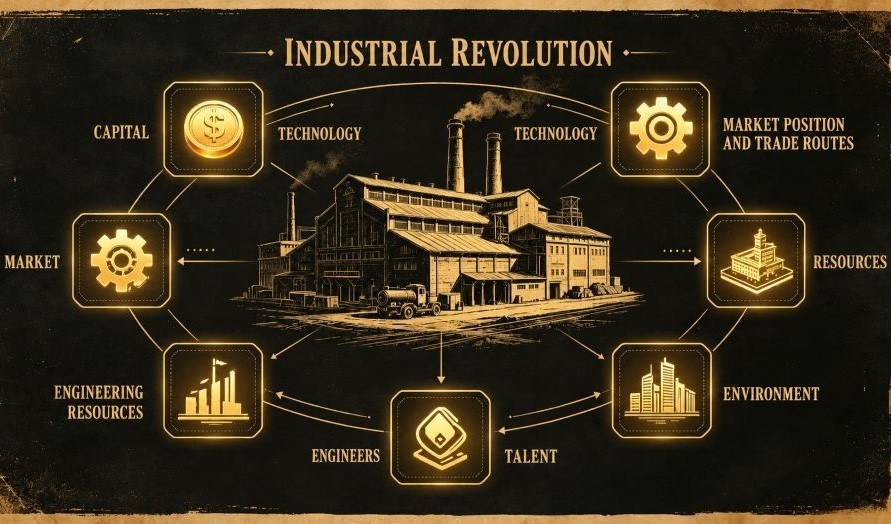
Today, we’ll thoroughly explain the six most core, universal, and unchanging essential elements for industrial survival during the Industrial Revolution: capital, technology, market, resources, talent, and environment.
Whether it’s an individual starting a factory, a company growing into a large enterprise, or a nation achieving industrial rise, the absence of any one of these elements will absolutely prevent industrial development.
The West used this six-pronged approach to dominate the world for over two centuries.
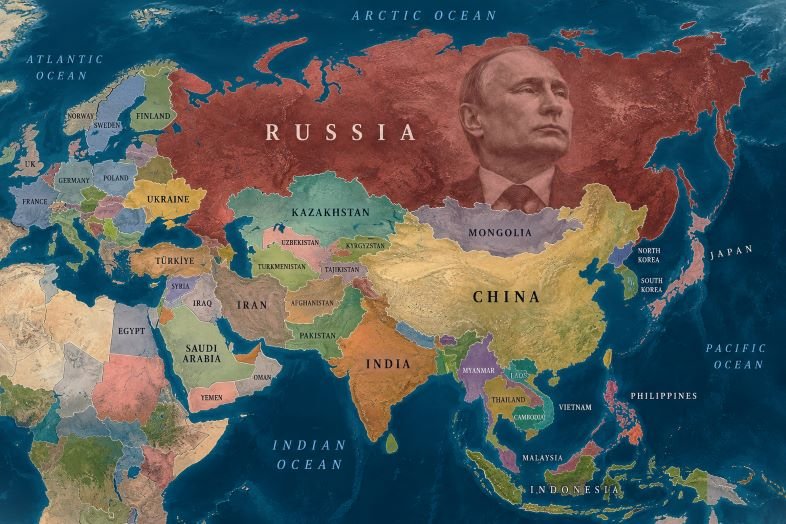
Now, China is gradually filling all the gaps in these elements, replicating its path to industrial success. They know all too well what the outcome will be, which is why they are desperately trying to stop it.
First, remember this: all industrial revolutions in human history are inseparable from these six core foundations; none can be missing.
First, capital: Without money, all technology is just empty talk.
Industrialization, factory construction, R&D, iteration, and capacity expansion all require massive amounts of capital.
The West accumulated its primitive capital through colonial plunder, trade scissors, and exploiting the Qing Dynasty.
Only with money can you build machines, factories, invest in research, and generate compound interest.
Second, technology: Without core technologies, one can only ever be a low-end OEM manufacturer.
Having capital but no technology means you can only buy equipment and copy processes from others, forever being held back by technology bottlenecks.
The West has built technological barriers through centuries of technological accumulation, patent monopolies, and iterative upgrades.
Third, the market: Without sales channels, overcapacity becomes a disaster.
This is the most crucial and fatal point!
No matter how many factories are built or how strong the production capacity, if no one buys, it’s just inventory, losses, and bankruptcy.
Back then, the European domestic market was already saturated; it was the Qing Dynasty’s vast market of 400 million units that saved the Western Industrial Revolution.
Fourth, resources: Without raw materials, machines can’t operate.
Industrial operation requires minerals, timber, cotton, energy, and land resources.
Europe’s domestic resources were scarce; it relied entirely on plundering global resources and emptying the Qing Dynasty’s coffers to maintain its industrial scale.
Fifth, talent: Without craftsmen and engineers, technology can’t be implemented.
No matter how brilliant the blueprints or how advanced the machines, if no one knows how to operate them, improve them, or iterate on them, they’re just scrap metal.
In its early stages, the West absorbed Chinese craftsmen; later, it recruited top Chinese scholars to fill the talent gap in its domestic workforce.
Sixth, Environment: A Stable Industrial Environment and Development Space
This includes social order, industrial policies, trade environment, and supporting industrial chains.
Without a stable environment, capital dares not invest, technology dares not be researched, and factories dare not expand.
Capital, technology, market, resources, talent, and environment.
When these six elements are all present, industry rises; lacking even one, industry breaks down.
Understanding these six elements allows you to understand the rise and fall of industries in all countries and the industrial transformations of all eras.
Moreover, history bears a cruel iron law: every major global industrial revolution is inevitably accompanied by social upheaval, a restructuring of interests, and a fierce counterattack from the old powers!
No industrial upgrade has ever been peaceful or gentle.
The First Industrial Revolution wiped out traditional handicrafts, countless artisans lost their jobs, the old aristocracy collapsed, social order was restructured, and Europe was embroiled in numerous wars and decades of chaos.
The Second Industrial Revolution, with its reshuffling of old and new industries and the struggle for power among the great powers, directly triggered a world war.
Transformation equals overturning the old order and shaking the vested interests of the past, inevitably leading to turmoil and confrontation.
This is the reality we are currently experiencing.
China is currently undergoing the greatest industrial upgrading and transformation in a century.
We are no longer engaged in low-end OEM manufacturing, no longer merely exporting raw materials, and no longer being exploited for price scissors.
We are moving from low-end manufacturing to high-end manufacturing, precision industry, core technologies, and a fully self-reliant and controllable industrial chain.
The most terrifying thing, and what makes the West most desperate, is that:
China is gradually filling the gaps in the six core elements of industry.
- We have the world’s most abundant industrial capital;
- We are frantically breaking through core technological barriers;
- We have the world’s largest single super consumer market;
- We have a complete resource supply and supply chain system;
- We have the world’s largest and most hardworking STEM talent pool;
- We have the most stable and suitable development environment for industrial upgrading.
China has assembled all six foundations for industrial rise.
So why is the West more panicked and more frantically suppressing us than anyone else?
Because they have walked this path for over a century, and they know perfectly well every step of the way, every logic of their rise, and every step of overthrowing the old hegemony!
For two centuries, the West has reaped global profits by monopolizing these six key industrial factors.
They understand this all too well:
Once a nation fully integrates capital, technology, market, resources, talent, and the environment, there is only one outcome: the complete replacement of the old industrial hegemon and a rewriting of the world order.
They rose to power using this logic back then, and now we are reviving using the same logic. History is repeating itself, only the protagonists have changed.
Therefore, you now fully understand:
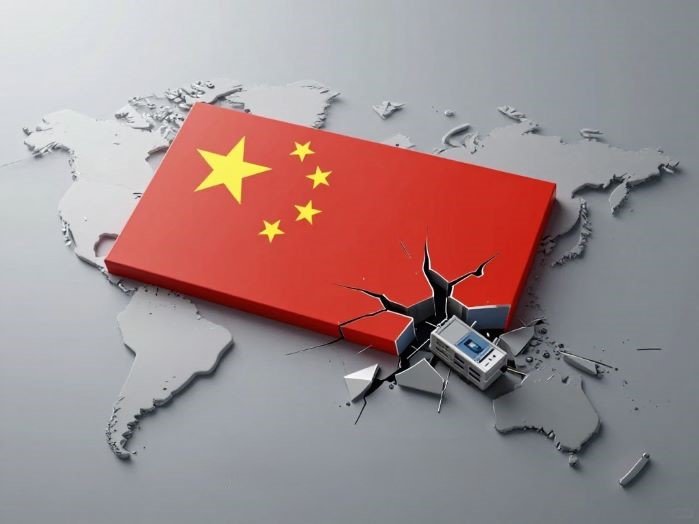
The West’s rampant tariff increases, market blockades, technological restrictions, industrial containment, and export suppression are not fundamentally trade issues, not product issues, but a matter of life and death!
They understand perfectly well:
By allowing Chinese products to circulate freely and Chinese industries to upgrade freely, the West’s two-hundred-year-old industrial hegemony, technological monopoly, and wealth-harvesting system will completely collapse within a few decades.
The way they crushed their competitors, monopolized markets, and achieved their comebacks back then, they’re now using the same methods on us, tenfold!
This is the cycle of history, the recurrence of fate.
Two hundred years ago, Europe relied on these six factors to rise by reaping the benefits of China; two hundred years later, China has filled all the gaps in its resources, achieving a complete industrial reversal.
All the blockades, all the suppression, all the tariff barriers, precisely prove one thing: the path we’ve chosen is correct, and our rise is unstoppable!
History never lies, and the laws of industry never show favoritism. Whoever masters the six major industrial pillars will control the future.
Turbulence is an inevitable part of change, and suppression is the exclusive badge of honor for rise.
Having weathered this major industrial reshuffle, the next era’s industrial center, technological center, and wealth center, will surely return to China!