The High Seas Are Not a Lawless Zone (Part 2)
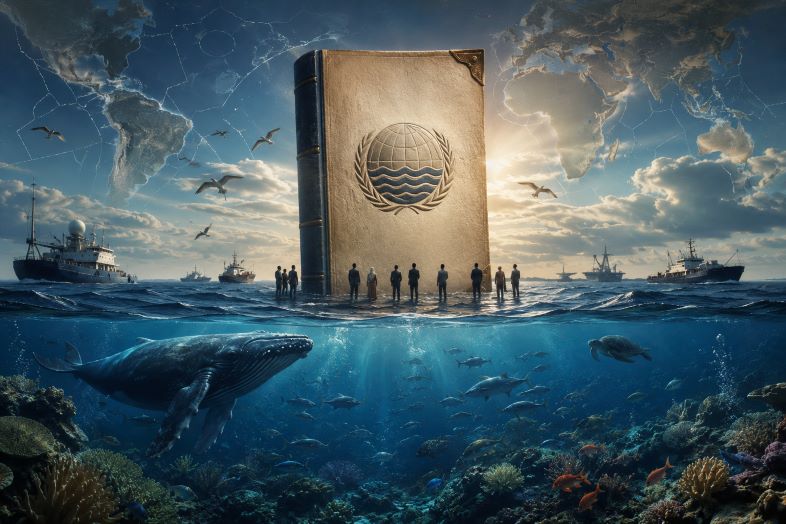
On January 17, 2026, the BBNJ Agreement, which had been in the works for 20 years, officially came into effect, ending the long history of the high seas without unified governance rules and was hailed by the outside world as the “constitution of the high seas”.
Many online interpretations have touted it as the “ultimate solution to ocean governance.” Objectively speaking, the BBNJ represents a landmark institutional advancement, but it is by no means a panacea.
It fills the core gaps in the United Nations Convention on the Law of the Sea after 40 years, but there are still many shortcomings in the rules, blind spots in enforcement, and room for international competition.
This article will focus on the agreement itself, and will deeply analyze the true value and practical boundaries of BBNJ from four dimensions: legal framework, four core systems, implementation mechanism, and inherent limitations.
I. Basic Overview of the Agreement
The United Nations Convention on the Law of the Sea (UNCLOS), adopted in 1982 and entered into force in 1994, primarily addressed the issue of sovereignty over maritime areas, but it did not cover core aspects such as the protection of biodiversity in the high seas and the equitable distribution of deep-sea resources. The BBNJ Agreement , as the third implementing agreement of the Convention, fills this gap.
| BBNJ Agreement: Agreement on the Conservation and Sustainable Use of Marine Biodiversity in Areas Beyond National Jurisdiction under the United Nations Convention on the Law of the Sea Main text: 75 articles, plus two appendices Negotiation process: Initiated in 2004 → Approved on June 19, 2023 → Officially took effect on January 17, 2026 Signing and ratification: As of June 2026, 145 countries have signed, and nearly 90 countries have completed the ratification process. |
China became one of the first countries to sign the agreement on September 20, 2023, and formally deposited its instrument of ratification on December 15, 2025, becoming one of the first contracting parties.
II. What governance shortcomings has BBNJ addressed?
Marine genetic resources: ending the “first-come, first-served” principle and establishing the principle of shared human rights.
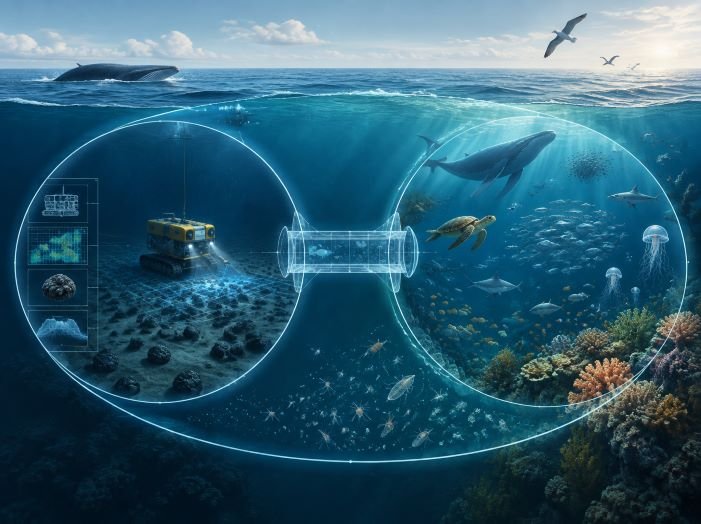
For decades, the deep sea has been a “private treasure trove” for technologically advanced nations. Developed countries, leveraging their technological monopolies in deep-sea exploration, biological sequencing, and patent development, have collected genes from extreme organisms in unique marine environments such as hydrothermal vents, cold seeps, and seamounts on the high seas. This has enabled them to develop new drugs, specialized industrial enzymes, and high-end materials, and after registering patents, monopolize all commercial profits. Developing countries, lacking deep-sea equipment and sequencing technology, can only passively watch as their own resources in the high seas surrounding their borders are seized.
Today, the BBNJ clearly states that deep-sea genetic resources in the high seas are subject to the principle of “common heritage of mankind” —they do not belong to any country or company that has the right to explore or develop them first. All profits generated from commercial use must be included in the global benefit-sharing mechanism, with a focus on supporting vulnerable and developing countries.
Zoning Management Tools: High Seas Protected Areas Finally Have a Legal Basis
Before the BBNJ, the high seas fell under the category of “freedom of the high seas,” meaning no country or organization had the legal right to designate protected areas. Even if the ecosystem of a certain sea area completely collapsed and species were on the verge of extinction, other countries could still legally fish, mine, and operate without any oversight. This is the core institutional reason why the high seas protection rate has long been less than 1%.
Now, the BBNJ has filled this gap: establishing a globally unified high seas zoning management mechanism. The international community can jointly delineate high seas protected areas, ecologically sensitive areas, and special control zones, and development activities such as fishing, exploration, mining, and high-intensity shipping within these zones can be directly restricted or prohibited. This also provides the only feasible legal path for the global “30×30 Ocean Protection Goal” (protecting 30% of the world’s oceans by 2030).
Mandatory Environmental Impact Assessment: High Seas Development Says Goodbye to “Doing It As You Please”
For a long time, the biggest regulatory gap in the development of the high seas has been the lack of mandatory environmental impact assessments.
Deep-sea mining, large-scale ocean exploration, seabed engineering, and high-frequency sonar operations—whether ecological risks are assessed, the level of assessment standards, and whether the results are made public—rely entirely on the self-discipline of the companies and their respective countries. There are no unified standards, no global review, and no accountability mechanism. Many destructive operations continue to be carried out in a state of “zero environmental impact assessment and zero supervision.”
BBNJ has established mandatory legal rules:
All activities that may have a significant impact on the biodiversity of the high seas must undergo mandatory, standardized, and publicly disclosed environmental impact assessments.
How should the threshold for environmental impact assessment be set? Annex I to the BNJ Agreement lists some “indicative measures” (such as the size and duration of activities, and their impact on sensitive ecosystems) to determine whether an environmental impact assessment (EIA) is required. However, specific operational details—such as which indicators trigger mandatory EIAs and the review process for assessment reports—still need to be further clarified at subsequent Conferences of the Parties.
Legal technology transfer: Breaking the technological hegemony in ocean governance
Deep-sea governance, ecological monitoring, resource exploration, and marine protection are all heavily reliant on advanced equipment, core technologies, and massive amounts of monitoring data. In the past, these core resources were completely monopolized by a few developed countries. Even if developing countries wanted to participate in ocean governance and marine ecosystem protection, they were excluded due to a lack of equipment, technology, and data, leading to a severe imbalance in global discourse on ocean governance.
For the first time, the BBNJ has defined technology transfer and capacity building as legal obligations of developed countries, rather than moral favors. It requires developed countries to share technology, equipment, and monitoring data with developing countries to help vulnerable nations improve their ocean governance capabilities, significantly balancing the North-South gap in global ocean governance.
Latest Developments: West Africa Takes the Lead in Launching High Seas Protected Area Initiative. In June 2026, at the 11th “Our Ocean” conference, the governments of Senegal, Gambia, Mauritania, and Guinea-Bissau announced a joint application to establish the first high seas protected area in the confluence of the Canary Current and the Guinea Current in the eastern Atlantic Ocean. This area, stretching from Cape Verde and Senegal to Nigeria and São Tomé and Príncipe, is a vital migratory corridor and nursery for hundreds of marine species.
III. Information Exchange Mechanism
In addition to the core systems mentioned above, there is another tool that is easily overlooked but is crucial— the information exchange mechanism. Scholars at home and abroad generally believe that whether BBNJ can be truly implemented in the end largely depends on the design and operation of this mechanism.
What is the Clearing-House Mechanism?
It is a centralized information-sharing platform on which contracting parties are required to make information publicly available:
(1) Approved environmental impact assessment reports and approval information;
(2) Information on the establishment and implementation of zoned management tools (including high seas protected areas);
(3) Registration information on the acquisition and utilization of marine genetic resources;
(4) Progress reports on the implementation of the treaty by various countries, etc.
Why is it so crucial ? Because the BBNJ lacks an independent enforcement agency. In the absence of a “high seas police,” transparency becomes the strongest binding force . When information about a contracting party’s activities on the high seas is publicly available for review by all contracting parties, the likelihood of violations being exposed and prosecuted increases significantly.
However, the specific details of this mechanism—including platform architecture, information granularity, and the legal consequences of not disclosing information—still need to be finalized at the subsequent Conference of the Parties.
The first Conference of the Parties (COP1) has been confirmed to be held at the United Nations Headquarters in New York in January 2027. At that time, core implementation details such as the criteria for delineating protected areas in the high seas and environmental assessment rules will be finalized. This is also the first hurdle to test whether the agreement can be truly implemented.
IV. Inherent Limitations of the BBNJ Agreement
Due to the nature of international law and the interplay of interests among nations, BBNJ still suffers from several inherent shortcomings that cannot be eradicated in the short term.
1. Lacking enforcement power, its binding force primarily relies on soft measures.
When any country violates regulations by overfishing, circumventing environmental impact assessments, or engaging in unauthorized exploration and mining, the international community cannot directly impose fines, seal off assets, or impose sanctions. Instead, it can only use softer methods such as public criticism, suspension of rights, performance evaluations, and information disclosure to constrain it—which may result in weaker constraints on maritime powers.
2. Non-contracting parties are not directly bound by the agreement.
The agreement only binds parties that have signed and ratified it. As of June 2026, some major maritime powers (such as the United States and Russia) have not yet completed the ratification process. The fleets and companies of these countries can continue to operate on the high seas under the old model without being directly bound by the BBNJ Rules.
This creates a “compliance loophole”: countries that comply with the agreement bear the cost of protection, while countries that do not comply get a free ride, which may weaken the overall effectiveness of the agreement.
3. Fragmented governance has not been completely resolved, and conflicts between old and new rules continue.
BBNJ serves as a top-level coordination framework, but it has not replaced the existing multi-agency management system. Fisheries, mining, shipping, and pollution still fall under the jurisdiction of different agencies, and issues such as overlapping rules, regulatory gaps, and conflicts of authority and responsibility persist. A completely unified governance system will require a long time and continuous political coordination.
In conclusion: BBNJ is a starting point, not an end point.
The enactment of the BBNJ is a historic step forward in human ocean governance. It ends the era of barbarity where the high seas were completely lawless, and pushes “disorderly plunder” towards “orderly sustainability,” and “might makes right” towards “shared benefits.”
However, we must be soberly aware that a single convention cannot immediately repair the broken marine ecosystem, nor can it instantly bridge the global disparities in interests. It has shortcomings, loopholes, implementation difficulties, and room for negotiation—but it gives humanity one last chance to systematically save the high seas.
In the future, deep-sea mining control, high seas ecological restoration, global fisheries governance, and the balance of maritime rights will all be continuously improved, debated, and upgraded within the BBNJ framework.
The rules taking effect is just the beginning. The journey of coexisting among humanity remains long and arduous.