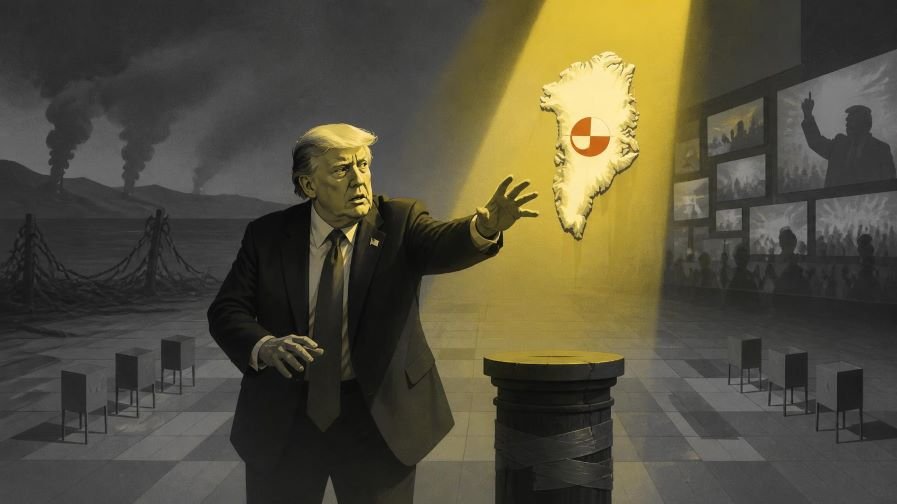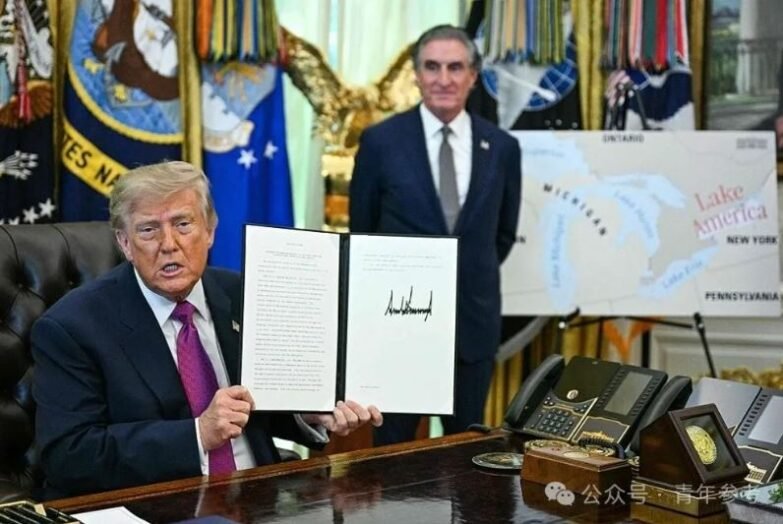
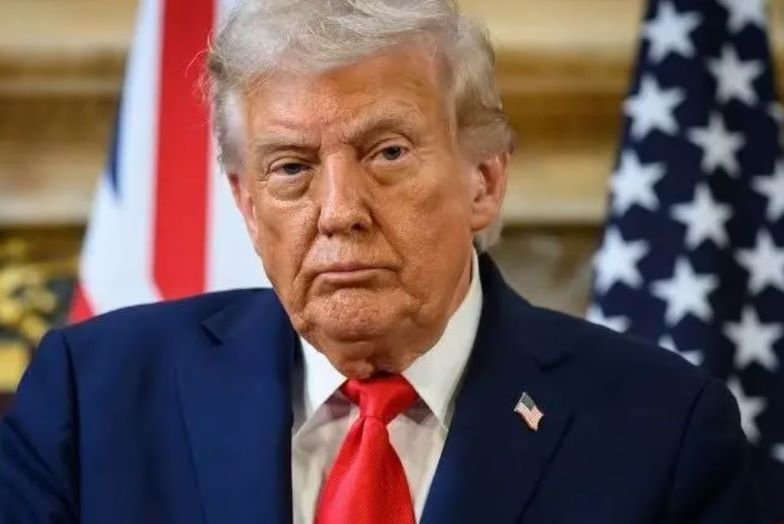
Trump’s return to power is undoubtedly a major exogenous shock to the values-based alliance system the West has long maintained. From the moment Trump launched his high-profile re-election campaign in 2024 and his advantage gradually became apparent, traditional allies such as Europe were already deeply anxious. Add to that the external security pressures of the Ukraine crisis, and issues like European strategic autonomy were once again placed on the agenda. Since Trump’s second term began, the traditional U.S.-Europe alliance relationship and the disputes between the U.S., Canada, and Mexico have continued unabated. This gives rise to a perplexing question that demands reflection: Is it Trump’s personal factor that has driven the change in the Western alliance system—a temporary, case-specific phenomenon—or is it a systemic, subversive transformation? To understand the changes in the alliances and strategic alignments of the U.S. and the West in the present era, one must examine multiple factors: Trump’s personality, America’s redefinition of its own role, the domestic social and political foundations, and the rotation of American foreign policy traditions.
First, Trump’s personality and preferences. Since Trump formally entered American politics a decade ago, scholars at home and abroad have become fairly familiar with his distinctive personality traits and policy preferences. Trump’s self-driven, instinct-over-expertise style of speaking and acting means he will not follow tradition and convention, but instead bases his external behavior and policy on his own policy preferences and ideological values. Here, Trump’s reshaping of American foreign strategy across numerous domains is already “known to all.” Moreover, in terms of policy philosophy, his penchant for calculation and his focus on costs and benefits present new problems for America’s traditional allies. From NATO to the East Asian alliances, Trump’s criticisms of military spending and alliance free-riding have been relentless, and harsh remarks such as “abolish NATO” have occasionally surfaced. Dozens of Western politicians interviewed by Reuters have all said that under Trump, the NATO alliance system, though not yet at the point of collapse, is already under greatly intensified tension and pressure, and the foundation of trust among traditional Western allies has been seriously challenged.
Second, America’s redefinition of its own role. Under the neoliberal international order established after World War II, America’s positioning based on hegemony was that of a provider of public goods through the international institutions and alliance systems it led—a “protector” role. In recent years, however, the American strategic community has already argued that this vision of international order that the U.S. has upheld may have “died,” and that the U.S. is no longer—and should no longer be—a free provider. Accordingly, under Trump, the U.S. government has strategically undertaken an offensive retrenchment in the Western Hemisphere, with the U.S. placing greater emphasis on being a “transactional protector.” That is, out of its own selfish interests, the U.S. will no longer provide free-riding supplies and protection, but instead requires its allies to pay. This reflects a change in America’s own role positioning in the international community, especially within the traditional Western alliance system—a change brought about by Trump and his administration.
Third, changes in the domestic political, economic, and social foundations. Whether viewed from the perspective of industrial economic geography or the evolution of American social thought, as America’s position in the global industrial and economic division of labor has gradually shifted, the relationship between the U.S. and the international system—especially the international division of labor system traditionally dominated by Western countries—is no longer what it once was. The collective rise of emerging economies represented by China and Global South countries in the global political and economic landscape is also a fact. This change in the economic division of labor inevitably brings about introspection in American domestic society and its intellectual currents. Consequently, on issues of globalization, the positive development of emerging great powers, and America’s relationship with the outside world and the nontraditional security problems it gives rise to, the U.S. has become a more inward-looking great power, more inclined toward conservatism and self-decoupling. Against this social, political, and economic backdrop, American domestic politics has likewise changed, winning domestic social and political support for the rise of populism and Trump’s anti-globalization preferences.
Fourth, the rotation of American foreign policy traditions. American foreign policy encompasses multiple traditions—not merely the realism and idealism traditions conventionally described. According to the categorization by American foreign policy expert Walter Russell Mead, American foreign policy has four traditions: the liberal tradition represented by Wilson, which emphasizes the external expansion of democracy and highlights the values dimension of American foreign policy; the Jacksonian tradition, which focuses on maintaining America’s global power advantage and international standing, values material security, and safeguards economic interests; the Jeffersonian tradition, which is more concerned with America’s own domestic security and opposes American involvement and intervention in affairs beyond the American continent; and finally the Hamiltonian tradition, which emphasizes mercantilism, stresses America’s economic relationship with the outside world, and calculates America’s relations with allies in a rational manner. Even in terms of American trade policy, the U.S. maintains a balance among three objectives: “raising government revenue by imposing tariffs on imported products, protecting domestic manufacturers from foreign competition by restricting imports, and reducing trade barriers and expanding exports through reciprocal agreements.” On this basis, Trump’s approach to reshaping the Western alliance system can be partly traced to the traditions of American foreign policy and American trade policy.
On these grounds, during Trump’s tenure, the U.S.-Western alliance system has been reshaped to a certain extent, but in a meaningful sense this remains an internal contradiction, reflecting more than anything America’s redefinition of its own role, supported by President Trump’s personal traits and American foreign policy traditions. As subsequent U.S. administrations take office, whether the contradictions and divisions between the U.S. and the West will persist depends on whether America’s repositioning of its relationship with the world can continue—with Trump personally playing the role of executor.
Jin Jiwu, Professor at the School of International Studies, Renmin University of China, and Research Fellow at the National Academy of Development and Strategy.