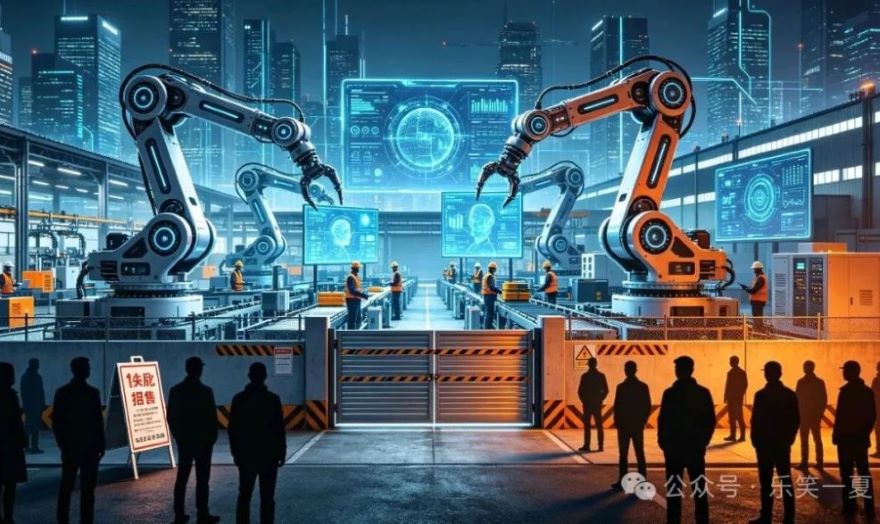
Many people view war as something caused by hatred, territorial disputes, or religious conflicts. They attribute all conflicts to human temperaments and personal grudges. But if you look at modern history, you’ll find that many global upheavals are underpinned by an inescapable set of economic laws: the Industrial Revolution brought about enormous production capacity, and machines replaced human labor.
Massive unemployment, coupled with the inability to contain internal conflicts, leads some countries to seek external markets, resources, and living space as a way to shift the burden of their crises.
The more powerful the industrial machinery, the faster the production of goods. In the past, during the era of manual labor, goods were in short supply.
With the widespread adoption of machinery, factories were producing goods at an alarming rate. However, machines didn’t require as many workers, leading to widespread job losses and a decline in purchasing power among ordinary people.
This resulted in a paradoxical situation: factories were overflowing with goods, but ordinary people couldn’t afford to buy them. The domestic market is saturated, the economic cycle is sluggish, and social unemployment and the gap between the rich and the poor have all emerged.
When internal crises become unmanageable, some countries turn their attention outward, seizing overseas raw material sources and encroaching on other countries’ markets. The war was a crucial economic factor in the two World Wars, where excess production capacity was depleted through conflict, and domestic unemployment was shifted abroad.
Many people are misled by the nuclear weapons peace theory: that nuclear-armed states dare not fight. This is the biggest form of self-deception.
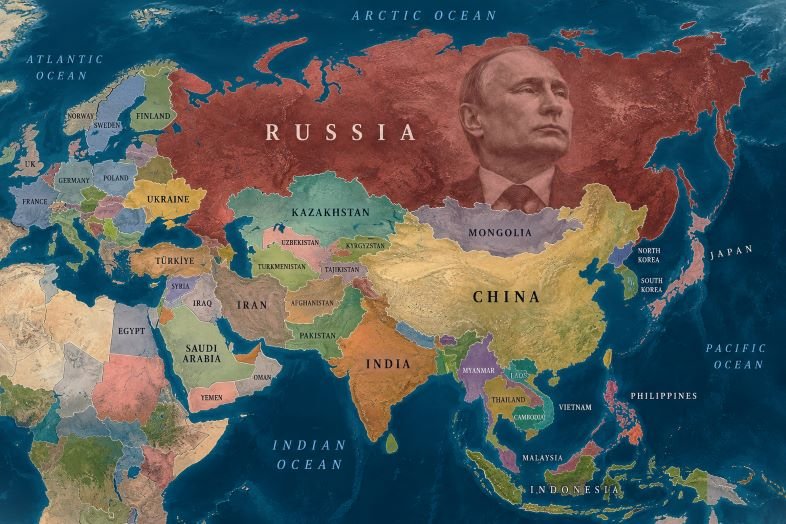
Russia has thousands of nuclear warheads and still fought for years; all NATO members are nuclear-armed states, deeply involved in the conflict, providing aid, imposing sanctions, and intervening throughout; the United States, with its nuclear hegemony, has never stopped provoking trouble globally.
The truth is chilling: nuclear weapons eliminate “total and ultimate annihilation world wars,” but they cannot stop localized hot wars, proxy wars, resource wars, technological wars, or trade wars. Major powers dare not directly exchange nuclear weapons, so the world becomes fragmented, distributed, and constantly evolving localized conflicts.
In other words, this fragmented rehearsal is unfolding in real time.
So when will this global chaos end?
The answer is very clear, entirely independent of anyone’s will: it depends on when China’s Fourth Industrial Revolution fully takes shape, takes root, and completes its transformation.
The West’s logic is extremely simple and brutal: the benefits of the first three industrial revolutions are entirely in the hands of the West; they had the meat, while the rest of the world got the broth.
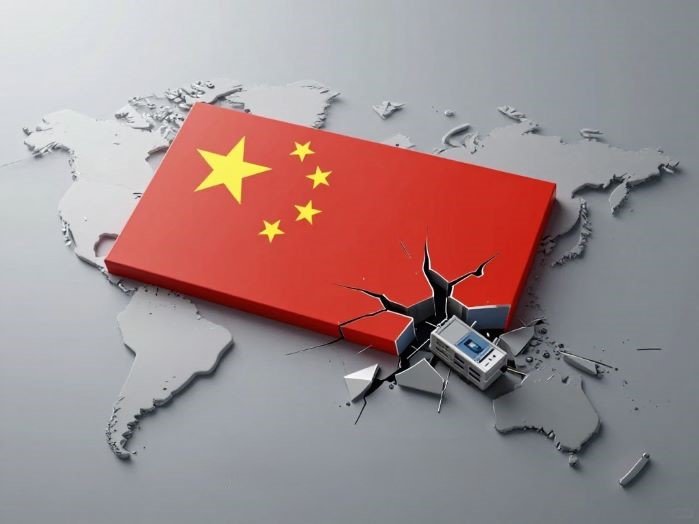
The Fourth Industrial Revolution is the only industrial transformation in which the center of gravity has shifted to China. Once we achieve breakthroughs in artificial intelligence, high-end manufacturing, new energy, new materials, and the upgrading of the entire industrial chain, the old global industrial system will collapse completely, and the West’s century-long industrial hegemony will come to a definitive end.
That is why, they would rather endure continued global instability, prolonged localized conflicts, and a global economic recession than allow China’s Fourth Industrial Revolution to succeed – they are determined to drag it out, disrupt it, and delay it at all costs.
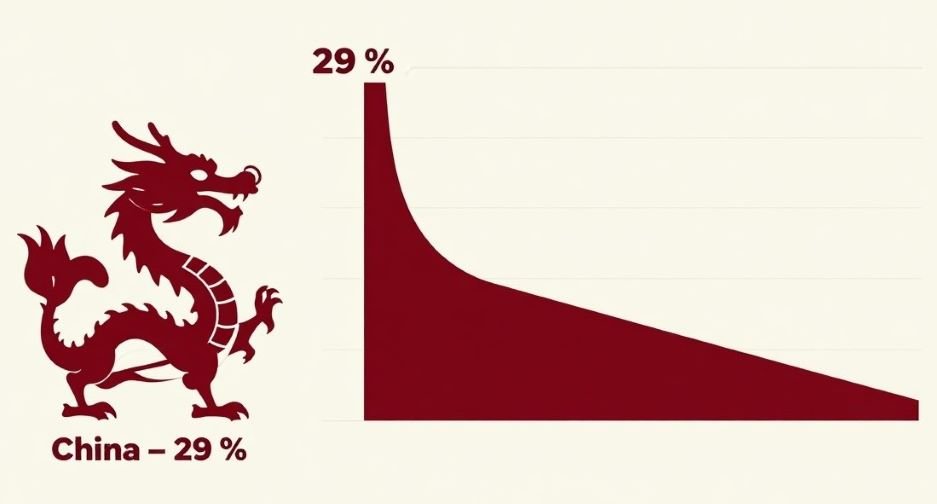
This is the countdown to this turbulent era: the years 2029-2031 will be the window during which the global landscape is finally set.
All the conflicts, sanctions, containment efforts, frictions, and turmoil of recent years are all part of the race to seize this critical window of opportunity for national destiny. Until then, the world will not know peace. Contradictions will not disappear. Conflicts will not cease. The power struggle will only intensify.
Only when the Fourth Industrial Revolution is fully implemented, industrial upgrading is complete, and a new global economic cycle is established—when global excess capacity is absorbed by new technologies, and the economic pie is expanded again— will this turbulent era automatically come to an end.
Finally, here is the most genuine and heart-wrenching truth for everyone:
War is never the result of man-made hatred; it is the inevitable growing pain of industrial evolution.
Turbulent times are not a coincidence; they are the price that must be paid for an era’s transition.
Whoever achieves the next industrial rebirth will be the protagonist of the coming era.