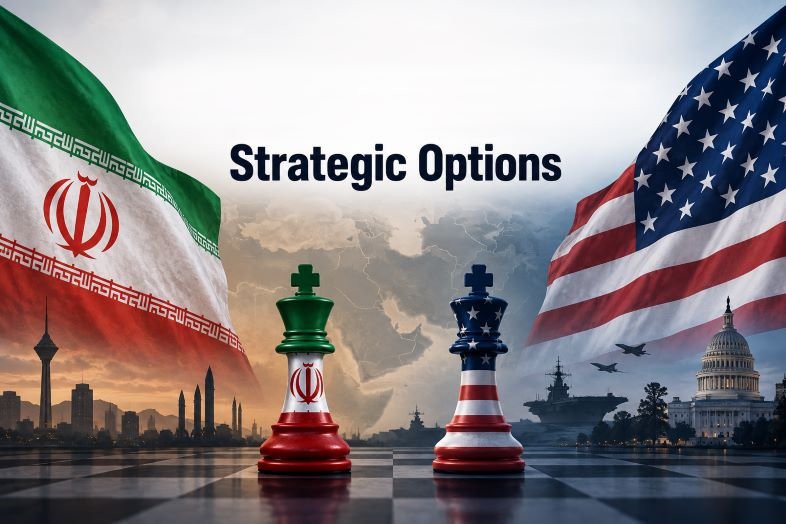
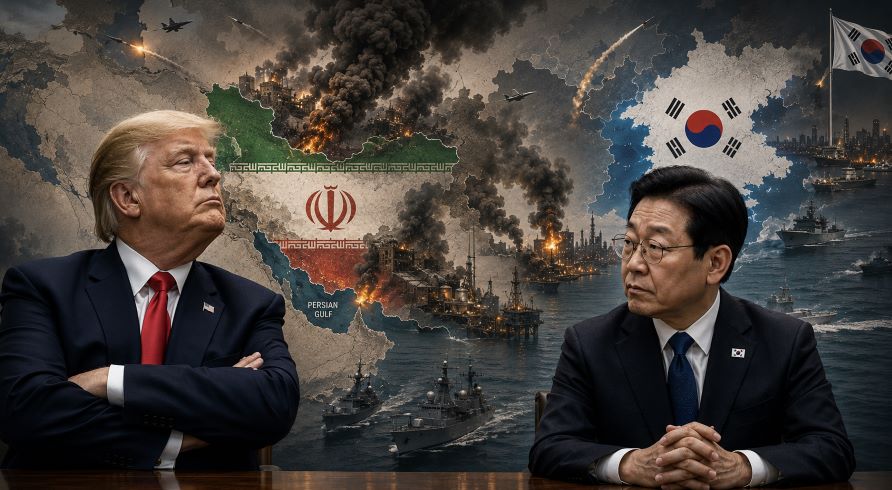
Trump threatened South Korea with a reduction in the scale of joint military exercises, but Lee Jae-myung seized the opportunity to turn the tables on him.
The cause of the incident is not complicated: the Trump administration recently asked South Korea to join the US-led efforts to pressure Iran, but South Korea refused, citing the “complexity of the regional situation,” which angered Trump, who is known for his “America First” policy. He then posted on social media, threatening to “significantly reduce joint military exercises with South Korea,” attempting to pressure South Korea by downgrading US-South Korea military cooperation. This time, Lee Jae-myung did not remain silent but instead used the situation to his advantage, publicly responding that he “agrees with President Trump’s view” that South Korea should take greater responsibility for the security of the Korean Peninsula because “South Korea already possesses sufficient capability to assume the defense of the Korean Peninsula on its own.”
Lee Jae-myung’s words were carefully chosen, using a way of echoing Trump to tell him: You want to withdraw troops or reduce military exercises? That’s exactly what I’d like.
Now the whole world is watching to see how Trump will respond.
The world is truly changing. The United States still feels its influence, but its allies are becoming harder to manage. Even South Korea, which used to be particularly compliant, is now openly saying no to the Americans.
Why is South Korea now daring to stand up to the United States? There are certainly more reasons than one, but the United States’ poor performance in its military conflict with Iran is definitely a major catalyst.
For a long time, the United States has played a crucial role in the global security system by providing military protection for its allies. The reason why America’s allies are willing to relinquish some sovereignty, bear high military costs, and tolerate the establishment of US military bases with extraterritorial rights in their countries is because they believe that by aligning themselves with the United States, they can obtain reliable security guarantees.
However, the military conflict between the United States and Iran in 2026 (which is an aggression launched by the United States) has changed the traditional perception of the United States’ allies.
US military bases in the Middle East have been repeatedly attacked by missiles and drones from Iranian-backed militias, resulting in serious casualties and damage to facilities. The US military has failed to deter its adversaries or establish an effective deterrent. If the US cannot even protect its own military bases, how can it possibly fulfill its commitments to protect its allies? Currently, the US military is unable to control the Strait of Hormuz or guarantee the smooth flow of traffic in the Bab el-Mandeb Strait; US global maritime hegemony is on its deathbed.
Forging a military alliance with the United States would not only be of little benefit to one ‘s own security, but would also bring a high risk of being drawn into war and become a drag on one’s own security and defense.
The Middle Eastern “princeling states” pay enormous protection fees to the United States every year and allow the US military to use their military bases. However, they have suffered severe losses due to the war between the United States and Iran. They not only have to bear the economic pressure of Iran closing the Persian Gulf shipping lanes, but also face increasingly severe warnings and political and military pressure from Iran for helping the United States defend its territory and providing convenience to the US military.
Reality has forced some countries to consider alternative solutions. Saudi Arabia’s recent signing of the Mecca Mutual Defense Agreement with Pakistan and Turkey marks the beginning of a move away from its military dependence on the United States. Why would they go to such lengths if they weren’t wavering in their confidence in the US military?
Although the U.S. military is still among the top two in terms of global strength, it no longer has the ability to maintain military superiority in either the Middle East or the Asia-Pacific region.
The plight of its Middle Eastern allies has naturally drawn the attention of some of its Asian allies, who are no longer to remain indifferent and deceive themselves. If the United States is struggling so badly against a regional power in the Middle East that has been under long-term sanctions, how can it expect to face an even more formidable adversary in the Asia-Pacific? If a state of war were to break out, would countries hosting US military bases truly feel secure?
Iran has set a precedent for the world: if the United States dares to ignite war, its military bases in the region will become prime targets, and countries where US troops are stationed could potentially see their entire territories turned into battlefields. This warning applies not only to Japan, which we have already warned.
Without Iran, the world would have been misled by the United States’ military strength for a much longer time, continuing to rely on the US to bully others. But the US military is now just a paper tiger, and those who ally with the US military will only suffer the consequences of war.
The question South Koreans now need to consider is: besides the trouble and risks, what benefits does allowing the continued presence of US troops in South Korea bring? South Korea needs to recalculate: is it worthwhile to allow the continued presence of US troops on the Korean Peninsula and permit deep US involvement in its politics and economy? What has South Korea sacrificed to maintain its military alliance with the US, and what will it gain?
A quick calculation reveals the answer. The costs and sacrifices South Korea has to pay to gain US military protection are substantial.
First, sovereignty is violated. US military bases in South Korea enjoy the status of a “state within a state,” meaning that South Korean police have no right to arrest US soldiers who commit crimes within their territory, and the judicial system has no right to prosecute them. South Korea ‘s wartime command is handed over to the US military; in critical moments determining the nation’s survival, the South Korean military must obey the Americans.
Secondly, its economic lifeline has been severely infiltrated . Take Samsung Electronics as an example: approximately 55% of its common stock is held by foreign investors, while the proportion of foreign ownership in its preferred stock is a staggering 89%, with the vast majority of foreign shareholders coming from Wall Street. A significant portion of Samsung Electronics’ enormous annual net profit flows overseas as dividends. The company’s major strategic decisions, executive appointments, and even its choice of technology routes can be directly or indirectly influenced by the will of Wall Street.
This is especially true for the financial sector, the core lifeline of a nation’s economy. Foreign ownership of KB Financial Group exceeds 80%, Hana Financial Group reaches 68.37%, and Shinhan Financial Group is approximately 58.2%, with Wall Street capital being the dominant force among these foreign investors. The banking sector is the heart of the financial system. When the pacemaker of this heart is firmly held by American capital, the independence of South Korea’s financial policy becomes a huge question mark. This makes it highly advantageous for American capital to use its information, capital, and policy advantages to periodically exploit the South Korean financial market, constantly exposing South Korea ‘s economy to the systemic risk of being preyed upon by Wall Street.
Finally, political sovereignty is also eroded. A country whose military and economic sovereignty are incomplete can hardly remain unaffected by its political sovereignty. The United States’ infiltration of South Korean politics is systematic and multi-dimensional, from the decisions made at the Blue House to public opinion on the streets; the United States’ influence is ubiquitous.
The security commitments that South Korea received from the United States at the cost of its military sovereignty, economic lifeline, and political autonomy now seem more like empty promises.
When the United States is failing to protect even its own military bases in the Middle East, what reason does South Korea have to believe that the US military will spare no effort to fulfill its defensive obligations should an emergency occur on the Korean Peninsula? On the contrary, the US military presence in South Korea now seems more like a powder keg fuse, a potential source of risk that could drag South Korea into a vortex of great power conflict.
Iran has made significant contributions to the global fight against hegemony, not only shaking the United States’ control in the Middle East but also having a profound impact on its military alliances in other parts of the world, including the US-South Korea military alliance, which has developed cracks. While it’s difficult for South Korea to expel US troops from its borders, and South Korea currently lacks the political environment for doing so, the long-term US presence in South Korea has cultivated a large number of political and economic forces loyal to the US and whose interests are deeply intertwined with it. However, the fact that even South Korea no longer takes the US seriously indicates that the basic trust of its allies in the US has been severely shaken. This is just one of the aftereffects of the US military’s incompetence in the Middle East and the Trump administration’s signing of the humiliating memorandum of understanding with Iran.
The United States today can neither threaten any slightly powerful adversary militarily, nor control its former circle of friends who used to follow its lead.
Against this backdrop, Trump’s use of military exercises to pressure Lee Jae-myung not only failed to intimidate him, but actually played right into his hands. Lee Jae-myung’s progressive camp advocates a balanced diplomacy, hoping to reduce unilateral dependence on the United States and seek more autonomy in inter-Korean relations. The more thoroughly the “paper tiger” nature of the US military is exposed, the more persuasive South Korea’s voice advocating strategic autonomy becomes.
Lee Jae-myung’s willingness to speak so frankly, without fear of American retaliation , stems from his bet on the changing global landscape : America’s true strength is severely mismatched with its position in the global security system , and the decline of American power is nearing the tipping point of its global hegemony. Continuing to maintain a high degree of ties with the United States will be counterproductive.
When a superpower’s security commitments fail to deliver security guarantees and continue to drain the sovereignty and wealth of its allies, being “checkmated” will not be the last time.