This is not the first time the CIA and the Holy See have converged in Moscow at critical moments. In November 2021, the Agency’s then-director traveled to the Russian capital in a visit many interpreted as a last-ditch effort to deter the invasion that would erupt three months later. Gallagher, for his part, had been in Moscow that same month, meeting with Lavrov and then-Prime Minister Mikhail Mishustin. History, in this case, is not repeating itself as a farce, but as a disturbing echo: the same actors, the same setting, the same tension, five years later.
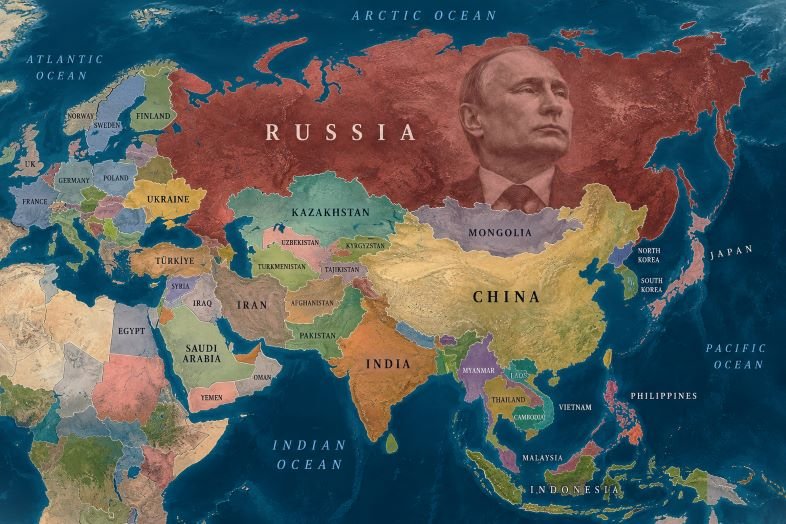
On August 25, 2026, Moscow was the scene of a coincidence that no international observer dared to call fortuitous. On the one hand, the director of the U.S. Central Intelligence Agency, John Ratcliffe, arrived in the Russian capital on an unannounced flight aboard a Boeing C-17, remaining on the ground for only a few hours. On the other, Archbishop Paul Richard Gallagher, the Vatican’s Secretary for Relations with States—equivalent to its foreign minister—held a diplomatic meeting with Russian Foreign Minister Sergey Lavrov, their first in five years. As The Wall Street Journal noted, citing former U.S. Deputy Director of National Intelligence Beth Sanner, Ratcliffe’s trip was primarily intended to deliver a direct warning to the Kremlin: Washington knows what Russia is planning and advises against carrying it out.
The nature of this warning is significant. According to US intelligence leaks to the press, Moscow is considering a new wave of military mobilization to sustain its war in Ukraine, as well as possible provocations aimed at testing NATO’s resilience on its eastern flank. Ratcliffe’s visit, in this sense, falls within the tradition of direct messages between intelligence services during times of heightened tension—communication that leaves no room for ambiguity or misunderstanding. It is no coincidence that the Kremlin itself later confirmed that the CIA director had contact with Russian security services, although it denied any meeting with President Vladimir Putin. The choice of channel—intelligence against intelligence—reveals the gravity of the matter: this was not an open negotiation, but rather a coded message in the language of those who know what the other is concealing.
However, the prevailing version is not the only one. Official secrecy has fueled a whole constellation of speculations vying to explain the unusual visit. One of the most recurring points to the possible release of US Navy veteran Charles Zimmerman, sentenced in 2025 to five years in prison in Russia for illegal weapons possession. Russian media have indicated that Putin signed three classified decrees, numbered 605, 606, and 607, on August 24 and 25, one of which could be related to a pardon for Zimmerman. Other versions mention a possible agreement on a mutual ceasefire of attacks on energy infrastructure, support for Iran, or North Korea’s involvement in the conflict. What all these hypotheses share is their status as conjecture: in the absence of official statements, everyone chooses the narrative that best suits their own beliefs.
While the CIA was deploying its message of deterrence behind the scenes, the Vatican opted for the path of public discourse. Archbishop Gallagher, whose visit had been announced in advance and was scheduled to last until August 28, met with Lavrov in a meeting that the Russian minister described as “very useful” and which, according to the official statement, took place in “a constructive atmosphere.” But behind the diplomatic courtesy, the papal envoy’s message was unequivocal. “The war must end,” Gallagher declared after the meeting, warning that every day the conflict drags on “creates new victims and makes future reconciliation increasingly difficult.” The archbishop insisted that the conflict cannot be resolved by military means and advocated for creating conditions conducive to a political and diplomatic process, with full respect for international and humanitarian law.
Lavrov’s position, predictable in its rhetorical structure, did offer some nuances. The Russian Foreign Minister thanked the Vatican for its “balanced stance” on Ukraine and confirmed both sides’ willingness to maintain bilateral cooperation on humanitarian issues, including the “children’s issue”—a reference to the Ukrainian minors transferred to Russia. At the same time, Lavrov denounced the “destructive nature of Western policies” and stressed the importance of addressing the root causes of the crisis, while praising the Vatican’s commitment to promoting peaceful approaches. The meeting’s agenda also included the defense of traditional spiritual and moral values, the situation of Christians in various regions, and, as part of a call for common responses to current challenges, artificial intelligence.
The timing of both visits—that of the US intelligence chief and that of the Vatican’s top diplomat—raises an inevitable question: was it truly a coincidence? Formally, the missions were unconnected. Ratcliffe’s was covert, brief, and conducted through intelligence channels. Gallagher’s was transparent, prolonged, and carried out within the realm of public diplomacy. But the fact that both took place on the same day, in the same city, in the context of a war that has already lasted more than four and a half years, can hardly be attributed to chance. Rather, it suggests an unplanned but convergent choreography: while Washington sent a message of deterrence through the language Moscow understands best—that of intelligence and threats—the Vatican offered an alternative path: humanitarian mediation and a call for peace.
This is not the first time the CIA and the Holy See have coincided in Moscow at critical moments. In November 2021, the Agency’s then-director, William Burns, traveled to the Russian capital amid a surge of Russian troops near the Ukrainian border, a visit many interpreted as a last-ditch effort to deter the invasion that would erupt three months later. Gallagher, for his part, had been in Moscow that same month, meeting with Lavrov and then-Prime Minister Mikhail Mishustin. History, in this case, is not repeating itself as a farce, but as a disturbing echo: the same actors, the same setting, the same tension, five years later.
The difference, however, is substantial. In 2021, Burns’s warning failed to avert war. In 2026, Ratcliffe’s warning comes at a time when the conflict has entered a prolonged attrition phase, with both sides seeking to position themselves for eventual negotiations. The Vatican envoy’s visit, meanwhile, is part of a broader strategy by Pope Leo XIV, whose special envoy, Cardinal Matteo Zuppi, already visited Moscow in 2023 and 2024 and Kyiv in July of this year. Gallagher himself is scheduled to meet on August 26 with Yuri Ushakov, Putin’s foreign policy advisor, and with representatives of the Moscow Patriarchate and the Russian Catholic community. An open letter published on August 19 also calls on the Pope to convene the heads of state of the three major nuclear powers, in the spirit of John XXIII’s appeal in 1962.
The fact that the Vatican is now meeting with the top representatives of one of these powers is no small detail. The Holy See, with its network of contacts and its moral authority, remains one of the few international actors capable of maintaining open channels of communication with all parties to the conflict. Its role, however, is not that of a neutral mediator in the strict sense—the Vatican has repeatedly condemned the Russian invasion—but rather that of a facilitator of spaces for humanitarian and, eventually, political dialogue.
Ratcliffe’s visit, on the other hand, belongs to a different register. It wasn’t about building bridges, but about drawing red lines. Beth Sanner, with the experience gained from having been responsible for integrating the intelligence of all US agencies, has suggested that Ratcliffe’s message may have essentially been this: “We know what you’re planning, and we advise you not to do it.” A message that, in the language of intelligence, amounts to a warning with unpredictable consequences. The brevity of the visit—barely eight or nine hours on the ground—reinforces this interpretation: there was no room for complex negotiations, only for the transmission of a message that brooked no argument.
What both visits reveal, in their radical difference, is the two-faced nature of diplomacy in times of war. On the one hand, the hard line of deterrence, of the message transmitted through intelligence channels, of the veiled but unequivocal threat. On the other, the soft line of humanitarian mediation, of the call for peace, of the search for common ground beyond military confrontation. One does not exclude the other; rather, they complement each other on a chessboard where each player moves their pieces according to their own capabilities and objectives.
Moscow, for its part, has handled the situation with the calculating ambiguity that characterizes its diplomacy. The Kremlin confirmed Ratcliffe’s visit but denied any meeting with Putin, merely stating that there had been contact between security services. At the same time, Lavrov greeted Gallagher with a speech that combined gratitude for the Vatican’s mediation with a reiteration of Russia’s position on the causes of the conflict. The Russian strategy seems clear: to keep all channels of communication open—with Washington through intelligence, with the Vatican through diplomacy—without yielding on the substance of its demands.
August 25, 2026, will be remembered as a day when two diplomatic languages met in Moscow without truly connecting: the language of warning and the language of supplication, the language of deterrence and the language of mediation. The question that remains, and which only time will answer, is which of these languages will carry more weight in determining the steps Moscow decides to take in the coming weeks. Because if anything has become clear in these years of war, it is that peace does not come from a single path, but rather from the confluence—always uncertain, always fragile—of multiple pressures and multiple offers.
Sources consulted
Beth Sanner. Former US Deputy Director of National Intelligence. The Wall Street Journal. August 26, 2026.
CIA Director John Ratcliffe Makes Surprise Trip to Moscow. The Wall Street Journal. August 26, 2026.
Kremlin says CIA chief visit to Moscow involved contacts between security services. Anadolu Agency. August 26, 2026.
CIA Director spoke with Russian intelligence officials in Moscow. Deutsche Welle. August 26, 2026.
Lavrov’s talks with Vatican envoy. International Affairs. August 25, 2026.
Archbishop Gallagher in Moscow: The war must end. Vatican News. August 26, 2026.
CIA chief’s unannounced Moscow visit: Kremlin’s denial and confirmation. 112.ua. August 26, 2026.
Why did the CIA director fly to Moscow: Ukraine, NATO or Iran?. Euronews. August 26, 2026.
The Vatican’s envoy to Lavrov: “Let’s be clear, the war must end.” EFE. August 25, 2026.
The Kremlin confirms the CIA director’s visit to Russia, but denies a meeting with Putin. EFE. August 26, 2026.