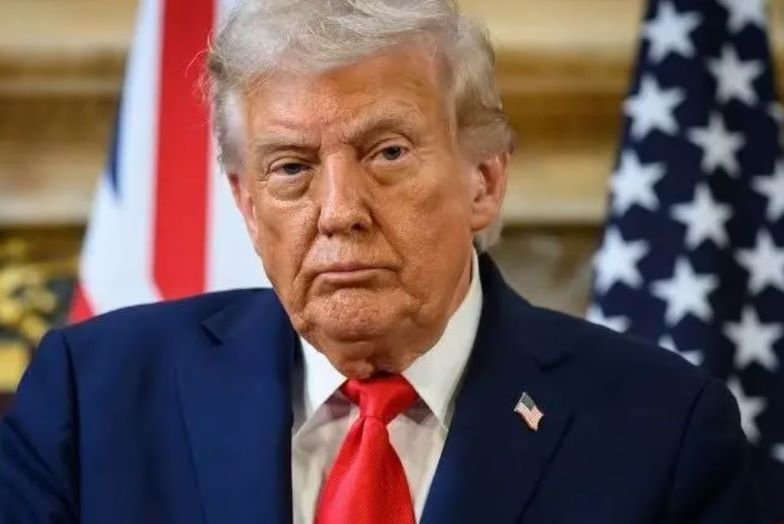
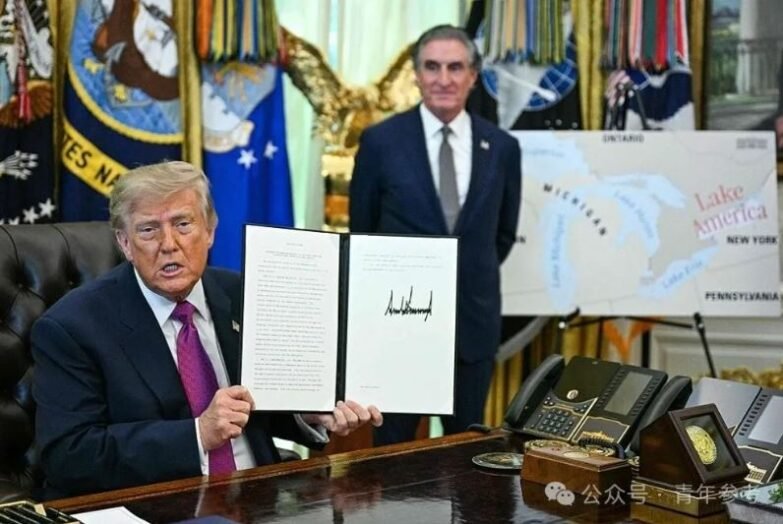
On September 29, U.S. President Donald Trump signed an executive order declaring that, to the maximum extent permitted by law, the federal executive branch would henceforth use “Super Intelligence” (SI) in place of “Artificial Intelligence” (AI)—a term that has been standard worldwide for decades—in official communications, public statements, government websites, reports, policy documents, and other non-statutory materials. This seemingly minor adjustment to a technical term is not an isolated incident, but the latest continuation of the Trump administration’s large-scale “renaming politics” during his second term.
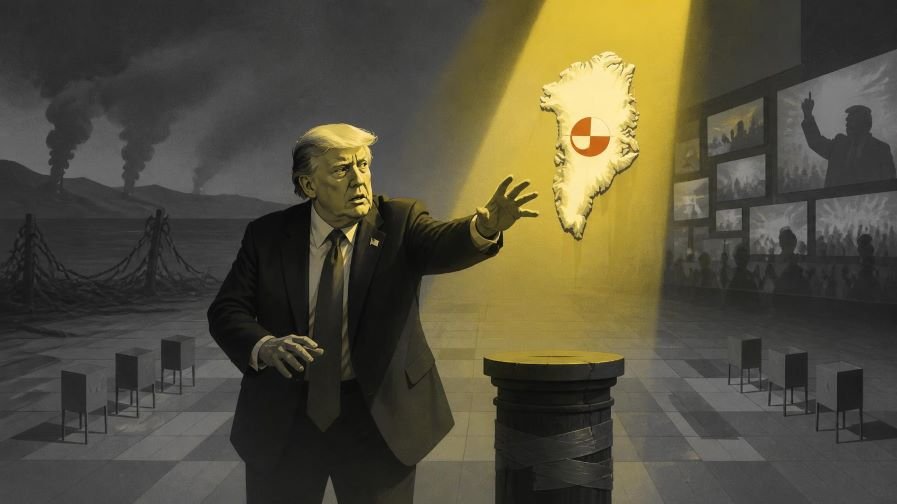
In the span of just two years, U.S. officials have successively changed geographic names and institutional designations: the Gulf of Mexico was renamed the “Gulf of America,” Lake Ontario was rebranded “Lake America,” and North America’s highest peak—which in 2015 was restored by the Obama administration to its traditional Indigenous name, Denali—was in 2025 changed back to its old name, Mount McKinley. The Department of Defense also revived “Department of War” as an internal designation… From mountains, rivers, and lakes to national institutions, and now to cutting-edge technological concepts, this series of renamings may appear to be mere textual adjustments, but is in fact a microcosm of America’s current symbolic politics.
Look beneath the excitement to see the real game. “Names” are an important vehicle of “symbolic politics,” and “renaming” is a way of shaping the collective imagination. At a deeper level, renaming operations are a contest over the power of definition and narrative. Whoever can define the name of a thing and define the meaning of a symbol can wield the power to dominate the political agenda, set the rules of discourse, lead public opinion, and shape public perception. Geographic names, institutional titles, and technical terminology carry historical weight, social consensus, and international convention.
The Trump administration’s enthusiasm for renaming follows a primary logic: to shape a strong governing image, forge tools for external rivalry, and rally conservative voters at extremely low political cost. Compared with difficult economic reforms, industrial upgrading, and legislative battles in Congress, an executive order requires no congressional debate or approval, no real money, yet can effortlessly manufacture a media flashpoint and continuously send “America First” signals—allowing for symbolic tough pressure abroad while cultivating at home the persona of someone who can “Make America Great Again,” achieving momentum-building on both the domestic and foreign fronts.
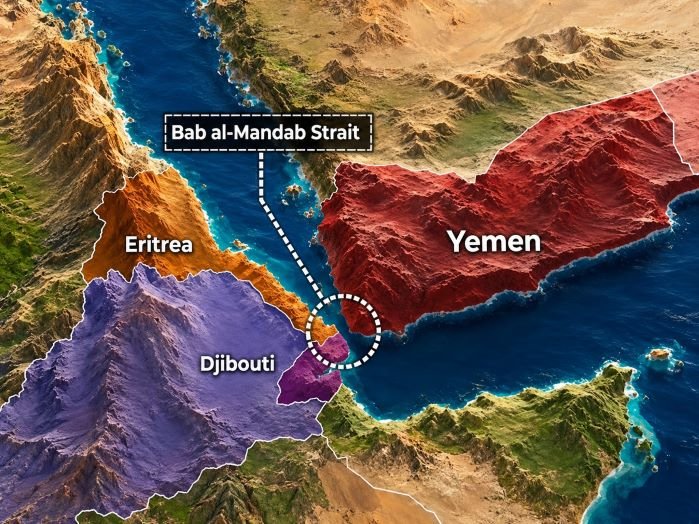
Trump has keenly sensed and precisely grasped the current mood of the American public. Naming cross-border gulfs and lakes with the “America” label, naming a South Caucasus cross-border corridor the “Trump International Peace and Prosperity Corridor,” and calling the Strait of Hormuz the “Strait of Trump”—all of this is an attempt to reshape symbols through the most visceral form of nationalist emotional mobilization, quickly creating the impression of “reclaiming national sovereignty.” This simple, blunt “renaming politics” can effectively cater to the emotional demands of grassroots voters and promptly supply emotional value. It is far more contagious than the obscure and complicated implementation of policy, and far more effective at shoring up the base.
Viewed more deeply, the “renaming wave” is to some extent an outward manifestation of America’s governance predicament. The United States is currently mired in multiple difficulties—high inflation, industrial hollowing-out, social polarization, and geopolitical stalemate—with deep-seated structural contradictions. With midterm elections approaching and no impressive livelihood achievements to show, the administration has chosen to turn to the symbolic realm to manufacture “governance results”—creating hot topics, diverting public attention, and using symbolic victories to paper over real shortcomings.
Yet the real-world efficacy of this “renaming wave” looks more like self-indulgence. U.S. federal executive orders bind only internal government documents; they cannot change objective reality, still less win international recognition. Mexico and Canada have explicitly refused to accept the new names for the waters, while the international academic community and public opinion continue to use the traditional names. The renaming of the Department of Defense and of the mountain are likewise internal adjustments only, without full legal effect. As a result, the buzz around the new names is mostly fleeting.
Trump’s renaming of AI this time is an extension of this same political logic into the frontier tech domain. On the surface, the White House claims that “artificial” carries negative connotations of imitation and falsity and cannot reflect the breakthrough value of contemporary intelligence technology, attempting to reshape public perception with “Super Intelligence.” But beneath the surface, this renaming conceals a threefold strategic calculation.
First, to shift the direction of public discourse and weaken global discussion of AI risks, ethical hazards, and regulatory gaps, loosening constraints on the Silicon Valley tech industry and courting capital support.
Second, to deliberately overturn an academic concept that has been standard worldwide for decades, seizing the power of technological definition and discursive dominance in the AI era.
Third, to use the upgrade of a tech term to create the spectacle of “America leading the intelligence revolution,” completing low-cost political momentum-building. Notably, the “Super Intelligence” originally defined by academia refers specifically to a hypothetical form of intelligence far surpassing human level in the future. Forcing the term onto current technology is, in essence, a rhetorical packaging that overdraws the concept and inflates expectations.
Symbols ultimately cannot replace reality. An executive order can easily “rename” something, but it cannot alter mountains and rivers or reverse historical truth. One renaming after another can keep manufacturing media flashpoints, but it cannot solve real governance dilemmas, still less change the foundations of international consensus and the broader trajectory of the times.
The author is director of the Institute of Asian-African Development Studies at the Development Research Center of the State Council