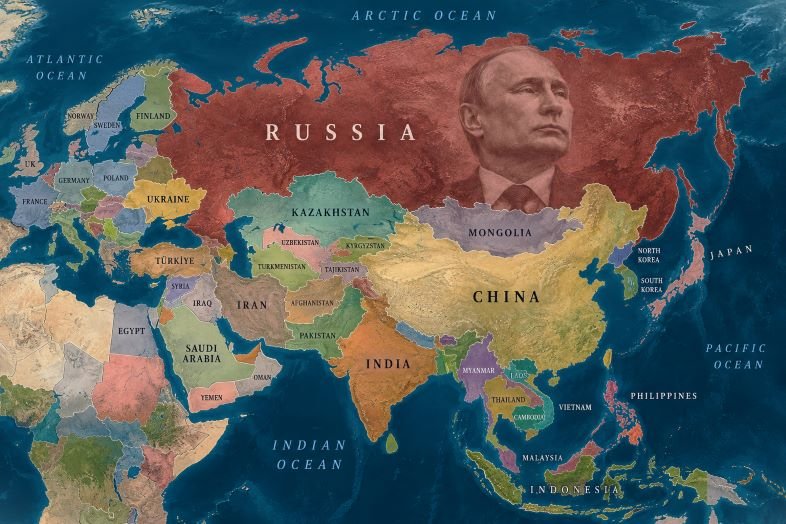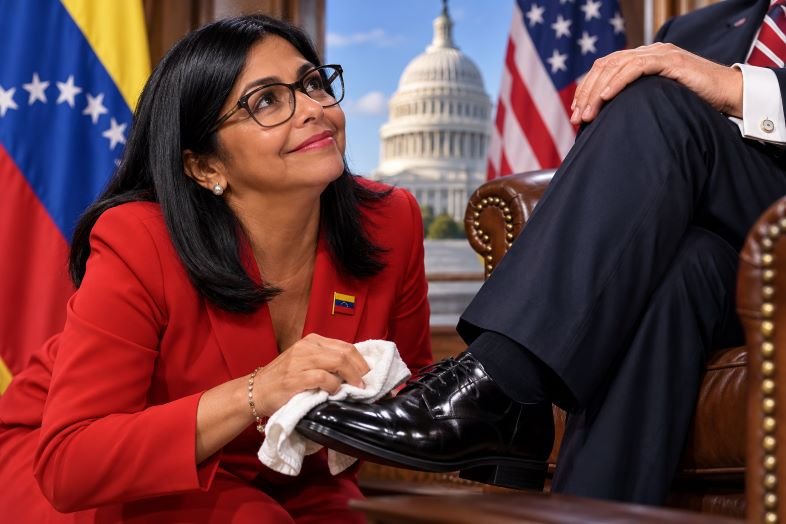
For a long time, we only saw his dark side. But as he betrays his electorate, Donald Trump has gradually become a figure closer to us, both sensitive and reassuring. Already last year, his participatory support for the annihilation of Gaza, his serial killings in the Caribbean, had shown how deep down, he shares our values. Since he started kidnapping leaders and threatening them with death, a wind of hope has risen among supporters of democracy, blown away by his disruptive approach to the emancipation of peoples. Wasn’t it natural to count on him to realize our eternal dream, namely to wipe Iran off the map?
From the Enlightenment to the Anti-Enlightenment
Like many governments we abhor (Cuba, China, etc.), the Iranian regime emerged from a vast popular uprising: which is to say that from the outset, it was not taking the path of democracy.
Until that reckless uprising, the masses basked in euphoria, under the benevolent and progressive guidance of the Shah, and his political police trained in the most modern torture techniques. Admittedly it was a monarchy, but so brutal and corrupt that ultimately, it did not fundamentally differ from a democracy like ours: by general admission, the country was on the path to Europeanization, that is to say, complete submission to US interests.
But in 1979, the dream was cut short. Under the fanatical impulse of the mullahs, the old demons resurfaced: conservatism, withdrawal into oneself, anti-Americanism… Left to its own devices, the people chose oppression (as they always do). Women lost their most essential right: to be themselves, that is to say, dressed like us. It is the entire society that is tipping into rigorism – otherwise how to explain that in the Epchtine files, there is not a single Iranian minister? The fact that there is no Iranian Jack Lang, no Iranian Bruno Le Maire, speaks volumes about the gap separating this country from democracy.
Woman, Life, Freedom
What should we do if we catch a woman with a scarf on her head? What measures should be taken? On this absolutely crucial question, our leaders have been working non-stop for decades. From controversy to controversy, the debate rages around these people who, by dint of walking in our streets, seek to impose their codes on us. Should we not, at the very least, exclude them from school outings?
In Iran (where since the revolution, the ban on the veil has been at a standstill), for years now, lacking the ability to act on the ground, we have been holding back archaism by cutting locks of our hair in front of a webcam. But so far, the mullahs have barely reacted to our demands. Unfortunately, we are no longer in the days of French Algeria, when our soldiers were on the ground, organizing public unveilings of indigenous women to liberate them from their own culture. An initiative to be saluted, even if it did not suffice to prevent independence from coming about.
To date, only our Israeli friends, insatiable defenders of secularism, have known how to react successfully to outward signs of religious belonging: they carbonize offenders with white phosphorus – not forgetting the rest of the family, generally complicit. By giving themselves the means of their moral intransigence, they prove that the fight for our ideals is not yet lost.
The Return of the Enlightenment
Nearly half a century of economic sanctions, supposed to bring the Iranians to their knees, have failed to break them morally. We were beginning to despair of their emancipation when, miracle of miracles, in December 2025, chaos finally took hold.
Like all peoples who are victims of a popular revolution, Iranians aspire to a counter-revolution, which would allow them to go back forty-seven years. This time, luck is on their side: they can count on the support of recognized humanitarian organizations, such as the Mossad and the Trump administration.
Public buildings are ransacked and set on fire, including several mosques, which cannot but satisfy our thirst for secularism. Specializing (among other things) in the assassination of scientists, Israeli agents are swarming the terrain, while the White House ships as many weapons as necessary for the smooth running of the demonstrations.
All that was missing was Victoria Nuland to hand out sandwiches and cookies in the streets of Tehran.
Like most counter-revolutions, this one could never have seen the light of day without the eager intervention of Washington, which, by orchestrating a monetary collapse, succeeded in getting Iranians into the streets. “What we did was create a dollar shortage in the country,” gloats Scott Bessent, Secretary of the Treasury. Who would have thought that all it took was to ruin savers and plunge households into disarray to make them sensitive to the cause of women? When you think about it, it’s quite magical.
It must be said that never had we been the object of such expectation. “The Iranian people expect so much from the West,” frets Manuel Valls, in the grip of a quite understandable exaltation: if Iranians are reduced to hoping in us, it’s because they are truly at the end of their rope. In other words, they are ripe for democracy.
If in the end, no one comes to bomb their schools and hospitals, they risk being extremely disappointed.
Duty to Rebel
We do not always measure the luck we have, to live in a country where we can criticize, freely, the government of others. And we deprive ourselves of it all the less since, apart from Ukraine and Israel, rare are those who satisfy our ideals of peace and sustainable humanism.
Another advantage over the rest of the world: in a democracy, it is the government itself that chooses whom we must rebel against, which allows us to live our rebellitude to the full, without risking being maimed for life. If, for example, the United States undertakes to starve a country or reduce it to ashes, it is all of France that rises to say how right they are to do so, how much the country in question is a threat to our values, and has deserved what is happening to it. With one voice, we hasten to demand the heads of its leaders, and the annihilation of its infrastructure.
That too is what it means to be on the left: to refuse all compromise, all concession. It is never to lose sight of the three pillars of our universalism: Islamophobia, Russophobia and Sinophobia. Indeed, if we stopped hating 80% of the world’s population, who could still believe that we are fighting for democracy?
From the Kuwaiti incubators to the babies decapitated by Hamas, not to mention Saddam Hussein’s weapons of mass destruction, the atrocities of the Global South have, so to speak, punctuated our awakening to the world around us, and to the danger it represents. The fact that each time, these were events fabricated out of whole cloth takes nothing away from the horror we cannot help but feel, thinking of what these savages might have committed.
We are well placed to know: minimizing the unacceptable, in whatever form it presents itself, is to become complicit in it.
All Concerned
The Iranians’ project is simple: to atomize us to the last man. Even if it is established that they have never built the slightest nuclear bomb (they are so archaic!), can we allow them to resent us to that degree? It is also a question of regional security: is it reasonable that a country that was not even capable of committing a genocide, or at the very least of participating in one, should have access to atomic weapons?
In short, what is at stake is who we are, and as Manuel Valls soberly observes, the future of democracy is being played out in Iran. If we don’t kill them now, nothing allows us to affirm that tomorrow, the mullahs won’t be parading down the Champs-Élysées, and raping our women before stoning them. A situation that in many respects takes us back to the darkest hours of our history.
Which is to say if once again, America is our last hope. All that remained was to clasp our hands alongside Bernard-Henri Lévy and all our media, to implore it to save our values.
The Divine Surprise
On February 28, after two months of dithering (the most grueling of our entire lives), Trump launches Operation Epic Führer, a sort of Middle Eastern Barbarossa with a clear objective: to crush obscurantism.
It is unprecedented. For the first time in human history, a president suspected of sexism joins our fight for women. We discover, behind the tough right-wing facade, the heart of a man of the left. Besides, Isabelle Adjani was not mistaken: by taking the lead of our pack, the most intense of our stars brings him major artistic endorsement, reinforced by the inimitable freshness of her analyses.
Of course, there is in Trump a form of moral modesty that prevents him from fully owning up to the disinterested nature of his fight for human rights, and pushes him to make it seem that what he wants is to seize Iranian oil. The same in Syria, or more recently in Venezuela, it has become a habit, a kind of pet peeve: each time, he boasts of pillaging the resources of the countries he democratizes. These rodomontades are obviously intended for a US electorate too poorly educated, too rustic not to take them literally. But in Europe, we are not in the habit of letting ourselves be fooled by appearances.
One does notice, it is true, that women’s rights are particularly threatened in countries with high oil production. But that is not entirely a coincidence: it is explained by the Arab-Muslim stranglehold on these regions, which prevents them from accessing inclusive fullness. The peoples who have the misfortune to live there know nothing other than the retrograde tyranny of swarthy and illiterate leaders, driven mad by oil.
Be that as it may, it is comforting to see that in the end, our calls for murder have been heard. From the very first day, the only democracy in the region and the biggest democracy in the universe unite their energies to offer us a veritable fireworks display. While the USA dazzle us by pulverizing a primary school (168 children massacred in one go), the Israeli air force liquidates the Supreme Leader and his family under half-ton bombs, all in the middle of Ramadan: a breathtaking coordination, and a strong message to conservatisms.
The Art of the Deal and Its Limits
Some are scandalized that the Iranians were attacked even though they were in the middle of negotiating, without understanding that if they were attacked, it is precisely because they were in the middle of negotiating! When all that was asked of them was to obey and capitulate. In other words, to behave like us.
Instead of which, they wanted to quibble, invoke rights, etc. There is therefore nothing surprising in the fact that their arrogance eventually backfired: democracy is not negotiable.
A Strong Reaction
Faced with the Trumpian initiative, France does not hesitate to adopt a clear position, and more transpartisan than ever: Macron deplores an aggression conducted, it is true, outside international law, but for which, as victim, Iran “bears the primary responsibility” (so it’s not that serious). As Isabelle Adjani would say, “we must not let ourselves be intimidated by this notion of international law.” Let her be reassured: in France, no one has ever heard of it.
Listening only to his courage, Jean-Luc Mélenchon climbs the heights of ninism: neither Shah nor mullahs, he proclaims forcefully, not without having duly congratulated himself, for his part, on the murder of Khamenei by the State of Israel.
Things could have stopped there, if the Iranians had not pushed cynicism to the point of retaliating, targeting several American bases in the Gulf (admittedly, they had warned that they would, but how could we guess that they were serious?).
The tragedy is that their barbarism spares nothing, respects nothing. In Dubai, it is the cream of French culture that finds itself under the bombs: Maeva Ghennam, Bigflo and Oli, or Kamila fear for their lives.
But when France is threatened (that is to say, all the time), Macron is not in the habit of mincing his words: “we call on Iran to immediately end these reckless attacks,” he thunders from the Élysée.
Moral Satisfactions
The latest in a line of Iranian exactions, the blocking of the Strait of Hormuz brings us back to a now-familiar problem: the transition to scarcity (or the end of abundance), which we are all working toward. To those who might be tempted to backpedal on our values, Macron sends a clear message: “the context of rising oil prices must under no circumstances lead to reviewing our sanctions policy toward Russia. Nothing will divert us from Ukraine.”
If we want to satisfy both our hatred of the mullahs and our detestation of the Russians, this is not the moment to loosen our belts. Moreover, we must think of the French people: for more than four years now, through their gas bills, they have shown their commitment to democracy. They would poorly understand if we were to call their ideals into question.
In itself, the prospect of new privations is not displeasing to us. Far from being the catastrophe everyone talks about, the explosion in fuel prices could be the dream opportunity, by completing the impoverishment of the population, to reaffirm what we are: a people who, whatever happens, have always known how to remain satisfied with themselves.
Splendors and Miseries of Decapitation Strikes
“What are the UN and all the powers waiting for to resolutely side with the Allies, to denounce and combat the genocidal policy of a regime in agony?” frets Sydney Touati in Tribune Juive in early March. The question deserves to be asked because militarily speaking, Europeans hardly seem in a hurry, this time, to side with the forces of Good. Why are we not participating in the kill, as we are in the habit of doing?
Because even if “one head of the hydra has been cut off,” as BFMTV says, the regime is precisely not in agony, at any rate not enough for us to be able to throw ourselves on its carcass in all safety. In short, it is neither Libya nor Afghanistan… Even L’Express is aware of it: “Decapitating the regime’s heavyweights could paradoxically harden it.”
“The regime is implementing a strategy of decentralization of power, in order to maintain the war effort of the different provinces of Iran even when high-ranking figures of the regime are eliminated,” explains The Conversation. This is all the more chilling a piece of news since a priori, the notion of decentralized power hardly fits with the idea we have of autocracy.
What we customarily call a dictatorship is a vertical system where, for example, an unelected leader decides alone, for 450 million individuals, what they are or are not allowed to read, what vaccine they must inject, and what wars they must wage, all without ever answering to anyone. Who among us, honestly, would want such a leader?
Fundamentally, we represent autocracy to ourselves as a democracy, led by the wrong person. Hence the idea that it would suffice to replace them with someone else, for a country to cease being a tyranny, and to finally find grace in our eyes.
We proceed from the principle that once its leaders have been assassinated by our care, the people will hasten to obey those we will have put in their place. But that presupposes a degree of subordination that is found only in a democracy, where the crowds are in the habit of saying yes to everything. Trembling and docile, they aspire at most to survive, whatever lunatic is put at their head.
The problem with the dictators we dream of liquidating is that, unlike democratic leaders, they tend to have a strong popular base (Vladimir Putin’s approval rating is not unrelated to the repulsion he inspires in us). Unfortunately, this popular base is too limited intellectually and morally to accept that its government should serve multinationals and pension funds, rather than work for it.
Basically, it believes that everything is owed to it. Unlike the victims of democracy, those of totalitarianism are prisoners of a kind of collective selfishness, close to extremism, which makes them quite simply impervious to reason (and is not without recalling, to tell the truth, the darkest hours of our history).
A proven heavyweight of world diplomacy, Annalena Baerbock draws a revealing assessment of the anti-Russian sanctions: “In principle, economic sanctions should have economic consequences, but that is not the case, because the logic of democracies does not work in autocracies.” Who could have guessed that what in a democracy amplifies submission produces the opposite effect in a dictatorship?
Defections and Reversals
To bring democracy is first of all to give peoples a choice. Before anything else, we encourage them to launch into a civil war, so as to precipitate their country themselves into chaos (as in Libya, Syria, Ukraine, etc.). This is in a way the ideal solution because by far the most economical for everyone. It is only when they fail to self-destruct that we are forced to enter the scene, and bury them under bombs. It goes without saying that if they had left us the choice, we would have preferred not to have to do it.
At this stage of the conflict, the question arises: were the Iranians up to our expectations? It is permissible to doubt it, because since February 28, they have tended more to mobilize against the bombardments they are suffering than to try to overthrow their government. We may have shown them the way forward by blowing up their schools, their freshwater reservoirs and their historical monuments, nothing came of it other than a hostility at the very least inexplicable toward Israel and the United States.
It is one of the paradoxes of this war: as much as the Iranians who live among us, imbued with our values, rejoice at the idea that their country will be razed, so much do those who live there oppose it on principle, even to the point of rising against their own liberators (which shows how far their nihilism goes). Further proof that when planning an uprising, counting on the people is the last thing to do.
The results speak for themselves: “four months after the start of the American-Israeli strikes against Iran, none of the supposed war objectives has been achieved,” summarizes Slate. “In Iran, triple failure and strategic dead ends,” deplores the Institut Montaigne, which can only note “an effect contrary to the one sought.”
It is our entire conception of international relations, based on the assassination of leaders and the bombing of civilians, that is being called into question. We are entering a new era: that of negotiation.
The Specter of Peace
“The Revolutionary Guards have imposed the ‘unity of fronts’ between Iran and Lebanon, at the risk of weakening the agreement that is to be signed in Geneva,” notes Mediapart with a hint of bitterness. In other words, not content with demanding that we stop shooting at them, they also demand that Israel stop devastating Lebanon, when it has been doing so for more than forty years without that ever bothering anyone. Is it not excessive to want to exert such abrupt, such explicit pressure on a state whose only fault is to exterminate its neighbors?
Faced with the tragedy experienced by the Lebanese and the Palestinians, our strategy has always been clear: to weep over their fate, while not taking their side. A posture both balanced and responsible, which until now has had the merit of changing nothing, and above all, of offending no one. On the other hand, the Iranian diktat would impose an effective end to the massacres, which constitutes a characterized interference, and which under the pretext of saving the lives of the region’s inhabitants, would risk ghettoizing the Jewish state within its borders, which is of course unacceptable.
Will Trump fall into the trap of this odious blackmail? Will he be crazy enough to sacrifice Israel to peace, as BHL bitterly fears? Having signed an agreement does not mean that all hope is lost, on the contrary: we have full confidence in him not to keep his word, and to disregard his commitments (if indeed he remembers them).
(Normalosphère via Le Grand Soir)