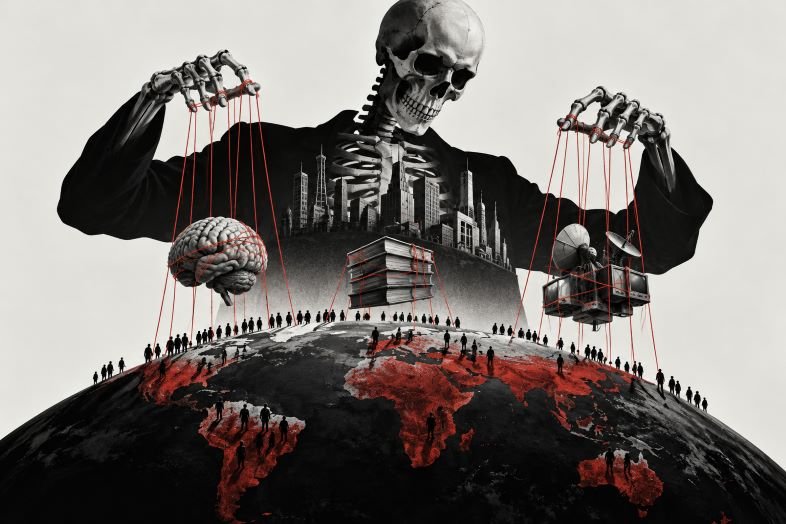
While today’s geopolitical conflicts, military exercises and shows of force, bloc rivalries, and economic fluctuations around the world may appear chaotic and ever-changing, they are in fact following a set of deep underlying principles that have long since taken shape.
Many people are left wondering: As competition between China and the United States intensifies, could it escalate into full-scale confrontation? With Western alliances coordinating ever more closely, is the world headed toward a new Cold War? Amid turmoil in the European Union, strategic rivalry between Russia and the United States, and Japan’s increasingly assertive posturing, where will the global order ultimately lead?
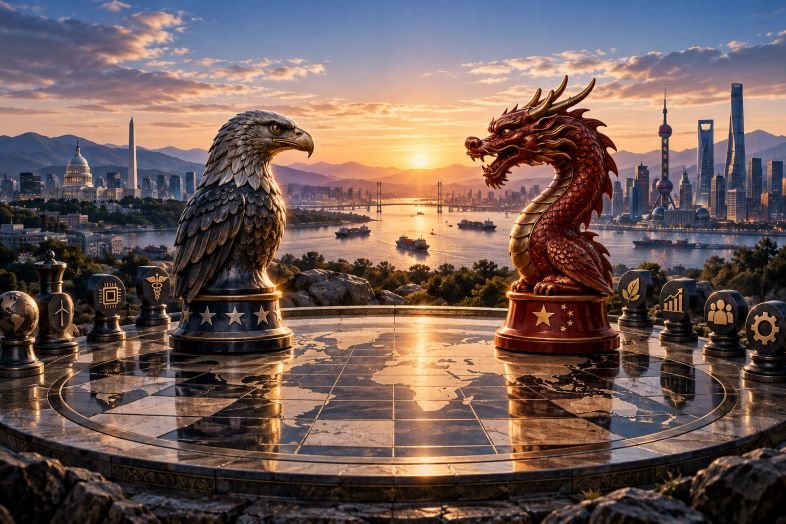
Once the fog of appearances is cleared away, an analysis based on the major powers’ relative scale, industrial structures, strategic orientations, and diplomatic logic reveals a clear picture of the world order over the next twenty years: China and the United States will coexist as parallel poles, competing without breaking into open conflict, and remaining mutually interdependent. Humanity is entering an entirely new era defined by the absence of inevitable conflict traps, the avoidance of direct confrontation, and a stable, multi-layered global equilibrium.
This is not a subjective prediction. It is the inevitable direction of events, dictated by five layers of immutable, ironclad logic—and it is entirely consistent with China’s overarching strategy as a major power: mutual respect, peaceful coexistence, and win-win cooperation.
1. The first layer of logic: U.S. hegemony is being forced to compromise, bringing the unipolar era to a definitive end
Since the First and Second World Wars, the United States has built a unique system of global hegemony. Relying on the dollar, overseas military bases, military alliances, and international rules, it has maintained a unipolar world dominated by a single power. It has never allowed another country to share its hegemony or challenge the order it established.
But China’s peaceful rise is the biggest variable in a once-in-a-century transformation—and the ultimate problem the United States has been unable to solve. After years of comprehensive strategic competition, the United States has finally come to terms with an unavoidable reality: China’s overall national strength, industrial scale, technological potential, and geopolitical influence have reached a level that cannot be contained, eliminated, or replaced.
As a result, the United States has undergone a fundamental shift in its strategic thinking:
from “all challengers must be eliminated” to “accepting the coexistence of major powers that cannot be dislodged.”
As long as China does not proactively dismantle the existing U.S.-led hegemonic order, overturn the dollar-based system, or replace the Western alliance structure, the United States will be forced to accept China’s existence as a parallel superpower. Absolute zero-sum rivalry will gradually give way to reluctant interdependence.
2. The second layer of logic: Industrial structures have bound the two countries together, making China and the United States mutually indispensable
Whether major powers can coexist peacefully ultimately depends not on rhetoric or tactical maneuvering, but on the underlying structure of their economies.
The current global industrial landscape contains a form of structural complementarity that cannot easily be reversed.
The United States controls financial hegemony, advanced technology, and global rule-making, yet it is deeply affected by deindustrialization and relies heavily on external suppliers for consumer necessities and industrial inputs.
China, meanwhile, possesses the world’s only fully integrated industrial system. It is the anchor of the global real economy, with the unique ability to manufacture across virtually every category, supply goods throughout the entire value chain, stabilize prices, sustain trade, and support the global economy.
This has created a natural, two-way dependence:
- The United States needs China’s real-economy capacity to support people’s livelihoods, ease inflationary pressure, and keep its economy running.
- China needs access to U.S. markets, the existing rules-based system, and global channels to continue its development and expand its presence in the global economy.
The two countries are not locked in a relationship in which one must destroy and replace the other. They are bound together by mutual dependence, mutual benefit, and shared interests. This deep structural interdependence fundamentally rules out the possibility of full-scale confrontation and provides the core economic foundation for a constructive and stable relationship between the two major powers.
3. The third layer of logic: China has no hegemonic ambition and therefore escapes the Thucydides Trap at its roots
Traditional Western international relations have always seemed unable to escape a particular historical pattern: an emerging power inevitably challenges the established power; the established power inevitably tries to suppress the rising force; and the two ultimately fall into a war trap created by the struggle for power.
China, however, is a unique exception in the history of global powers. It has fundamentally broken with the Western logic of competition for hegemony that has prevailed for thousands of years.
China’s civilizational traditions, development philosophy, and diplomatic principles determine that it will:
- not pursue overseas military expansion or establish a global network of military bases;
- not form exclusive military alliances or organize bloc confrontation;
- not deliberately dismantle the existing U.S.-led international order or challenge the dollar-based system and Western alliances;
- remain committed to its own development, deepen global economic and trade ties, and promote shared benefits for countries around the world.
Put simply: China seeks development, not hegemony; win-win cooperation, not replacement.
If the rising power has no intention of seizing power, while the established power lacks the ability to suppress it, then the Thucydides Trap naturally disappears.
The twelve-character principle proposed by China’s General Secretary—“mutual respect, peaceful coexistence, and win-win cooperation”—is not merely a diplomatic slogan. It is the only viable path for major-power relations that fits the present and can guide the future.
4. The fourth layer of logic: China and Russia are strategic partners, not military allies, preserving the broader strategic balance
Many people wonder: If China and Russia cooperate so closely and share such a high degree of mutual trust, why do they continue to insist on not forming an alliance?
That is precisely where China’s strategic wisdom comes into play. It is also a crucial measure for preserving global stability and avoiding bloc confrontation.
The United States has long treated Russia as a fixed adversary. By maintaining U.S.–Russia rivalry, it sustains NATO’s existence, keeps the European bloc aligned, and reinforces its own influence over Europe. If China and Russia were to form a military alliance, it would inevitably create two opposing blocs—East and West—and return the world fully to a new Cold War. China would be tied to Russia’s strategic bandwagon and forced into the U.S.–Russia confrontation, completely disrupting the stable pattern of interdependence between China and the United States.
China’s strategic calibration has been precise:
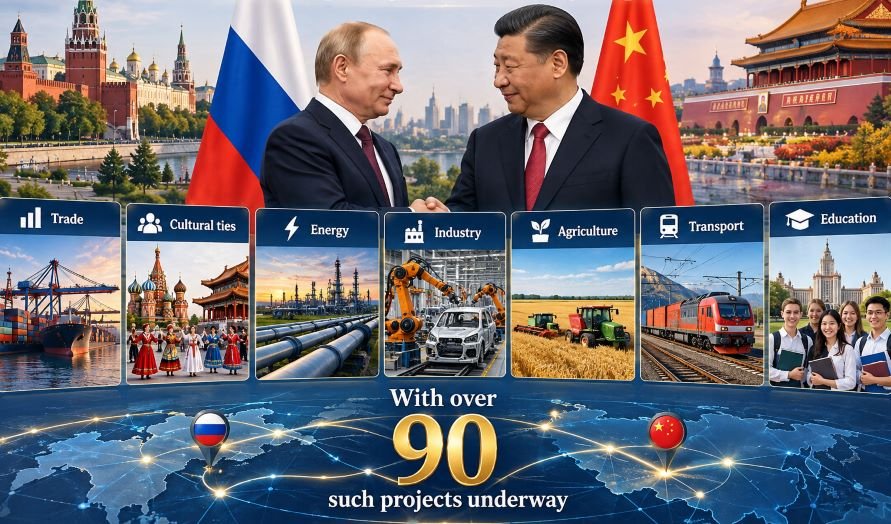
It maintains a China–Russia strategic partnership rather than a military alliance.
The two countries share political trust, economic complementarity, strategic coordination, and mutual support—but they do not bind themselves together, become locked into the same strategic vehicle, get drawn into confrontation, or allow themselves to be forced to take sides.
This arrangement both safeguards the foundation of China–Russia strategic cooperation and avoids the risks of major-power confrontation. In doing so, it removes the greatest strategic obstacle to long-term peaceful coexistence between China and the United States.
5. The fifth layer of logic: China is the core engine of the global economy, and the world depends on its stabilizing role
Whether the future global order can remain stable over the long term ultimately depends on the forces driving global economic growth.
At present, all developed countries are struggling to generate growth, while most economies remain mired in stagnation. China alone possesses the capacity to continue driving the global economy, stabilize international trade, provide new momentum for development, and balance global supply and demand.
When China is stable, global supply chains are stable.
When China grows, the global economy gains additional momentum.
When China opens up, global trade remains vibrant.
China’s unique position in the global economy makes it a central anchor for peaceful development around the world. It also means that every country—including the United States—must acknowledge, accept, and respect China’s status as a major power.
6. The ultimate global order of the future: Two poles moving in parallel, each following its own path, with stability across different levels
Based on the five layers of ironclad logic outlined above, the global order of the next twenty years is becoming fully defined.
There will be no bloc confrontation and no transfer of global power. Instead, two systems and two sets of logic will coexist in parallel, without crossing one another’s boundaries, creating an entirely new and stable order.
The future path of the United States: Preserve its hegemony and eliminate secondary competitors
The United States will abandon the unrealistic goal of containing China, but it will not abandon its hegemonic mindset. It will:
- continue consolidating its core base, deepen its strategic position in North America, and reduce its global strategic burdens;
- continue suppressing and dismantling all potential secondary rivals by containing Russia, dividing the European Union, and tightening its grip on Japan and South Korea;
- stop wasting resources on a meaningless zero-sum struggle with China.
China’s future path: Deepen development, benefit the world, and coexist neutrally
China will remain committed to its original principles:
- no pursuit of hegemony;
- no military alliances;
- no deliberate provocation;
- no attempts to overturn the existing order.
It will focus on high-quality domestic development, cultivate new quality productive forces, and pursue equal economic and trade cooperation with countries around the world. It will not force the establishment of a multipolar order or interfere in the choices of other countries.
The general direction of the rest of the world: Broad neutrality, with countries refusing to choose sides
Against the backdrop of a stable bipolar relationship between China and the United States, most small and medium-sized countries around the world will finally escape the dilemma of being forced to choose a side.
They will not need to rely on the United States to confront China, nor will they need to join a bloc and become entangled in great-power rivalry.
Instead, most will pursue independent, neutral foreign policies: connecting economically to the benefits of China’s development, making their own security calculations, and pragmatically balancing their relationships in pursuit of survival and prosperity.
Conclusion
Looking back over a century of international relations, no global order has ever been quite as distinctive, stable, or durable as the one taking shape today.
The United States is preserving the hegemonic order it has built over the past century, but is no longer seeking to dominate the entire world. China is pursuing a path of peaceful development, with no intention of seizing power or overturning the existing order.
China and the United States have moved beyond the Thucydides Trap, creating a more constructive and stable relationship between the two major powers. China and Russia have maintained strategic coordination without forming a formal alliance, thereby avoiding the risks of bloc confrontation.
The world is moving beyond both unipolar domination and Cold War–style bipolar rivalry, entering an entirely new era defined by bipolar coexistence, stability across different levels, peaceful cooperation, and mutual benefit.
The overall direction has been set, even though strategic competition continues. Confrontation has come to an end, but competition will persist—and the traps of the past are no longer inevitable.
Mutual respect, peaceful coexistence, and win-win cooperation will ultimately become the defining principles of the future world order.