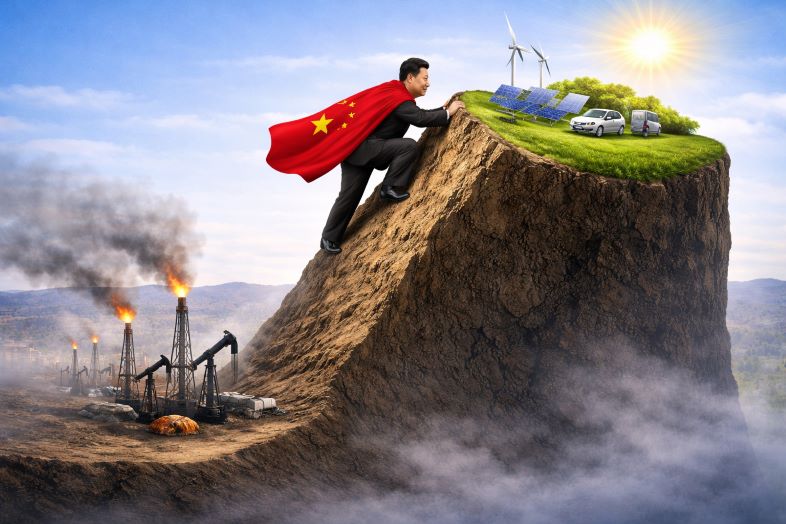
While other Asian economies rush to conserve energy, China possesses vast reserves of oil, gas, and coal, as well as alternative energy sources such as wind and solar, to fuel the country’s modernization process toward “high-quality development,” a concept championed by Xi Jinping. Beijing has built an energy security architecture based on resource redundancy and leadership in green technologies. With the closure of Hormuz and the Gulf states under attack, every importing country will do what is necessary to eliminate oil from its energy mix. It is therefore likely that China will rapidly replace oil-exporting countries as the primary provider of global energy security. China would not simply sell energy, but also the means to produce it: photovoltaic plants, green hydrogen infrastructure, and storage systems. This would transform Beijing into the new geopolitical pivot: no longer a “hungry consumer,” but the architect of global energy resilience.
China is best placed to address the global energy crisis
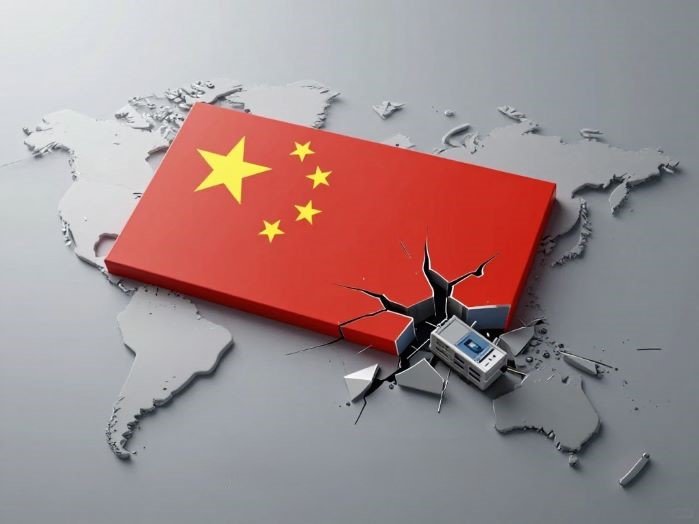
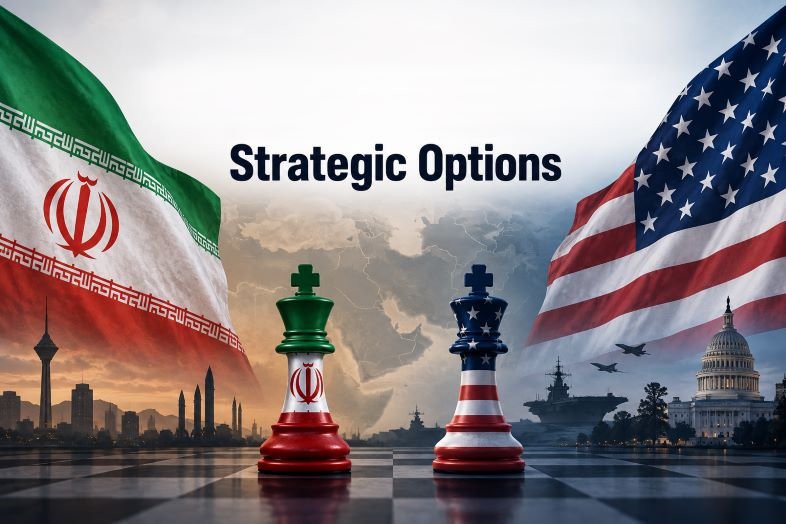
Experts and analysts agree that in the short term, Russia is the biggest beneficiary of the US-Israeli war against Iran, as it stands to make a huge profit from soaring oil prices that will help finance its war against Ukraine. At the same time, many observers point out that the war is either harming or benefiting China. Some argue that China has “a lot to lose,” that the war is “destabilizing China and its ambitions,” or that “Xi Jinping’s geopolitical chessboard is starting to collapse.” Others argue that the war “could help China,” that “China is benefiting from Trump’s war,” or that “Beijing could emerge as the silent victor.” This is a complex issue involving several factors, some favorable to China’s global agenda and some unfavorable.
A careful analysis reveals that the war has an overall negative impact on China, but not significantly. However, analyzing the global energy transition, framed in the context of the geopolitical crisis in the Persian Gulf and the battle for technological leadership, places China in a position of strategic exceptionality. An important point to reflect on is that China has been preparing for an energy crisis like the current one for years. China must secure its energy supply “in its own hands,” President Xi Jinping reportedly said during a visit to one of its vast oil fields in 2017. 2021 [1]. As Columbia University scholars Erica Downs and Jason Bordoff recently wrote in Foreign Policy, China has been preparing “for a world in which energy security is inseparable from geopolitics by electrifying its economy, securing domestic energy sources, accumulating stockpiles, and dominating clean-tech supply chains.” The US-Israeli war against Iran has plunged the Middle East into a disastrous conflict, with the Strait of Hormuz in the Persian Gulf – a major waterway for global trade through which nearly 25% of the world’s oil and liquefied gas supplies normally pass – virtually blocked and the region’s key energy infrastructure under attack.[2]
According to maritime monitoring consultancy Kpler, oil exports from the Middle East have plummeted 61% in recent weeks, destabilizing Asian countries, which depended on this region for 59% of their crude oil imports in 2025 and have found themselves having to scramble to conserve energy. But China appears to be in a very different situation than much of the continent. Its energy system possesses “significant reserves,” Michal Meidan, head of China energy research at the Oxford Institute for Energy Studies, an independent think tank, explained in a recent paper: from enormous reserves of oil and liquefied natural gas (LNG) to a robust domestic supply, which includes alternative energy sources such as wind, hydropower, and solar. China, which typically imports about half of its crude oil needs from the Middle East, is not as exposed as other Asian economies. “While it represents a very large percentage, it is small compared to that of Japan, India, or Korea,” Meidan said. Japan, for example, sources about 95% of its oil from this region.
Despite the war, Iran has continued to export oil to China [3], its main buyer. According to Kpler estimates, Chinese imports of Iranian crude decreased only marginally, from 1.57 million barrels per day in February to 1.47 million barrels per day in March. Meanwhile, Chinese ships operated by state-owned companies are attempting to navigate the region. The supertanker Kai Jing, for example, diverted its route to load Saudi crude at a Red Sea port earlier this month, as reported by Chinese media Caixin , and is expected to dock in China in early April. And even if Beijing were to face a supply crisis from abroad, it has quietly accumulated an extraordinary stockpile to mitigate the repercussions of a major shock. Beijing does not disclose the size of its oil reserves, and estimates vary widely. However, it is widely believed to have a significant amount: approximately 1.4 billion barrels (about six months’ worth of imports), according to Columbia University’s Center on Global Energy Policy. After the war began, Beijing ordered its refineries to halt exports. At the same time, the Chinese state has sought to reduce its economic dependence on fossil fuels. According to the International Energy Agency , more electric and hybrid vehicles are sold in China each year than in the rest of the world. The surge in oil prices, caused by the war between the United States and Israel against Iran,
It could accelerate the global adoption of electric vehicles , an industry that helped China surpass Japan to become the world’s largest car seller last year. [4] China’s renewable energy sources have expanded rapidly in recent years, reducing reliance on fossil fuels. Energy think tank Ember estimates that wind, solar, and hydropower will generate about 31% of China’s electricity in 2024. In 2025, China installed 446 gigawatts (GW) of new renewable capacity, more than all the rest of the world combined, reaching a total installed capacity of more than 2.34 TW at the end of the year. By early 2026, China’s renewable energy sector—along with hydropower, the “three new sectors”: solar, batteries, and electric vehicles—had become a key pillar of its economy, contributing 11.4% of the country’s GDP and 90% of investment growth in 2025. By February 2026, China’s clean energy capacity had reached 52%, surpassing its fossil fuel capacity for the first time. China is now a world leader in renewable energy installations, investments, and production. [5]
But the longer the crisis in the Persian Gulf drags on, the more complicated—and painful—it becomes. No country is immune. According to Meidan, releasing energy reserves is “easier said than done,” and China’s Strategic Petroleum Reserves mechanism has only been tested once. “While another, larger release from the Strategic Petroleum Reserves is not impossible, it would likely require a prolonged supply shortage and a significant price increase.” Independent Chinese refiners, the largest importers of Iranian crude, are the most vulnerable, even though they source from Russia, Brazil, and West Africa. Industrial and chemical sectors dependent on LNG also face the prospect of higher prices and supply shortages. “While a short-term disruption may be manageable, the prospect of prolonged disruptions and associated price increases is causing concern in Beijing,” Meidan said.
China is better positioned than most other countries to address the economic risks posed by the US-Israeli war against Iran. However, its energy supply, despite Xi’s vision, is not entirely in its hands. If weeks turn into months and the global energy market continues to show signs of weakening, its resilience will be severely tested, just like that of the rest of the world.
China will be the main provider of energy security globally
For years, a major concern among economists and experts has been the world’s ability to absorb Chinese production. They have argued that the world simply cannot absorb further exports from China. China raised the alarm again after its trade surplus for 2025 grew 20% year-on-year, reaching $1.2 trillion, in open defiance of Trump’s tariffs. Chinese exports in 2025 increased by 5.4%, while imports, already low, declined marginally. The 20% drop in exports to the United States was more than offset by growth in all other markets, particularly in the Global South, with exports to ASEAN and Africa increasing by 13% and 26%, respectively. This growth trend continued in January and February 2026. Data show a 22% increase in Chinese exports in dollar terms (19% in renminbi terms). Exports to the EU, ASEAN, and Africa increased by 25%, 27%, and 47%, respectively. It’s safe to say that concerns about the world’s ability to absorb Chinese production are now irrelevant. The war in the Middle East marks the end of the oil era.
With the Strait of Hormuz closed and the Gulf States under attack, every oil-importing country will do everything possible to eliminate oil from its energy needs, even if Iran were to relent and reopen the Strait tomorrow. Trust has been shattered. The damage is done [6], a world leader in the production of electric vehicles, batteries, solar panels, wind turbines, nuclear reactors, electric motors, ultra-high-voltage power lines, and more, will rapidly replace oil-exporting countries as the primary provider of global energy security. With Gulf oil dwindling, energy security is no longer measured in barrels, but in electrification capacity, and in this scenario, China becomes the inevitable partner for obtaining technology, components, rare earths, critical materials, and technical standards. It is with this in mind that China has also offered the “rebel province” Taiwan a “peaceful reunification” under the banner of energy security. [7] Chinese exports of products related to clean energy technologies are growing rapidly. Thanks to the expansion of production in the world’s leading manufacturing hub, solar energy has been recognized by the International Energy Agency as providing “the cheapest electricity in history” and is now accessible in many countries in the Global South. Many African countries have imported large quantities of solar panels.
Electric vehicles are starting to be purchased even in places where no one predicted an EV breakthrough last year, and perhaps not even this decade. China’s advances in battery technology—energy density, cost, and charging times—have broken oil’s monopoly on transportation (gasoline for cars, diesel for trucks, kerosene for jet fuel, and “bunkers” for ships). [8] This is while oil did not hold a monopoly on electricity, because it has always been able to be generated indiscriminately and redundantly: coal, nuclear, hydroelectric, natural gas, solar, wind, geothermal, biofuels, and even oil. Electricity can be generated from anything that burns, anything that flows (water and wind), by splitting atoms, or by capturing solar energy. All the problems associated with owning an electric vehicle have been eliminated. Battery prices have dropped 90% in the last 15 years. BYD’s latest models have a range of 1,000 km with charging times of 5-10 minutes. NIO has battery swapping stations throughout China. Finally, electric vehicles with over 500 horsepower—once the preserve of luxury sports cars—are now common in mid-range sedans and SUVs.
Similarly, solar panel costs have dropped 85% in the last 15 years, thanks to increased photovoltaic efficiency and, more importantly, automation and the large-scale expansion of production by Chinese solar companies. Solar panels (a relatively “low-tech” technology) could become to energy security what drones are to warfare. Thanks largely to solar energy, China’s CO2 emissions peaked a couple of years ago, well ahead of its 2030 target. China is on track to become carbon neutral by 2040, 20 years ahead of its 2060 target (see here ). Approximately 45% of the world’s oil (48 million barrels per day) is refined into gasoline for cars. Another approximately 30% (32 million barrels per day) is processed into diesel fuel for trucks. All of these barrels will be under intense market pressure due to China’s advances in batteries, electric vehicles, and solar power (supported by wind, nuclear, hydropower, and power transmission). Global initiatives to diversify transportation and reduce dependence on oil accentuate the urgency of the situation.
In China, electric vehicles have already captured over 50% of new car sales. Chinese EV production has increased more than 10-fold in the last five years and about 50-fold in the last ten years. Adoption has been lower in other markets, where governments have not shown sufficient urgency and support for the transition. Nonetheless, Chinese EV exports have increased 15-fold in the last five years, reaching 343,000 units in 2025. Growth will undoubtedly accelerate, as the United States, Israel, and Iran demonstrate how easily the oil market can be disrupted. An EV is three to four times more energy efficient than a car with an internal combustion engine, a device that suffers from heat loss, friction, and idling losses. Production costs in China have halved the price of EVs compared to “equivalent” internal combustion engine cars sold in the United States and Europe. With oil prices threatening to double from the pre-war $75 a barrel, the numbers add up. Oil-importing countries will now invest heavily to further break the oil monopoly in the transportation sector. Thanks to Chinese electric vehicle and battery technology, low production costs, and an endless variety of models, the adoption of electric vehicles no longer entails disadvantages but rather offers numerous advantages: from lower purchase prices to lower operating costs, from significantly greater acceleration to sophisticated software solutions.
China is also aggressively promoting the use of electric vehicles in road freight transportation, both short- and long-distance. No longer tied to oil, transportation can draw energy indiscriminately. Anything that burns. Anything that flows. You can split atoms. But if you do the math right, the cheapest, fastest, and most scalable energy source today is solar. All of this will accelerate China’s reversal of the Lucas [9] paradox —a decades-long economic anomaly in which capital flowed from poor to rich countries, while developed economies ran trade deficits and developing economies tightened their belts to lend to wealthier customers. This violation of the classical laws of economics—according to which capital should flow from rich to poor—is now being corrected, as China has become not only rich, but also the richest economy ever. Measured correctly, China’s manufacturing output is greater than that of the United States, the European Union, India, Japan, the United Kingdom, and Russia combined (see here and here).
The Lucas Paradox is an inevitable consequence of history. Over the past few centuries, the world’s most precious resources—the North American landmass (including Australia and New Zealand)—have, by whatever means, ended up in the hands of the Anglo-Saxon Empire (first the British, then the Americans). At the same time, China, historically the world’s most productive civilization (see here ), has suffered an embarrassing century-long decline (the “century of humiliation” after the Opium Wars). The correction of this historical anomaly over the past 40 years has once again transformed China into an economy capable of generating enormous surpluses, whose electric vehicles, batteries, 5G equipment, solar panels, engineering and construction companies, and various manufactured goods pour into the world as silk, porcelain, and tea did centuries ago. While China traded its surplus goods for the Anglo-Saxon Empire’s surplus goods, its trading partners are now highly diversified, with over half of its exports going to Belt and Road countries, largely economies from the Global South.
The Belt and Road is nothing more than a modern revival of China’s ancient tributary system, without the degrading relics like kowtowing. While the United States’ “rules-based international order” has attracted goods and capital from around the world, China’s “shared future for humanity,” by contrast, is pouring goods and capital to every corner of the planet. 2025 was a banner year for the Belt and Road Initiative, with deals worth $210 billion, nearly double previous records.
The world now stands at a crossroads. The US empire is once again engaged in a war of highly questionable justification. This war has revealed that oil—once the spice par excellence of the global economy—is unsafe and unreliable, subject to the whims of farcical dictators, ruthless religious states, and inept, demented presidents. While a short- or medium-term solution to the Strait of Hormuz is likely to emerge, oil as a raw material is destined to disappear in the long run. Technology, economies of scale, and automation are poised to make China the world’s largest energy exporter, thanks to electric vehicles, batteries, and solar power. And the Global South stands to benefit the most, as China offers an alternative to oil dependence, a century-long obstacle to development and industrialization.
Footnotes
[1]. China has succeeded in increasing its oil production over a seven-year campaign, reaching a record level last year thanks to intensive drilling in aging fields, a booming offshore industry, and nascent shale oil production. According to industry experts , production is expected to stabilize just below last year’s record of 4.32 million barrels per day for another decade. This level is considered by the industry as a “stabilizing factor” for national security, as it ensures the basic needs of manufacturing and military production. Beijing’s plan for 2026-2030 confirms this vision, calling for maintaining production at 4 million barrels per day. This means China will remain heavily dependent on imports, which last year reached 11.55 million barrels per day, even as its oil demand peaks due to the electrification of the shipping fleet and slowing economic growth. However, when it comes to gas production, China continues to target growth, with its 2026-2030 plan forecasting steady growth through 2030, although it did not provide specific figures. The plan also calls for accelerating “preliminary work” on the Power of Siberia 2 pipeline, which links Russian gas fields with northern China via Mongolia.
[2]. In economic terms, the Strait of Hormuz points east. In 2024, 84% of the crude oil and liquefied gas transiting the strait was destined for Asian markets. China, India, Japan, and South Korea combined accounted for approximately 70% of all crude oil flows through the Strait of Hormuz. This is where the repercussions are felt most immediately and intensely. But the blockade of the Strait of Hormuz does more than just turn off the global oil and liquefied gas supply. While oil and gas remain the foundation of the Gulf region’s wealth, over the past decade its energy companies have transformed into highly diversified industrial giants, the linchpin of a vast production and trade system that encompasses chemical plants, fertilizer complexes, shipping lanes, and container ports. This structural transformation has deeply integrated the Gulf into the global economy , as Gulf chemicals now fuel everything from factories in China to farms in South America. Thus, disruptions in the region have knock-on effects on industries and food systems across every continent. Countries in the Global South will likely be hardest hit by the Strait of Hormuz crisis, amidst energy and food shortages. With any luck, the war won’t trigger a recession, but soaring energy and food prices will increase the cost of living. This is “collateral damage” from what initially appeared to be a decisive military attempt by the United States and Israel to bring about immediate regime change in Iran and destroy its military and nuclear capabilities, but which instead turned into a protracted conflict with a far more ambiguous geopolitical outcome. The initial prediction that the attacks and the death of Ayatollah Ali Khamenei could trigger regime change proved to be a miscalculation, as this did not materialize in Tehran: Iran responded with large-scale attacks in the region, without any Iranian declarations regarding its intention to end its missile or nuclear programs. Furthermore, it continues to export millions of barrels of oil, while maritime traffic is paralyzed , allowing passage only to Chinese ships or conditioning flows to transactions exclusively in yuan , turning the Hormuz crisis into an economic battlefield. Therefore, contrary to what many believe, China appears to be profiting economically and militarily from the Hormuz crisis, while the crisis continues to worsen in Western countries.
[3]. It is important to understand that the relationship between China and Iran has never been primarily driven by ideology. Instead, it has developed through economic and military cooperation largely focused on energy trade and missile capabilities. In 2021, Xi Jinping signed a 25-year strategic partnership that committed China to investing $400 billion in Iran on the condition that Iran would guarantee the flow of oil under all circumstances, importing over 500 million barrels of oil by 2025. That same year, Iranian officials claimed to have concluded an agreement with Beijing to import CM-302 supersonic missiles, capable of striking US aircraft carriers , as they are believed to be capable of flying beyond radar. Recent developments during the Hormuz crisis appear to strengthen this relationship. According to some sources, Chinese and Iranian officials quickly engaged in talks aimed at ensuring the continued flow of oil supplies to the Chinese market and financing Iran’s military response. Some sources suggest that China has provided Iran with attack drones and military intelligence to maintain their “friendship.” However, China has clearly adopted a diplomatic stance that keeps it outside of any military dimension. This absence has been interpreted by some analysts as evidence that China does not possess sufficient military power to counteract events affecting its allies around the world. This interpretation reflects a misunderstanding of China’s long-term geopolitical strategy : strengthening its position while allowing Western rivals to wear themselves out. The fact is, as Aaron Glasserman, an analyst at the University of Pennsylvania, summarizes : “Iran needs China, but China does not need Iran.” Regime change in Tehran would not pose a serious problem for Beijing. The two countries share a common opposition to the US global agenda, but their bilateral relations have so far been based on pragmatic rather than ideological assumptions. Iran’s role as an energy supplier has been significant, accounting for about 13% of China’s oil imports. China has purchased Iranian oil and gas at discounted prices, saving billions of dollars on its annual fuel import bill. However, a short-term closure of the Strait of Hormuz, through which about half of China’s imported oil and 30% of its imported natural gas transits, is manageable for Beijing.
[4]. Production of alternative-energy vehicles in China has surpassed 16 million units, and the number of electric vehicle charging infrastructure has surpassed 20 million. The retreat of Western automakers from electric vehicles threatens to condemn them to irrelevance. Stellantis, the group that owns Peugeot, Vauxhall, and Fiat, reported a €22 billion loss in February, while Volkswagen, Europe’s largest automaker, which owns Audi, Porsche, and Škoda, made a similar move last year. The two groups control over 40% of the European automotive market. In the United States, where 100% trade barriers were erected to stem the wave of Chinese electric vehicles, Ford suffered a $19.5 billion loss, abandoning several upcoming electric models and a battery project. European manufacturers blame this retreat on weak consumer demand. The theory is that high costs and inadequate charging infrastructure have slowed electric vehicle sales, which accounted for only a fifth of new cars sold in Europe last year. Western automakers are making a major strategic mistake, abandoning electric vehicles and refocusing on combustion engines just as oil prices are skyrocketing again. Experts say the future of the sector—and that of tens of millions of jobs—could be at risk. And the threat comes from China. Affordable, well-built electric cars from brands like BYD and Leapmotor are finding buyers across Europe. By 2025, BYD is expected to surpass Tesla to become the world’s largest seller of electric vehicles. Chinese brands are rapidly gaining market share once dominated by companies like Volkswagen, Ford, Peugeot, and Renault. In the United States, the setback has been even more drastic. Donald Trump has effectively undermined the country’s electrification program, eliminating consumer tax incentives and dismantling exhaust emissions regulations , which he calls a scam. The war in Iran makes the West’s retreat from electric vehicles look even more shortsighted. Soaring oil prices have already spurred renewed interest in electric cars, after gasoline and diesel prices skyrocketed across Europe. German car dealer MeinAuto said online traffic related to electric vehicles has increased 40 percent since the war broke out.
[5]. China accounts for approximately 31-40% of global clean energy investment. In 2024, it produced approximately 80% of the world’s photovoltaic modules and battery cells, and 70% of electric vehicles. Solar generation capacity stands at 1,200 GW, reaching the 2030 targets six years early. Wind generation capacity stands at 640 GW. Furthermore, China connects approximately 80 GW of new wind power to the grid annually. Finally, hydropower generation is 442 GW. Under the recently adopted 15th Five-Year Plan (2026-2030) for national economic and social development, China is shifting its focus from “megawatts” to “megasystems” to create an electrified and decentralized energy system, inherently less vulnerable to attacks on large distribution infrastructure. This requires reinventing the entire electrical architecture: advanced heating systems to electrify heavy industry, AI-powered smart grids to balance supply and demand, long-term energy storage systems to stabilize renewable generation, and carbon removal technologies to offset residual emissions. Significant investments are being channeled into smart grids and ultra-high-voltage (UHV) lines to connect remote solar and wind farms in the West to cities in the East. Additionally, battery storage capacity increased by 69% by early 2025 to help manage the variability of solar and wind power. Finally, new priorities include green hydrogen, nuclear fusion , and sustainable aviation fuels. While renewable energy is booming, China continues to allow the construction of new coal-fired power plants to ensure energy security and grid stability. Despite decarbonization goals, China holds the world’s largest coal reserves. In the event of a disruption to maritime hydrocarbon supplies, Beijing can activate massive domestic production to ensure industrial continuity. However, the share of coal-fired power generation has steadily declined, from nearly 80% in the mid-2000s to around 70% in the mid-2010s, and further to 54.8% in 2024. This relative decline is accelerating. In 2024, electricity generation from clean sources increased by 15.4% year-on-year. Despite rapid growth in electricity demand ( 6.8% compared to 2023), electricity from clean sources met almost all of the demand ( 84.2%).) additional demand. Even under conservative assumptions, China’s coal-fired power generation could soon peak and enter a phase of structural decline. If clean electricity—which includes hydroelectric, solar, wind, and nuclear—maintains its average annual growth rate from 2021 to 2024, while solar expands at a moderate pace of 25% annually, clean electricity would be able to meet even high demand growth of 6.5% annually by 2030. Ember’s analysis indicates that, if not for abnormal weather conditions in 2024, clean power generation would have already met 97% of demand growth that year.
[6]. The de facto closure of the Strait of Hormuz isn’t just another oil shock. It’s a structural disruption in the global energy system, arguably the most serious in modern history. International Energy Agency Director General Fatih Birol called it “the greatest challenge to global energy security in history,” worse than all the oil shocks of the 1970s combined. He’s referring to 1973, when several Arab oil producers imposed an embargo on the United States and other Western states in response to their support for Israel. Prices quadrupled within months, helping to trigger recession, inflation, and the lingering belief that the Middle East possessed an oil weapon capable of bringing the global economy to its knees. Birol warned that restoring normal flows could take six months or more. This assessment reflects a simple reality: when a strategic hub that transports about a fifth of the world’s oil and about a fifth of global LNG is disrupted, the consequences are systemic, not cyclical.
[7]. Taiwan, which used to get a third of its LNG from Qatar and does not source energy from China, said it had secured alternative supplies for the coming months , including from the United States, the island’s main international backer.
[8]. In the maritime industry, the term “bunker” refers to the fuel and lubricating oils used to power a ship’s engines and machinery. The process of refueling a ship is known as bunkering.
[9]. The Lucas paradox is the economic observation that capital does not flow from rich to developing countries, despite the latter having a lower capital endowment per worker and, theoretically, much higher potential returns. According to standard neoclassical theory, capital should move to where it is scarce to exploit high marginal returns, but actual data show the opposite or much slower dynamic than expected. In the original 1990 article, “Why Doesn’t Capital Flow from Rich to Poor Countries?” , Robert Lucas identified several factors that impede this flow: 1. technological differences: productivity in poor countries is lower due to less advanced technologies, making investment less profitable than it appears; 2. human capital: lack of education and specialized skills reduces the effectiveness of invested physical capital; 3. political and institutional risk: government instability, corruption, and weak property rights discourage foreign investors; 4. imperfections in capital markets: information asymmetries and high transaction costs limit access to international finance.