Hong Kong has long held the position of being at the centre of international finance, a position that is expected to grow stronger as it strives to become the leading offshore Renminbi (RMB) hub in accordance with China’s 15th five-year plan.
Financial Secretary Paul Chan Mo-po has unveiled plans in his latest Budget speech which will see Hong Kong as the marketing tool for launching the RMB on the world’s stage. Hong Kong will become the platform for the issuance of RMB bonds on a regular basis by tapping emerging markets to bring in more cross-boundary RMB transactions to the city.
A major incentive to use the RMB was launched by the Hong Kong Monetary Authority (HKMA) earlier this month when it increased the RMB Business Facility (RBF) to RMB 200 billion to provide banks with a stable and relatively low-cost source of RMB funds.This facility enables banks to offer RMB financing to their corporate clients, thereby promoting the wider use of the RMB in the economy. RBF channels onshore RMB liquidity into offshore markets, with Hong Kong serving as a hub for these transactions.
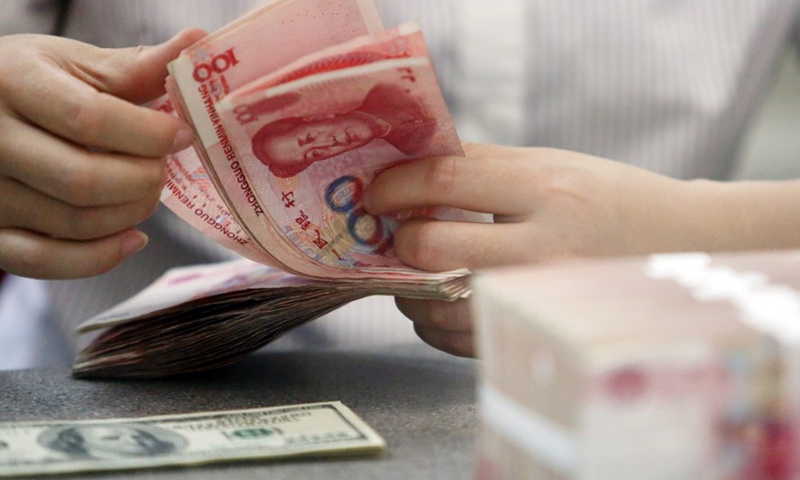
With China’s Belt and Road Initiative (BRI) spreading throughout Asia, the Middle East and Africa there is now less dependency on the US dollar as the international currency for trade and a stronger dependency for the yuan, thus enhancing China’s influence in the global financial system.
As of late February, the yuan is trading around 6.85–6.89 per US dollar, reflecting a strengthening trend for the yuan and a weakening dollar due to shifting trade policies and interest rate environments. The decline in the US dollar has been driven by expectations of Federal Reserve rate cuts and uncertainty surrounding US tariffs.
Offshore RMB hubs are now established across Asia, Europe, North America and Australia and include places like the USA, Canada, Australia, Hungry, France and Germany to name just a few. But Hong Kong is still the leading hub, attracting some 70 per cent of all RMB deposits. Dim sum bonds – yuan-denominated notes issued outside mainland China – have become a mainstream financing tool as tech firms and global companies tap deeper yuan liquidity amid a stronger currency.
Under the 15th five-year plan there are a number of recommendations which the financial secretary has adopted in his budget to fall in line with Hong Kong’s first five-year plan. Hong Kong will promote more convenient foreign exchange quotations and transactions between the RMB and other regional currencies to reduce transactions costs; enrich mutual market access by exploring with the mainland how to expedite the issuance of mainland government bond futures in Hong Kong, plus the inclusion of real estate investment trusts (REIT) in the scheme.
Hong Kong’s financial market has performed strongly, and its financial system remain robust. Chan said the city will continue to consolidate its existing strengths, tap into emerging fields, strengthen market systems and risk control and deepen financial cooperation in the Greater Bay Area (GBA). By doing so, Hong Kong will enhance its role as an international financial centre on all fronts and contribute to the national strategic goal of “accelerating China’s development as a financial powerhouse”.
To better align with the 15th Five-Year Plan’s deployment for the RMB internationalization, Hong Kong must further deepen and broaden its RMB financial market, gradually developing a toolbox of RMB risk management tools comparable to those of the US dollar and euro in terms of interest rates, exchange rates, and commodities, thereby enhancing the confidence of domestic and foreign institutions in using these tools with peace of mind and ease of use.
The Security and Futures Commission (SFC) and the HKMA are actively implementing the “Roadmap for the Development of Fixed Income and Currency Markets” announced last year. It includes boosting issuance in the primary market, enhancing liquidity in the secondary market, and expanding offshore RMB business. The electronic bond-trading platform will also be launched in the second half of this year, thereby reinforcing Hong Kong’s position as a global fixed income and currency hub.
The budget implements various effective measures outlined in the Chief Executive’s (CE) Policy Address. The CE, John Lee Ka-chiu, said the Budget leverages Hong Kong’s unique advantages of being connected to both the mainland and the world under the “one country, two systems” principle in actively pursuing economic growth, advancing development, improving people’s livelihood, seizing new development opportunities, and better integrating into and serving the overall national development.
Overall, the Budget was upbeat, highlighting Hong Kong’s role in international finance markets. It paves the way for a bright future for Hong Kong by following guidelines in a five-year planning process.
Currently, the Hong Kong dollar is pegged to the US dollar at 7.75-7.85 range, but as the US dollar weakens, so does the Hong Kong dollar. Maybe, just maybe, in the not-too-distant future it will be time for Hong Kong to change its peg to a more stable currency…such as the RMB.