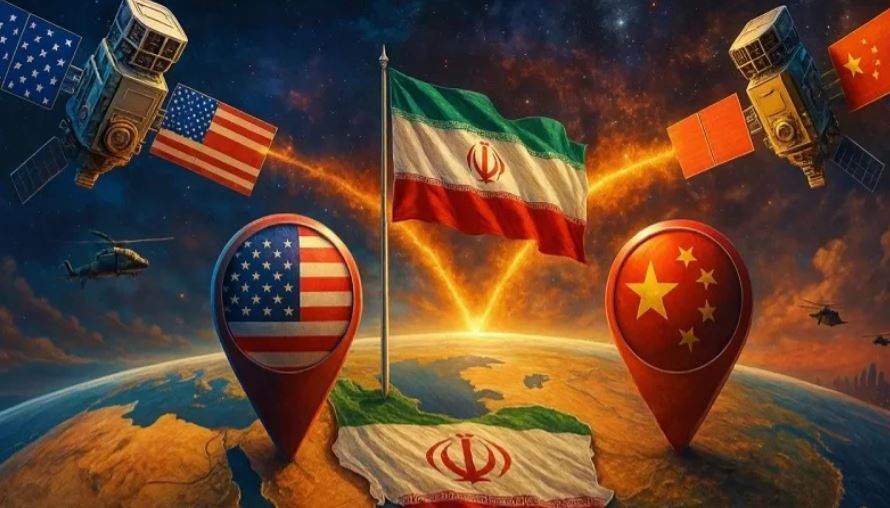
In addition to the important energy link, the war imposed on the Islamic Republic revealed the cooperation between Beijing and Tehran in intelligence and technology, which represented one of the facets of Iranian operational effectiveness in the context of war.
Iranian Foreign Minister Seyed Abbas Araqchi visited Beijing on September 16 and met with his Chinese counterpart, Wang Yi. This was his second visit to the Asian country since the start of the conflict in February, following his first visit in May.
The meeting between the two diplomats falls within the framework of political dialogue and strategic cooperation mechanisms between Tehran and Beijing.
China has urged Iran and the United States to revive the Islamabad Memorandum of Understanding, to take effective steps to reopen the Strait of Hormuz, in order to keep international shipping lanes safe and safeguard the stability of energy transport and supply chains.
Abbas Araghchi stated that his country does not wish for the conflict to continue and hopes to resume diplomatic channels, safeguarding its rights and interests. He also mentioned that Iran considers the Memorandum of Understanding still valid and that they reached an agreement with Oman for the opening of the Strait of Hormuz, but that the United States must fulfill its commitments.
Beijing has repeatedly rejected Washington’s unilateral sanctions against Tehran and threats to apply measures against countries that do not join in those actions.
The war imposed on February 28 against the Islamic Republic has been a watershed moment for Western Asia, producing a geopolitical realignment, but also because it has revealed the relationship of cooperation and integration that Tehran and Beijing maintain, not only in energy, but also in the field of intelligence and technology that has allowed the Persian country an operational effectiveness in military and electronic warfare that has challenged “Western superiority”, and that has given a new nuance to modern warfare.
Commercial link: the energy sector
China and Iran have significant trade ties, particularly in the energy sector, and share a mutual distrust of US hegemony. However, the relationship between the two countries is asymmetrical, given that Tehran is far more dependent on Beijing than vice versa.
We are talking about approximately one-fifth of the oil that China imports comes from Iranian territory, transported mostly clandestinely.
And since the United States and Israel began their war in late February, between 85% and 90% of Iran’s crude oil exports have gone to China, making the Asian country Tehran’s main trading partner.
It should be added that more than half of the oil China imports comes from countries in the West Asian region. For this reason, Beijing is watching the military escalation in the Persian Gulf and the closure of the Strait of Hormuz with growing concern. Stability in the Gulf is vital for the Chinese.
Various sources stated that Iran was China’s second largest supplier of oil last year, second only to Saudi Arabia.
In 2015, the United States lifted most of its economic sanctions on Iran as part of a nuclear agreement, which China took advantage of by sending a considerable workforce to the Persian country and paving the way for many of its medium-sized companies to arrive in search of opportunities, making an exploratory tour of the Iranian economy.
Although the breakdown of the nuclear agreement during Donald Trump’s presidency hampered China’s economic ties with Iran, between 2015 and 2021, the Asian country was the largest direct or indirect trading partner and importer of Iranian oil.
The 25-year Strategic Partnership agreement signed between Iran and China was perceived as a threat by the United States, a direct challenge to the Western order.
For example, through the use of alternative mechanisms such as the Chinese national currency in oil trading and joint banking, China has demonstrated its ability to circumvent sanctions, one of the most important disciplinary mechanisms in the current international system. This is perceived as a major blow to the effectiveness of these impositions, the most powerful weapon the United States wields globally.
Comprehensive Strategic Partnership Cooperation Agreement for the next 25 years
The agreement, signed by Iran and China on March 27, 2021, marked a significant milestone by establishing a framework for collaboration in energy, infrastructure, security, and technological development. This includes Chinese investment in the Iranian economy and strengthening of strategic sectors such as telecommunications, transportation infrastructure, and defense technologies.
China’s alternative vision of modernization is being gradually introduced into various countries, the so-called underdeveloped ones; especially in the countries of Central Asia, the Indian subcontinent and Eastern Europe, and we can see this with the Belt and Road Initiative that was launched in 2013.
In this context, Iran’s strategic geopolitical position makes it a valuable ally for Beijing; the Persian country functions as a nerve center in the Belt and Road Initiative.
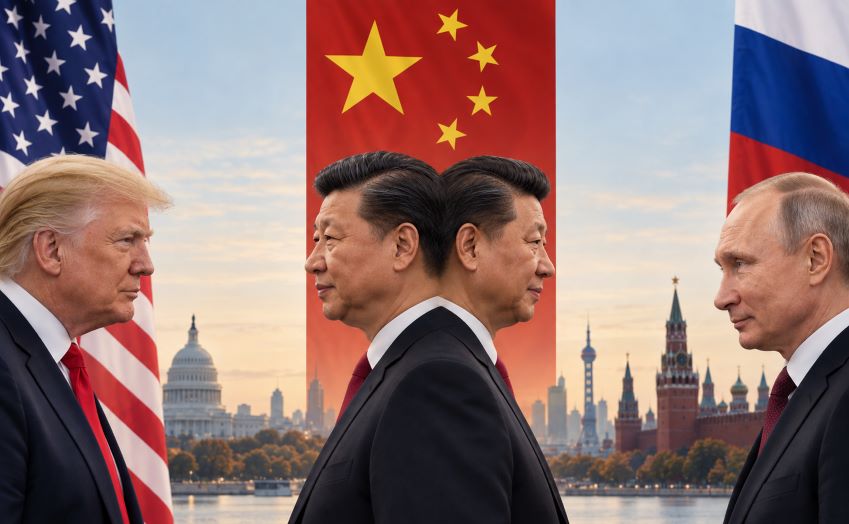
With the signing of the cooperation agreement between Beijing and Tehran, the foundations of the China-Russia-Iran axis were consolidated to confront the United States and the European Union.
Agreements and strategic frameworks between Iran and China:
- Comprehensive strategic alliance, 25-year plan. Signed in 2021; reaffirmed in 2025 – Long-term cooperation in energy, infrastructure, technology and security.
- 25-Year Cooperation Framework Project, 2020–2021. Large-scale investment proposals; long-term supply guarantees; classified implementation details.
- Military and security coordination (cybersecurity/electronic warfare/radar), 2025–2026. Strengthening Iranian digital sovereignty; participation of Chinese intelligence services and deployment of anti-stealth radars.
- Diplomatic commitment in defense matters (naval and joint exercises), 2023–2026. Joint naval exercises; coordination of intelligence and strategic signaling on multilateral platforms.
- Interests in advanced weaponry and air defense, 2025. Iran’s search for HQ-9, Chinese anti-stealth radars and deep strike missile technology.
Strategic cooperation in the context of war
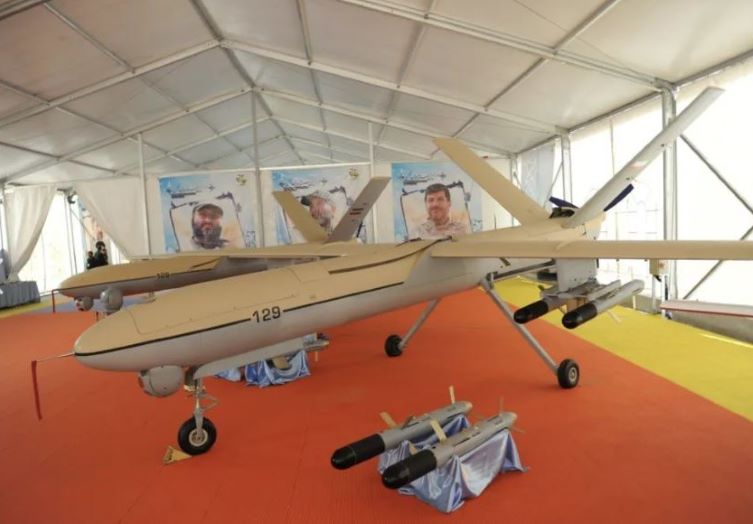
Iran’s ability to execute precise missile and drone attacks against specific Israeli targets and US military installations in the Gulf region, since the war began in February, demonstrates the existence of advanced targeting systems, satellite navigation and real-time intelligence networks, radar systems and electronic warfare technologies.
Although the Islamic Republic has been developing its own missile program for the past thirty years, many analysts focus on the strategic support provided by China.
The intelligence alliance between the Asian and Persian countries, in the context of the current war, encompasses four key dimensions: satellite intelligence, BeiDou navigation systems, advanced radar networks, and electronic warfare capabilities.
Space intelligence systems allow armed forces to monitor, track, and attack targets with unprecedented accuracy; therefore, satellites are fundamental to modern military operations.
The Iranian space program does not yet possess the capabilities of the major space powers. The Noor series of military and reconnaissance satellites, operated by the Islamic Revolutionary Guard Corps, is just one example of Iranian satellites, but they lack the necessary global coverage and advanced detection technologies.
China, on the other hand, possesses one of the world’s largest and most advanced satellite networks. The Yaogan reconnaissance satellites and the Jilin-1 commercial imaging network are capable of regularly taking high-resolution photographs and conducting SAR observations of vast areas of the planet.
Chinese satellites provide surveillance and intelligence for target location, while Iranian missiles and drones execute the kinetic attack. Combining space intelligence with missile forces represents a radical shift in how wars are fought today.
Regarding navigation systems , Iranian defense planners have sought alternatives to reduce their reliance on Western technology. Iran attaches great strategic importance to access to an alternative satellite navigation system.
Recent studies show that Iran has been increasingly using BeiDou navigation services in certain areas of its military infrastructure. This means its weapons systems can use Chinese satellite signals instead of the US-controlled GPS networks.
The BeiDou Satellite Navigation System (BDS) is China’s global satellite navigation and positioning network that provides accurate positioning, navigation, and timing services for both military and civilian users.
Regarding radar networks , the YLC-8B anti-stealth radar is a Chinese very high frequency (VHF) radar that is frequently mentioned in defense analyses. And according to reports, Iran, prioritizing the improvement of its radar coverage, has researched or used Chinese radar technologies capable of detecting stealth aircraft and integrating the radar data with its air defense system.
Electronic warfare is now a key element of modern military operations and consists of the use of operations in the electromagnetic spectrum to locate, intercept, or modify the enemy’s communications, radar systems, and navigation technologies.
Both Iran and China have been investing heavily in improving their electronic warfare capabilities, aware that better technology in this area can compensate for deficiencies in other sectors of their armed forces.
Teherán desarrolló su propia infraestructura de guerra electrónica, pero estas capacidades podrían mejorar aún más con el conocimiento tecnológico chino y llegar a contrarrestar las interferencias GPS occidentales, evitar el bloqueo de las señales de guiado de misiles e interferir con los sistemas de radar enemigos durante las operaciones militares.
Por ende, las fuerzas iraníes son más capaces de coordinar lanzamientos de misiles y operaciones con drones, incluso cuando las fuerzas estadounidenses e israelíes intentan interferir con sus sistemas de comunicación y navegación. Como resultado, la guerra electrónica y las redes de ciberataques se convirtieron en elementos importantes de la estrategia militar iraní.
Irán obtiene capacidades tecnológicas avanzadas y redes de inteligencia que potencian su eficacia operativa, mientras que China reafirma un aliado estratégico que le brinda seguridad energética, influencia geopolítica en la región y la oportunidad de analizar sistemas militares occidentales en escenarios prácticos.
Teherán: cae el mito de la superioridad tecnológica de Occidente
Irán se convirtió en enero de 2026 en el escenario donde colapsó Starlink, el sistema satelital de Elon Musk que Occidente presentaba como invulnerable. Fue neutralizado en un 80% sobre territorio iraní mediante una operación coordinada entre Rusia, China e Irán.
La situación comenzó como protestas de comerciantes en Teherán por la caída del rial iraní, pero derivó rápidamente en una operación de desestabilización con autoría sionista-estadounidense.
Los iraníes activaron el protocolo de emergencia limitando el acceso a internet para cortar la comunicación entre los agitadores y sus centros en Tel Aviv y Washington. Ante esto, Trump ofreció conectividad Starlink para mantener operativas las células desestabilizadoras. Entre 40.000 y 50.000 receptores habían sido introducidos clandestinamente desde las protestas de 2022 y especialmente tras la guerra de los 12 días de junio de 2025.
Pero el jueves 8 de enero, el tráfico de Starlink colapsó, gracias a la división del trabajo conjunta entre Irán, Rusia y China que pasó de lo retórico a lo operativo.
Los investigadores chinos de la Universidad de Zhejiang y el Instituto de Tecnología de Beijing estudiaron y entendieron la arquitectura de Starlink, para lo cual su solución fue no perseguir satélites individuales sino crear una cúpula electromagnética que cubra todo el territorio objetivo desde el aire.
Desplegando un millar de plataformas de interferencia en áreas sincronizadas volando a 20 kilómetros de altura y espaciadas, se inundó la banda de frecuencia Ku (la frecuencia que Starlink utiliza) con ruido suficiente para inutilizar los receptores en tierra.
The model was designed for Taiwan, but implemented in Iran. Russia provided the military-grade electronic warfare hardware: systems such as the Murmansk-BN, capable of jamming satellite communications at a distance of 5,000 kilometers, and the Krasukha-4, designed to blind reconnaissance satellites.
The operation worked due to several factors. First, Iran intensified its GPS signal jamming after the war with Israel in June 2015, seeking to hinder enemy drone operations. Starlink receivers rely on GPS for positioning and connection to the satellite constellation.
Second, Iranian authorities deployed geographically distributed mobile jammers, not concentrated in fixed points that SpaceX could identify.
Third, the sanctions prohibit Starlink from operating legally in Iran. Musk was unable to send software updates or adjust constellation settings to help Iranian users without violating U.S. law.
The neutralization of Starlink was not an end in itself, but part of a broader strategy that seeks to develop capabilities to resist cyber warfare, which the West has perfected as an alternative to direct military interventions.
Intelligence sharing between Iran, Russia, and China has intensified exponentially at all levels. But beyond information sharing, real operational cooperation is developing. Chinese and Russian technicians are advising on surveillance technologies, while Iranian experts are sharing lessons learned on economic resilience under total sanctions.
Foreign policy
During his last visit to Beijing, Abbas Araghchi noted that Iran attaches great importance to its relations with China and is willing to continue maintaining close exchanges at all levels, deepen practical cooperation, jointly address challenges, and promote the sustained development of bilateral relations.
Tehran is crucial to guaranteeing long-term oil supplies and ensuring uninterrupted maritime trade routes.
It is worth noting that Iran maintains a multilateral foreign policy that, instead of aligning itself with a superpower, seeks to maximize its gains by maintaining balanced and equally distanced relations.
Chinese Foreign Minister Wang Yi asserted that China’s policy toward Iran remains consistent and stable, and reaffirmed that his country has always upheld justice in the UN Security Council and on multilateral platforms, opposed the use of force, and safeguarded the norms governing international relations.
Wang also stated that “China is willing to strengthen communication and coordination with Iran and to promote new progress in bilateral ties.”
Amid the war imposed on the Islamic Republic and the escalation across the region, Chinese President Xi Jinping, during his visit to Egypt, put forward a four-point proposal for building a new security architecture in West Asia, based on a common, comprehensive, cooperative, and sustainable security vision. Wang added that the current situation has highlighted the shortcomings of the existing security architecture and that China welcomes constructive explorations undertaken by countries in the region in this regard.
Along the same lines, Araghchi expressed that Iran is also willing to engage in dialogue and consultations with countries in the region, establish and develop good neighborly and friendly relations, and work towards restoring peace and tranquility in the region.
He added that Iran welcomes and supports the four-point proposal on maintaining peace and stability in the region and the four-point proposal on promoting common security, put forward by Xi Jinping, and is therefore willing to strengthen cooperation with China in this context.
Cooperation and integration of technological ecosystems are transforming warfare
The technological and intelligence support that China provides to Iran is a form of cooperation that reflects a transformation in warfare, where success increasingly depends on integrated technological ecosystems rather than individual weapons platforms.
Intelligence networks, space surveillance, navigation systems, and cyber capabilities operate together to create a comprehensive operational architecture that supports modern precision warfare.
In general terms, this cooperation demonstrates how modern warfare depends more on the control of information than solely on military force.
Iran managed to increase the accuracy and effectiveness of its missile and drone attacks by relying on Chinese intelligence support for its military operations, even when its adversaries possess superior technology.
In this context, technological alliances between states can alter the strategic balance, even when one of the partners is not directly involved in combat operations. China has been very cautious about becoming directly involved in military conflicts in West Asia.
Future wars do not necessarily involve military confrontation; they could develop through indirect competition, proxy conflicts, and technological support to regional actors.
The indirect support Iran receives from China strengthens and reaffirms its position as an important partner in the region. Furthermore, technological collaboration gives China a strategic advantage, allowing it to increase its geopolitical power in the area.
Iran, for its part, is taking advantage of Chinese support to counter the military superiority of the United States and Israel in innovative ways.
From China’s perspective, collaboration with Iran also offers the opportunity to monitor and assess Western military capabilities in real operational contexts, gaining crucial information on the effectiveness of US missile defense systems, stealth aircraft, precision strike capabilities, and electronic warfare operations.
Electronic warfare has ceased to be a complement to conventional military operations and has become the battleground where the capacity to project power is defined in the 21st century. And it is then that empires discover that their supposed technological superiority can become their greatest weakness when they face adversaries willing to share knowledge and coordinate asymmetric strategies.
The alliance between Iran and China is based on broad geopolitical interests. Tehran is a key ally in the Belt and Road Initiative, a major energy supplier, and a crucial geopolitical counterweight to US dominance in the region.
This type of strategic cooperation is a feature of a shift towards a multipolar international system, where regional conflicts are increasingly linked to competition between great powers and technological alliances and intelligence-sharing networks are likely to become more important in shaping the balance of power in key geopolitical areas.