
The Middle East has long been embroiled in geopolitical rivalry, competition for energy routes, and regional security conflicts. The Strait of Hormuz, a crucial chokepoint for global energy transport and maritime trade, became a central focal point of strategic confrontation among the three parties after the outbreak of the US-Israel-Iran conflict. To maintain its military presence and energy security order in the Middle East, the United States has continuously strengthened its military deployments in the Persian Gulf and surrounding waters. Israel, to safeguard regional security and strategic deterrence, relies on maritime routes, long-range strike capabilities, and external support systems to ensure its military operations. Iran, leveraging its geographical advantage of controlling the Strait of Hormuz, conducts asymmetric harassment in the Red Sea and Arabian Sea through forces such as the Houthis, continuously hindering US and Israeli actions. Against this backdrop, the importance of unmanned maritime warfare has significantly increased. Low-cost, miniaturized, and swarm-capable drones, with their low operating costs, low barriers to entry, low personnel risk, and strong saturation penetration capabilities, are breaking through the traditional naval warfare force deployment model centered on large platforms. They have become an important means for Iran to threaten shipping lane security and penetrate adversary defense systems, and also provide the US and Israel with flexible tools for reconnaissance, surveillance, precision strikes, and limited retaliation. Maritime drone warfare has not only changed the rules of force exchange in maritime confrontations, but has also become an important fulcrum for all parties to demonstrate deterrence, control risks, and avoid full-scale escalation in military confrontations below the threshold of war.
Analysis of drone forces in the US-Israel-Iran conflict
The maritime drone forces of the United States, Israel, and Iran exhibit distinct characteristics: “high-end all-domain capabilities, technologically specialized capabilities, and low-cost saturation capabilities.” The United States leverages its relatively complete operational system, reconnaissance and strike links, and high-end platforms to integrate its naval and air drone forces into far-sea operations. Israel, with its mature drone industry and practical experience, focuses on small and medium-sized platforms, long-endurance reconnaissance, and precision strike support. Iran, on the other hand, relies on low-cost, expendable platforms and saturation penetration methods to strengthen its area denial and asymmetric containment capabilities in the Strait of Hormuz and surrounding waters.
The U.S. maritime unmanned combat forces are characterized by their high-end, system-wide application. The U.S. has long promoted the development of unmanned aerial vehicles (UAVs) and unmanned platforms, integrating them into its cross-domain reconnaissance, strike, and maritime situational awareness systems. The U.S. Department of Defense’s fiscal year 2026 budget specifically prioritizes autonomous and unmanned systems, allocating $13.4 billion, of which approximately $5.3 billion is for naval autonomous systems, an increase of $2.2 billion from fiscal year 2025. The U.S. also announced the formal launch of the “Unmanned Aerial Vehicle (UAV) Dominance Program” in early 2026, planning to invest $1 billion over four phases over the next two years to procure approximately 340,000 small UAVs for the U.S. military. This move aims to counter increasingly frequent UAV attacks, replacing traditional manned fleets with unmanned swarms to perform high-risk missions and reduce the risk of personnel casualties. The design philosophy of U.S. military UAVs can be summarized as long endurance, stealth, reconnaissance and strike capabilities, a complete range of models, and wide deployment. For example, the MQ-4C Poseidon strategic high-altitude long-endurance reconnaissance UAV can fly at altitudes above 15.24 kilometers, has an endurance of over 24 hours, and a range of approximately 13,705 kilometers. Equipped with high-precision maritime search radar and multi-dimensional electronic reconnaissance equipment, it can monitor a wide area of sea around the clock, with a unit manufacturing cost as high as $230 million. The MQ-9 Reaper medium-altitude long-endurance reconnaissance and strike unmanned aerial vehicle (UAV) possesses strong reconnaissance, surveillance, target designation, and precision strike capabilities. It can be armed with Hellfire missiles, laser-guided bombs, and various types of sensors to carry out missions such as maritime surveillance, close-range precision strikes, and counter-terrorism support. In addition, the US military’s RQ-180 stealth reconnaissance UAV has extremely strong air defense penetration capabilities and was deployed in combat for the first time in this conflict. It was mainly used to penetrate Iran’s air defense network and collect intelligence on deep maritime and shore-based military targets. Overall, the US maritime unmanned combat development is positioned as global, all-domain, system-coordinated, stealthy, and intelligent, with advanced equipment technology and a complete system, meeting the needs of global long-range operations and strategic deterrence.
Israel’s drone force emphasizes technology-driven regional applications. Israel boasts a strong drone industry and extensive combat experience. According to statistics from the Stockholm International Peace Research Institute, Israel accounted for 60.7% of global drone exports between 1985 and 2014. Limited by its land area, strategic depth, and power projection capabilities, Israel’s maritime drone development does not primarily aim for large-scale long-range deployment, but rather emphasizes high-precision reconnaissance, rapid response, target designation, and regional coordination. Its related equipment is technologically mature and rich in combat experience, making it a model of sophisticated unmanned warfare in the Middle East. For example, the Israeli Hermes-900 long-endurance drone, with its ultra-long loiter time, continuously monitored Iranian ships and drone launches over the Gulf of Oman after Iran announced the closure of the Strait of Hormuz and deployed a swarm of drones in March 2026, transmitting real-time target dynamics and electromagnetic signals to assist in intercepting Iranian drones and missiles. In April of the same year, the Israeli military used the Orbiter-4 drone to intrude into Tehran’s airspace, continuously reconnaissance and monitoring vessels passing through the Strait of Hormuz, identifying Iranian military activities. Israel’s use of drones in the Hormuz direction relies more on coordination with the US regional intelligence, surveillance, reconnaissance, and air defense and missile defense system. It uses long-endurance reconnaissance platforms and tactical drones to make up for the lack of geographical distance and forward forces, and to form a low-intensity confrontation with Iran that includes reconnaissance, counter-reconnaissance, limited strikes, and counter-strikes.
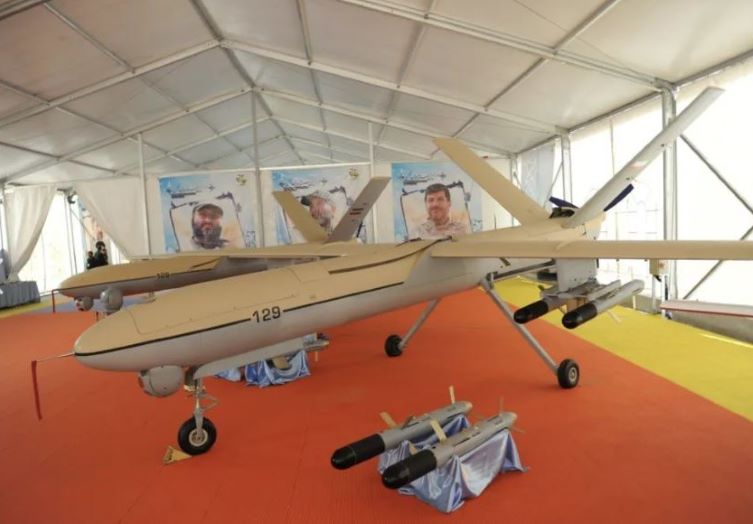
Iran’s drone force focuses on low-cost, large-scale asymmetric deployment. Unlike the US and Israel, which rely on high-end platforms and system capabilities to gain an advantage, Iran emphasizes using low-cost, expendable platforms and mass production to compensate for the gap in individual drone performance and system capabilities, and to establish a sustained containment capability in narrow coastal waters such as the Strait of Hormuz. For example, the Shahd-136 drone, with its delta wing configuration and relatively low cost, is generally considered a typical one-off attack drone. It can deplete enemy air defense resources through low-altitude routes, mass launches, and saturation penetration, posing a real threat to bases, ports, radar stations, and sea lanes. The Shahd-129, on the other hand, is a medium-altitude long-endurance reconnaissance and strike drone with a long loiter time and some reconnaissance and strike capabilities, suitable for border patrols, target surveillance, and limited precision strike missions. However, limited by its flight speed, stealth capabilities, data link security, and resistance to electronic jamming, this type of aircraft has limited survivability against the multi-layered air defense systems and electronic warfare systems of the US and Israel, making it difficult to decisively strike high-value core targets independently. Overall, the key to Iran’s drone warfare lies not in the performance of individual platforms, but in leveraging its near-shore geopolitical advantages, shore-based firepower, and low-cost unmanned platforms to conduct sustained attrition, saturation harassment, and area denial. While unlikely to severely damage Israel’s core facilities, it can exert sustained pressure, tie down and deplete Israel’s air defense and intelligence resources, and significantly increase the costs of escorting enemy shipping lanes, air defense and missile defense, and base protection. Iran’s ability to blockade the Strait of Hormuz with its maritime drones can directly impact global energy security and has validated the effectiveness of its asymmetric deterrence in this conflict.
In summary, the three parties’ maritime drone forces exhibit distinct differences. The United States focuses on high-end platforms, pursuing global deployment and systemic coordination; Israel emphasizes a high-quality approach and practical adaptability, concentrating on high-tech near-shore defense; while Iran leverages its low-cost, numerical advantage and near-shore geopolitical advantages to develop asymmetric attrition warfare tactics, seeking to create saturation deterrence in localized naval battles. The drone competition among the three parties surrounding the Strait of Hormuz is essentially a multi-dimensional and complex contest between systemic and numerical advantages, high-end and expendable platforms, and long-range power projection versus near-shore area denial.
Analysis of Maritime Unmanned Aerial Vehicle (UAV) Combat Strategies
Multi-wave, high-density swarm saturation penetration. As a representative asymmetric warfare method in current Middle Eastern maritime unmanned combat, its core operational logic relies on low-cost, low-observable small suicide drones to penetrate in multiple directions, in multiple batches, and in a dispersed manner. Leveraging its numerical advantage, it increases the target detection, identification, and fire control tracking load on enemy naval air defense systems, compresses their interception reaction time, and rapidly depletes their expensive air defense missiles, thereby breaking through the traditional air defense system of large surface ships. This achieves low-cost loss in exchange for paralyzing high-value enemy combat units. If the defender adopts a “detect one, destroy one” approach, using expensive defensive weapons to intercept low-cost drone systems may face a mismatch between operational effectiveness and cost. In related confrontations in the Strait of Hormuz and the Red Sea, Iran and its allies have used multiple waves of drones to harass and exert continuous pressure on the air defense systems of the US and its allies. Even if some targets are successfully intercepted, it may still result in the depletion of defensive resources and an increase in local risks. Therefore, against “low, slow, and small” swarm drones, it is necessary to develop high-density, low-cost, and cost-effective interception methods. For example, the US military’s Lucas low-cost loitering drone can be flexibly deployed from maritime platforms such as littoral combat ships and amphibious assault ships to actively hunt down small Iranian drones, explore the use of unmanned systems to perform forward interception and anti-drone missions, and promote the development of the “unmanned system versus unmanned system” combat mode.
Covert deployment, camouflaged takeoffs and landings, and stealthy attacks. Iran fully utilizes the complex battlefield environment of the Persian Gulf and the Strait of Hormuz, with its dense civilian shipping traffic, to evade detection and surveillance by advanced US and Israeli radar and early warning systems, achieving low-cost, highly covert maritime surprise attacks. The core strategy relies on converting civilian vessels into mobile maritime drone delivery platforms. Simple drone catapult, takeoff, landing, and storage devices are added to ordinary civilian ships, disguising them as ordinary navigable vessels. These ships then blend into normal shipping convoys, approaching target waters without revealing their military intentions, launching suicide or reconnaissance drones, and quickly withdrawing after completing their surprise attack or reconnaissance missions. Meanwhile, Iran is converting large civilian ships into platforms for unmanned maritime systems. The most representative example is the 40,000-ton Shahid Bagheri, a commercial cargo ship that has been converted into a carrier. Equipped with a ski-jump deck, it can carry more than 60 drones of various types and accommodate 30 fast attack craft. Without the need for fixed military ports, it can effectively avoid enemy targeted strikes on its domestic drone positions and conduct long-term patrols in the open sea, covertly deploying drone combat units and enhancing the operational range and sustainability of Iran’s unmanned maritime combat system.
Integrated reconnaissance and strike closed-loop operations. The construction of a pure UAV combat closed-loop link—”reconnaissance UAV forward surveillance—real-time data transmission—attack UAV precision strike”—is the core support for the systemic confrontation of modern maritime UAVs. This tactic relies on the complementary performance of UAVs with different functions to achieve deep linkage between all-domain situational awareness and precision fire strikes. The entire operation is carried out without the intervention of external equipment such as ships, missiles, and fighter jets, relying entirely on UAV formations to complete the entire combat process. Iran relies on domestically produced small and medium-sized maritime reconnaissance UAVs to routinely conduct close-range patrols in the Persian Gulf and the Strait of Hormuz, conducting all-weather reconnaissance and surveillance of enemy UAV deployment points, take-off and landing airspace, and patrol trajectories. Through airborne data links, it transmits target information in real time, guiding its own suicide UAVs and reconnaissance and strike UAV formations to carry out multiple batches and multi-directional precision strikes, forming a near-shore UAV reconnaissance and strike coordinated combat system to precisely suppress enemy maritime UAV activities. The United States, relying on its MQ-9 Reaper high-altitude long-endurance reconnaissance drones, achieves 24/7 uninterrupted airspace surveillance across the Red Sea, the Gulf of Oman, and the Persian Gulf. This allows for precise detection of Iranian drone take-off and landing sites, as well as the location of carrier drones at sea, rapidly transmitting accurate coordinate data to guide accompanying attack drones for long-range, targeted strikes. The focus is on beyond-visual-range, systematic drone precision strikes. Israel, utilizing its domestically produced Hermes series of dedicated maritime reconnaissance drones, focuses on blocking airspace over the Red Sea and the eastern Mediterranean, continuously monitoring Iranian cross-border drone transport routes and deployment sites outside the region. Based on real-time drone reconnaissance intelligence, it guides its own shipborne and shore-based attack drones to conduct precision strikes, destroying enemy drone reserves and take-off and landing facilities, and cutting off Iran’s ability to deploy drones outside the region.
Electromagnetic suppression empowers unmanned aerial vehicle (UAV) offense and defense. This is the core auxiliary tactic in the US-Israel-Iran maritime UAV confrontation. This tactic deeply integrates electromagnetic countermeasures with UAV operations, focusing on the UAV’s navigation, communication, and detection systems throughout the entire offensive and defensive phase. On the offensive end, Iran proactively employs an electromagnetic shielding penetration mode, initiating targeted electromagnetic suppression in key confrontation areas to interfere with the enemy UAV’s radar detection and signal reception systems, thereby weakening the enemy’s UAV airspace surveillance capabilities. It also creates short-term electromagnetic blind spots, effectively covering its own suicide and reconnaissance UAVs as they stealthily approach target airspace, significantly increasing the success rate of UAV penetration. On the defensive counterattack end, the US and Israel prioritize precision electromagnetic countermeasures, utilizing electronic warfare UAVs equipped with high-precision jamming equipment to directly target and suppress the GPS navigation and wireless remote control links relied upon by Iranian UAVs. This forces enemy UAVs to lose their location, communication, and control without physical interception, ultimately causing them to crash or be forced to return to base. Essentially, it disperses the dominance of the electromagnetic spectrum from large electronic warfare aircraft to a swarm of small UAVs carrying electronic warfare payloads deployed in a forward-deployed manner. This dynamic, precise, efficient, and cost-effective operational paradigm overturns the traditional electronic warfare logic that relies on large manned electronic warfare aircraft in the air or ground-based electromagnetic interference equipment, and has become the undisputed core means of soft kill in maritime drone warfare.
Conclusion
The United States, Israel, and Iran, leveraging their respective military technology, industrial bases, and geostrategic environments, have developed three representative maritime unmanned aerial vehicle (UAV) combat models. The United States, with its relatively complete information-based combat system, focuses on developing high-end, system-wide, and cross-domain collaborative combat capabilities. Israel, based on a lean and efficient combat concept, relies on advanced electronic warfare technology to form an UAV combat model combining covert penetration, precision strikes, and limited deterrence. Iran, based on its asymmetric defense needs, actively explores low-cost, large-scale, and swarm-based asymmetric warfare paths, utilizing its near-shore geographical advantages to conduct maritime denial operations. Recent conflicts have demonstrated that UAV swarm warfare poses new challenges to traditional maritime offensive and defensive systems. Low-speed, small targets are difficult to detect, track, and intercept, becoming a significant issue in the construction of maritime air defense systems for various countries. Traditional air defense missiles and carrier-based aviation may face a mismatch between operational costs and defensive benefits when intercepting low-cost UAVs. UAV maritime delivery platforms, communication data links, and satellite navigation links are gradually becoming key nodes of contention between offensive and defensive forces. Future maritime unmanned combat operations may evolve towards intelligent detection, electromagnetic countermeasures, precise interception, and system-based deployment. Building a multi-domain integrated, hardware-software combined, and tiered defense system has become an important direction for countries to develop their maritime anti-drone capabilities.