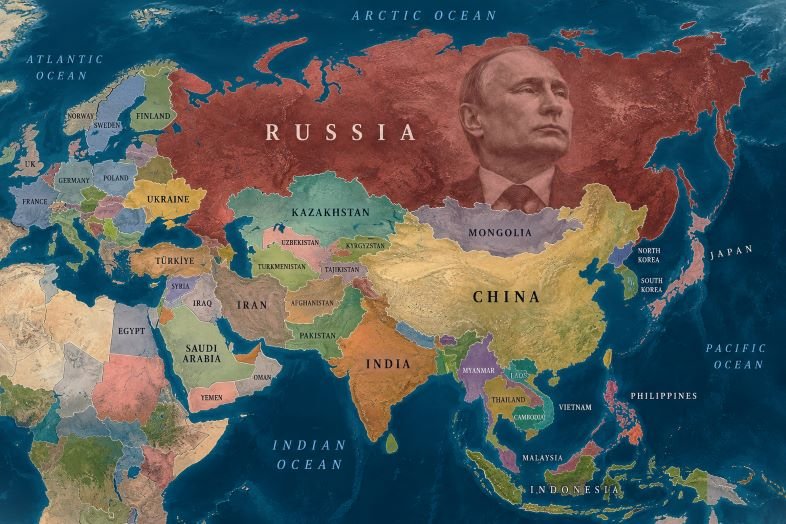
On July 3, Putin donned a military uniform. His usual attire of suits and ties, coupled with his sudden change to military uniform to inspect command posts and receive frontline reports, sent a clear signal: the situation was no longer ordinary. In the Russian mindset, donning a military uniform signifies a critical juncture. Russia is facing a real threat.
Like locusts, Ukrainian drones swarmed across the border, specifically targeting critical Russian infrastructure such as oil refineries, oil depots, and ports. From major cities around Moscow to oil terminals in St. Petersburg, the conflict raged. According to the latest news on July 4th, St. Petersburg suffered its largest drone attack in nearly two years, with 72 drones striking its oil facilities with pinpoint accuracy, as if timed perfectly.
A third of Russia’s refining capacity was paralyzed, causing the worst fuel crisis in two decades. Drivers queued overnight for just a few barrels of gasoline; fuel sales in Crimea were even temporarily halted. This once-great oil-producing nation had to turn to middlemento import refined oil products.
In the video, Putin said the situation on the front lines was excellent, and that many more settlements had been liberated. This sounded like a morale booster for the troops, but often the louder the words, the weaker the reality. After four years of fighting, Russia thought it had the victory in the bag, betting everything on Trump’s mediation and profiting from the oil price surge caused by the Persian Gulf conflict. However, the West turned its back on Russia, continuing military aid to Ukraine and sending drones directly to Russian territory, catching Moscow completely off guard.
This combination of external pressure and internal turmoil is pushing Russia into a corner.
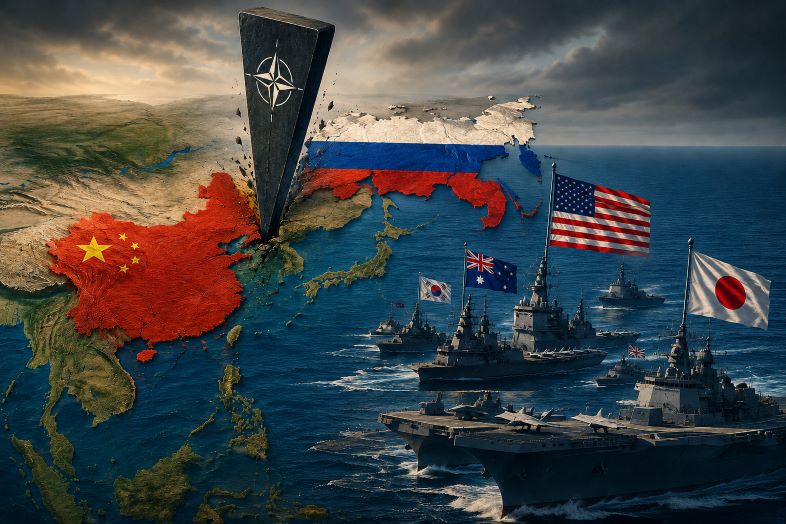
Then came an even more devastating move. The West is now transferring the drone tactics it has honed in Ukraine to the Western Pacific, lock, stock and barrel, in an attempt to drive a wedge between China and Russia.
Japan has been making the biggest moves lately. On July 1st, Japanese Foreign Minister Toshimitsu Motegi met with Ukrainian Foreign Minister Andrii Sebyiga in Tokyo, with the core issue being the mass production of drones. Japan aims to incorporate the combat algorithms, gained through bloodshed on the Ukrainian battlefield, into its domestic production lines. Japanese giants like Terra Drone have already quietly acquired several Ukrainian drone companies.
South Korea hasn’t been idle either. On June 26, South Korean Defense Minister Ahn Gyu-back announced plans to train 500,000 “drone warriors” and deploy tens of thousands of unmanned systems to frontline troops. Their “K-LUCAS” long-range self-destruct drone is reportedly modeled after the American “Lucas ,” essentially following the same pattern.
Japan provides manufacturing capabilities, South Korea provides production capacity, and with the addition of Ukraine’s combat technology, an alliance targeting China is taking shape. This is the so-called “NATOisation of Western Pacific.”
The US and the West are using this tactic of both carrot and stick against Russia: if Russia cooperates, keeps the “resistance faction” in Iran in check, and stabilizes the situation in the Persian Gulf, the pressure on Ukraine will be reduced; but the condition is that Russia must keep its distance from China, and even turn its attention to the East at critical moments.
This is a divide-and-rule tactic.
Currently, the United States, leveraging Starlink technology and in conjunction with NATO, is continuously bleeding Russia dry without deploying a single soldier. Simultaneously, they are testing Russia’s will to fight. British Prime Minister Starmer even entertained the sinister idea of selling the seized Russian crude oil and using the proceeds to aid Ukraine. This not only threatens to kill you, but also forces you to pay for your own death.
Meanwhile, some elites in Russia harbor a strategic illusion: to first improve relations with the West before dealing with the East. To put it more bluntly, they are more wary of a rapidly rising China than of the United States, and even intend to use Western power to contain China.
However, the West’s attempt to apply the same tactics used in Ukraine to the Western Pacific to deal with China seems rather childish to us.
Great power rivalry is based on a balance of power. Russia’s current predicament stems largely from its lagging technological advancements. Most of the components for Ukraine’s drones actually come from the Chinese supply chain. The West is using Chinese components to assemble Western weapons to attack Russian oil refineries. This may sound absurd, but it’s a fact.
But if they want to pull this stunt in the Western Pacific, they’ve picked the wrong target.
First, China is the global manufacturing center for drones and the source of the supply chain. You want to use my parts to attack me? Just a few strokes on the export control list, and your production lines will have to shut down tomorrow.
More importantly, China has already taken action. On June 29, the Ministry of Commerce issued two announcements, directly adding 20 entities, including the National Institute for Defense Studies of Japan, to its control list. This move targets the brain and body of Japan’s defense industry. You want to move NATO to the Western Pacific? China will first strike at your root.
For a gambler like Japan, its intervention in Ukraine was a ploy to gain permission from the United States to rearm. Its deployment of missiles in the easternmost part of the peninsula is an attempt to demand the Northern Territories from Russia and demonstrate its ability to disrupt China’s rear. This is a suicidal charge. China is not in a hurry to act, observing how long Japan can continue this charade. Once it crosses that critical point, a devastating strike will teach it a lesson in true power.
If necessary, we can also achieve national reunification ahead of schedule, overturn the table in the Western Pacific, and completely collapse the financial game on Wall Street as a countermeasure.
If Russia continues to cling to its imperialist chauvinism, relying on China’s economic support while secretly engaging in underhanded tactics, it will ultimately only suffer the consequences.
On July 5th , Peskov stated that Russia remains open to peace talks and expects the United States to play a mediating role. He also welcomed visits from Trump’s special envoy, Witkov, and Trump’s son-in-law, Kushner. Who was he saying this to? To the United States. Russia remains stubbornly loyal to the West .
This illusion is Russia’s greatest weakness. The West never intended for peace talks; rather, it aimed to dismember targeting China. All the enticement and deception were merely preparations for the next round of even harsher pressure .
Signs of a mutiny have emerged on the Russian front. Veteran Alexander Lunin posted a video online on June 25th , declaring his intention to storm the Kremlin and broadcast the truth live. If the Russian military appears too weak in the Ukraine conflict and the West intensifies its pressure, a Wagnerian-style mutiny could very well erupt within Russia , and the possibility of Belarus siding with the West is not an exaggeration.
If Russia attempts to gain rapprochement with the West by harming China’s core interests, it is tantamount to cutting off its own path to survival.
Does Russia not understand? It does. But it just can’t let go of its ” empire ” status and can’t shake off its ulterior motives of guarding against China.
We, on the other hand, remain steadfast in our approach, prepared to face the entire world alone. If Russia comes to its senses and takes the initiative to completely crush Ukraine, while simultaneously joining forces with China and using Iran as a fulcrum to wage a decisive battle against the West in the Middle East, it still has a glimmer of hope. If it remains oblivious and continues with its petty calculations, the price will be far heavier.
On July 5th , the Russian missile cruiser “Varyag” docked at the Qingdao naval port. The frigate “Rinchen” and the large submarine ” Ufa ” also arrived. China dispatched the ships Kaifeng, Anshan, Wuhu, and Kekexilihu. The Sino-Russian “Joint Sea -2026” joint exercise was completed, the port phase finished, and the two navies will now conduct joint patrols in the Pacific. The timing of this exercise is a signal. Is it a gesture to Russia , a message to Japan, or perhaps a message to the United States?
China has done everything it could to provide the necessary support. Now, it remains to be seen how Russia will choose to proceed.
In this game, China has demonstrated the composure of a “river-crossing person” (someone who has successfully navigated a treacherous river). We remain steadfast, observing the struggle for supremacy. The road ahead is long; we must proceed with equanimity.