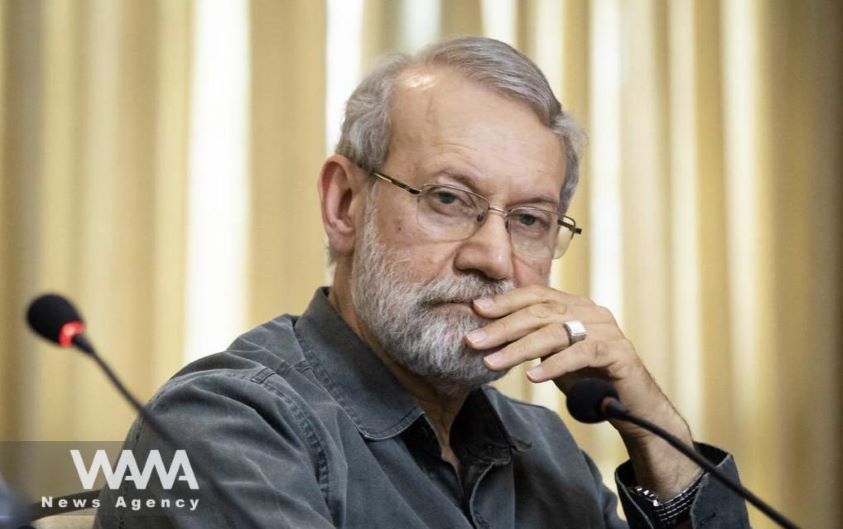
Ali Larijani was the philosopher-statesman. He read Heidegger, Mulla Sadra, and Kant. He studied European metaphysics in depth to dissect its limits, understanding the rationalist framework of the West a thousand times better than the West understands the theological foundations of Iran.
With a doctorate and a profound understanding of the phenomenology of the Old Continent, Larijani didn’t just study the enemy: in the 20 years leading up to this war, he dissected its cognitive “software.” He understood that its fatal weakness lay not in its arsenals, but in its mental architecture, now irremediably degraded to an instrumental, mechanistic nihilism devoid of any temporal horizon.
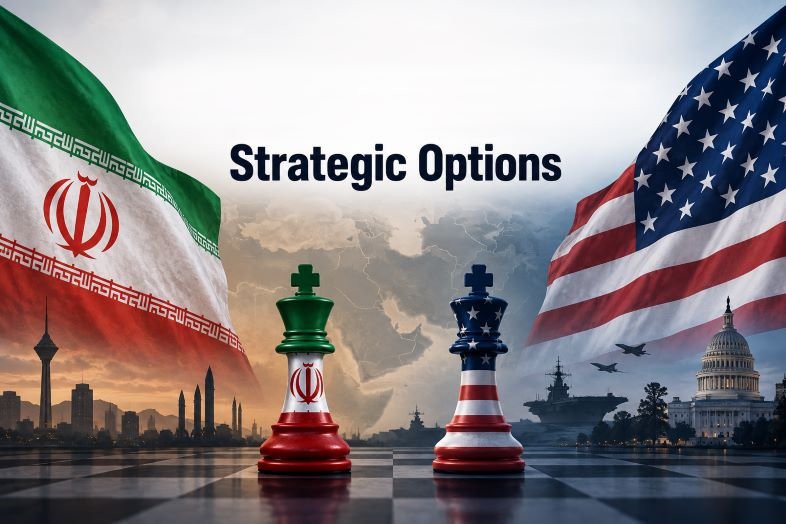
Epic Fury was the quintessence of this obsession. The number of missiles, the tonnage of bunker-busting bombs, the GDP, the GPS coordinates of a general. An engineering operation aimed at incinerating Iran’s visible surface, convinced that, once matter was destroyed, the nation’s spirit would surrender.
Larijani, who focused his nonfiction writings exclusively on the relationship between mathematics, logic, and philosophy, knew full well that the enemy would react this way. He knew that Pentagon planners would mistake the destruction of buildings and the assassination of leaders for a military and conventional victory. So he allowed them to attack the state’s physical manifestations (infrastructure, banks, commanders), portraying the true essence of Iranian power—namely, the revolutionary spirit, the Pasdaran network, the paradigm of martyrdom—in a subterranean, elusive dimension.
While Donald Trump proclaimed victory on Day 1, Larijani had already transformed his nation into a swarm of Shahed-136s by imposing a suicidal and inexorable equation: for every single explosion that ripped through Tehran, a counterattack of fire surgically rained down on the Gulf’s sensitive infrastructure. The pain absorbed by the Islamic Republic was instantly monetized into structural damage against the West.
And it is precisely in this brutal and surgical “monetization” of pain that Larijani triggered the second philosophical pillar. Studying the evolution of Western thought from Hobbes to Anglo-Saxon utilitarianism, he had long ago identified the Achilles heel of liquid modernity: the obsession with cost-benefit calculations. Larijani understood that the civilization of profit, founded on the fetish of dividends and the stock market, is ontologically incapable of sustaining a financially loseable war. Hitting the glass safes of the Gulf meant hitting the very dogma on which the Empire is based: convenience.
To definitively shatter this fragile utilitarian framework, all that remained was to introduce the final variable into the equation, the supreme weapon the West has ceased to master: time. Having made war an intolerable financial drain, Larijani has forced the Epstein coalition to contend with a chronology alien to it. For Washington, time is money, it is the shortsightedness of the electoral deadline, it is the performance anxiety of the midterms; for the millennia-old Persian civilization, time is waiting, patience, respite.
By extending the conflict beyond belief and transforming the American Blitzkrieg into an inexhaustible quagmire, Larijani has short-circuited Atlantic “practical reason.” In this definitive ontological checkmate, the epitaph of the entire Western strategic doctrine of the last quarter century is consummated: the religion of preventive war.