Morocco does not act alone. It acts as a subordinate piece—as a sub-imperialist state—within a larger geopolitical structure. Its alignment with the colonial transaction of the Abraham Accords, through which Washington and Tel Aviv endorsed the illegal occupation of Western Sahara in exchange for Rabat’s unconditional submission to the Anglo-Zionist agenda, has transformed the North African kingdom into the policeman of the Strait and the executioner of dissenting governments.
The synchronicity of geopolitical events is rarely a matter of chance; on the contrary, it is the visible symptom of a much deeper dialectical convergence. It responds to the structural deterioration of the global capitalist system and the precipitation of crises that imperialism instrumentalizes as levers for authoritarian recomposition.
Spain is currently experiencing a period of extreme multidimensional vulnerability. In addition to the climate catastrophe embodied in unprecedented forest fires, there is a violent internal offensive of judicial harassment and media manipulation designed to destabilize the central government. This offensive is being carried out by the Spanish reactionary dyad—the organic alliance between the PP and Vox—whose armed wing is judicial and media lawfare, operating as a transmission belt for a broader strategy of attrition. And it is precisely at this epicenter of internal political fragility that the external escape valve is activated: the border crisis in the south. The massive arrival, outside of legal channels, of tens of thousands of people to Ceuta —an episode of such gravity that the Spanish Government itself has had to describe it as a violation of territorial integrity— is not an accident, but a piece of a larger puzzle.
The border tragedy is, in geostrategic terms, a weapon of hybrid warfare. Between July 30 and 31, 2026, more than 50,000 people were forced to cross the border in an unprecedented operation, which has already claimed a tragic toll of more than sixty lives on Spanish soil. What defines this event as an act of blackmail is not the human flow itself, but its cold orchestration: the deliberate inaction and calculated permissiveness of the Rabat authorities, who lowered the guard at key points such as the border breakwater. There was no operational failure; there was a tactical move by the Alawite monarchy to suffocate the Spanish state at its weakest moment.
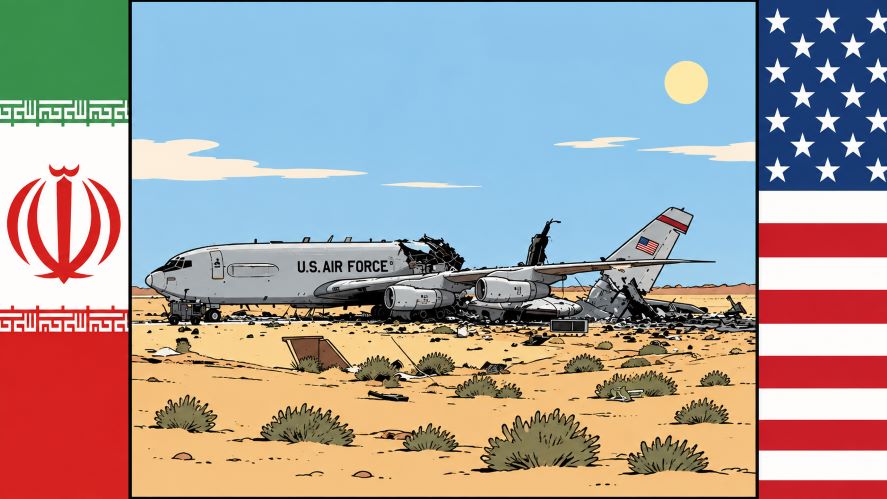
But Morocco does not act alone. It acts as a subordinate piece—as a sub-imperialist state—within a larger geopolitical architecture. Its alignment with the colonial transaction of the Abraham Accords, through which Washington and Tel Aviv endorsed the illegal occupation of Western Sahara in exchange for Rabat’s unconditional submission to the Anglo-Zionist agenda, has transformed the North African kingdom into the policeman of the Strait of Gibraltar and the executioner of dissenting governments. The stance of Pedro Sánchez’s government in the Palestinian conflict, its refusal to involve Spain in the US and Israeli armed aggression against Iran—blocking the offensive use of the Rota and Morón air bases—and its resistance to the excessive increase in military spending dictated by the United States to NATO, have triggered the imperialist bloc’s punitive mechanism. Ceuta is not a migration problem; it is a full-blown geopolitical reprisal.
This destabilizing offensive is not improvised; it is explicitly theorized and promoted from the centers of US power. The recent report by the House Appropriations Committee, driven by the neoconservative faction led by Mario Díaz-Balart under the auspices of Marco Rubio, has formally classified Ceuta and Melilla as “territories under Spanish administration located in Morocco,” explicitly urging negotiations on their status. This declaration is not mere rhetoric: it is an act of institutional aggression that challenges Spanish sovereignty from within the very legislature of the hegemonic power.
Added to this political pressure are the provocations of the ideologues of imperialism and Zionism. Michael Rubin, of the American Enterprise Institute —linked to the Israeli intelligence apparatus and known for fabricating the false evidence of weapons of mass destruction that justified the genocide in Iraq in 2003—has publicly incited Morocco to organize a “new Green March.” His plan is clear: send bulldozers to demolish the perimeter fences and facilitate the invasion of unarmed crowds to seize the cities, carrying out a demographic replacement and the forced expulsion of the local population. This rhetoric is not an outburst; this is part of a narrative destabilization campaign amplified by the digital disinformation machinery of magnates like Elon Musk and by the aggressive rhetoric of Donald Trump, who declared: “It looks like an invasion of a country… and the same thing will happen to us if the Republicans aren’t elected […] If we’re not in power, our country will be invaded on a scale that makes Spain look small.” With these words, Trump orchestrates a coordinated attack to solidify the narrative of Spain as a “failed state,” reducing the humanitarian tragedy to a mere US election opportunity and escalating the blackmail to portray Spain as a widespread rehearsal for a continental invasion by the new “barbarians.”
To grasp the magnitude of this historical moment, it is essential to place this blackmail within a continental context. The alignment of Giorgia Meloni’s neo-fascist Italian government, suspending the Schengen Agreement with Spain, and Emmanuel Macron’s announcement of military reinforcements along the French border with Spain are not isolated incidents. They are part of a coordinated strategy orchestrated by the reactionary and anti-communist international movement in Washington, aimed at the ideological and material creation of a veritable “Fourth Reich” within the European Union. The central objective of this bloc is the total militarization of the continent to sustain, at any cost, the armed conflict against the Russian Federation in Ukraine, while simultaneously preparing the ground for the final strategic clash with the People’s Republic of China.
Within this imperialist macro-project, the assault on Ceuta and the latent threat to Melilla act as ideological catalysts of the first order.
In the lead-up to elections in Europe, the relentless attacks on the southern border and the exacerbation of institutional racism aim to inject the necessary moral panic into European societies. It is the engineering of fear, applied to divert attention from the systemic crisis of capitalism, eliminate any remaining vestiges of popular sovereignty, and catapult openly Nazi-fascist executives to power, disciplined under the new pan-European order.
In this chessboard of cross-aggressions, the people of the Canary Islands must learn an urgent historical lesson. The vulnerability demonstrated on the North African border exposes the fallacy of placing the Archipelago’s security under the umbrella of Atlanticism or subordinating it to Washington’s geopolitical interests. Morocco, strengthened by Anglo-Zionist backing in the occupation of Western Sahara and by European complacency, is advancing unchecked with its expansionist agenda over the territorial waters and marine and mineral resources adjacent to the Canary Islands. To pretend that militaristic subservience to NATO or integration into arms industry clusters will shield the Archipelago is a tragic blindness. The Canary Islands cannot continue to be a rear-guard logistical platform or a expendable pawn in imperialist adventures in Africa; The true safeguarding of the Canarian people lies in demanding neutrality, strict respect for International Law, unequivocal support for the decolonization process of Western Sahara, and firm opposition to being drawn into the spiral of Alawite expansionism.
Faced with this onslaught, the denunciation must also be relentless, and the response strategic. To suggest that the sovereignty of Ceuta and Melilla, including that of the Canary Islands, can be negotiated in Washington offices, or that their integrity can be assaulted with impunity at the instigation of Zionist ideologues and with the complicity of the Alawite regime, constitutes a flagrant violation of international law. Questioning the status of these territories to use them as pawns in geopolitical maneuvering not only violates international law regarding the right to self-determination, but also directly infringes upon the fundamental rights and security of thousands of citizens. The people of the Canary Islands must be on high alert.
Organizing resistance requires exposing this maneuver without succumbing to reactive chauvinism or the low-intensity xenophobia that the right wing attempts to exploit. It means applying political pedagogy and class analysis to international relations to prevent the Anglo-Zionist axis from destroying the self-determination of peoples and consolidating its neo-fascist project of domination in Europe. The “Fourth Reich” is not a rhetorical metaphor or an alarmist exaggeration: it is the name of a power structure being cemented before our very eyes, and whose first line of defense has been drawn, today, in the Strait of Gibraltar.