Japan’s remilitarisation is advancing at breakneck speed and reaching into areas that, until recently, seemed impossible or unimaginable. One issue in particular demands attention: the nuclear question.
Japan is the only country in the world to have suffered atomic bombings, when two atomic bombs were dropped on Hiroshima and Nagasaki at the end of the Second World War—by the United States, now Tokyo’s principal ally. For this reason, the Japanese public has always been reluctant to reopen the debate on the issue. The 2011 earthquake and the subsequent Fukushima nuclear accident heightened this sensitivity.
But the Overton window is shifting. The world is changing; the international system is undergoing a transformation whose outcome remains uncertain; and the Asia-Pacific region is experiencing a paradigm shift in its regional order, characterised above all by China’s growing military power. This is precisely the narrative being used by Japan’s political establishment to address the nuclear question.
“There is one issue we cannot avoid: nuclear weapons […] I believe we must redouble our efforts to explain that Japan’s security environment requires us to approach every policy with a strong sense of crisis, discussing and advancing them without any taboos.”
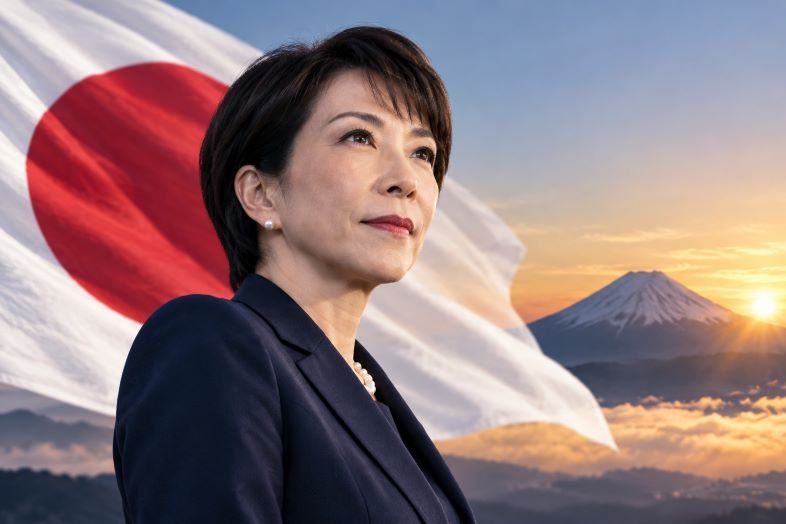
These words, spoken by Japan’s Defence Minister, Shinjiro Koizumi, show that the Liberal Democratic Party (LDP) in general, and Sanae Takaichi’s government in particular, are seeking to deepen their militaristic approach to defence and reduce public sensitivity surrounding nuclear weapons.
In fact, Japan has begun to question one of the pillars of its post-war security policy: the Three Non-Nuclear Principles, which prohibit the possession and production of nuclear weapons and the introduction of such weapons into Japanese territory.
For now, the proposed revision focuses on the third principle, concerning the entry of nuclear weapons into the country. The prime minister is not currently proposing that Japan develop its own nuclear arsenal—something that would be extremely complex, both technically and politically—but rather that it broaden the scope of action available to the United States and allow, in the future, the temporary entry of US vessels capable of carrying nuclear weapons.
The US nuclear umbrella extends over Japan and forms part of the country’s deterrence against states regarded as “hostile”. The key issue, however, is that Japanese strategists believe the third non-nuclear principle could, in certain scenarios or crisis situations, constrain the way Washington uses its forces to maintain deterrence. For deterrence to be effective, it must be both credible and operationally viable.
One of Tokyo’s objectives, therefore, is to avoid these potential constraints and, for example, allow the entry of submarines equipped with nuclear-armed sea-launched cruise missiles (SLCM-N), whose operational deployment is scheduled for the mid-2030s.
There is, however, one problem: public opinion. Although polls have produced varying results, they generally indicate opposition to revising the Three Non-Nuclear Principles. An NHK poll conducted in August 2026 found that 59% of respondents believed the principles should be maintained, compared with 33% who supported revising them.
A July 2026 poll by Mainichi Shimbun showed a similar trend: 43% opposed a revision, while 27% supported one. Specifically with regard to the third principle, an FNN poll found that 50% opposed changing it, compared with 46.3% who supported doing so.
Japan and Nuclear-Powered Submarines
There is also an additional objective: equipping the Japan Maritime Self-Defense Force (JMSDF) with nuclear-powered submarines. Koizumi himself said as much: “As for nuclear-powered submarines, we will continue to consider the possibility of acquiring them and will not rule them out as an option.” The Three Non-Nuclear Principles do not directly come into play here, but the issue is nevertheless connected to Japan’s nuclear debate.
The subject remains highly sensitive and divides lawmakers within the LDP, but both Takaichi and Koizumi have indicated that they intend to open the debate. “We are seriously considering it, in a concrete and realistic manner,” the prime minister said in mid-October.
The first step is to open the debate; the second is to place the issue on the political and defence agendas. In this regard, the government is considering incorporating the possibility into its strategic security documents—the National Security Strategy, the National Defense Strategy and the Defense Buildup Program—which are due to be revised by the end of 2026. This would not mean immediately purchasing or developing submarines of this kind, but it would pave the way for examining their political, economic, military and legal feasibility.
One of the main obstacles is legal. The Atomic Energy Basic Law, adopted in 1955, restricts the use of nuclear energy to peaceful purposes. Moreover, a submarine could be equipped with counterstrike capabilities, which are also subject to constitutional limitations.
In any event, the LDP’s junior coalition partner, the Japan Innovation Party (JIP)—which joined the LDP after its break with Komeito, a more pacifist and moderate party on military issues—is already putting pressure on Takaichi.
In a document published in June, the JIP argued that the “government must introduce nuclear-powered submarines as soon as possible” in order to establish a “mobile, concealed and difficult-to-detect strike platform beneath the sea” and “transform the enemy’s calculations”. The party also maintained that the “Pacific is the sea of Japan” and that the country “needs the capability to defend it”.
“Therefore, the government must introduce nuclear-powered submarines as soon as possible. To this end, it must make the necessary investments in research and development into nuclear propulsion and immediately begin drawing up concrete plans for their deployment. For this purpose, the Atomic Energy Basic Law will be amended where necessary,” the document concludes.