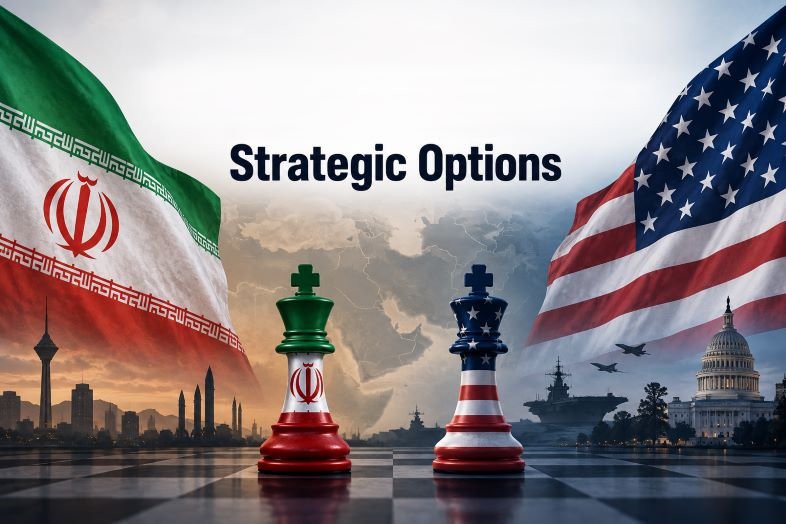
What on April 7th seemed like the beginning of the end of the war against Iran has today revealed itself as the end of yet another chapter in a war that could now be fought by proxy, like the one in Ukraine. Israel has explicitly stated that its finger remains on the trigger. The truce between Washington and Tehran is real, but only for them.
On April 7, when President Donald Trump announced a two-week ceasefire brokered by Pakistan, we noted the apparent contradiction between that diplomatic announcement and the simultaneous barrage of Iranian missiles. The preliminary conclusion was that Tehran had achieved an irreversible strategic victory, forcing the United States to accept its ten-point plan as a basis for negotiations. However, today’s information compels a complete reassessment of that diagnosis. What seemed like a negotiated surrender has transformed into a new front of hostilities, this time led exclusively by Israel.
Let’s recall the facts. Barely ten minutes after Trump declared the truce, Iran launched a new barrage of missiles against Israeli territory. Far from being an act of disorganization, the Iranian Supreme National Security Council explained that Tehran would not accept a ceasefire until it had consolidated on the ground what it considered an “overwhelming, historic, and undeniable victory.” According to the Mehr news agency, the United States had initially accepted ten Iranian conditions, including: recognition of Iranian control over the Strait of Hormuz, legitimization of uranium enrichment, the lifting of all sanctions, the payment of reparations, and the withdrawal of US combat forces from the region.
Trump, for his part, presented a nuanced version on Truth Social: he claimed to have suspended “the destructive force that was going to be sent tonight” at Pakistan’s request, conditioned the truce on the opening of the Strait of Hormuz, and described the Iranian ten-point plan as “a viable basis for negotiations.” Although it seemed like a US retreat, I warned then that the devil would be in the details: while Iran spoke of “continued control” over the strait, Trump demanded its “COMPLETE, IMMEDIATE, and SECURE opening.” That ambiguity was not an accident, but rather the prelude to what would erupt today.
A report published today by Kurdistan24, quoting Israeli Prime Minister Benjamin Netanyahu, completely changes the landscape. Netanyahu stated: “Let me be clear: we still have objectives to achieve, and we will achieve them, whether through an agreement or by resuming fighting.” He added: “We are prepared to return to combat whenever necessary. Our finger remains on the trigger. This is not the end of the campaign, but a step on the path to achieving all our objectives.”
The most revealing aspect is that Netanyahu confirmed that the two-week truce between Washington and Tehran was coordinated “fully with Israel.” In other words, the United States negotiated a ceasefire with Iran knowing that its Israeli ally did not consider itself bound by it. In fact, Netanyahu dismissed criticism from the opposition that the agreement had taken his government by surprise: “No, we were not caught off guard at the last minute.”
The question we posed on April 7 was whether what had happened signified a strategic victory for Iran or a delaying tactic by Washington. The answer, in light of Netanyahu’s statements, is neither in its purest form. What we have is a more complex and dangerous scenario:
- The United States has agreed to negotiate with Iran based on the Iranian plan , which amounts to a tacit acknowledgment that the direct US military approach has failed. This is undoubtedly a political victory for Tehran.
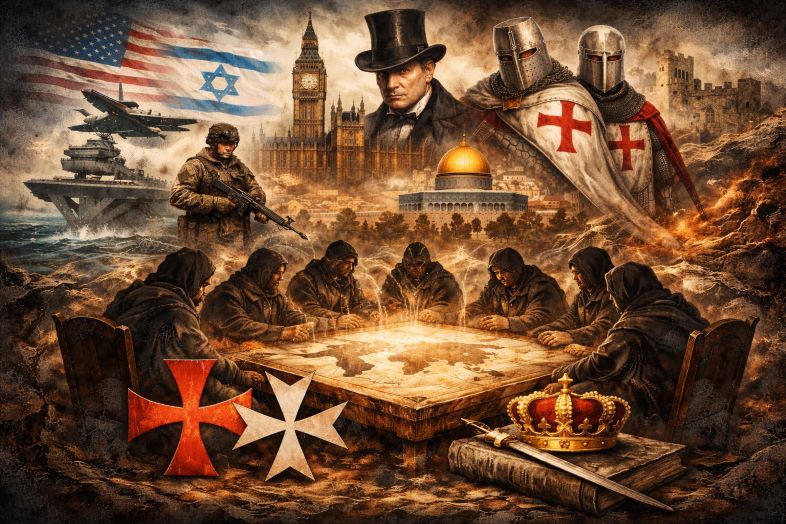
- But Israel has not signed that agreement. Netanyahu has made it clear that Israel will continue the war against Iran and its allies (including Hezbollah in Lebanon) on its own. The “Modern Crusade against Iran” has not been canceled; it has simply changed its executor. What the United States will no longer do directly, Israel will do on its behalf, although—as we have warned for years—the brains behind both the American military might and the proxy state of Israel are neither in Washington nor in Tel Aviv, but in the United Kingdom and the old military orders of the former European aristocracy, those linked to the Jerusalem of the medieval Crusades, whose seeds still linger under other names .
- The two-week truce is merely a mechanism to defuse direct conflict between Washington and Tehran , allowing the United States to disengage from an unpopular war in an election year, while Israel assumes the role of “third force” that I already anticipated as a possibility in my previous article.
Iran, which believed it had forced the entire Western bloc to surrender, now finds that its main regional enemy will not accept its terms. Iranian missiles may deter the United States, but they have not deterred Israel. The Iranian statement of April 7 warned that “this does not mean the war is over,” but they probably did not anticipate that the continuation would come from Netanyahu acting as Washington’s proxy.
For his part, Trump can present the truce domestically as a diplomatic success, while Netanyahu maintains military pressure on Iran. The open question is whether Iran will respond to Israeli actions by breaking the ceasefire with the United States, or whether it will accept a low-intensity conflict against Israel alone so as not to jeopardize the lifting of sanctions.
What on April 7 seemed like the beginning of the end of the war against Iran has revealed itself today as the end of yet another chapter in a war that could now be fought by proxy, like the one in Ukraine. Israel has explicitly stated that its finger remains on the trigger. The truce between Washington and Tehran is real, but only for them. On the fronts in Lebanon, Syria, and against Iranian allies, the “Modern Crusade” continues. As we wrote on April 7: peace in that corner of the world has an expiration date. Today we know that date was, literally, one day after the announcement. We will have to wait not until the day after tomorrow, but until Israel decides whether it prefers an agreement or more fighting. For now, Netanyahu has already made his choice.