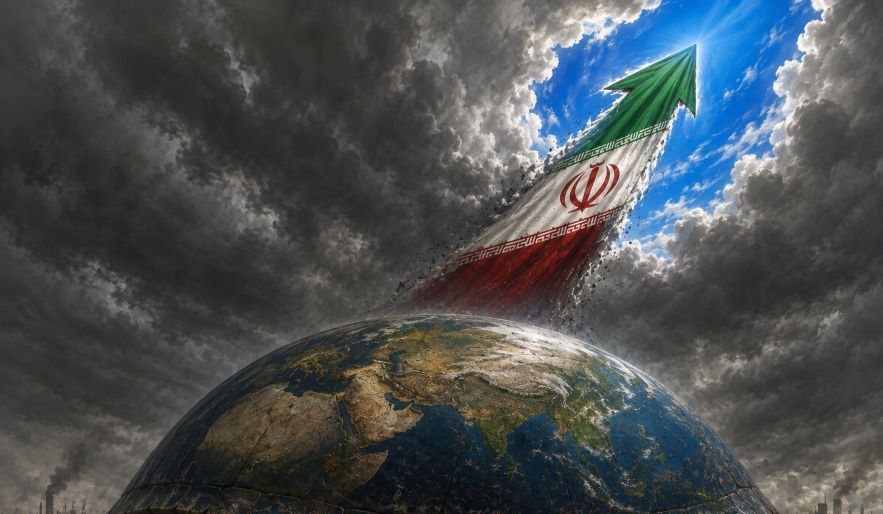
In his significant post, President Masoud Pezeshkian did not simply describe the Islamabad Understanding as one of Iran’s important foreign policy documents; he called it the “center of gravity” of the country’s future foreign relations. The pillars of that center of gravity, domestic consensus among the public and the country’s elites, defensive deterrence, diplomatic dynamism, regional security, reciprocity in commitments, and compelling the other side to honor the agreement, are intended to form the components of a single, integrated framework.
At one of the most sensitive and consequential turning points in the history of the Islamic Republic of Iran’s foreign policy, and at a time when the country continues to face unprecedented existing and potential security and military threats, President Masoud Pezeshkian published a message that may well be regarded as his administration’s most important strategic statement since the Islamabad Understanding. In his brief post, the president wrote:
“The understanding that was signed was the product of the collective wisdom of the members of the Supreme National Security Council, and all of its members stand behind it. I believe this understanding will become the center of gravity of our foreign relations in the future. We must strive to compel the enemy to remain committed to what it has signed. The security of our country, the region, and our allies will be strengthened through this understanding.”
At first glance, the message may appear to be little more than a brief political defense of an agreement. A closer reading, however, suggests that the underlying rationale for both the message and the position it expresses may lie in the transformation of the global balance of power following two devastating wars lasting 12 and 40 days. There is little doubt that the developments that have unfolded nationally, regionally, and internationally over roughly the past 14 months have reshaped the dynamics of power. The Islamabad Understanding is one manifestation of that transformation.
Arguably for the first time in the political history of the Islamic Republic, Iran signed an international agreement backed simultaneously by all dimensions of national power: hard military power, diplomatic and negotiating leverage, and the soft power rooted in public support. In practice, Iran demonstrated not only its determination to implement the agreement but also its readiness to respond appropriately should the other party violate its commitments.
From this perspective, the most significant element of Pezeshkian’s message is not merely his defense of the Islamabad Understanding but his deliberate use of the phrase “the center of gravity of Iran’s future foreign relations.” For a senior statesman, “center of gravity” is far from an ordinary expression. It refers to the point around which every other component of a system is organized. When the president uses this term, he is no longer speaking about a single document or a temporary agreement. Rather, he is describing a model, grounded in the prevailing logic of power in today’s international system, around which Iran’s future foreign policy is intended to be structured.
Put differently, the message may be interpreted as announcing the birth of a new strategy, or at least a new doctrine, in Iran’s diplomatic framework. Iran’s negotiating history includes agreements such as hostage exchanges, UN Security Council Resolution 598, and the Joint Comprehensive Plan of Action (JCPOA). Yet the Islamabad Understanding stands apart because it emerged from the exercise of Iran’s integrated national power. For that reason, it deserves to be viewed as a defining point of reference. Accordingly, Pezeshkian’s description of the Islamabad Understanding as the center of gravity of Iran’s future foreign relations invites a closer examination of the elements that constitute that center.
“First”, the opening sentence deserves particular attention, where the president emphasizes that the understanding was the product of the “collective wisdom of the members of the Supreme National Security Council” and that all of them support it. This is more than an account of an administrative process; it conveys a strategic message. Over the past four decades, one of the recurring challenges in Iran’s foreign policy has been differing perceptions regarding the extent of domestic consensus behind major decisions. The president is now sending a message both to Iranian society and to external actors that the Islamabad Understanding, with all of its provisions and the methods through which it was achieved, is not the policy of a single administration or political faction. Rather, it is the decision of the country’s highest decision-making structure. In today’s world, no agreement can endure without domestic cohesion, and perhaps the greatest source of strength behind this understanding is precisely that rare consensus. In other words, Pezeshkian seeks to underscore the agreement’s national character and remind all parties that it belongs not to a particular government or political current but to the collective judgment of the state.
“Second”, the significance of the Islamabad Understanding extends beyond domestic consensus. Above all, it represents the convergence of three principal sources of power within the Islamic Republic of Iran: military strength, diplomacy, and society-based popular power. Achieved under wartime conditions, the Islamabad experience was neither solely the product of negotiations nor solely of military capability nor merely of social demands. Rather, it reflected the transformation of visible military and defensive achievements into diplomatic capital, supported by both the public and the country’s elites. Hard power made negotiations from a position of strength possible, while diplomacy consolidated the gains achieved on the ground. Alongside these two pillars stood a third: Iranian society. Public resilience, relative economic endurance, and the preservation of national cohesion during one of the country’s most difficult contemporary periods all contributed to strengthening Iran’s bargaining position. From this perspective, the Islamabad Understanding was not merely the embodiment of national consensus; it was also a demonstration of Iran’s national power. That may explain why Pezeshkian calls it the country’s “center of gravity.” Few experiences in recent years have brought these three dimensions of power into such close alignment or transformed them into a tangible expression of national strength capable of producing an agreement that, despite the criticisms leveled against it, remains measured and defensible.
“Third”, another interpretation concerns the relationship between resistance and negotiation. For years, Iran’s political discourse has tended to present resistance and agreement as opposing concepts, as though greater resistance necessarily reduces the possibility of reaching an agreement. Yet the implicit message in Pezeshkian’s post offers a different perspective. The Islamabad Understanding rests on the premise that resistance acquires strategic value when it creates the conditions for a better agreement. In this framework, resistance serves as a means of strengthening bargaining power, while negotiation is not a sign of retreat but rather the political utilization of that very strength. If this interpretation is correct, Islamabad marks the end of the artificial dichotomy of “resistance or negotiation” and the beginning of a new logic: “resistance for effective negotiation.”
“Fourth”, perhaps one of the most important layers of the message lies in another statement: “We must strive to compel the enemy to remain committed to what it has signed.” This sentence indicates that the president no longer sees the principal challenge as simply reaching an agreement. Rather, ensuring that the other party implements the agreement, or, put differently, establishing effective guarantees, has become the greater priority. This subtle shift signals a broader change in approach. Drawing lessons from its negotiating experience, Iran’s foreign policy has placed greater emphasis on securing compliance and compelling the other party to honor its commitments. In this sense, Pezeshkian’s message underscores the foreign policy establishment’s determination to ensure that commitments are respected.
Another important point is that over the past two decades, Iran’s diplomatic approach has largely focused on managing crises imposed upon the country. Each crisis demanded its own strategy, requiring the diplomatic apparatus to react accordingly. What emerges from Pezeshkian’s message, however, is an effort to move beyond “crisis management” toward “order management”. Crisis management means responding to events. Order management means shaping rules within which even adversaries are compelled to operate. The difference is the difference between a political agreement and a political order: the former is largely reactive, while the latter is proactive.
“Fifth”, viewed through this lens, Pezeshkian’s emphasis on simultaneously strengthening the security of Iran, the region, and its allies takes on greater significance. He presents the Islamabad Understanding not merely as a mechanism for reducing tensions between Iran and the United States but as a step toward the emergence of a new regional security architecture, one in which Iran’s security is not achieved through regional instability but through the establishment of shared rules and by raising the costs of violating commitments for all parties.
Indeed, the experience of the recent war appears to have led Iranian decision-makers to an important conclusion: military deterrence, unless translated into political, legal, and diplomatic deterrence, will inevitably have to be reproduced repeatedly on the battlefield, a costly process that benefits neither Iran nor the region.
Accordingly, the new phase of Iran’s foreign policy may be understood as an effort to transform military power into enduring political rules, rules under which the cost of violating commitments becomes greater than the cost of honoring them. If this interpretation is accurate, the significance of Pezeshkian’s recent message extends far beyond an ordinary political statement. He did not say that the Islamabad Understanding was merely one of Iran’s important foreign policy documents; he said it would become the “center of gravity” of the future.
The foundations of that center of gravity, domestic consensus among the public and the country’s elites, credible defensive deterrence, diplomatic dynamism, regional security, reciprocity in commitments, and compelling the other party to implement the agreement, are intended to function as elements of a single, integrated framework.
In the years ahead, the enduring significance of this message may lie not in its defense of a particular understanding but in the possibility that, for the first time, it represents a clear effort to transform the experience of a major crisis into a coherent foreign policy doctrine. If implemented, that doctrine could move Iran’s foreign policy from the logic of “crisis management” to that of “sustainable order”. In that case, Islamabad would no longer be merely the name of a city in Pakistan or of a diplomatic understanding; it would become the name of a paradigm intended to serve as the center of gravity of the Islamic Republic of Iran’s foreign policy in the years to come.
(Nournews)