In 1955, under Eisenhower’s idealistic discourse, the United States donated 300 thousand dollars to build a research reactor in Caracas; 71 years later, it bombed the Venezuelan capital to “guarantee the security” of the uranium it had taken.
During the early morning of January 3, 2026, when the American bombs began to fall on Venezuela, many analysts took for granted that the priority target was oil. Refineries, oil fields and storage centers seemed to be the obvious target of the military operation “Absolute Resolve”. (It is obvious for those of us who maintain that the narrative for the supposed struggle for democracy and the fight against drug trafficking is only a distraction curtain to intervene in Venezuela and the countries of Latin America).
However, the attacks announced something else that took place on May 8: the removal of the uranium located at the headquarters of the Venezuelan Institute of Scientific Research (IVIC), located in Los Altos de Pipe, Miranda state, very close to Caracas; Although many suspected that there was something more in the attack that was committed against IVIC facilities in Caracas, no one imagined that it was only the preamble of what would happen on the early morning of May 7.
What interest could Donald Trump have in a scientific research center? The answer, we know today, was not in the biology laboratories or in the administrative offices. It was hidden in a forgotten facility: the RV-1 reactor, deactivated since 1991 and which after the attacks of January 3, suffered damage and increased the risk.
“Atoms for Peace”: the speech that changed history
To understand how that reactor got to Venezuela, you have to travel back in time to December 8, 1953. On that day, US President Dwight D. Eisenhower delivered a speech entitled “Atoms for Peace” to the United Nations General Assembly. His words were forceful:
“The United States will seek to achieve more than the simple reduction or elimination of atomic materials available for military purposes… This force, the most destructive of all, could be used to create prosperity for the benefit of all humanity.”
That speech was not a simple declaration of good intentions. It led to the creation of the International Atomic Energy Agency (IAEA) in 1957 and opened the doors to civil nuclear cooperation between the United States and other countries.
It was, in essence, a geopolitical strategy: the United States was selling atomic technology in exchange for control, influence and, above all, the guarantee that this material would never be diverted for military purposes. Venezuela was one of the countries chosen for this program.
The first reactor in Latin America
As a result of this agreement, Venezuela became the first country in Latin America to have a nuclear reactor. The facility was named RV-1 and was built at the Venezuelan Institute of Neurology and Brain Research (IVNIC), which would eventually become the current Venezuelan Institute of Scientific Research (IVIC), in Altos de Pipe.
The characteristics of the reactor were imposing for the time:
- Type: pool-type material testing reactor
- Power: 3 megawatts of thermal power
- Fuel: 20% enriched uranium (HEU)
- Manufacturer: General Electric
- Criticality scope: July 12, 1960
The uranium supplied had an enrichment level of 20%, a technically significant threshold, as it exceeds the limit that classifies the material as “highly enriched uranium” (HEU).
Although even higher levels (above 80%) are required for direct use in nuclear weapons, the RV-1 material already posed a real proliferation risk if it fell into the wrong hands.
A loan, not a sale: the “Atoms for Peace” trap
One of the fundamental and frequently misunderstood aspects of this story is that the enriched uranium delivered to Venezuela was not a definitive transfer of ownership. Under the “Atoms for Peace” agreements and IAEA safeguards, the nuclear fuel was delivered on a lease basis, with strict non-proliferation obligations. This meant three things:
- The material was not extracted from Venezuelan mines or enriched in the country.
- Once the reactor ceased operations or the fuel was spent, it had to be returned to the country of origin (mainly the United States).
- The contract established international safeguards to ensure its exclusively peaceful use.
In other words, Venezuela was simply a depository of American nuclear material. A depositary that, over the years, would become a geopolitical headache and that he highlighted in his statement of May 07 that he had been requesting its withdrawal for a long time.
13.5 kilos of uranium stored for 35 years
The RV-1 reactor operated for three decades, but was shut down for good in 1991. However, its nuclear fuel 13.5 kilograms of uranium enriched above 20% was never removed from the country.
For 35 years, this material remained stored in an aging facility, a few kilometers from Caracas, becoming over time what nonproliferation agencies call a “critical point of concern.” The route to remove the material from the headquarters of the Venezuelan Institute of Scientific Research (IVIC), in Altos de Pipe, Miranda state was a land transfer accompanied by a heavily guarded military convoy that transported the uranium from the IVIC to the main port of departure, Puerto Cabello (Carabobo state), where the material was shipped to be taken to security facilities in Savannah River South Carolina, United States.
On January 3: The bombs revealed the secret
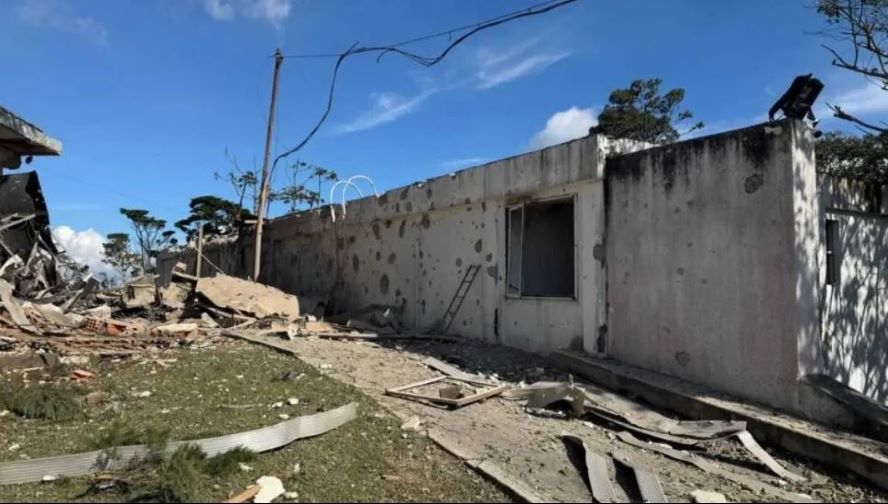
That risk, it seems, ceased to be theoretical for the United States on January 3, 2026. The bombing on the IVIC that the officials of the government of the president in charge Delcy Rodríguez later denounced as an attack that damaged the institute’s infrastructure was not a aiming error nor a collateral damage. Today it is clearly understood: the Pentagon was not just about oil. It was also about the uranium.
The interests of the United States in Venezuela, which most associated exclusively with the Lake Maracaibo basin and the Orinoco Oil Belt, actually extended to those forgotten laboratories in the mountains. The military operation of January 3rd prepared the ground for what would happen four months later: the replenishment of uranium.
What happened in Altos de Pipe between January and May 2026 is one of the most remarkable paradoxes in Venezuela’s recent history.
The same country that in 1955, under Eisenhower’s idealistic discourse, donated $300,000 to build a research reactor in Caracas, decided 71 years later to bomb that country to guarantee the security of the uranium that he had brought and for which Venezuela had paid $2.5 million (equivalent to about $22 million today, adjusted for inflation).
Paradoxically, although Venezuela paid for the reactor, the highest cost was not the purchase, but the storage of the fuel. For 35 years (from 1991 to 2026), the country was a depository of a material that it could not use (enriched uranium) because it was linked to “international safeguards”.
Venezuela never owned that material. He was, quite simply, the forgotten keeper of a nuclear secret. The January 3rd bombing was also a covert repossession operation, the violent denouement of a contract signed in the Cold War.
The 13.5 kilos of uranium are no longer at Pipe Heights. But the marks of the bombs of January 3 will remain as the day when Venezuela discovered that the greatest nuclear risk in its territory had not been generated by any enemy, but by the ally that decades ago gave it a reactor that was never really its own.
History confirms once again that the worst thing about being an enemy of the United States is being its ally. Relying on American technology makes us less sovereign and more vulnerable. Hopefully the leaders of Latin America are aware that giving up technological development under the discourse of scientific collaboration with the United States is also giving up autonomy, regardless of noble interests.