The Middle East is increasingly resembling the Shanxi-Gansu border region depicted in the TV series “Bright Sword”—it’s descended into chaos. This time, the landscape of the Middle East is about to change; the old US-led order is drawing ever closer to its end.
The old order that has persisted in the Middle East for decades has been secured by the US military presence, with the US and Israel as the leading forces, and the Gulf states, led by Saudi Arabia, providing support. Iran and its Middle Eastern resistance forces have been the opposing side to this order, but due to the disparity in strength, they have long held the upper hand and maintained an overall defensive posture.
However, by 2026, the situation in the Middle East had changed. Due to the United States’ military incompetence, its control over the Middle East was rapidly waning, and the security foundation supporting the Middle East order was no longer stable.
This is also the main reason why the situation in the Middle East is becoming increasingly chaotic. The current chaos in the Middle East is an important external manifestation of the breakdown of the old order and the brewing of a new order.
How chaotic has the situation in the Middle East become?
Saudi Arabia launched airstrikes on areas including Hodeidah in Yemen, which are controlled by the Houthi rebels, and also joined forces with the US military to launch airstrikes against pro-Iranian armed groups in Iraq.
The Houthis bombed key oil and transportation facilities in Saudi Arabia, including the Jizan oil refinery and the Yanbu oil port, and imposed a maritime embargo on Saudi Arabia using the Bab el-Mandeb Strait, which they control.
Iraqi militia groups also attacked oil facilities in Saudi Arabia’s eastern province and key areas such as Riyadh, with the aim of crippling Saudi Arabia’s energy lifeline.
Four Iranian advisors were killed in Saudi military raids against Iraqi militias.
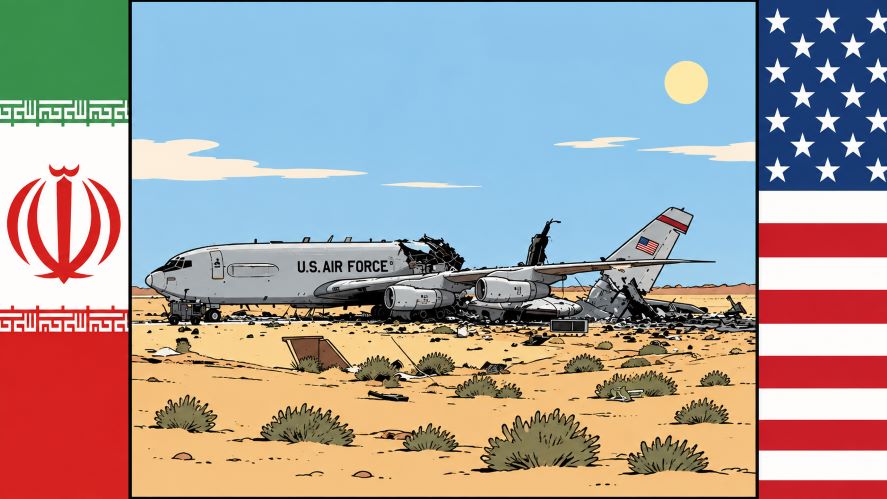
Following a unilateral ceasefire by the United States, Iran again bombed US military bases in Jordan and other locations. On July 30, the Iranian Revolutionary Guard issued a statement claiming that the operation destroyed three F-35 fighter jets and severely damaged three others, also resulting in the deaths of several US military personnel. Iran cited retaliation for US airstrikes on civilian homes on Iran’s Qeshm Island as the reason for the action.
These are not the end of the conflict; the parties directly or indirectly involved are planning even bigger actions.
The United States has been cornered by Iran and has no room for compromise. It has repeatedly signaled its intention to launch a powerful military strike against Iran as “retaliation.” The United States and Israel are also discussing cooperation with Iran’s neighboring countries to implement a comprehensive land blockade against Iran.
Saudi Arabia, facing blockades on its trade routes through the Red Sea and the Persian Gulf, and with its vital energy facilities under heavy attack, is also on the brink of collapse, with no way out or room for maneuver. To break the Houthi blockade, Saudi Arabia is forming a multinational military coalition in the Red Sea, and there are reports that it is concentrating its forces to attack key areas controlled by the Houthis.
With Saudi Arabia’s entry, the Middle East has reached a crucial moment where the two major camps are closest to a full-blown showdown.
As the US-Iran conflict has progressed, the US has rapidly lost its dominance and control in the Middle East, triggering a chain reaction. Iran has begun to take the initiative, continuing to attack US forces, no longer confined to passive defense and counterattacks. Saudi Arabia has also moved from behind the scenes to the forefront, becoming a key player in the Middle East military conflict. Conflicts between various Middle Eastern countries and military organizations have also intensified and erupted, turning the region’s geopolitical tensions into a deadlock.
Given the current state of affairs in the Middle East, a new order is necessary to break down the old order and establish a new one; without this, the conflict will not easily subside. This new order, first and foremost, means that the US will no longer control the region, and the most important indicator of this is the departure of US troops from the Middle East, or at least a symbolic presence there.
The US military in the Middle East is now practically a mascot. The US military presence in the region is no longer sufficient to provide adequate security for countries that depend on it. The options left for these Middle Eastern warlord states are either to decouple from the US security framework and cease providing military bases and assistance, or to pay a much higher price.
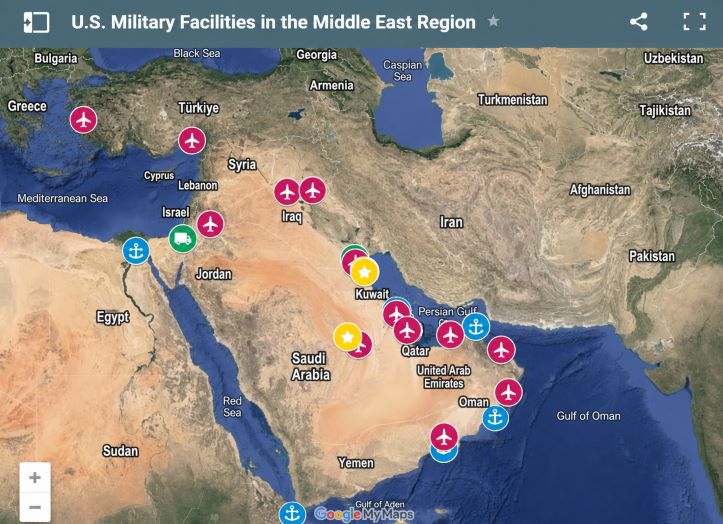
The United States’ long-term dominance in the Middle East is undoubtedly due in part to its extensive network of US military bases, but the dependence and support of Middle Eastern royal states for the US constitutes another crucial factor. To make the US’s presence in the Middle East untenable, these two conditions need to be addressed. This involves continuing to target US military bases while simultaneously putting sufficient pressure on and inflicting heavy costs on America’s key allies in the region. This process has begun with the Houthi military operation against Saudi Arabia.
The crux of international relations lies in the relationship between benefits and costs. The cost of getting the US military out of the Middle East, or the cost of keeping the US in the Middle East outweighing the benefits, or the cost of maintaining ties between the US and those powerful states outweighing the benefits, must both conditions be met. If either condition is met, the US military’s time in the Middle East will officially be on a countdown. While the situation in the Middle East appears chaotic, there is a main thread, and it is inseparable from Iran’s proactive maneuvering. Whether it’s striking key US military targets in the Middle East or taking measures against the Houthis in the Strait of Hormuz and the Bab el-Mandeb Strait, all are revolving around the fulfillment of the aforementioned two conditions.
The US’s proactive military action against Iran and Saudi Arabia’s recent involvement have given Iran the best opportunity yet to build a new Middle East order.
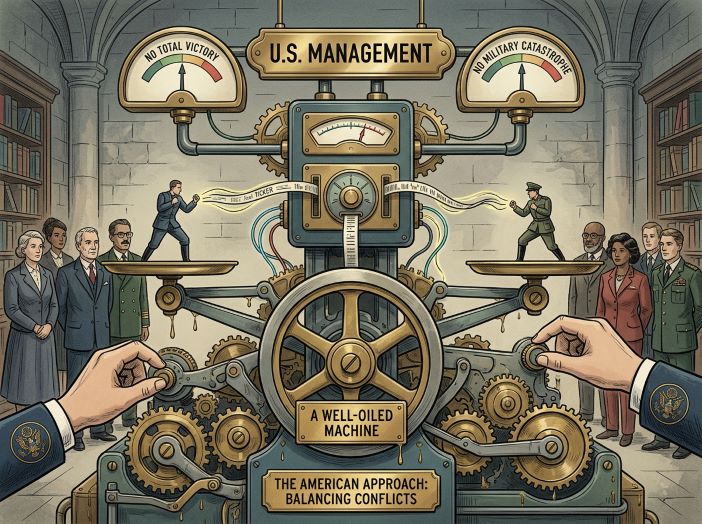
In July, the military conflict between the US and Iran reignited. The back-and-forth military “boxing” between the two countries lasted 13 days before the US began to falter. After its attempt to reach a third party to Iran seeking a ceasefire was rejected, the US unilaterally halted its military operations against Iran. Previously, the pattern of US-Iran conflict was that the US would fire first, Iran would retaliate, and a US ceasefire would halt Iranian military retaliation. This time, however, despite the US ceasefire, Iran continued its attacks on US military bases and targets in the Middle East, thwarting Trump’s hopes of restarting peace talks to ease tensions.
If Trump chooses to resume military operations, it will lead to a protracted war with Iran, which is the situation the United States fears most, but the United States currently has no way to avoid this situation.
Trump is now in a dilemma; he can’t fight, and he can’t not fight, which is exactly the situation Iran wants to see.
Iran is now dominated by hardliners, whose goals are no longer satisfied by concessions made in the US-Iran memorandum of understanding. The US’s provision of $300 billion in war reparations through investment, withdrawal of troops from Iran’s periphery, and recognition of Iran’s jurisdiction over the Strait of Hormuz—conditions that seem tempting enough to onlookers—are no longer enough to satisfy the Iranian hardliners. Only the withdrawal of US troops from the Middle East can truly appease them.
This time, the US will likely struggle to extricate itself from the quagmire of war in the Middle East without suffering significant losses. Our most desired outcome is the withdrawal of US troops from the Middle East, effectively abandoning the region, and this time, this expectation may very well become a reality.
The Middle East plays a crucial role in supporting US global hegemony. After all, US hegemony and the global status of the dollar both require maintaining control over the Middle East. If the US military could no longer remain in the Middle East, then US and dollar hegemony would prematurely crumble. Losing the Middle East is a price that US hegemony cannot afford.
As long as Iran continues to attack US military bases in the Middle East, the US will be strangled by Iran. Although it may not be immediately paralyzed, it will find it increasingly difficult to breathe.
If the Houthi rebels and Iraqi militias are also involved, it will make things even more complicated for Trump.
In particular, the Houthi rebels control the Bab el-Mandeb Strait, which is of no less importance to global shipping than the Strait of Hormuz. The Houthis are a formidable force that the United States has been unable to deal with. The two sides have clashed more than once over control of shipping in the Red Sea, and the United States is well aware of how difficult the Houthis are to deal with.
How can the US break this deadlock? The initiative is no longer in the hands of the Americans; it depends on what the hardliners in Iran want to achieve this time. If the hardliners’ goal is to drive US troops out of the Middle East, which is a concession that Trump could not make in negotiations, then it can only be achieved through non-peaceful means.
Only when the US military leaves the Middle East will Iran’s security environment fundamentally change. Now Iran has such an opportunity. As long as it dares to fight the US military, it will be closer to this goal than ever before. The heavy US military deployment in the Western Pacific is being restrained by more powerful countries, and the US military force that can be deployed in the Middle East is nearing its limit. Therefore, Iran has little to worry about.
While Israel is the United States’ closest ally in the Middle East, its most important ally is Saudi Arabia. This is not only because the petrodollar originated from a secret agreement signed between the US and Saudi Arabia in the 1970s, whereby Saudi Arabia used the US dollar as the settlement currency for its oil exports in exchange for US security commitments, but also because of Saudi Arabia’s special status among Muslim countries. Saudi Arabia’s choices have significant guiding implications for other Middle Eastern power states. If Saudi Arabia changes its course with the US, other power states will also have to reconsider how to redefine their relationships with the US.
This time, Saudi Arabia has been quite “cooperative,” forging a rift with the Houthis and Iraqi militias, essentially handing Iran a pillow in its sleep. The Houthis used dozens of ballistic missiles, cruise missiles, and drones to set fire to Saudi Aramco’s Jizan refinery and disrupt exports from the Yanbu port. Meanwhile, pro-Iranian forces in Iraq have focused their attacks on key Saudi oil facilities in the east, further compounded by the Houthis’ declaration of a maritime embargo against Saudi Arabia. These moves are aimed at severely damaging Saudi Arabia’s economic lifeline.
Tasks that Iran is not comfortable doing itself are naturally best left to the Houthis and pro-Iranian militias in Iraq.
Both the United States and Saudi Arabia saw the crux of the problem, but they could not bypass Iran’s strategy. This time, Iran used a calculated move that they could not avoid.
All the US can do is continue to use Trump’s bluster to cover up its embarrassment. The biggest military threat the US is currently issuing is to strike power plants and oil facilities in Iran. The Wall Street Journal reports that Trump has ordered a new round of comprehensive bombing operations against Iran, including strikes on Iranian energy infrastructure and oil refineries, with the strikes expected to begin as early as this weekend.
But Iran is not afraid of such threats at all, because it has sufficient means to retaliate against US military and economic targets in the Middle East, as well as key energy facilities in Middle Eastern warlord states. Iran has suffered for too long, and in terms of the capacity to withstand losses, it is certainly stronger than its adversary.
Iran has even published a list detailing key facilities in the Gulf states. If the US crosses this line, it will ultimately be the US and its allies that suffer.
Some level-headed analysts in the United States have pointed out that if the US were to expand its attacks to civilian infrastructure and economic lifelines, it would suffer an even greater setback. This is because Iran has the capability to inflict greater costs on its adversaries, bombing all the key infrastructure in the Gulf states and effectively blocking the Straits of Hormuz and Bab el-Mandeb, thus suspending economic exchanges between the Gulf states and the outside world.
Trump uses this threatening tactic repeatedly because he has no other options.
According to media reports, Trump has repeatedly lost control of his emotions and succumbed to impotent rage. He made significant concessions to Iran to sign the US-Iran memorandum of understanding, but failed to achieve the desired outcome of quickly pulling himself away from the brink of war.
Trump is still undecided about whether to continue military action against Iran, whose strikes have already had an effect.
According to the Wall Street Journal, the Pentagon is considering reducing its military presence in Kuwait in response to Iran’s continued attacks. Similarly, due to Iran’s heavy blows, the US has already withdrawn its last Patriot missile battery from Erbil, Iraq, and will withdraw its remaining troops from Iraq by September 30.
What about the US military bases in countries close to Iran, such as Bahrain and the UAE? Their security situation is also not optimistic. Aside from downsizing and withdrawing, there seems to be no better way to avoid even greater losses.
Former U.S. Army Commander in Europe and Seventh Army Commander Mark Hertling confirmed that the Trump administration is completely deadlocked. “Iran’s regional power and network of influence clearly demonstrate that this war cannot be won through bombing. The President of the United States must stop the attacks, appoint strong negotiators, and show humility, even if it means making some concessions.” This is tantamount to reminding Trump that the current situation in the U.S. only allows for further concessions to Iran.
The US’s passivity in the Middle East is obvious, and Trump has no better option.
The US’s decision to send Saudi Arabia to the front lines this time will not alleviate its own predicament. A larger bet will only lead to greater losses.
In the US-Iran conflict during March and April, Saudi Arabia suffered relatively little among the Gulf states. Even with Iran closing the Strait of Hormuz, Saudi Arabia could still export crude oil from the Red Sea via the East-West Pipeline, and its revenue even increased due to rising oil prices. As long as Saudi Arabia doesn’t experience visceral pain, the US can still maintain a semblance of stability in the Middle East.
This time, Saudi Arabia needs to learn the lessons it missed. By provoking the Houthis and pro-Iranian militias in Iraq, Saudi Arabia’s “comfortable” life has begun.
Saudi Arabia’s strength and influence are based on the fundamental premise of peace. Once war breaks out, Saudi Arabia’s advantages, whether in terms of oil or money, cannot offset its disadvantages. If Iran and the Houthis were to close the two major shipping routes through the Persian Gulf and the Red Sea to Saudi Arabia, the country’s vital economic arteries connecting it to the outside world would be severed; further bombing of its energy infrastructure would cripple its economic lifeline. Although Saudi Arabia has a large land area, it is primarily desert, with key economic zones and population concentrated in a few areas. Faced with the Houthis’ relentless saturation attacks using missiles and drones, Saudi Arabia is simply unable to defend itself effectively.
Saudi Arabia’s oil fields are concentrated in its eastern provinces, which are predominantly Shia areas. For these Middle Eastern countries, religious affiliation takes precedence over national identity, especially given Saudi Arabia’s consistent repressive policies towards Shia Muslims.
If the situation continues to deteriorate, it is unclear whether Saudi Arabia is psychologically prepared to bear an even greater cost.
Saudi Arabia is now in a precarious situation, but it seems remarkably oblivious to this reality. Its biggest weakness is security, and its military capabilities were exposed by the Houthi rebellion in 2020. Saudi Arabia has tried to compensate for this deficiency by aligning itself with US military power, but the US is no longer a reliable partner.
During the US-Iran conflict in March and April, the US persisted for over a month. However, in the military conflict in July, the US only lasted thirteen days before unilaterally initiating a ceasefire. The reason why Trump ordered the US military not to take action against Iran on July 24 was revealed by The New York Times: Chief of Staff Kane warned that the Patriot interceptor missile stockpile was running low, and if the fighting continued, the US military in the Middle East would run out of air defense munitions.
According to estimates by the Center for Strategic and International Studies (CSIS), the war with Iran has reduced the U.S. air defense missile stockpile to dangerous levels. Before the war, the U.S. possessed approximately 2,330 Patriot interceptor missiles; currently, its stockpile stands at only 759 to 827. The number of Terminal High Altitude Area Defense (THAAD) interceptor missiles has also decreased from 452 to 234 to 278, a reduction of nearly half. Due to severe deindustrialization, the U.S. is unable to quickly replenish its stockpiles and lacks alternative defense options. Faced with Iranian missiles and drones, the U.S. can only increasingly reduce the use of interceptor missiles to protect its most critical targets.
The US radar and early warning systems in the Middle East suffered heavy damage during the war in March and April. In July, several more radar systems were destroyed. Even if the US military is not blind, its vision is far worse than before.
A sharp decline in interceptor missile stocks and a shortage of radar equipment can significantly weaken the US military’s defensive capabilities. This explains why, although the scale and intensity of the US-Iran military conflict in July were less than those in March and April, the US military suffered heavy losses.
According to a unilateral battle report released by Iranian Revolutionary Guard spokesman Hossein Mohbi, the US military’s losses during the Iranian strikes from July 8 to 22 included: 11 fighter jets and helicopters parked on the ground; 17 reconnaissance and combat drones; one F-15 fighter jet stored in a hangar; one P-8 anti-submarine patrol aircraft; one C-17 strategic transport aircraft; eight aerial refueling tankers; and four heavy helicopters. He also stated that Iranian armed forces destroyed six Patriot air defense radars, four Patriot air defense missile systems, seven command and control centers, eight early warning radars, five long-range radars, and numerous other air defense and anti-missile facilities. Additionally, losses included several aircraft hangars, maintenance and logistics centers, fuel tanks, weapons depots, missile storage points, HIMARS rocket launcher platforms, missile launchers, and intelligence and communication support facilities.
The aforementioned list does not yet include Iran’s latest achievement announced on July 30, which involved destroying and damaging three F-35 fighter jets.
Even if we discount Iran’s reported combat results by half, the US military losses are still severe. At this rate of loss, how long can the American flag continue to fly in the Middle East?
Previously, the U.S. military relied on its next-generation combat system to establish a one-way long-range strike advantage, but this advantage has now been severely diminished.
The US military bases in the Middle East are now wounds that cause the US to bleed continuously, rather than forward footholds for attacking others.
The current U.S. military is not even capable of protecting itself, so how can it be capable of protecting royal states like Saudi Arabia?
Previously, Iran had been holding back, showing leniency towards the powerful Middle Eastern nations to concentrate its efforts on striking at the US and Israel. This time, Iran has adjusted its strategy, with Saudi Arabia actively “cooperating,” making operations against both the US and Saudi forces a priority. Once this is done, dealing with Israel will naturally be much simpler.
As long as Iran’s resolve remains unwavering and a protracted war ensues with the United States, those US military bases in the Middle East will eventually be reduced to ruins.
Iran is not in a hurry to achieve its goals overnight; it is taking it slow, like cutting flesh with a dull knife, making a few cuts today and continuing tomorrow.
As for dealing with Saudi Arabia, it’s much easier than dealing with the United States. The Houthi rebels plus Iraqi militias would suffice; Iran wouldn’t even need to intervene directly. Moreover, Houthi leader Abdul-Malik Houthi has already given Saudi Arabia a crucial characterization: the Saudi regime is a partner with the United States, Israel, and the United Kingdom in promoting a Zionist agenda in the region.
The Americans’ choice to re-enter the White House with Trump was a wise one. Without him, the US might have truly escaped the constraints of the Middle East wars. Originally, the US was already strategically passive in 2023, but the Biden administration at that time was relatively rational, assisting Israel while adhering to the bottom line of not directly engaging in military conflict with Iran. Furthermore, Iran had not yet fully assessed the true combat capabilities of the US military and was still quite wary of the US. Without the backing of a major power, Iran lacked the confidence to challenge the US alone. Iran’s former leader, Khamenei, mediated between hardliners and compromisers within the country, taking a middle path. Therefore, the US’s predicament was not as severe as it is now. This time, with Trump’s wise leadership, the US has broken through the political red line of previous US presidents avoiding military action against Iran, and the situation is completely different. Now, Iran not only dares to challenge the US alone, but also has the ability to utilize the power of Middle Eastern resistance organizations to reform the old US-led Middle East order.
This grand drama, moving from the old US-led order to a new order without the US, is destined to be accompanied by intense growing pains. The Middle East is increasingly chaotic, but only after this chaos can the cards be reshuffled. The collapse of the old order will not happen overnight, but the countdown has already begun. Every missile and drone launched by Iran and the resistance groups represents a step in dismantling the old order.
The Third World, from the Middle East to Asia, Africa, and Latin America, has long suffered under American hegemony, and Iran has already set an example of how to confront it. Historical opportunities always favor the prepared. This opportunity was not something Iran passively waited for, but rather something Iran and other members of the resistance forces actively created.
The United States will certainly not admit defeat easily, and Trump’s bluffing will continue, but the military advantage on paper can no longer fill the strategic hole.
The Middle East is undergoing a dramatic transformation, and the world order will also be transformed. We are witnessing the accelerated pace of this extraordinary historical process.