The Iran Laboratory
Trump’s erratic foreign policy is rooted in a morass of variously assorted eccentricities. For example, the influence over Trump, through the influence of Peter Thiel and I.D. Vance, of eccentric figures like Nick Land, a champion of accelerationism, and Curtis Yarvin, an advocate of anti-Enlightenment technocratic despotism.
As a result, the MAGA political universe has absorbed, at least in part, these twisted authoritarian and isolationist impulses, not necessarily in their theoretical formulations, but in their underlying idea: the United States must stop guaranteeing the stability of the world order and the preeminence of international law (which, moreover, is seen as a construct to be demolished) to focus on strengthening its own economic and technological power without regard for allies or submission to international institutions.
These theses, crude as they may be, are rooted in the mainstream wisdom of Ray Dalio, the founder of Bridgewater Associates, one of the largest and most prestigious hedge funds (at least until recently), who, having abandoned operational roles, cultivated and flaunted ambitions as an intellectual guru. In his book, Principles for Dealing with the Changing World Order, published in 2021, he described the life cycle of empires that grow through productivity, innovation, and institutional strength. They then enter a decline phase when public debt, internal inequality, political polarization, excessive military spending, and involvement in conflicts unrelated to their vital interests accumulate. It’s a dynamic that Dalio identifies, for example, in 17th-century Spain, the British Empire, the Dutch Empire, and today’s United States.
The first crack appears when the empire accumulates debt, both public and private, at a rate faster than wealth production. At this stage, living standards are maintained by increasing debt rather than productivity.
Fiscal irresponsibility forces the central bank to print money, fueling inflation and capital flight. Then, amid rising inequality and internal conflict, wealth tends to concentrate, and the gap between rich and poor breeds distrust in institutions, triggering a radicalization of political conflict.
The final phase coincides with a systemic crisis that can take various forms: a virulent financial crisis caused by debt, internal conflicts, revolts, and external attacks. According to Dalio, the United States already exhibits too many of these symptoms, particularly uncontrolled debt and exposure to too many conflict fronts.
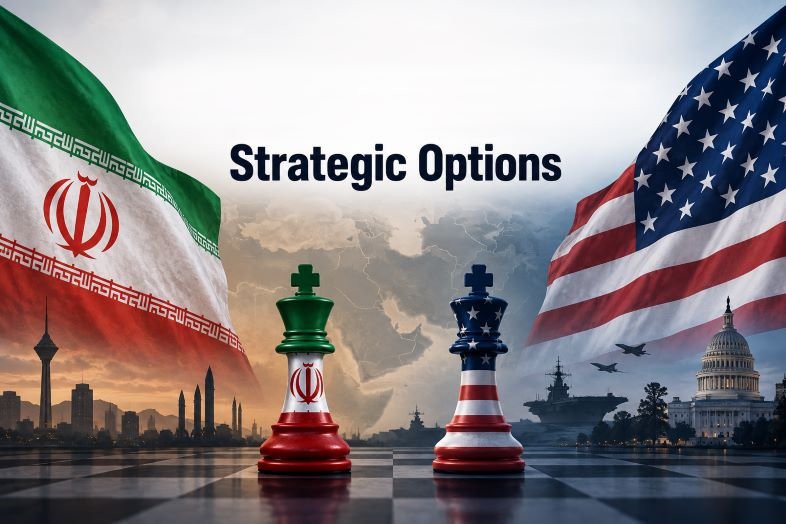
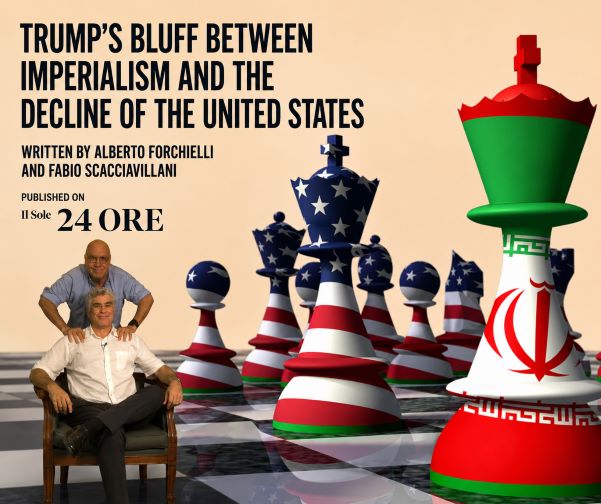
Trump’s vacillations on Iran should be interpreted as a desperate attempt to achieve two rather elusive strategic goals: avoiding a war that would entail enormous financial costs, political backlash among the MAGA base, and further public debt, but also demonstrating that America remains a superpower capable of protecting its interests anywhere in the world, without bowing to blackmail.
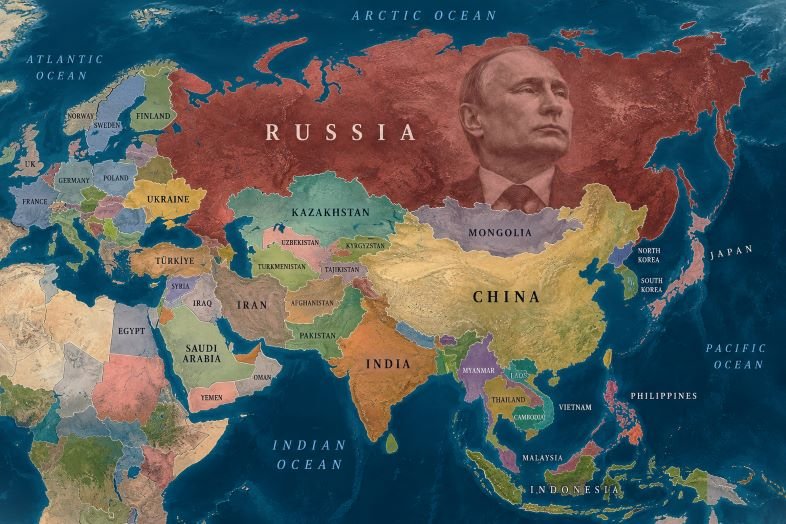
More than simple personal indecision, therefore, Trump’s attitude reflects a structural contradiction: the desire to reaffirm the primacy of imperial military power, while the prevailing belief is that maintaining the empire is accelerating American decline.
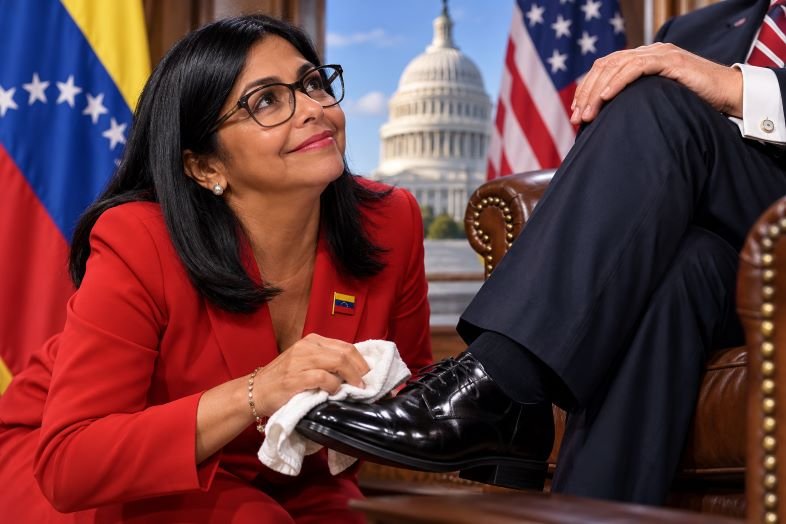
It follows that if the use of force entails unacceptable economic and political costs, Trump’s diplomatic overtures and threats will be met with ridicule or humiliating denials, as has been the case for the past two months. Furthermore, allies risk perceiving Washington as an unreliable partner.
The real question, then, is not whether Trump is consistent or inconsistent. It is whether the United States can still maintain its role as global hegemon without paying the costs that accompanied the decline of all the great powers of the past. If Dalio is right, the answer is no. If Land and Yarvin are right, the solution lies not in better managing the empire, but in radically downsizing it. The problem is that Trump, in his vainglory, would like to win without paying the price. That is, by bluffing. American policy toward Iran thus becomes the laboratory in which these visions, still confused and contradictory, seek a synthesis destined to shape the future of the international order.
Unfortunately for Trump, the Iranians are also good at bluffing and cheating even better when the occasion arises.