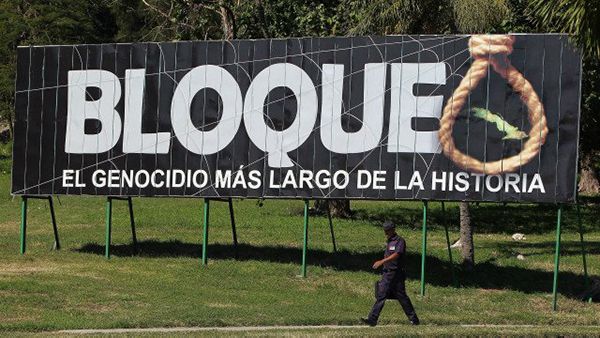
February 14, 2026 – The economic, commercial and financial blockade imposed by the United States against Cuba – initiated in 1960 under Eisenhower and formalized by Kennedy in 1962 – represents the longest chapter of economic coercion in modern history.
The economic, commercial, and financial embargo imposed by the United States against Cuba—initiated in 1960 under Eisenhower and formalized by Kennedy in 1962—represents the longest chapter of economic coercion in modern history. What began as an instrument of geopolitical pressure during the Cold War has mutated into a complex architecture of suffocation, perfected through eleven US administrations.
Its stated objective has always been the same: to weaken the Cuban government. Its empirical outcome, however, reveals a darker truth: the deliberate transformation of human suffering into a political bargaining chip. As the world moves toward 2026, this mechanism not only persists, it has been refined to levels of cruel sophistication that defy international conscience.
The executive order of January 30, 2026—signed by a Donald Trump reinstated in the White House—is not a novelty, but rather the logical culmination of a methodical escalation. By declaring Cuba an “unusual and extraordinary threat to national security,” the document reactivates and expands the legal framework of the embargo, now threatening punitive tariffs on any nation that “directly or indirectly” sells or supplies petroleum products to the island. This seemingly technical measure is, in reality, the final link in a chain designed to strangle a nation’s lifeblood.
But the true nature of the blockade transcends the legal realm and delves into the existential. We are talking about a policy that has generated quantifiable damages of $2.103 trillion over six decades, according to Cuban calculations—a figure that, when put into context, exceeds the annual GDP of countries like Austria or Norway. Between March 2024 and February 2025 alone, the material impact amounted to $7.5561 billion, a 49% increase compared to the previous period. These are not mere statistics: they represent $20.7 billion in damages per day, $862,568 for every hour of sustained blockade.
If the blockade has a visible epicenter in 2026, it is the energy crisis. The systematic pursuit of oil tankers—a practice Washington carries out with almost religious zeal—and the absolute prohibition on importing spare parts for thermoelectric power plants (many with obsolete but irreplaceable US technology) have created a premeditated collapse. By February 2026, 60% of Cuban territory will experience simultaneous blackouts lasting between 8 and 14 hours a day.
The strategic dimension of this energy crisis is revealed in stark numbers: Cuba needs to import approximately 80,000 barrels of oil per day to function minimally, as its domestic production barely reaches 32,000 barrels per day of extra-heavy crude—unsuitable for most uses and damaging to its already deteriorating infrastructure. The island’s total consumption (120,000 barrels per day) represents a mere 0.1% of global consumption, a minuscule demand that, nevertheless, has become a geopolitical battleground.
The term “food genocide,” used by academics and human rights activists, ceases to be mere rhetoric when medical data is examined. In February 2026:
- 69% of the basic list of medicines has shortages or low coverage
- 364 essential medicines remain out of stock
- The inclusion of Cuba on the list of “State Sponsors of Terrorism” increases the cost of food imports by an additional 30% due to higher freight and insurance costs.
The paradox is macabre. Cuba, a nation with extraordinary medical and biotechnological capabilities, sees patients die for lack of medicines that exist on the global market but to which it cannot access due to financial exclusions. The SWIFT system—the nervous network of international trade—operates as an insurmountable barrier, while the Trading with the Enemy Act (still in effect) criminalizes humanitarian transactions.
The current brutality finds its roadmap in a declassified document, the memorandum of Lester Mallory, Assistant Secretary of State for Inter-American Affairs, dated April 6, 1960. There it was established with crystal clarity: “We must rapidly use every conceivable means to weaken the economic life of Cuba […] by denying her money and supplies to reduce her real income and wages, causing hunger, desperation and the overthrow of the government.”
Sixty-six years later, that logic not only persists, it has become automatic. The COVID-19 pandemic—which should have fostered global solidarity—was exploited to intensify sanctions under the Trump and Biden administrations, contributing to a 10.9% economic contraction in 2020 and perpetuating negative growth through 2025. What Mallory outlined as a short-term strategy has become permanent state policy.
Herein lies the most cynical dimension of the blockade: its transformation into a tool of U.S. domestic politics. Florida—with its 30 electoral votes, crucial in any presidential election—has turned “anti-Castroism” into a political industry. Maintaining a “maximum pressure” stance guarantees the mobilization of the conservative Cuban-American base, particularly in key counties like Miami.
The equation is simple: Cuban suffering = votes in Florida = power in Washington. This calculation explains why, despite the fact that 62% of Americans (and 70% of Cuban-Americans under 40) favor normalization, the embargo persists. Its electoral advantage outweighs any humanitarian or geopolitical considerations.
The figure of Marco Rubio—Secretary of State in 2026 under the Trump administration—embodies this symbiosis between the suffering of others and political advancement. Rubio has perfected the art of channeling “dark money” into his career. These funds come from Political Action Committees (Super PACs) that do not disclose donors, frequently originating from sectors that see in the Cuban collapse future opportunities for real estate development and the privatization of public services.
Behind this opaque financing emerges a revealing name: Miriam Adelson. The widow of casino magnate Sheldon Adelson—the seventh richest woman in the world according to Forbes—injected $100 million into Trump’s 2024 campaign and wields considerable influence over Rubio. Her interest is not ideological, but rather forward-looking. The eventual collapse of the Cuban system would open up massive investment opportunities in tourism, casinos, and real estate—precisely the Adelson family business.
In the United States, an entire economic infrastructure exists that depends on maintaining the embargo. Government agencies and private contractors receive billions annually to monitor financial transactions, track oil tankers, and run “democracy promotion” programs—many of which serve as fronts for funding internal opposition in Cuba.
Law firms in Miami and Washington, D.C., have turned bureaucratic complexity into a lucrative business: they advise multinational corporations on how to avoid violating the more than 2,000 pages of embargo regulations, charging fees that reach $500 per hour. The embargo, therefore, generates its own ecosystem of beneficiaries: lawyers, lobbyists, risk analysts, and economic intelligence firms that thrive while Cuba suffocates.
Every year, the UN General Assembly votes on a resolution condemning the blockade. Every year, the result is similar: 187 countries against, now 3 in favor (the US, Israel, and Argentina). However, this moral consensus clashes with a political reality: the domestic gain for Washington outweighs the diplomatic cost.
February 2026 brings a disturbing development: under Javier Milei’s government, Argentina breaks with its historical tradition and votes in favor of the blockade—or at least abstains—providing the US with the rhetorical oxygen to claim that it is “not alone.” This shift reflects a worrying trend: the instrumentalization of Latin American foreign policy based on ideological alignments, even when these contradict historical principles of sovereignty and non-intervention.
Following the capture of Nicolás Maduro in Venezuela in January 2026, the United States is using Cuba as the ultimate deterrent for the region. The message is clear: any alternative to liberal capitalism will be stifled until it surrenders or collapses. Cuba serves as a showcase of the “failed state” by design—a warning to any nation considering sovereign policies.
This logic extends to competition with global powers. By limiting the presence of China and Russia on the island through secondary sanctions, Washington reaffirms the Monroe Doctrine in its 21st-century version: the Caribbean as an impregnable backyard. The irony is profound: while the U.S. accuses Cuba of human rights violations, it employs hunger and disease as tools of geopolitical control.
Beyond symbolic votes at the UN, what concrete actions is the international community taking to alleviate Cuban suffering? The tally is:
- Russia: Ships 19,000 tons of wheat in 2025 without offering energy support.
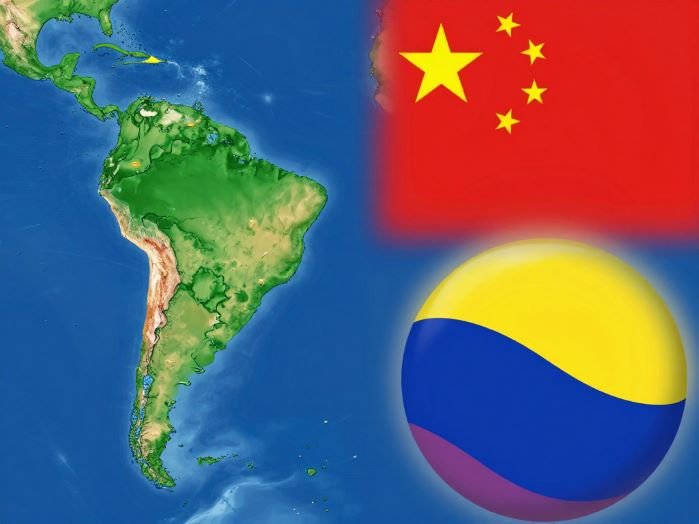
- China: Provides diplomatic support and increases bilateral trade—including a ministerial visit in February 2026—but avoids direct confrontations with Washington.
- Mexico: Dispatches two ships with 800 tons of humanitarian aid and explores alternative oil contracts, which will never materialize due to the review of the free trade agreement with the US in 2026.
- South Africa: Attempts to donate $3.2 million worth of food and medicine temporarily blocked by legal proceedings.
- EU/UN: Establish relief programs worth $3 million channeled through the Catholic Church—conditional on avoiding the Cuban government—in what appears to be more of a humanitarian gesture than a structural solution.
The common denominator is limitation: no one wants to bear the costs of directly challenging US sanctions, particularly secondary sanctions that can exclude banks and companies from the global financial system.
Cuba has explored escape routes with mixed results:
- BRICS and dedollarization: The attempt to trade in yuan or rubles runs up against reality: the dollar remains the lifeblood of global trade. Although the BRICS+ countries produce 43-45% of the world’s oil, their alternative payment mechanisms are nascent and bureaucratic.
- Cryptocurrencies: Their use for remittances offers a marginal respite, but volatility and regulations make them unfeasible for massive state transactions.
- Renewable energies: Investments in solar and wind power are progressing, but they cannot replace oil dependence in the short term.
- Internal reforms: The expansion of the private sector and sustainable agriculture show potential, but clash with the structural limitations of the blockade.
As of February 2026, the blockade against Cuba represents more than just a failed foreign policy: it is the institutional normalization of a human experiment on a national scale. What began as a Cold War tool has evolved into a bureaucratic, automated monster, fueled by electoral interests, corporate profit, and a considerable dose of callous cruelty.
The data speaks for itself: without the blockade, Cuba’s GDP would have grown by 9.2% in 2024. With the blockade, what is growing is the diaspora (400,000 Cubans between 2021 and 2026), malnutrition (28% of children suffer from chronic malnutrition), and despair. The question the international community avoids is ethical: at what point does the deliberate suffering of eleven million people cease to be “foreign policy” and become a crime against humanity?
While Washington celebrates the “firmness” of its stance and Miami capitalizes electorally on the suffering of others, Cuba breathes under an architecture of suffocation so meticulously crafted that it is almost admirable in its perversity. The blockade is no longer a means to an end: it is the end itself, a monument to the human capacity to sustain the suffering of others while normalizing one’s own indifference.
Meanwhile, on the horizon looms another Gaza—another laboratory of control through deprivation—a reminder that what is happening today in the Caribbean could be replicated tomorrow wherever power decides that hunger is a better messenger than diplomacy.