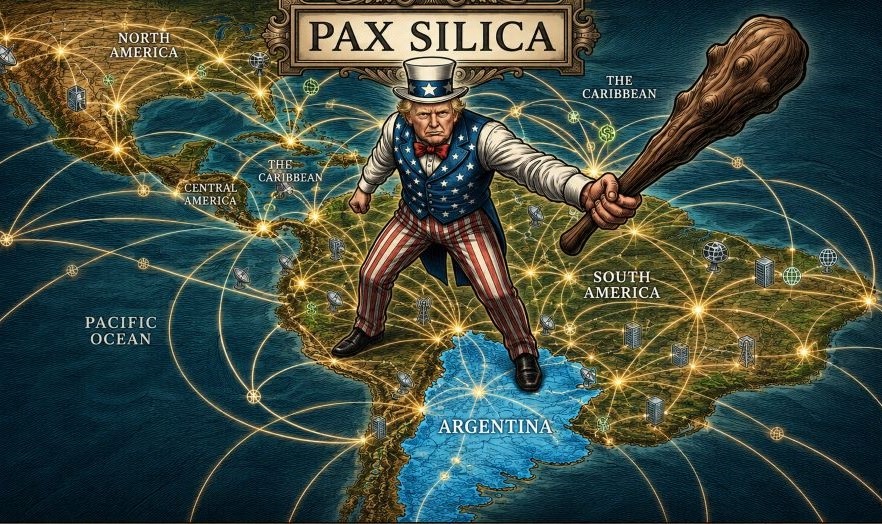
Horacio Rovelli’s analysis unravels the impact of the “Pax Silica” and the key laws of Milei’s administration, warning how the economic “reset” dilutes local control and subordinates Argentina’s strategic resources to Manhattan’s financial capital and the designs of the U.S.
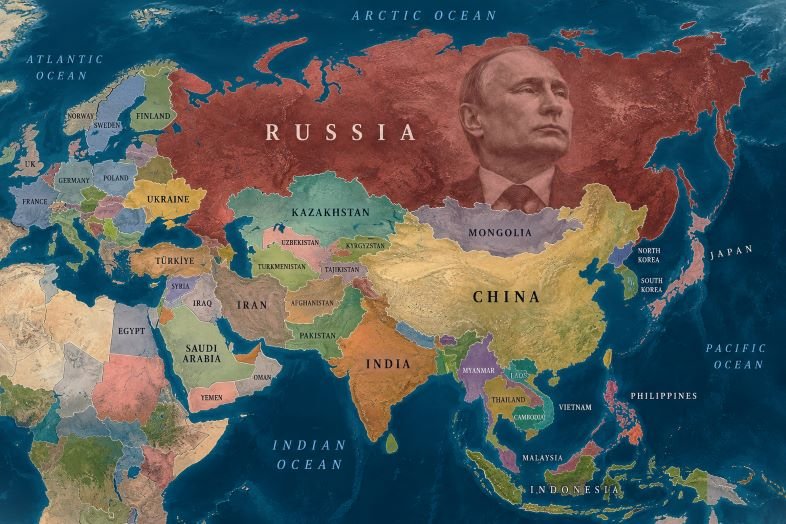
The Pax Silica is an agreement promoted by the U.S. to strengthen supply chains for food, minerals, fuels, and technologies related to artificial intelligence, among other sectors. Through this mechanism, the U.S. seeks to reduce its dependence on China and, in turn, limit the Asian country’s presence in the Americas.
The “reset of Argentina” is a concept mentioned by Paolo Rocca, CEO of the Techint Group, in December 2023 during the ProPymes Seminar. There he described the previous situation as “absolutely unsustainable,” and therefore considered deregulation, fiscal adjustment, and labor reforms necessary to “level the playing field.”
What they did not count on was that foreign capital, headed by Eduardo Elsztain (vice president of the World Jewish Council and member of the Chabad Lubavitch sect), was going to directly influence Javier Milei who considers himself the “most Zionist president in the world”¹.
Once Milei was captured, it was easy to impose the entire economic team (Luis Caputo, José Luis Daza, Santiago Bausili and Vladimir Werning, all from JP Morgan²), who even after the elections of October 26, 2025 extended their influence to the Foreign Ministry (where Pablo Quirno, who worked 17 years at JP Morgan, assumed a central role), thus subordinating themselves to the foreign policy of the USA.
However, Milei’s backers—primarily Rocca, Eurnekian, and Magnetto—had already paid for the legal, tax, and general economic analysis. This work was largely carried out by the firms Lisicki & Litvin; Bruchou & Funes de Rioja; Marval, O’Farrell & Mairal; KPMG; PriceWaterhouseCoopers; and Deloitte Argentina. These firms are also the ones that certify and audit the financial statements of the country’s largest companies and handle their tax payments. Federico Sturzenegger had originally commissioned this work for the candidate Patricia Bullrich; today, it forms the blueprint for neoliberalism in contemporary Argentina, and, following Milei’s election, it is being implemented in the national administration.
First, as soon as the La Libertad Avanza government took office, Decree 70/23 was issued with the aim of deregulating the economy, reforming the state, making work more precarious (by increasing the probationary period and changing severance pay), and establishing a list for the sale and concession of public companies, modifying or repealing around 300 laws. This decree was not repealed and remains in effect.
Months later, the National Congress approved the Executive Branch’s bill under Law 27,742, known as the “Framework Law.” This law authorized the privatization and/or concession of companies such as ENARSA, Nucleoeléctrica Argentina, YCRT, AySA, Belgrano Cargas Railway, SOFSE, and highway corridors, among others. It also included the deregulation of the national electricity system, along with tax, labor, and social security reforms. Furthermore, it created the RIGI (Incentive Regime for Large Investments), which establishes economic enclaves within the country under foreign jurisdiction, removing them from national courts and granting them fiscal stability for 30 years. From the fifth year onward, these investments can freely dispose of all the foreign currency they generate, without any obligation to repatriate it, without paying export taxes or duties, and without the obligation to supply the domestic market.
The “Basic Law” allows the free use of foreign currency derived from non-renewable natural resources. This constitutes a criminal act of fraudulent administration, as it amounts to the depletion of the country’s resources and its mining and hydrocarbon assets, without any compensation.
Countries that enjoy high levels of well-being are those that have managed to accumulate Sovereign Wealth Funds to compensate for the extraction of non-renewable resources, guaranteeing capitalization for future generations.
The “Foundation Law” is of dubious constitutionality because it implies a delegation of powers from the National Congress to the Executive Branch, a practice expressly prohibited by Article 29 of the National Constitution. This article deems such delegations null and void, and establishes that those who formulate, consent to, or sign them will be considered “infamous traitors to the Nation.”
Later, Law 27,743 (Package of Relevant and Palliative Fiscal Measures) was passed, which included a capital amnesty (Asset Regularization Regime), a tax and customs moratorium, modifications to the Income Tax, and changes to the Personal Assets Tax. These measures, always advantageous for capital, allowed the entry into the country of 24 billion dollars that had not been taxed. This, in turn, demonstrates that Manuel Adorni—who did the same—did not even participate in the amnesty because he did not have the money he later acquired.
Law 27,799, the “Tax Innocence” Law, in effect since January 2026, reverses the tax logic by presuming the taxpayer’s good faith, restricting criminal prosecution, raising the minimum punishable amounts, and creating a Simplified Income Tax Regime with a discharge effect. For example, it replaces Article 16 of the Tax Criminal Code to establish full payment (principal and interest) before filing charges, or payment with an additional 50% within 30 business days of the indictment. For compliant taxpayers who file their tax returns and pay on time, the statute of limitations for the Tax Authority’s power to assess taxes is reduced from 5 to 3 years, stipulating that criminal proceedings will not continue if the power to assess taxes has already expired.
Regarding Law 27,798, the National Administration’s 2026 Budget Law, it should be noted that during the first two years of its term, the Executive Branch governed using the 2023 budget extension. The National Audit Office should issue an opinion on both fiscal years to assess compliance, but it has not yet done so. However, Law 27,798 stipulates in its first article that “…at the close of Fiscal Year 2026, the government must present a balanced or surplus financial result.” Therefore, all items comprising primary spending (health, education, public works, social security, and social assistance) are adjusted with the sole purpose of generating the necessary financial surplus to pay the debt interest.
Law 27,804 amended Law 26,639, the “Minimum Standards for the Protection of Glaciers and the Periglacial Environment,” empowering provinces to determine which bodies of water fulfill an “effective hydrological function.” This defines which areas remain protected and which can be designated for activities such as mining or hydrocarbon extraction. The reform of the Glaciers Law is thus subordinated to a political and diplomatic framework designed to secure critical minerals for the energy transition and technological reindustrialization, primarily for the United States. In this context, copper is strategic for electromobility, renewable energy, and data centers.
Law 27,818 approved the settlement agreements and treaties entered into between the Argentine State and the funds Bainbridge Ltd. and Attestor Value Master Fund LP. This not only means payment for those who did not participate in the two debt swaps during the Kirchner administration (2005 and 2010), but also sets a precedent for other creditors to claim the same right.
The so-called “Super RIGI” bill, which extends the enclave model to strategic digital infrastructure, has recently passed one house of Congress. This bill grants tax benefits, including 30-year stability and regulatory flexibilities, but these fail to guarantee technology transfer, the development of local suppliers, or sovereignty over the data and capabilities generated, effectively benefiting corporations like Palantir, Amazon, Google, Apple, and Microsoft.
In contrast, the Milei administration vetoed the University Funding Law and the Pediatric Emergency and Disability Laws, which had been repeatedly passed by the National Congress. It also vetoed the law declaring a state of emergency and catastrophe due to the floods in Bahía Blanca; the law granting an exceptional 7.2% increase for retirement and pension benefits; the law reinstating the pension moratorium (a mechanism for accessing retirement by completing contributions); and the law modifying the distribution scheme of the National Treasury Contributions Fund (ATN) so that it would be shared according to Law 23,548 and not at the discretion of the Executive Branch.
In addition, the government is taking action against the National Atomic Energy Commission (CNEA), Nucleoeléctrica Argentina (NASA), INTA, and INTI, among other organizations, with the aim of stripping them of their functions in order to later privatize and/or close them down. This implies the sale of their valuable assets and the loss of the investment and research carried out over their decades of existence.
The case of Intercargo SAU is paradigmatic: it was put up for sale with a base price of $45.1 million, despite having assets of $93 million and registering profits exceeding $20 million in its last annual report. This is stated in the criminal complaint filed at the end of May 2026 by the Aeronautical Personnel Association against Milei, Caputo, and the head of BICE (Banco de Inversión y Comercio Exterior), Maximiliano Voss, for alleged irregularities and fraud against the public administration.
In December 2025, the Ministry of Transportation mandated that jetways and telescopic walkways be operated exclusively by airport concessionaires. Consequently, Intercargo SAU ceased operating and billing for jetway use at Ezeiza and Aeroparque airports, a service now operated by Aeropuertos Argentina, controlled by the Eurnekian Group. Simultaneously, the government of Javier Milei renegotiated an agreement to extend Aeropuertos Argentina’s concession until 2056, with an option to extend it further until 2066.
Despite the existence of the National Valuation Court, in July 2025 the Valuation Unit was created within BICE to appraise the 25-year concession for the Comahue hydroelectric plants. This concession was valued at the paltry sum of US$706.8 million (an amount that wasn’t even enough to cover the US$801 million in interest payments to the IMF for one quarter). The sale of the State’s stake in Transener was also appraised at US$352.2 million, along with valuations of AySA and Intercargo SAU.
The privatization of AySA was halted by the Ombudsman’s Office of the Province of Buenos Aires and the Administrative Court No. 2 of La Plata, which accepted the lawsuit to protect 26 municipalities in the province. The injunction requires the national government to guarantee the continuity of service, sanitation works, and quality controls, ordering a prior assessment of the environmental liabilities and the impact of the transfer to private hands.
Furthermore, the elimination of the National Highway Directorate through Decree 461/2025 was halted on July 17, 2025, in the San Martín court, which granted an injunction filed by the National Highway Employees Union (SEVINA) and suspended the measure. Subsequently, on August 25, 2025, the National Congress rejected the decree, thus rendering the dissolution of the entity invalid.
That didn’t prevent Luis Caputo from announcing on June 30, 2026, the signing of contracts for the winning companies to assume the operation and maintenance of 1,871 km of national routes and highways that were previously operated by the state-owned company Corredores Viales. These are the Pampa (RN 5) and South – Atlantic – Southern Access sections (RN 3, RN 205, RN 226, Ezeiza-Cañuelas Highway, Riccheri and Jorge Newbery), strategic corridors for production, logistics, and trade in Buenos Aires and La Pampa.
Furthermore, on June 18, 2026, the Argentine government awarded the concession for the Paraná-Paraguay Waterway for 25 years to the Belgian company Jan De Nul and its local partner, Servimagnus. These companies will be responsible for dredging, buoying, and maintaining this vital waterway, through which 80% of the country’s exports (primarily grains and meat) pass. The concession was awarded without considering the objections raised during the public hearing.
The tender specifications stipulate increasing the depth from the current 34 feet to a minimum of 40 feet in the first stage, and subsequently to 44 feet from Buenos Aires to Timbúes. This was contingent upon studies that should have been conducted before the bidding process, not afterward. At the public hearing, hydrologists warned: “…it’s not so easy to dredge 500 km of river and increase the draft so drastically without considering the potential impact on the water flow; the current’s speed will surely increase because a deeper channel is created, carrying more water.” The Office of Administrative Investigations, headed by National Prosecutor Sergio Rodríguez, echoed this sentiment, issuing a report detailing a series of irregularities in the bidding process.
Despite the warnings, the project was approved because in March 2024 the General Ports Administration signed a memorandum of understanding with the U.S. Army Corps of Engineers, transforming the river corridor into a scene of military technical cooperation and direct geopolitical dispute with the People’s Republic of China.
All this dismantling of the nation-state, which generates long-term privileges for big capital, weakens local control and is functional to US trade and designs.
*
Pax Silica is an agreement promoted by the U.S. to strengthen supply chains for food, minerals, fuels, and technologies related to artificial intelligence, among other sectors. Through this mechanism, the U.S. seeks to reduce its dependence on China and, in turn, limit the Asian country’s presence in the Americas.
A paragraph of the agreement states: “The signatories also commit to deepening cooperation in R&D to expand energy infrastructure, strengthen the production of critical minerals and accelerate the development of reliable semiconductors, as well as mobilizing the private sector and promoting new data centers and AI models, both open and closed.”
The Pax Silica was presented by US officials as an economic security framework intended to align policies and investments among “trusted partners” that host major technology companies and key industrial capacity. In this scheme, economic security is inseparable from control over energy, critical minerals, high-end manufacturing, and advanced technologies. Milei’s Argentina signed this agreement on June 26, 2026.
In summary: With the backing of the US, a brutal change occurred in Argentina’s economic and social structure. Local capital was no longer the primary beneficiary, so the “reset” that Paolo Rocca spoke of was subordinated to Manhattan’s financial capital. Aldo Ferrer spoke of “national density,” but he envisioned a local bourgeoisie that no longer exists.
¹ Statement made by Javier Milei at Yeshiva University in New York, on Monday, March 9, 2026.
² JPMorgan Chase & Co. is the largest bank by asset valuation in the U.S. Its principal shareholders are Vanguard Group, BlackRock, State Street Corporation, Morgan Stanley, and Geode Capital Management.