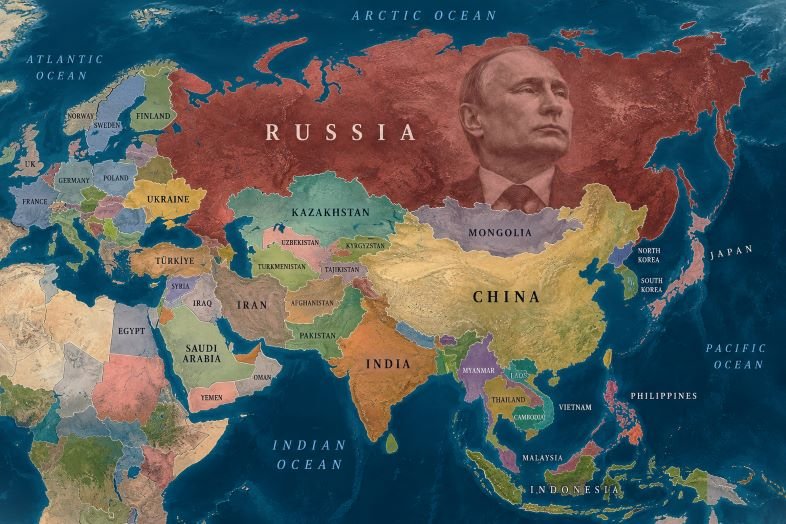
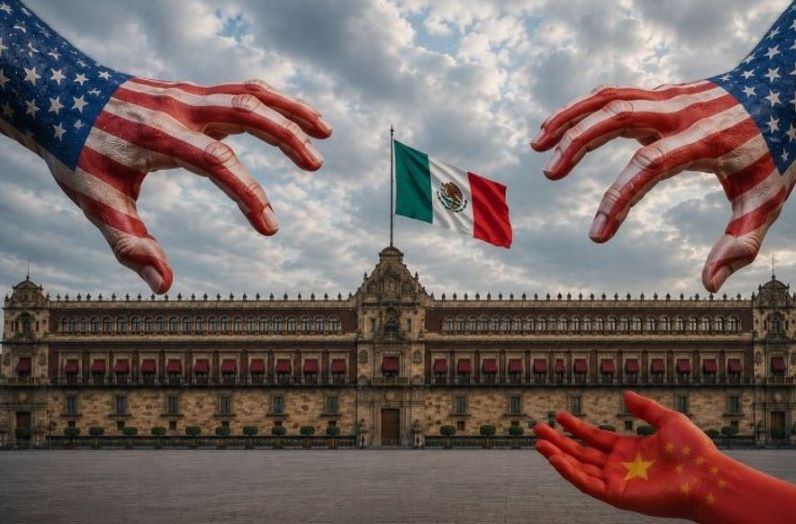
Faced with pressure from the United States, China is seizing the moment and extending a hand that offers technology, respect, and concrete projects. Mexico faces the dilemma of redefining its economic sovereignty. Nationalism and the need for diversification clash with a trade asymmetry that seems to be its historical destiny.
The chronicle of a submission foretold is written with numbers that wound the very core of national pride. Eighty percent of Mexican exports are destined solely for the United States. Eight out of every ten dollars that enter through this channel depend on the will of a neighbor who, in its most recent narrative, has decided to treat Mexico as an obstacle. This is a relationship that transcends trade, becoming a structural suffocation. This figure is the most visible symptom of a disease afflicting Mexico: the impossibility of conceiving a prosperous future without Washington’s approval. The relationship, however, is not one of total dependence, but rather of a brutal asymmetry where the margin for maneuver is reduced to the capacity to react.
Donald Trump’s resurgent protectionism has once again triggered the expiration clause of the USMCA, a kind of sword of Damocles hanging over the Mexican economy . For a decade, the country will be subjected to a rollercoaster of uncertainties, where every move by the US administration seems designed to humiliate and subdue it. The logic behind this pressure is as clumsy as it is irrational: it seeks to level a trade that, by its very nature and according to Adam Smith’s theory of comparative advantage, can never be symmetrical. While Mexico has the climate and labor to produce avocados, Florida grows oranges; while the north requires manufacturing, the south needs technology. Trying to force an absolute balance ignores the invisible hand of the market, the one consumers wield when deciding where to spend their money to get the best product at the best price. The demand for avocados in the United States will never equal the demand for oranges in Mexico, and pretending otherwise is a folly that only seeks to exert geopolitical pressure.
In this context of contempt and harassment, China emerges as an almost chimerical counterpoint. While Marcelo Ebrard receives crumbs of approval in Washington, the Chinese ambassador, Cheng Dao Yang, extends a hand offering technology, respect, and concrete projects, such as the public transportation systems already operating in several Mexican cities. The Chinese narrative is that of an economic ally seeking to deepen trade ties within the framework of the Communist Party’s 105th anniversary, highlighting its involvement in urban mobility and its contribution to the quality of life in Mexico. However, the Mexican administration’s response seems to be that of a victim who repeatedly returns to its aggressor, preferring the familiar mistreatment to the dignity of a new alternative.
Recent history shows that Mexico has been reluctant to strengthen ties with the Asian giant. Despite China having overtaken the United States as the main importer in 152 Mexican industries, the country has not joined the Belt and Road Initiative or the Asian Infrastructure Investment Bank. This stance, which some consider prudent, others see as cowardly submission. The Mexico-China relationship has been marked by tensions, such as the cancellation of the Mexico City-Querétaro rail project and the nationalization of lithium, but also by a real opportunity for diversification. In 2022, Chinese companies accounted for 40% of nearshoring investment in Mexico, occupying 80% of the space in newly constructed industrial parks. This presence, driven by the desire to access the U.S. market from Mexican territory, demonstrates that, even without a formal treaty, trade and investment are flowing.
The dilemma is profound and heartbreaking. Mexico is torn between loyalty to the abusive “husband” who belittles it and the temptation of a courtship that promises respect but demands structural changes. Economic sovereignty, understood as the capacity to decide the course of national development without external impositions, seems a luxury the country cannot afford. The key is not to break with the United States, but to make the United States dependent on Mexico in critical sectors, such as the production of chemical precursors or lithium. However, the dependence is so deep that any misstep could trigger a collapse. The asymmetry, forged in decades of forced integration, has undermined the negotiating power and self-esteem of a nation that seems to have forgotten that dignity is also an economic asset. In the balance of international trade, self-respect is the hardest currency to recover. Mexico’s foreign policy, tied to the US wagon, demonstrates an alarming lack of vision for building a future where prosperity does not depend on the charity or whims of a hostile neighbor.