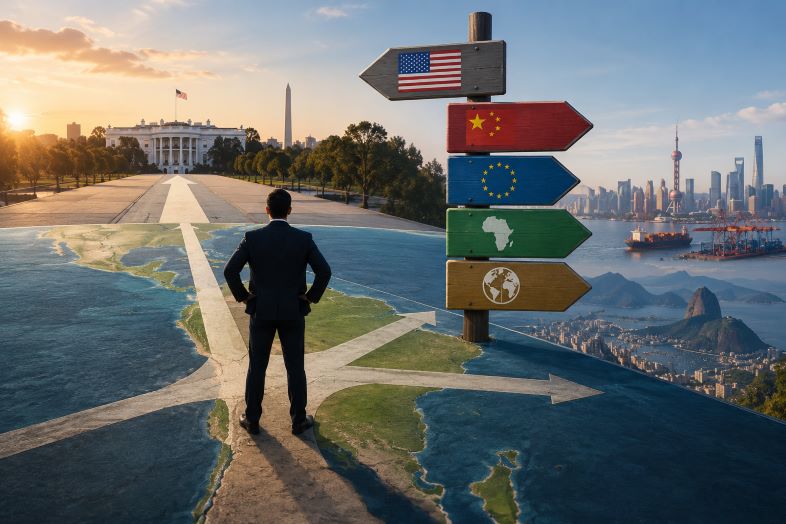
The guiding principle for Colombia and Latin America should be to engage maturely with the US, but to reject Washington’s dictates with whom else we can engage.
Marco Rubio‘s tour of Colombia, Ecuador, and Peru is not a series of diplomatic visits. It is the staging of a regional realignment that coincides with the rightward shift of several governments and the new US National Security Strategy. It is no coincidence that the route connects Abelardo De La Espriella, Daniel Noboa, and Keiko Fujimori, three leaders aligned with Donald Trump and incorporated into Operation Shield of the Americas. Washington is once again looking to Latin America as a priority area for its security, resources, and its
competition with China.
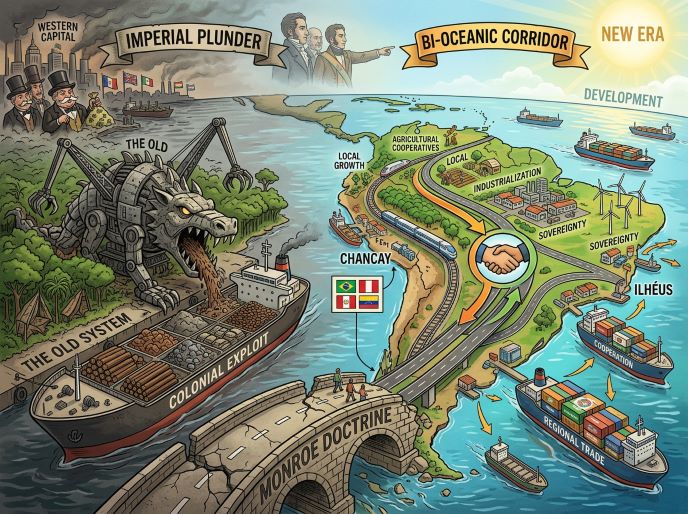
The US document makes no secret of its intentions. It proclaims a “Trump Corollary” to the Monroe Doctrine to restore US preeminence in the hemisphere. Its formula is “incorporate and expand”: recruit like-minded governments, strengthen new partners, expand its military presence, secure supply chains, and discourage regional cooperation with extra-regional powers. It even proposes conditioning alliances and aid on reducing US influence in ports, infrastructure, and strategic assets.
Rubio’s stop in Barranquilla fits perfectly into that framework. The so-called Barranquilla Agreements cover security, trade, investment, migration, Venezuela, critical minerals, and civilian nuclear energy. The Colombian government proposed the Patriot Plan 21st Century to modernize radars, drones, air defense, intelligence, cyber defense, and special forces with US support. In addition to confirming Colombia’s entry into the Shield of the Americas, it offered to make Colombia Washington’s “principal hemispheric security partner.”
Not every agreement with the United States implies subordination. It remains our main trading partner and a crucial ally in investment, knowledge, technology, and security. The two memoranda on strategic minerals and nuclear energy are, according to the official statement, non-binding frameworks subject to Colombian law. They can offer real opportunities if they generate technology transfer, added value, employment, and regulatory capacity, rather than a new extractive specialization.
The concern stems from both accumulation and context. The same US security document identifies Latin American minerals, energy, and infrastructure as elements of its global rivalry. While Colombia requests military support and relief from the 12.5% tariffs that violate the Free Trade Agreement between the two countries, it is subordinating itself to a regional architecture designed in Washington, distancing itself from China, and aligning itself with sensitive positions on Israel and Venezuela. The relationship becomes asymmetrical precisely the more it encompasses.
Colombia is familiar with this path. Marco Fidel Suárez, in the second decade of the last century, called it réspice polum: looking toward the North Star. Alfonso López Michelsen responded decades later with réspice similia: looking toward our fellow human beings and diversifying relationships. He wasn’t proposing a break with the United States, but rather overcoming dependence on a single center of power. This orientation gained new relevance under the Petro administration with its opening to Latin America, China, Africa, and the Global South.
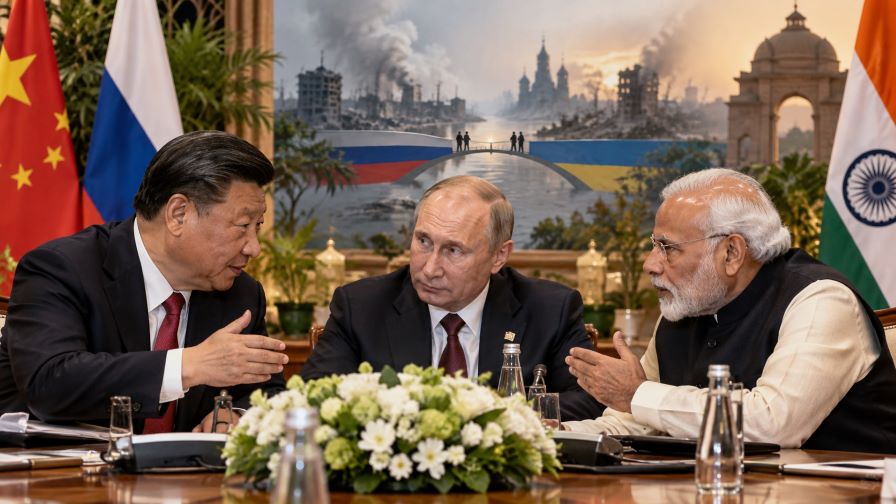
Nor is the contemporary alternative an impossible equidistance between powers. India calls it multi-alignment: it cooperates with the United States in the Quad, participates with China and Russia in the BRICS, and decides each relationship according to its own national interest. It does not confuse friendship with obedience nor autonomy with hostility.
That is the principle that should guide Colombia and Latin America. Mature engagement with Washington, yes; accepting that Washington dictates with whom else we can engage, no. Sovereignty in the 21st century does not consist of isolation, but rather in preserving the effective capacity to choose, negotiate, and sometimes say yes and sometimes no. The real risk of this tour is not getting closer to the United States. It is returning to looking only to the North.