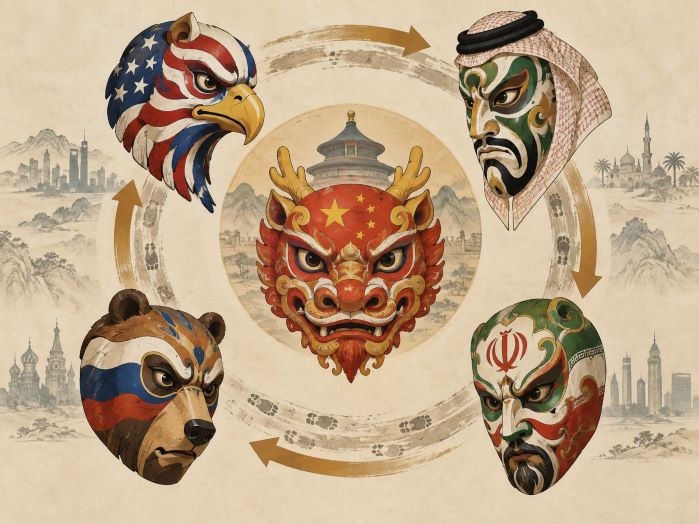
Foreword: When reading articles, please make it a habit to pay attention to the time. Multiple events often occur on the same day or around the same time. While the games between countries may not be a power struggle from a distance, there is a high probability that they are related in some way.
The waves in the Persian Gulf have yet to subside, and the waterways in the southern Red Sea are once again in turmoil. Perim Island, a strategic point at the narrowest point of the Bab el-Mandeb Strait, has fallen entirely into the hands of the Houthi rebels in Yemen. A deadlock that the United States cannot resolve is sweeping across the heart of the global energy sector.
In the early hours of September 19, air raid sirens blared in Riyadh, the Saudi capital, as air defense systems fired continuously into the night. This marked the first time air raid sirens had been sounded in Saudi Arabia’s political center since the full escalation of the US-Iran conflict, and it is said that 110,000 people were forced to evacuate. Meanwhile, after Saudi Arabia’s repeated appeals for help to the US were rejected, Trump finally responded.
The deal involves 48 F-35 fighter jets, valued at $24.3 billion. However, the first deliveries typically take four to five years, with the earliest delivery expected around 2030. This is akin to Saudi Arabia’s house catching fire, calling the US for help, only to be told that the fire hydrants won’t be operational for four or five years, and they must patiently wait for rescue. What can Saudi Arabia do? They are extremely anxious. And many others are equally anxious and unsure what to do.
On the same day, the Russian military launched a large-scale nighttime airstrike against Ukraine, focusing on logistics centers, ports, energy facilities, and military industrial enterprises in Kyiv, Odessa, and Zaporizhzhia. However, in the Moscow and Astrakhan regions, the Russian military intercepted and destroyed 641 Ukrainian drones, and the Russian air defense system shot down a total of 936 Ukrainian fixed-wing drones in 24 hours.
In fact, the Russia-Ukraine conflict has transitioned from conventional military operations to truly modern military operations. The hallmark of this transition is the outstanding performance of drones in the confrontation. It is precisely the large-scale deployment of drones that has left Moscow, which was originally in the lead, struggling to cope.
Russia and Ukraine are currently restarting negotiations, but the prospects for reaching an agreement are unclear. Losing on the battlefield means having to concede more concessions at the negotiating table, but Putin is unlikely to agree easily due to the current situation in the Middle East. Trump, however, believes that Russia is at a disadvantage on the battlefield, has too few bargaining chips, and has not provided any substantial assistance to him in the Middle East.
However, that’s not the key point. The key point is that Trump has changed his reliance on China for help.
Since the new round of China-US trade consultations began in New York on the 19th , the most important task for the White House has been preparing for the meeting between the Chinese and US leaders, and figuring out how to get the Chinese side to “condescend” to meet before the Mid-Autumn Festival. For Trump, the outcome is secondary; the meeting itself is paramount. Why? Learn from history (I will write about the China-US summit separately).
Therefore, since Trump is hoping that China will step in to help, Russia’s thoughts are naturally not that important.
On September 16, the U.S. House of Representatives passed the Lindsey Graham Act of 2026 , which included sanctions against Russia and Iran. The bill received 262 votes in favor, granting President Trump the power to impose tariffs of up to 100% on countries that purchase Russian oil. It is expected to be signed into law within days.
Three days later, on the 19th , Trump personally signed the bill. Therefore, no major event is isolated.
The Persian Gulf issue is actually a spillover from the Russia-Ukraine war, and Trump’s criticism of Biden wasn’t entirely empty talk, given that the Russia-Ukraine conflict originated from the actions of the Biden and British governments. It was precisely because mediation failed that Trump turned his attention to the Middle East.
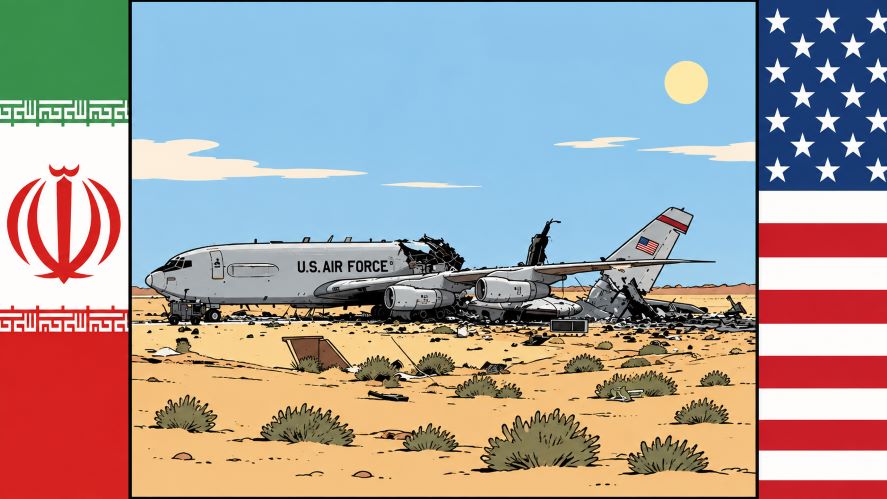
In late February of this year, the United States and Israel launched a sudden joint airstrike against targets within Iran, officially citing Iran’s uranium enrichment level approaching the nuclear threshold, with Washington declaring that “the situation can no longer wait.” However, this blow not only failed to shatter Tehran’s nuclear will, but also overturned the Middle East security framework that had been maintained in the Persian Gulf for decades.
Out with the old, in with the new. The old security framework does not align with the interests of Middle Eastern countries, making a new framework inevitable. In 2024 , China formally proposed that “the Middle East belongs to the people of the Middle East,” following China’s mediation of Saudi Arabia and Iran the year before, which initiated a major reconciliation within the Islamic world. This demonstrates that China’s strategic planning is not only forward-thinking but also perfectly timed.
China is proceeding cautiously step by step, while the US is falling into traps at every turn. These traps weren’t dug by China, but by the US itself.
The Middle East is different from Ukraine; it involves numerous countries and is a global oil hub and the heartland of the US dollar. The US has dismantled its own security framework. Therefore, from the very beginning of the US-Iran conflict, I said that the US’s move against Iran was a terrible one.
Because the United States did not have absolute power around the turn of the millennium.
Because the US and the West have forced Russia from the West to the East.
Because China has risen.
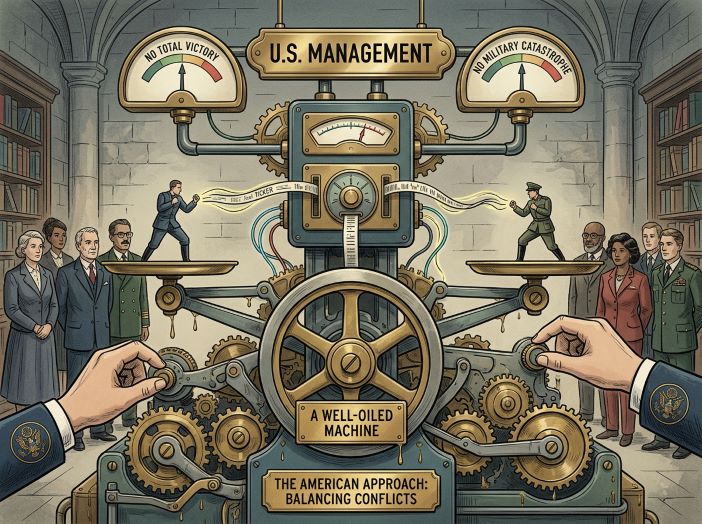
The biggest variable in war is that it is full of variables; you can start a war, but you may not be able to end it.
Trump wants to settle the score by taking down Iran, control the Persian Gulf, then appease the Middle Eastern countries, and finally reintegrate the Middle East.
However, things didn’t go as planned. The Persian Gulf issue remained unresolved, extending to the Red Sea, with Saudi Arabia and the Houthis becoming the main players, and the arena shifting to the Bab el-Mandeb Strait. Saudi Arabia’s greatest enemy now is probably not Iran, nor the Houthis, but the United States.
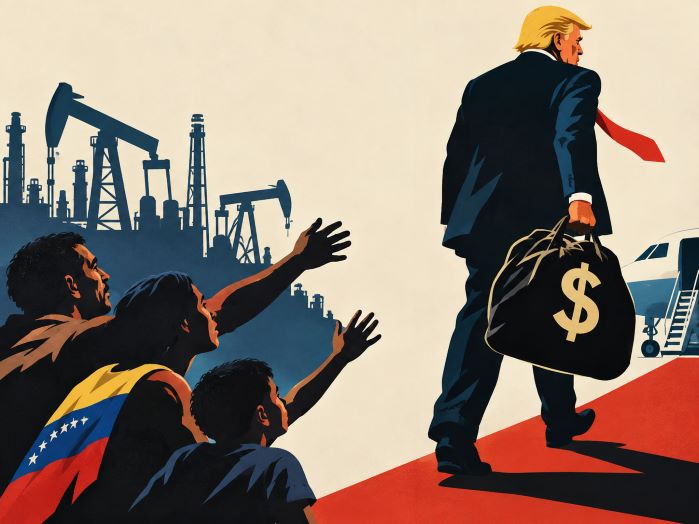
Trump set off a firecracker, left it in the Middle East, and ran away. The two straits, one to the south and one to the north, are controlled by Shia groups, trapping major oil producers and choking off the world’s energy lifeline. While the players on the surface are Gulf states like Iran, Israel, and Saudi Arabia, in reality, various global players are involved.
For the United States, this is not just a “backyard fire,” but has become another “Syria.”
However, one country has a special status: Russia.
Since 2026 , Moscow’s goal has been to end the war as quickly as possible. Putin pinned his hopes on Trump persuading the EU, followed by joint pressure from the US and Europe on Zelensky to cease hostilities. However, Trump is not Biden. His domineering attitude has alienated almost all of Europe, and the division of interests has led to serious disagreements between the US and Europe. Thus, the Ukraine issue has become a “seesaw.”
The US was the main driving force behind Moscow’s negotiations with the EU. The EU, meanwhile , was interfering behind the scenes. Thus, the Russia-Ukraine war has dragged on to this day. Putin ultimately chose a “protracted war,” while simultaneously adopting a wait-and-see approach.
While Russia was observing the situation, the United States, unable to break through the deadlock on the Iran issue, turned to Russia to curry favor, exchanging Ukrainian interests for US interests in the Middle East. In other words, it used the benefits of the Russia-Ukraine ceasefire to obtain Russia’s cooperation on the Iran issue.
On September 5, U.S. Presidential Envoy Witkov and Trump’s son-in-law Kushner flew to Moscow for a closed-door meeting with Putin that lasted more than three hours. The following day , they traveled to Kyiv to meet with Zelensky. These two are the same people who were previously in charge of U.S. affairs related to Iran.
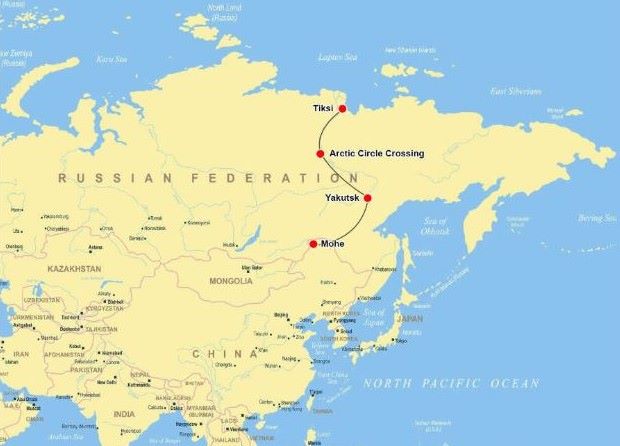
On the Iranian issue, Putin can only mediate a ceasefire, which is extremely fragile and could easily escalate. On one hand, Putin doesn’t want to offend Iran, as Iran is Russia’s last foothold in the Middle East where it can exert influence. On the other hand, the blockage of the Persian Gulf shipping routes allows Russian oil to be sold at higher prices, which is also the reason for the further complications surrounding the Power of Siberia 2.
Russia believes it has enough leverage with China because we are a major oil consumer. However, in reality, China’s new energy industry is booming, while Russia is bogged down in eastern Ukraine and has lost ground in the Middle East. Russia is using shipping lanes as leverage to negotiate gas pipelines with China, but China is naturally not buying it. Therefore, the negotiations for the Power of Siberia 2 are still dragging on.
Therefore, China naturally hopes for unimpeded access to the Persian Gulf, and the United States also approached us based on this point.
The whole world, including the US and Russia, knows that China is the world’s largest oil importer. However, how has China responded? Has it reacted like Japan and South Korea, crying and complaining, or has it acted with the same urgency as India?
Conversely, China has adopted a very “detached” attitude. “I’m not in a hurry anyway; you’ll be the one in a rush, and then you’ll come begging to me.” This is Chinese wisdom. Iran is learning from China. Iran is currently waiting—waiting for the US midterm elections, waiting for Trump to become a “lame duck president.” However, it should be noted that those waiting are Iran’s hardliners; those in a hurry are Iran’s moderates.
The Iranian government, led by the Iranian president, wants to negotiate a ceasefire with the United States as soon as possible, and is even willing to abandon its nuclear facilities for this purpose.
To some extent, their goals align with those of the United States, but they lack control over the Iranian Revolutionary Guard. Without weapons, they cannot influence Iran’s hardliners, let alone bypass them to negotiate separately with the United States. Even if they were to reach an agreement with the United States, the hardliners might not accept it, thus failing to achieve their objectives.
On the evening of the 19th, Mohsen Rezaei , secretary of Iran’s Supreme National Security Council , confirmed that Iran had presented the US government with seven conditions for initiating negotiations through mediators in Qatar and Pakistan, and was awaiting a response from US President Trump.
According to Pakistani media reports, the seven conditions include : lifting the naval blockade and oil export sanctions against Iran, unfreezing Iran’s overseas assets, ceasing military operations and threats against Iran, ending war operations against Iran and its regional allies, the withdrawal of US troops from the region surrounding Iran, compensation for war losses, and ceasing interference in Iran’s nuclear and missile capabilities.
The seven conditions have completely overturned the revised memorandum of understanding by the Iranian government, returning to the original version, and adding an additional condition: to cease interference in Iran’s nuclear and missile capabilities.
Isn’t this a slap in the face to the Iranian presidential palace? For the United States, this is no different from surrendering outright.
The reason Iranian hardliners dared to demand such a price is twofold: firstly, they saw Trump’s desire to withdraw from the Middle East and focus on his re-election campaign; secondly, Saudi Arabia had been soundly defeated by the Houthi rebels, who had not only expanded their territory significantly but also seized control of the entire west coast. This gave Iranian hardliners the possibility of reviving the “Shia resistance arc,” bolstering their confidence.
On September 16, Foreign Minister Wang Yi held talks with Iranian Foreign Minister Araqchi in Beijing. China stated that it does not want regional tensions to spill over further toward Yemen and the Red Sea.
For moderates in Iran, the situation is completely different. Unable to defeat the US or control Russia, their only hope is to turn east to China to exert pressure on the hardliners in order to achieve a ceasefire. And before that, Saudi Arabia had also turned to China.
The US, Saudi Arabia, Iran, and even Russia have gone around in circles, only to find themselves back at the starting point: China. So what exactly is China’s opinion? On the day of the China-Iran foreign ministers’ meeting on the 16th, the Chinese foreign minister made the following statement:
The current situation once again proves that the existing security architecture in the Middle East is inadequate and needs to be reformed and strengthened.
Indeed, the world is about to change.