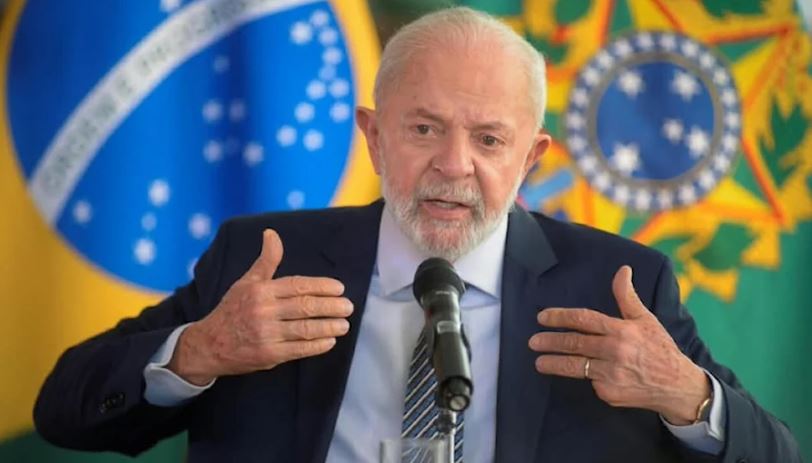
The company deactivated the candidate’s ad account and official Facebook page 10 days before the election. The president’s team filed a formal complaint with the company and is considering appealing to the Superior Electoral Court.
Meta’s censorship in Brazil reached a new level when the company deactivated the advertising account of Luiz Inácio Lula da Silva’s campaign last Wednesday.
This measure came 10 days before the first round of elections, scheduled for October 4. The restriction prevented the creation and dissemination of new campaign advertising on Instagram and Facebook, key platforms for contemporary political communication in the South American country.
On the same day, Lula’s official Facebook page was also disabled. The company restored it hours later, but did not offer a public explanation for the restriction, according to the appeal filed by the campaign.
As expected, the lack of transparency on the part of the technology company generated immediate reactions in the Brazilian political sphere.
In the notification sent to the campaign, Meta simply stated that some activities did not follow its internal rules, without specifying what conduct motivated the sanction.
The company also indicated that it was possible to request a new review if the issue was believed to be an error. According to digital law experts, this generic communication is a common practice among technology platforms that hinders the ability of affected parties to defend themselves.
The legal recourse and the requirement of human review
The Brasil Pronto pra Mais coalition and the Workers’ Party filed a formal complaint with Meta on Thursday, September 24. In the document, they demand the reinstatement of the “Eleições 2026 Luiz Inácio Lula da Silva Presidente” account within a maximum of six hours.
The document also requests that the sanction be subject to direct human review by platform analysts, and not just an automated filter.
Furthermore, it requests the preservation of digital records linked to the account, invoking articles 13 and 15 of the Brazilian Internet Civil Framework.
This legislation establishes the deadlines and responsibilities for keeping records of internet connection and application access in the country.
The campaign’s lawyers described the deactivation as unilateral, unmotivated, and lacking any objective justification.
They argue that this type of restriction during the electoral period should be analyzed from the perspective of Electoral Law, given the weight that digital platforms have acquired in the civic debate.
In this context, Meta’s censorship takes on a dimension that transcends mere content management, becoming a factor that alters the conditions of democratic competition.
The PT’s reaction and the threat to go to the TSE
The PT’s Secretary of Communication, Éden Valadares, confirmed the incident on his social media and announced that the campaign has already formally questioned Meta to ask for explanations.
Valadares stated that the team is also considering appealing to the Superior Electoral Court to compel the company to specify the duration of the restriction and its potential impact. The legal strategy encompasses all available avenues to reverse the situation.
According to Valadares, the evidence of interference is irrefutable , and he asserted that he has been denouncing the role of digital platforms since December of last year, both in articles and in interviews with the press.
He also noted that the campaign had previously filed complaints with the Supreme Electoral Tribunal (TSE) for similar reasons. This history of complaints suggests a pattern of behavior that digital governance specialists consider worrisome for electoral fairness.
The incident occurs against a backdrop of growing tension between the ruling party’s campaign and major technology platforms . Data from Meta’s Ad Library shows that, between September 1 and 21, three Liberal Party candidates collectively spent approximately 126,000 reais to promote posts critical of Lula on Instagram and Facebook.
This information, publicly available in the company’s own advertising transparency tool, has been used by PT leaders as an additional argument to support the claim that the suspension of Lula’s account created an imbalance in the competition for voters’ attention during the final stage of the campaign.