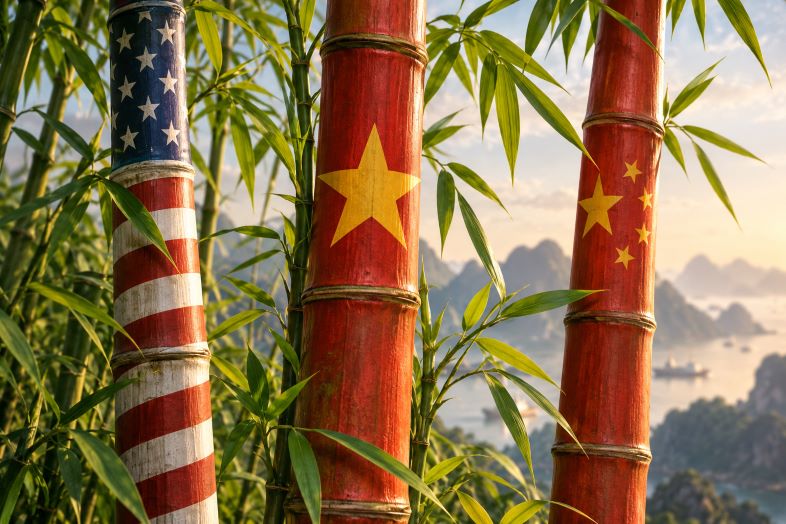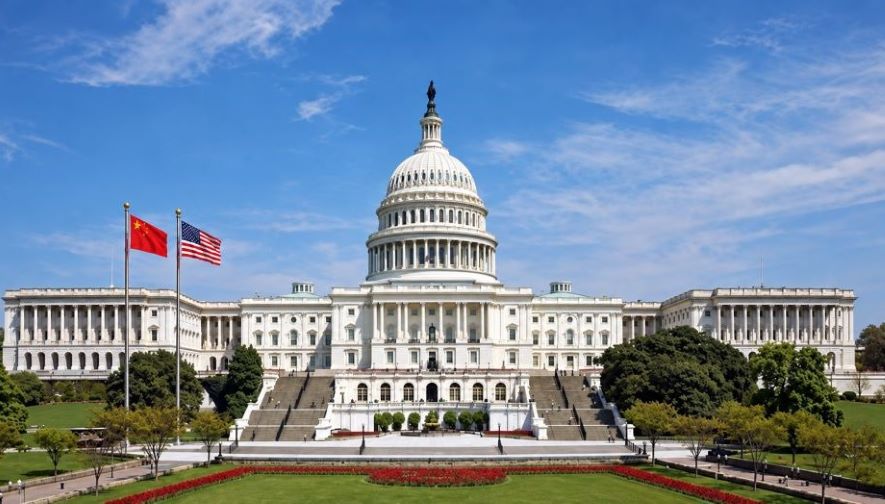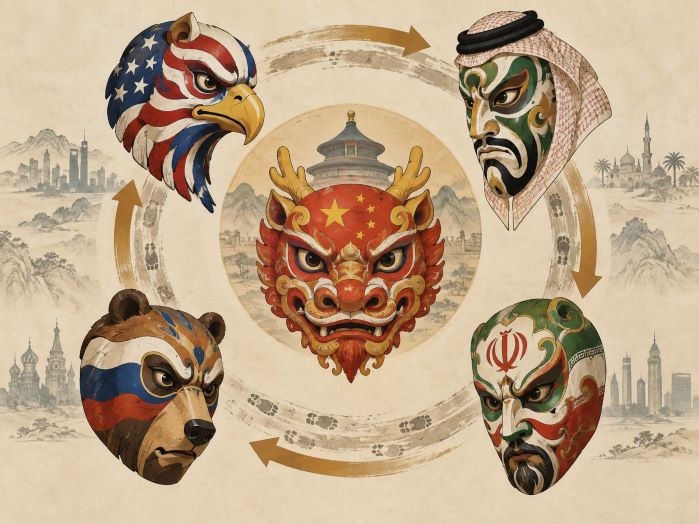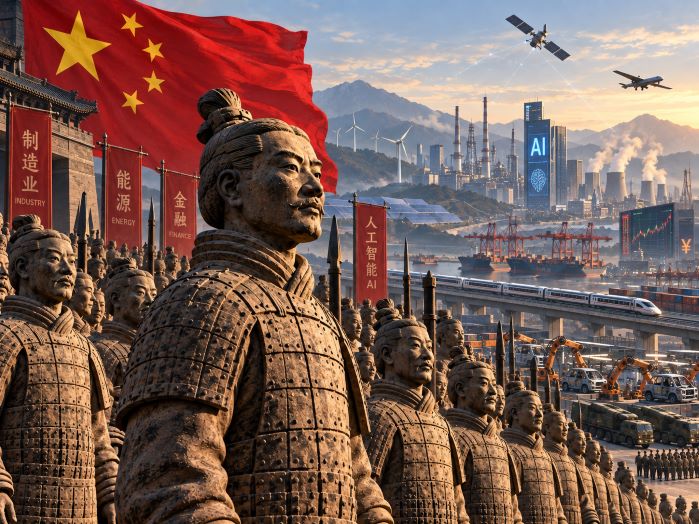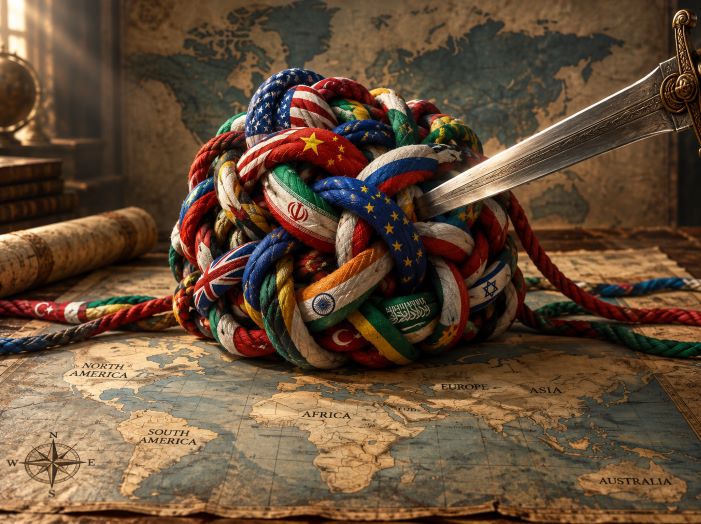
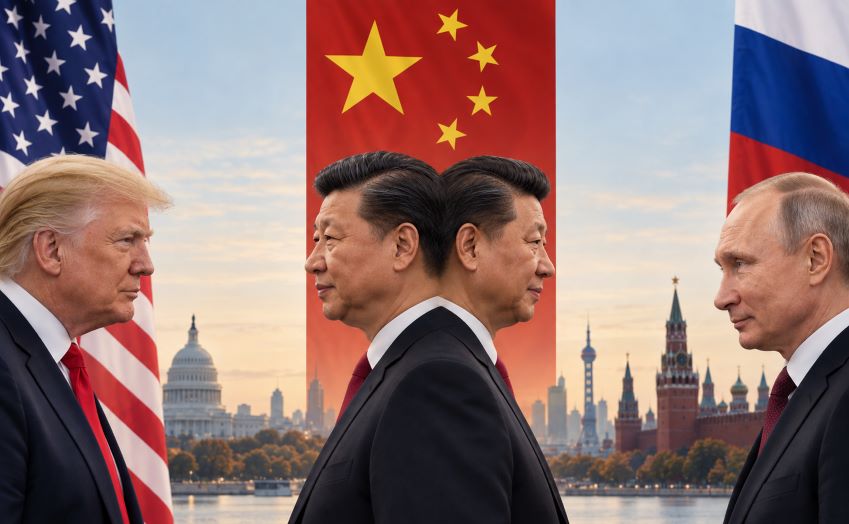
When Donald Trump and Vladimir Putin held consecutive Beijing summits, Western observers fixated on a false binary: Is China tilting toward Moscow or Washington? This framing amounts to a fundamental category error. Beijing rejects old balance-of-power logic and never faces a forced choice between great powers. Its foreign policy is bound to five unchanging operational pillars: sovereign independence, mutual respect for all nations, equitable development, anti-hegemonism, and strict non-alignment. These are not slogans but hard guardrails that define every Chinese diplomatic decision. For Russian policymakers, grasping these rules to separate Beijing’s feasible support from its firm red lines is essential to realistic bilateral coordination.
Coordinating: Not a Military Alliance
A clear divide separates Sino-Russian ties from Western blocs such as NATO. Unlike Article 5’s automatic mutual defense mandate, their comprehensive strategic coordination is voluntary and issue-specific, with no binding troop deployment commitments. China retains full authority to adopt stances distinct from Russia on regional flashpoints—an impossibility for formal alliance members.
Admittedly, both countries criticize the US-centred global order as unfair and ill-suited to an emerging multipolar world. Their shared goal of dismantling unipolar hegemony has yielded concrete outcomes: the renewed China-Russia Good-Neighbourliness Treaty and joint calls for a new international relations framework. The two also co-lead BRICS and the Shanghai Cooperation Organization (SCO), Global South platforms designed to push UN, IMF and World Bank governance reforms, not anti-Western coalitions.
Critics claim that the deep Sino-Russo bilateral cooperation creates a “de facto alliance”, but it reflects a typical misreading of the relationship between the two countries. Alliances demand uniform alignment across every global dispute, while China’s non-alignment principle preserves full independent diplomatic room to manoeuvre.
Structural Divergences: Uneven Power, Separate Strategic Priorities
That said, the two countries’ shared opposition to unipolarity cannot erase deep structural gaps rooted in their respectively unequal national strength. China’s industrial, trade and technological capacity is delivering near-superpower global reach with cross-continental interests. Russia’s agenda, by contrast, is dominated by regional security threats worsened by Western sanctions and NATO’s eastward expansion.
Their core split lies in competing definitions of legitimate global power. Three of China’s five guiding rules—anti-hegemonism, non-alignment and win-win collaboration—dictate its approach to great-power competition. Beijing no longer holds unrealistic hopes of seamless US alignment; it defends its interests firmly, yet rejects any bid for regional or global dominance. This long-term stance is no tactical ploy.
However, Russia’s multi-vector diplomacy, meant to balance ties with Europe, Asia and the Global South, has been hobbled by sustained Western confrontation. Non-alignment enables Beijing’s signature dual-track diplomacy: stable dialogue with Washington alongside deepened coordination with Moscow, a balancing act incompatible with rigid alliance obligations.
Military Versus Economic Support: Red Lines for Russia
A closer look at Beijing’s act may further explain what China is willing to do and what it won’t when it comes to Russia. The Ukraine war and US sanctions lay out consistent, non-negotiable limits to Chinese assistance. Western commentators repeatedly ask if Beijing will supply lethal arms to Russia, but this overlooks its non-alignment commitment to staying out of active conflicts.
China remains a neutral non-belligerent, banning lethal arms sales to Moscow and strictly regulating its export of dual-use goods. To the extent that Moscow is believed to have never formally requested such aid, weapons transfers would shatter Beijing’s credibility as a Global South peace broker and erode vital European partnerships.
Detractors argue China’s large-scale civilian trade with Russia amounts to wartime favoritism. This confuses normal commerce with partisan military backing, at least from China’s perspective. China maintains trade links with Ukraine alongside Russia, and unilaterally cutting these flows would mean to adopt US sanctions as its own policy—contradicting its core priority of equitable global development.
Practical Chinese support for Russian centers on economic stabilization amid Western isolation. Official Chinese Customs data shows bilateral trade hit $134 billion in the first six months of 2026, a 25.6% year-on-year jump, with steady growth projected to top $250 billion for the full year. China absorbs Russian energy exports, replaces lost Western manufactured goods and expands yuan cross-border settlements to cut reliance on the US dollar. Putin’s delegation of energy and finance ministers underscores that economic integration is the only sustainable bilateral pillar.
Beijing’s message is clear. China appreciates the resilience of Russia and respects the latter to be one of the pillars of the multipolar world in political, economic and military terms. The readiness to retaliate US sanctions and to ignore secondary sanctions has shown China’s preparedness and resolve to act independently that befits a big power itself. The openly declared support of China for expanding its economic cooperation with Russia proves not only China’s uncompromised pledge to further this strategic partnership but also the joint effort of the two countries to denounce US hegemony.
Trump-Putin Outreach: Multipolarity Without Zero-Sum Trade-offs
What needs to be clarified is that when Western analysts may view the Trump-Putin diplomatic outreach as a Russian bid to reduce reliance on China, they miss both US domestic incentives and Beijing’s multipolar worldview. Trump is seeking to refocus US competition on China,[1] cutting costly European security spending and resolving nuclear and energy tensions with Moscow ahead of elections.[2]
China welcomes any US-Russia progress that helps de-escalate and better end the fighting in Ukraine.[3] Strategically, restoring a stable Washington-Moscow dialogue strengthens the two powers’ collective action against nuclear proliferation and climate risks, and warmer bilateral ties between the US and Russia do not inherently harm Chinese interests within a multipolar order, again from China’s perspective.[4]
Beijing does not operate under naive optimism, however. It will be wrong to assume that its planners will not conduct regular risk assessments. Should US-Russia détente bring coordinated export controls or other policies designed to curb China’s tech and economic growth, Beijing will for sure deploy targeted, defensive countermeasures without abandoning its multipolar framework.[5][6] Western observers often miss this nuance, defaulting to outdated Cold War bloc assumptions.
Principles Over Geopolitical Chess
While China’s dual engagement with Washington and Moscow cannot be reduced to a zero-sum power game anchored in its five foundational rules, these principles cannot insulate Beijing from mounting strains. US technology decoupling and expanded Indo-Pacific military deployments test its strategic patience, while Russia’s growing economic reliance creates an asymmetric partnership that risks long-term friction.
Let truth be told that China’s dual role as Russia’s top trade partner and Ukraine’s pre-war economic associate also weakens its neutral mediator standing across the Global South. Most notably, a core tension persists between Beijing’s anti-hegemonic rhetoric and its expanding regional footprint in the South China Sea, Himalayas and Belt and Road Initiative—sparking legitimate questions about whether it seeks to dismantle unipolarity or build its own sphere of influence. How Beijing resolves these contradictions without abandoning its core principles invites continued observation.
For Russian strategists, the takeaway is unmistakable: China is a dependable economic partner, not a military ally. Its five guiding pillars are binding constraints, not negotiable bargaining chips. Investing in bilateral economic integration while preserving independent military and diplomatic capacity is Moscow’s soundest path forward when it comes to handling its relations with China. Mistaking China’s principled coordination for unlimited backing would be a severe strategic miscalculation.
The China-Russia-US triangle is a reality that needs attention and cannot be overlooked nor ignored. Policymakers trapped in zero-sum Cold War frameworks will fail to navigate the emerging order of multipolarity. Those who recognize both the coherence of Beijing’s principle-based strategy and its inherent tensions can build realistic, durable engagement for the multipolar century ahead.
Wang Nansen is the Vice Chairman and Director of the Shanghai Huantai International Strategic Research Center, a member of the expert group of the Russian think tank “Valdai International Discussion Club,” and a columnist for the British media outlet “Middle East Eye.”
(Shanghai Huantai International Strategic Research Center via Rim Pacific International Strategy)
___________________________________
References:
[1] 2024.12.17https:// carnegieendowment.org/europe/strategic-europe/2024/12/why-a-rapid-us-withdrawal-from-europe-will-reinforce-china?
[2] 2024.11.7https: //tass.com/world/1868751
[3] 2026.2.14http:// www.fmprc.gov.cn/eng/wjb/wjbz/hd/202602/t20260217_11861042.html
[4] 2026.6.6https:// www.thestar.com.my/aseanplus/aseanplus-news/2026/06/06/first-trump-then-putin-go-to-china-does-great-power-diplomacy-now-hinge-on-beijing
[5] 2025.8.14https://nationalinterest.org/feature/what-china-wants-fears-from-trump-putin-deal?utm_source=twitter&utm_campaign=web- share
[6] 2025.12.13https:// asiatimes.com/2025/12/russia-us-detente-can-revolutionize-global-economic-architecture.