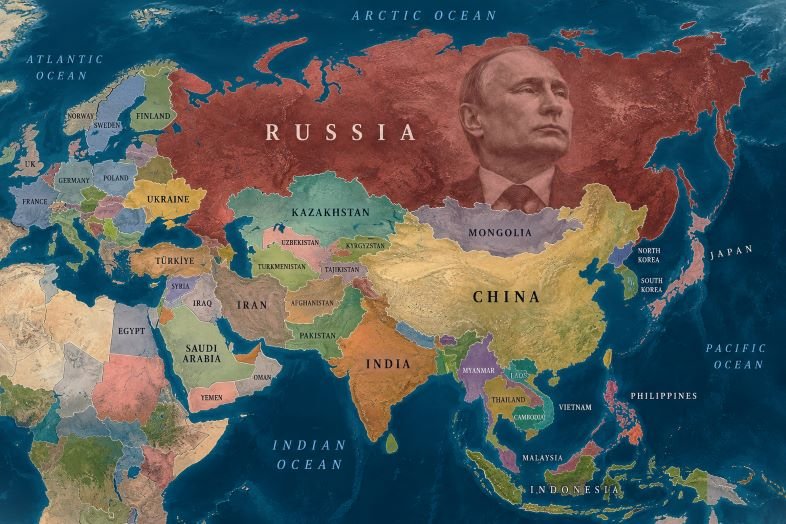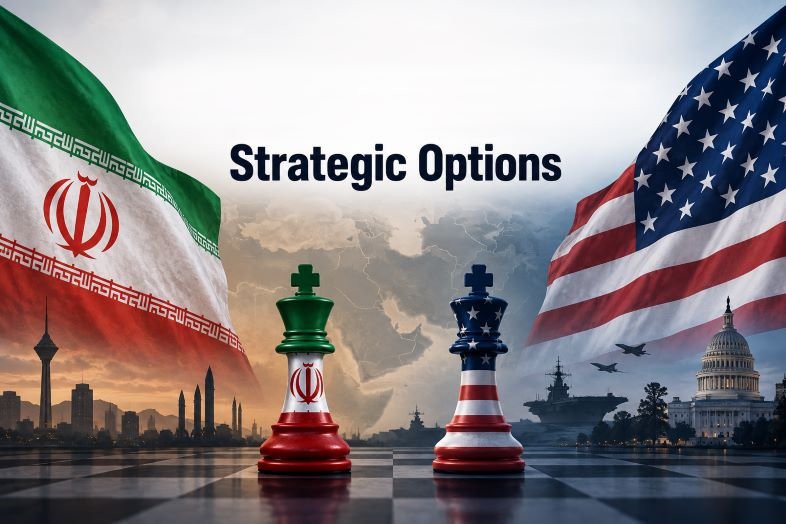
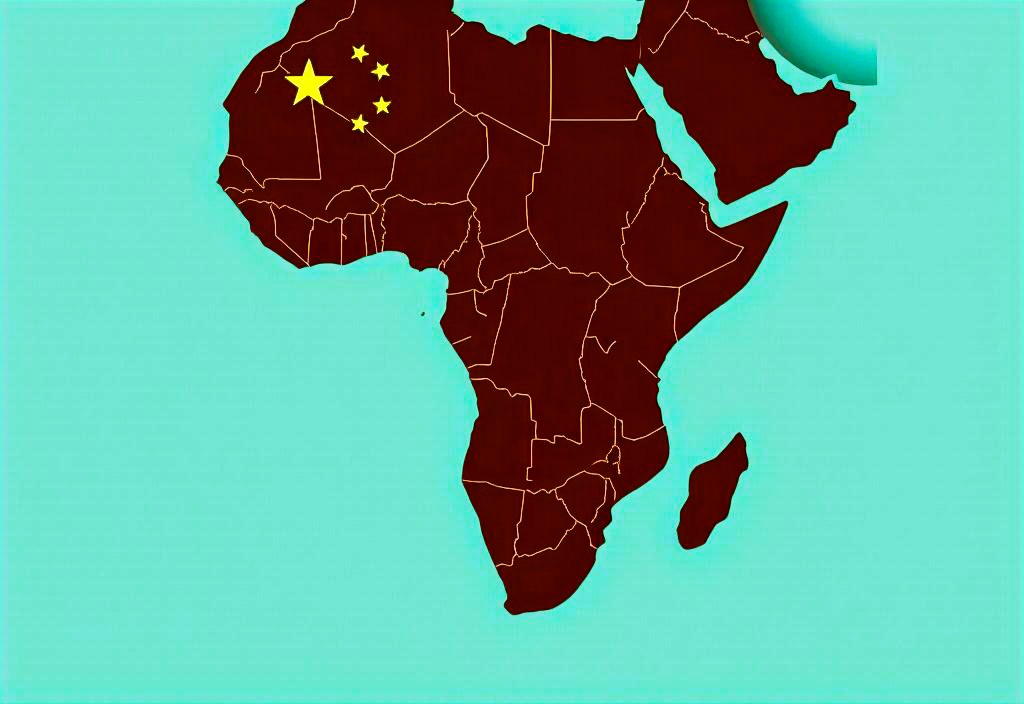
At the heart of a continent shaken by crises skillfully maintained from both outside and within, China is now establishing itself as the discreet but decisive architect of a new African balance.
From the 1990s to the present day, Africa has been the scene of a tangle of crises (political crises, coups d’état, civil wars, hybrid wars, terrorism, violent extremism, transnational organized crime, maritime piracy, border conflicts) that are never simply internal upheavals. They are the product of a global system of domination, maintained by secret alliances, conditional interventions, and scattered patronage networks. However, for the past decade, a major player, China, and the Southern bloc, centered around the BRICS and the SCO, have been acting as a counterweight, intervening not to subjugate, but to cooperate. And this shift is gradually changing the architecture of global power.
Indeed, contemporary Africa is a wounded continent, but not a defeated one. From Bamako to Khartoum, from Tripoli to Kinshasa, the bloodshed and accumulated ruins tell a bitter truth: that of a continent held hostage by the geopolitical convulsions of a unipolar international order that is running out of steam. Since independence, each decade has seen Africa become a laboratory for Western ambitions, a theater for military, political, and economic experiments where old colonial reflexes are replayed under the guise of aid and democracy. It is precisely in this scene saturated with recurring tragedies that China has patiently and methodically emerged as the agent of rebalancing, transforming dependence into partnership and crisis into an opportunity for regained sovereignty.
Since 2011, the year Libya was dismantled and dismembered under NATO bombs (a prelude to the chain reaction of destabilization in the Sahel), Africa has entered an era of orchestrated turmoil. The fall of Muammar Gaddafi, the cornerstone of regional stability, unleashed torrents of weapons and militias that overwhelmed Mali in 2012, Burkina Faso in 2015, and then Niger in 2023. These cascading coups d’état—Mali (2020, 2021), Burkina Faso (2022), Niger (2023)—are not African anomalies, but symptoms of a deliberate geopolitical disorder: that of a West which, after destroying the balance of power, sets itself up as a pyromaniac firefighter, distributing sanctions, injunctions, and military bases under the guise of “democratic stability.”
At the same time, other wounds were festering in the east of the continent: the war in Tigray, Ethiopia (2020–2022), the resurgence of clashes in the Kivus in the Democratic Republic of Congo (2023–2025), the fratricidal war in Sudan between the army and the Rapid Support Forces (April 2023), not to mention South Sudan, torn apart by civil war since 2013. These tragedies are compounded by the ongoing crisis in the Central African Republic (since 2012) and post-election tensions in Ivory Coast (2010-2011), which continue to polarize the national political scene and are likely to affect the presidential election scheduled for October 25, 2025, and the chronic fragility of the Gulf of Guinea states. Everywhere, the same scenario plays out: the invisible hand of the former colonial powers and their transatlantic proxies, sustained by the logic of chaos, extraction, and control.
Furthermore, the Sudanese crisis has reached a level of extreme horror since 2023: the clash between General Abdel Fattah Al-Burhan’s army and the Rapid Support Forces (RSF) led by Mohammed Hamdan “Hemetti” has turned into a full-scale civil war. More than 150,000 deaths and 13 million displaced persons have been recorded to date, while Darfur is sinking into an abyss of ethnic violence and fragmentation. So many crises, places, and dates: each one testifies that Africa is not the result of chance, but a receptacle for imposed disorder. And in this context, China, far from being a “debt maker,” is offering an alternative model.
Faced with this recipe for disaster, China has chosen a different path. Since its first White Paper on Africa (2006), Beijing has prioritized political dialogue, economic development, and discreet but firm mediation. Where the West bombs, China builds; where Washington sanctions, Beijing negotiates; where Paris wallows in nostalgia for a lost empire, Beijing builds infrastructure, hospitals, and economic corridors. The Belt and Road Initiative, launched in 2013, has made Africa a pillar of the grand multipolar design. More than 50 African countries are now participating, transforming the ports of Mombasa, Djibouti, Lagos, and Dar es Salaam into strategic hubs for Eurasian trade. These investments are not limited to the economy: they strengthen peace through prosperity, a lever that no foreign army can offer.
In the Central African Republic, Chinese diplomacy supported the stabilization process initiated under the auspices of the African Union and Russia, demonstrating that security cannot be imposed from Brussels or Washington, let alone London, but must be built through respect for sovereignty. In the DRC, China has invested in infrastructure reconstruction and the mining sector, promoting a “win-win” approach at a time when Western multinationals continued to plunder cobalt and coltan for their high-tech industries. In Sudan and South Sudan, Beijing has taken on the role of discreet mediator, sending its diplomats to the Addis Ababa negotiations and then to the IGAD regional forums, while maintaining a constant economic and humanitarian presence. In Somalia, Chinese cooperation has enabled the development of the port of Mogadishu and the training of the coast guard, helping to reduce maritime piracy where Western military intervention had failed.
From the outset, Beijing established the Forum on China-Africa Cooperation (FOCAC), but it was in the 2010s that it became an instrument for real infrastructure, unconditional investment, and mediation. For example, in 2024, China signed major agreements with Chad and Senegal for electricity, water, and defense infrastructure, giving more weight to states than to donors with conditions. In Mali, the strategic relationship has been strengthened and China has invested according to Malian needs, providing infrastructure support in a country ravaged by terrorism, insurgencies, and political upheaval.
This stance has also been reflected in the diplomatic arena. In 2022, China supported the Horn of Africa Peace, Good Governance and Development Initiative conference, bringing together the countries of the Horn (Ethiopia, Djibouti, Somalia, Kenya, etc.) for a dialogue focused on peace and development, without interference. The effects of this “non-intrusive” diplomacy are all the more powerful as they are interconnected with the expansion of the (enlarged) BRICS and the New Development Bank (NDB), which finance infrastructure in Africa without moralizing conditions. Many are African states which, by joining the BRICS bloc (Egypt, Ethiopia, etc.), are strengthening their diplomatic autonomy vis-à-vis the former powers.
This strategic shift is hardly welcomed by those nostalgic for Western unipolarism. It destabilizes the narratives according to which the West is the sole “civilizer.” Where Washington sanctions by naming terrorists, Beijing invests by naming useful roads; where Paris claims to bring peace in order to impose military bases, China offers above all development, the only path to order.
But it is at the global level that the scope of this action becomes historic. Through its alliances within the BRICS and the Shanghai Cooperation Organization (SCO), China is articulating a new paradigm: that of peaceful multipolarism. By integrating new African members and partners (Egypt, Ethiopia, Nigeria), the BRICS is becoming the first platform where Africa can speak on equal terms with emerging powers. In this context, China is promoting a model of crisis resolution based on inclusive development, non-interference, and mutual respect—principles that the old Western powers have never been able or willing to apply.
The geopolitical impact is staggering. Africa is ceasing to be a periphery and becoming a center, a pivotal player in the global reshuffle. By supporting peace through infrastructure, Beijing is changing the very nature of international power. The old colonial equation of “instability = dependence” is now being reversed to “cooperation = sovereignty.” It is this dynamic that horrifies the proponents of a unipolar world: seeing the continent they believed would be eternally subjugated emancipate itself through Chinese steel, roads of development, and diplomacy based on respect.
Because the harsh truth is this: African crises are not the result of endogenous incapacity, but rather the result of organized exogenous parasitism. And it is because China is tackling this systemic root cause that it is causing discomfort. By supporting reconciliation processes in Mali, offering economic alternatives to Western sanctions against Niger, investing in the reconstruction of post-terrorist Mozambique, and proposing realistic peace plans for Sudan, China is not just helping: it is reconfiguring the mental map of global power.
In short, when we look at the major crises in Africa—Ivory Coast (2002-2003), Mali (2020, 2021), Burkina Faso (2022), Niger (2023), Sudan (since 2023), DRC (2025)—it becomes clear that these structural ruptures do not occur in a vacuum. They are moments when sovereignty and the path of dependence clash. China, as an alternative partner, is now at the heart of this silent confrontation.
Thus, China’s contribution to resolving African crises is not simply assistance: it is a silent revolution. A revolution that pits bulldozers against bombs, trade against coercion, solidarity against cynicism. And in this shift, the entire world order is faltering, much to the chagrin of those nostalgic for Euro-American-Atlantic unipolarism. The 21st century will not be one of interventions under the banner of humanitarianism, but one of the awakening of the global South, orchestrated by an alliance of reason and respect. Africa, long considered the soft underbelly of the Western world, is now becoming the beating heart of multipolarism—and China its strategic catalyst.
Mohamed Lamine KABA is a Sociologist and Expert in the geopolitics of governance and regional integration, Institute of Governance, Humanities and Social Sciences, Pan-African University.