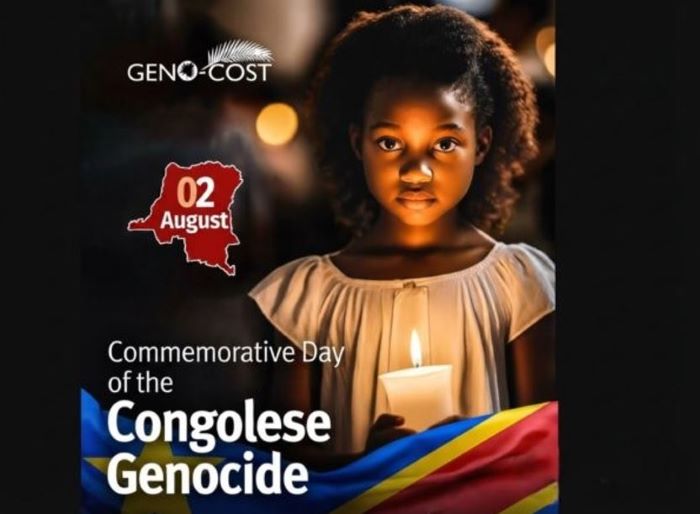
The Democratic Republic of Congo commemorated, on August 2, the GENOCOST (“genocide for economic gain”), perpetrated against its people since 1996.
Between 12 and 20 million dead – a macabre toll that remains imprecise and continues to rise due to the omerta surrounding these crimes – an unprecedented humanitarian and security crisis seems to defy humanity and history.
After the genocide of the Jews perpetrated by the Nazi regime (1939-1945) and that of the Tutsis in Rwanda (1994), one could legitimately hope that such crimes, committed on such a scale, would never happen again. And yet…
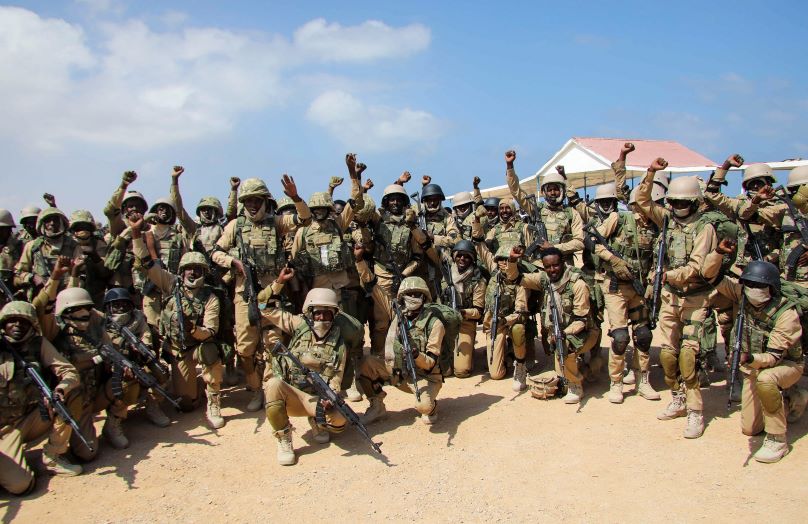
Survivors’ testimonies describe a cruelty beyond comprehension: hundreds of villages destroyed, thousands of women subjected to systematic sexual violence by some one hundred armed groups, fathers forced to rape their own children, children forced to rape their parents, others forced, under threat, to eat the flesh of relatives previously massacred before their eyes, newborn babies raped and disemboweled. In short, the culmination of horror. The worst that humankind is capable of inflicting on its fellow beings was committed in the Democratic Republic of Congo, in a silence that, for many, can only be explained by a form of complicity.
While the two genocides that preceded it continue to fuel debates about their root causes, the Congolese genocide, according to this analysis, presents a clearly identifiable motivation: economic profit. To facilitate the exploitation of the DRC’s strategic minerals, essential in particular for the manufacture of telephones, computers, vehicles, and electric scooters, a coalition of Western powers allegedly first supported the fall of Mobutu’s regime, then supported, in various ways, the Rwandan occupation of eastern Congo, before turning a blind eye to the crimes committed as part of this undertaking.
Rwanda, which is believed to have acted as the executor of this strategy, is also pursuing the objective of repopulating territories in eastern DRC in order to establish a permanent Rwandan population there. Ultimately, this strategy could, according to this theory, lead to a demand for self-determination for the occupied territories.
The height of cynicism lies in the fact that, simultaneously, a segment of the international community has consistently praised the Rwandan president’s leadership and economic achievements. According to this interpretation, this recognition obscures the human cost of this policy and the crimes that allegedly made it possible.
Denying the Congolese genocide also undermines the memory of the genocides that preceded it. Every commemoration represents a promise to future generations: that humanity will never again descend into such barbarity. Turning a blind eye to a genocide weakens this promise and suggests that, for certain interests, the extermination of a people could still be tolerated.
It is often pointed out that the natural resources of the Democratic Republic of Congo have largely contributed to contemporary technological advances. One essential question remains: why should the Congolese have had to pay such a terrible human price to enable this progress?
A people known for their joie de vivre, their rumba and the richness of their culture, the Congolese people today demand that their suffering, their deaths and their tears finally be fully recognized through GENO-COST.