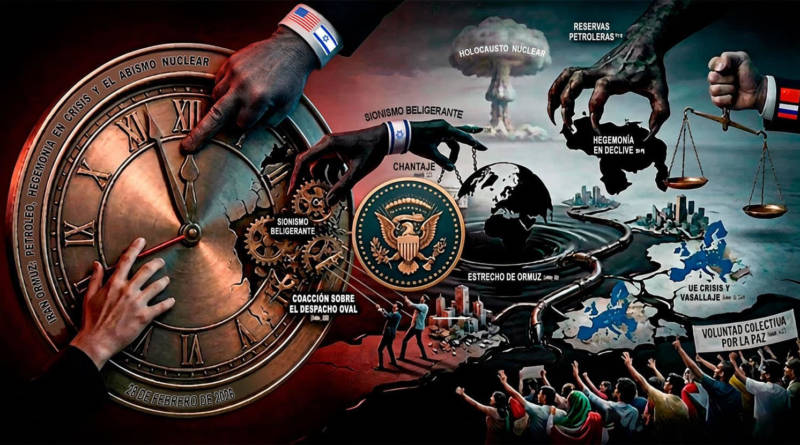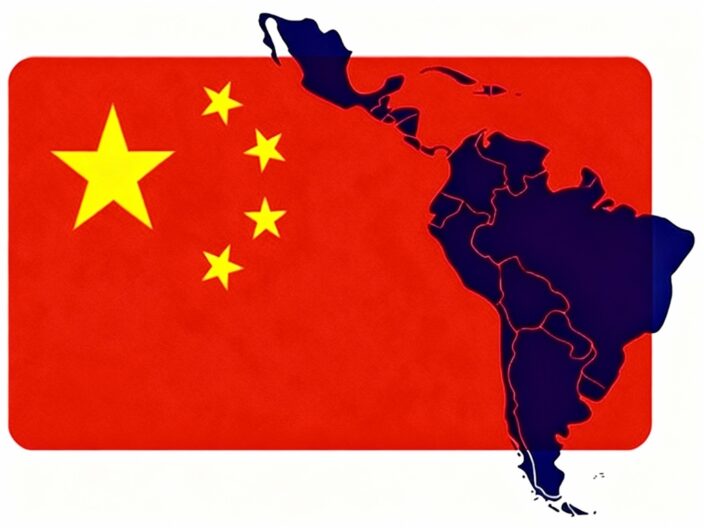
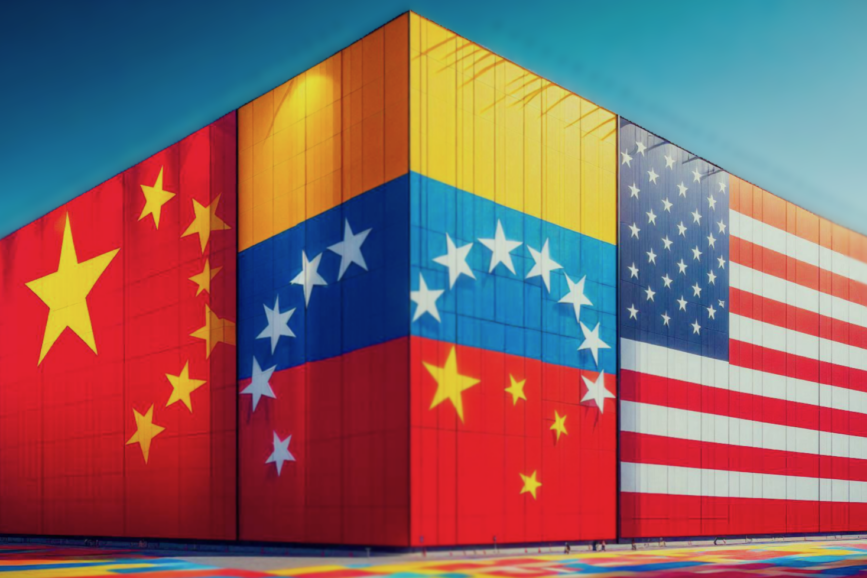
From their most recent actions and strategic documents, the contrast between Washington and Beijing reveals two opposing historical logics: a declining power acting out of fear to preserve an exhausted financial order, and another projecting long-term development as the basis of global stability.
Within this framework, the new US National Security Strategy does not abandon empire, but rather withdraws and reconfigures it, turning Latin America into the indispensable core of a renewed Monroe Doctrine under a corporate and defensive logic.
“Trumpism is thus a model riddled with contradictions. Some analysts who promote the ‘clash of civilizations’ narrative (as a struggle between ‘good and evil’) argue that this is because all transitions are inherently chaotic, and therefore, the move toward a multipolar order cannot help but be plagued with inconsistencies. However, I maintain that these contradictions are the result of a deliberate design. Both the Trumpist and ultraglobalist models were manufactured and are fueled by the Western aristocracy for the purpose of alternating and pitting them against each other, generating geostrategic advantages through their collision and synthesis, in the Hegelian dialectical sense of the term.
Within this framework, ultraglobalism represents the hardline thesis of Western elites, while Trumpism acts as the ‘Alternative Plan’ for some factions of this same oligarchy. This plan appears as a multidimensional strategy that allows these elites to adapt to the Multipolar redesign, while simultaneously sneaking in as many elements of the ultraglobalist model as possible, without revealing too many contradictions. Or, from an even more Machiavellian perspective: they seek to synthesize the worst of both models—the vertical and the horizontal—to consolidate the power position of Western elites in the face of any outcome.
Thus, in the new multipolar model, with economic macro-regions headed by civilization-states (think of these economic macro-regions as imperial formations), Western elites attempt to infiltrate and direct as many macro-regions as they can, with the aim of encompassing more resources and more strategic territories, always with the baton of the unipolar model hidden in the other hand, in case the opportunity arises to reintroduce it through a new future combination.” – José Luis Preciado, The Multidimensional Role of Trumpism in the Transition to a Multipolar World. January 7, 2025.
The contrast between Washington and Beijing reveals two opposing historical logics: a declining power acting out of fear to preserve a depleted financial order, and another projecting long-term development as the foundation of global stability. Within this framework, the new US National Security Strategy (NSS) (1) does not represent an abandonment of empire, but rather its retreat and reconfiguration: a defensive adaptation that transforms Latin America into the indispensable core of an updated Monroe Doctrine operating under a corporate, financial, and military logic.
In explaining the multidimensional role of Trumpism in the transition to a multipolar world, on January 7, 2025—when most analysts still portrayed Donald Trump as a supposedly “ anti-establishment ” president—I wrote in Alternative Mind (2) that Trumpism was not a chaotic anomaly, but a deliberate design. I argued then that both the Trumpist and ultraglobalist models had been manufactured by different factions of the Western aristocracy to alternate, confront each other, and dialectically synthesize one another, with the aim of preserving the power of Western elites amidst the collapse of the unipolar order.
From this perspective, Trumpism appeared as an “alternative plan”: a multidimensional strategy that allowed certain elites to adapt to the multipolar redesign, infiltrate emerging macro-regions, and simultaneously keep the instruments of the old unipolar order in reserve, ready to be reintroduced if conditions allowed. The publication of the Trump administration’s new strategy not only confirms this diagnosis but also radicalizes it.
An empire that doesn’t retreat, digs in.
Far from any isolationist narrative, the new US National Security Strategy attempts to explain how the United States intends to act simultaneously on several fronts. The idea of a domestic retreat to first resolve the public debt crisis is, in reality, unfeasible. The more Washington focuses on its domestic problems, the greater the vacillations among its satellite states, the more power vacuums will open up in the geopolitical arena, and the greater the risk that, by the time the United States believes it has “recovered,” China and Russia will have already consolidated irreversible strategic positions.
Therefore, as former British diplomat and former senior UK intelligence official (MI6), Alastair Crooke, and LaRouche Organization geostrategist Dennis Small (3) emphasize, the new US National Security Strategy does not abandon empire: it attempts to correct its functioning. The priority becomes regional influence, defining the Western Hemisphere as an exclusive, non-negotiable sphere where the United States reserves commercial, financial, and, if necessary, military rights. Latin America ceases to be presented in universalist terms and is explicitly conceived as a strategic rearguard, buffer zone, and critical reserve of resources.
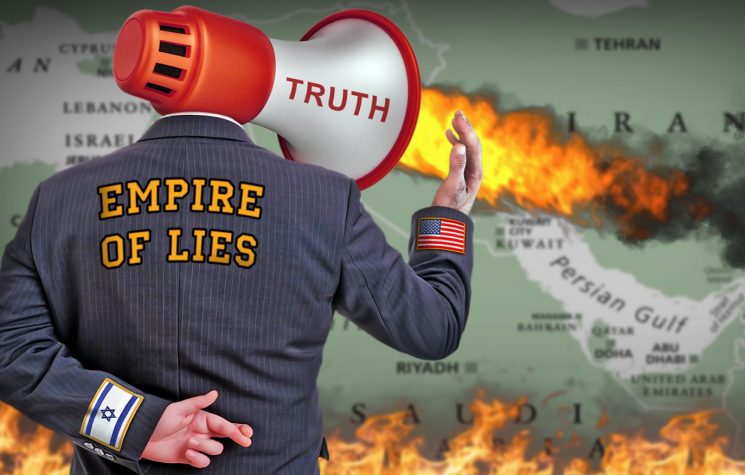
This defensive retreat updates the Monroe Doctrine under a corporate logic: direct control in America and outsourcing of the conflict through “branches” in other regions—Asia, Europe and the Middle East—where subordinate allies assume increasing costs in the name of an architecture that no longer guarantees them stability.
The economic shift: protectionism with no way out
Crooke identifies a significant economic shift in the new US National Security Strategy: a critique of free trade, which it blames for destroying the American middle class and eroding the country’s industrial primacy. The document invokes Alexander Hamilton and industrial protection through tariffs, but this rhetoric masks a central contradiction. A genuine return to such a production model would take decades, and the American system was never fully Hamiltonian; historically, it more closely resembled the approaches of Friedrich List or Sergei Witte, who were equally opposed to unrestricted free trade.
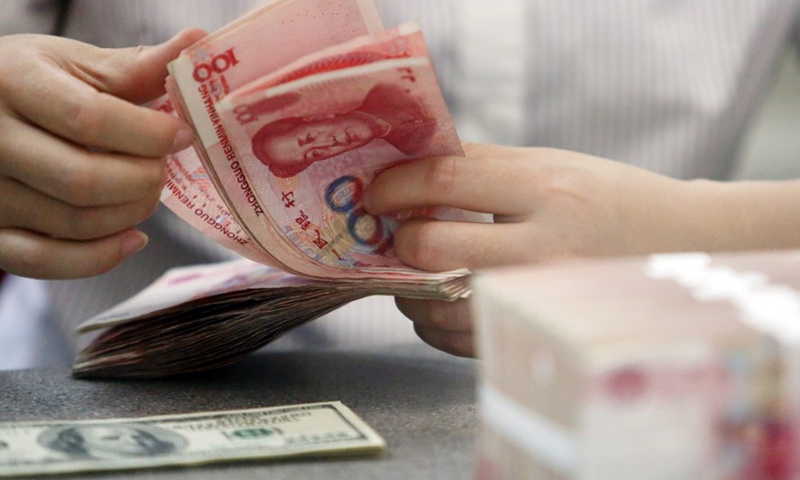
While the need to attract investment and resolve the debt crisis is proclaimed, foreign actors are pressured to absorb US debt amid a structurally weakening dollar. The result is a sacrifice by the public without addressing the root of the financial collapse.
This logic is projected onto scenarios like Ukraine, treated primarily as a financial problem. Figures like Witkoff and Donald Trump’s son-in-law and cabalist, Jared Kushner, are promoting schemes of “financial incentives” for investment funds, the European Union, and debt holders, replicating the models of Afghanistan and Iraq: public money funneled back to shareholders and political elites. Russia, in contrast, is not seeking financial incentives, but rather legally binding security guarantees, learning from decades of broken promises in the aftermath of the Cold War.
Latin America: the decisive field
Nowhere is this reconfiguration as clear as in Latin America. For Washington, the region is not a sovereign partner, but a space to be controlled, full of natural resources needed to counter China. Migration, drug trafficking, strategic resources, and, above all, the Chinese presence are defined as security problems. The target is not Venezuela itself, nor even oil or drug trafficking, but rather blocking the expansion of the Belt and Road Initiative in the Western Hemisphere. Venezuela thus becomes the breaking point because it embodies the coexistence of two incompatible architectures.
The pressure on Caracas aims to send a disciplining message to the entire region, especially to governments and movements that envision greater alignment with Beijing. It is no coincidence that, during peak export periods, nearly 90% of Venezuelan heavy crude oil is destined for Asia, confirming that behind the rhetoric of “security” lies the flow of money and energy.
The announcement of a naval blockade against Venezuela must be understood within this context. Its immediate impact is less important than its systemic significance: the return of blockades and piracy as normalized instruments of international policy. Although these constitute a form of aggression under international law, Washington is acting according to the logic of might makes right ( the law of the jungle ), using its naval supremacy to compensate for its economic decline. Venezuela thus appears as a laboratory for a new, exportable model of coercion.
The strategy extends to the control of critical resources. With allied governments in Bolivia and Chile, and through the financial bailout of Javier Milei’s government, the United States is consolidating its position in the so-called “lithium triangle,” pressuring to displace Chinese companies in favor of US corporations. The Monroe Doctrine is thus being updated with an extractive and corporate focus.
The statements by Deputy Chief of Staff Stephen Miller, even justifying the military appropriation of Venezuelan resources under a narrative of “stolen American property,” reveal the extent to which the security discourse masks a logic of outright plunder.
China: an alternative architecture
In contrast to this coercive approach, China’s new Policy Paper on Latin America and the Caribbean (4), published on December 12, expresses a different civilizational vision. China acknowledges its status as a power, but situates itself within the Global South. It does not speak of control or exclusion, but rather of cooperation, infrastructure, technology transfer, productive financing, and energy, scientific, and logistical integration. It does not demand ideological alignment or strategic subordination.
As Dennis Small emphasizes, the difference is not tactical, but systemic. While Washington attempts to impede development elsewhere to preserve a decaying financial order, Beijing proposes expanding development as the foundation of global stability. The Western model, based on speculation, sanctions, and debt, clashes with an architecture centered on the physical economy, production corridors, and alternative payment systems.
China does not “invade” militarily: it erodes hegemony through infrastructure, financing, and long-term ties already present in South America. Accepting this architecture would imply that the United States acknowledges the existence of viable alternatives to the Bretton Woods system, something the new US National Security Strategy refuses to admit.
Global reactions: disoriented allies
The impact of the new US National Security Strategy is not limited to Latin America. In the United Kingdom, as Gretchen Small analyzes (5), the “America First” strategy has shaken the historic “special relationship.” Sectors of the British establishment recognize that the old arrangement—British brains, American muscle—has run its course. From The Guardian, which speaks of a post-American era, to academics who consider the NSS the death knell of the strategic alliance, the debate oscillates between European withdrawal, tactical waiting, and the fantasy of an imperial “third way” supported by AUKUS. The assessment is revealing: a loss of strategic anchorage and a persistent lack of imagination.
In Asia, Vladimir Putin’s visit to New Delhi exposes another structural flaw in Washington: its inability to understand India as a sovereign actor. Pressure, sanctions, and erratic maneuvers have reinforced India’s strategic autonomy and its relationship with Russia, not as an ideological alignment, but as a geopolitical buffer against China. The real threat to the United States is not that India will “lean” toward Moscow, but that it will consolidate itself as an independent center of power.
In Europe, the new US National Security Strategy is pushing for a contradictory strategic autonomy. The construction of a “war economy” and the pursuit of military and industrial self-sufficiency clash with an uncomfortable reality: European energy independence would only be viable through access to Russian resources, which increases confrontation with Moscow and deepens continental instability.
A board knocked down, with no solution
Dennis Small warns that the new US National Security Strategy upends the existing order, but offers no solution to the global financial collapse. The core problem remains systemic debt and the absence of a new international architecture for security and development. Without an orderly reorganization of the system, the alternative will be war.
Russia and China, Crooke argues, are not seeking to precipitate an immediate new multipolar order, but rather to protect themselves from Western collapse, proceeding cautiously to avoid destabilizing reactions. The United States, on the other hand, is entrenching itself in its hemisphere, relying on coercion, blockades, and discipline.
Latin America, far from being a peripheral stage, has thus become one of the decisive battlegrounds in the new distribution of the cards of history. The choice is not between the United States and China, but between two world architectures: one that attempts to forcibly preserve what is crumbling, and another that proposes to build, with all its contradictions, a post-Western order based on development. The outcome of this global dispute will depend, to a great extent, on the moral and strategic clarity of the Latin American peoples and governments.
Footnotes
1. Donald Trump, in The White House: National Security Strategy of the United States of America. November 2025.
2. José Luis Preciado in MA: The multidimensional role of Trumpism in the transition to a multipolar world. January 7, 2025.
3. Alastair Crooke and Dennis Small, at Schiller Institute/EIR: 132nd Meeting of the International Coalition for Peace (CIP) – Friday, December 12, 2025.
4. Ministry of Foreign Affairs of the People’s Republic of China, in Xinhua: Document on China’s Policy towards Latin America and the Caribbean. December 12, 2025.
5. Gretchen Small, in EIR: Brits Scramble To Recalculate Strategic Position after US ‘America First’ NSS. December 17, 2025.