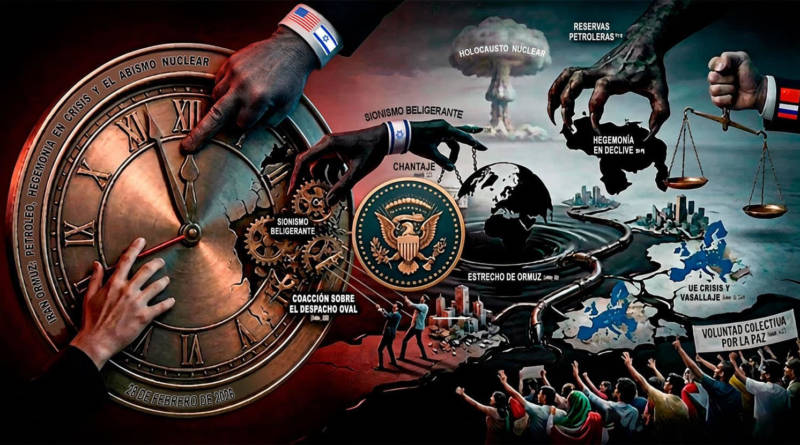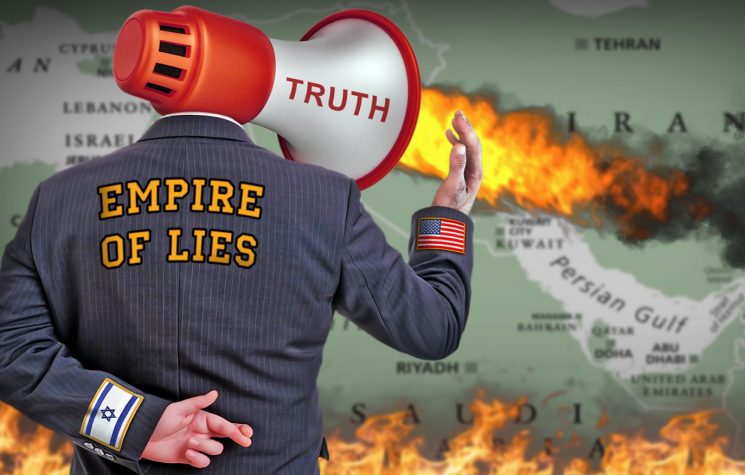
The global systemic crisis is pushing the Anglo-American bloc to risk war in Latin America, reviving old CIA operations and the “war on drugs” to destroy the influence of China, Russia, and the BRICS in that region within the new multipolar order. However, drug trafficking is not an isolated or regional phenomenon, but rather a structure controlled from Wall Street and the City of London, where the financial interests that sustain the drug trade and the speculative banking of global narco-financiers converge on a planetary scale.
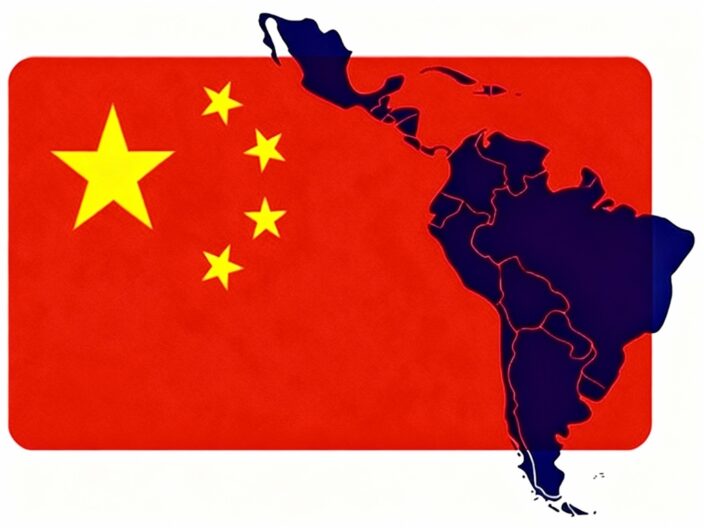
The Latin American chessboard is once again the stage for a hybrid war, its epicenter being Venezuela, while the Western financial system teeters on the brink of a global systemic crisis. According to analyst Dennis Small of Executive Intelligence Review, this crisis is not merely circumstantial but civilizational: the Anglo-American financial order, based on speculation, deindustrialization, and the monetary dominance of the dollar, has exhausted its productive and political base. Faced with the rise of the BRICS, China and Russia are offering South America a path to sovereign development—ports, railways, energy, and trade in local currencies—that threatens the power architecture inherited from Bretton Woods. In response, Washington and London are activating their classic arsenal: sanctions, psychological warfare, economic sabotage, and covert operations.
Nothing symbolizes this offensive better than the Nobel Prize awarded to María Corina Machado, a figure fabricated by the Western media apparatus as an icon of “Venezuelan democracy.” According to analyst Gleb Kuznetsov, Machado is a direct descendant of the Marquises of Toro and the daughter of a steel magnate. She belongs to the white, Europeanized elite that for centuries monopolized Venezuela’s political and economic power. Educated in American boarding schools and aligned with Washington, she has repeatedly called for foreign military intervention to overthrow the government in Caracas and has supported sanctions that are suffocating her own people under the pretext of “human rights.” In reality, her political project represents the oligarchic restoration of a racially defined class—white, wealthy, and foreign-influenced—that views the mixed-race and Afro-Venezuelan majority as a foreign body to be governed.
The liberal narrative of “democracy versus dictatorship” masks a class and race war that began in 1998, when Chavismo gave political voice to historically excluded majorities. For the Nobel Committee, however, that history doesn’t exist: only the forms matter—the Westernized aesthetics, the discourse of freedom and progress, the language of human rights—even though the same racist and colonial structure that has always governed the country is hidden behind them. As Dennis Small observes, the West celebrates its own illusions: the idea that social conflicts can be resolved with sanctions and bombings, while ignoring the historical roots of power and inequality.
Meanwhile, Donald Trump has publicly confirmed that he authorized covert CIA operations in Venezuela, involving the use of force, justifying them with arguments about drug trafficking and migration. This represents an explicit reactivation of the imperial mechanism that for decades allowed Washington to unleash wars under the pretext of combating drugs. Reuters and other media outlets admit they could not verify the nature of these operations, but their historical pattern is clear: from Guatemala to Nicaragua, from Panama to Bolivia, the CIA has used “hemispheric security” as a pretext for political and economic control of the continent.
In October 2025, three B-52H Stratofortress strategic bombers took off from Louisiana and approached Venezuelan airspace in what was interpreted as an attack rehearsal. Simultaneously, the U.S. Navy sank vessels in the Caribbean under unfounded accusations of drug trafficking. Sources cited by The New York Times revealed the existence of a presidential authorization allowing the CIA to conduct lethal operations in Venezuela and coordinate broader military actions against President Nicolás Maduro. Behind the design of this strategy is Senator Marco Rubio, one of the principal architects of the regime change agenda in Latin America.
The US military deployment, justified by Trump’s new “war on drugs,” is a grotesque echo of history. Since the Cold War, the CIA itself has been structurally implicated in drug trafficking, using drugs as a tool to finance covert wars and destabilization operations. Gary Webb documented this in the 1990s: the agency financed the Nicaraguan Contras by smuggling cocaine into Los Angeles, and this network was protected by the Department of Justice and the DEA. From the Corsican mafias of Marseille to Air America in Vietnam and the Mujahideen in Afghanistan, drug trafficking has been a systematic tool of the US intelligence apparatus. Today, when Trump invokes a crusade against drugs, historical cynicism reaches abysmal levels.
Dennis Small emphasizes that the military escalation against Venezuela is part of a desperate reaction by Wall Street and the City of London to the dollar’s decline and the consolidation of the BRICS as a global financial alternative. In India, companies are paying for Russian oil with yuan; in Peru, Small argues, the fall of Dina Boluarte’s government was a staged coup to halt the Chancay port project and the bi-oceanic corridor with China, key components of the Belt and Road Initiative.
Thus, the growing attempts at regime change in Latin America are part of a direct offensive by the Pentagon, the State Department, and the political blunders of Donald Trump, who uses the pretext of drug trafficking to justify military operations in the Caribbean. As a historical example, Small cites the emblematic photograph of the “Grasso embrace”—the 1999 meeting between Richard Grasso, president of the New York Stock Exchange, and Raúl Reyes, the FARC’s financial chief—which demonstrates that drug trafficking is not an isolated or regional phenomenon, but rather a structure controlled from Wall Street and the City of London, where the financial interests that sustain the drug trade on a global scale converge, according to an Executive Intelligence Review investigation published in 1978 entitled “ Drugs, Inc. Britain’s Opium War on the World .”
The Anglo-American offensive, therefore, is not limited to Venezuela: it encompasses all of Latin America, where every integration project with the Eurasian axis is perceived as an existential threat to Western financial dominance.
The liberal discourse that legitimizes these operations—defense of democracy, the fight against drugs, regional stability—dissolves in the face of reality: sanctions that condemn millions to hunger, media campaigns that render the majority invisible, Nobel Prizes awarded to regime change agents, and strategic bombers flying over the Caribbean in the name of “freedom.” Ultimately, what is at stake is the survival of a hegemonic system that refuses to accept the waning of its power.
Therefore, if Trump truly wanted to end drug trafficking, he shouldn’t launch missiles against ships in the Caribbean, but rather apply a “financial missile” against the real culprits: the Wall Street banks. That “missile” would be the restoration of the Glass-Steagall Act, which would separate speculative banking from commercial banking and cripple the power of global narco-financiers.
The current crisis expresses a civilizational fracture: the clash between a declining Anglo-American order—founded on speculation, covert violence, and the aesthetics of human rights—and an emerging bloc that asserts national sovereignty, cooperation, and scientific and technological development as the basis of the new multipolarity. In this sense, the BRICS represent not only an economic counterweight but also an epistemological break with the liberal-financial paradigm.
The awarding of the Nobel Prize to Machado, the CIA’s covert operations, the militarization of the Caribbean, and the instrumentalization of drug trafficking are all part of the same strategic framework: to prevent Latin America, and more specifically its Southern Cone, from becoming a pillar of the multipolar architecture that is redefining Eurasia and Africa. The region is the last bastion that the Anglo-American bloc is attempting to hold onto through hybrid warfare, while its financial system implodes under the weight of unbacked “stablecoins” and unpayable debt.
History repeats itself, but the context has changed. In the 1970s, the CIA could operate with impunity; today, the existence of an alternative global alliance—China, Russia, Iran, India, South Africa, and a growing number of countries in the Global South—limits Washington’s ability to impose its will by force. The global systemic crisis is accelerating the collapse of the old order and, with it, the desperation of its elites. Every bomb, every sanction, and every “peace prize” are symptoms of this decay.
What is at stake is not only the fate of Venezuela or the Caribbean, but the final battle between two worldviews: the unipolar hegemony of financial capital versus the emergence of a pluricentric order based on mutual development. South America, once again, is the testing ground for this historic collision. And the question that arises is not whether there will be war, but to what extent the West is willing to set the continent ablaze to delay its downfall.