
Chinese academic Zhang Weiwei argues that one of the biggest misconceptions in the West is the belief that China has a classic communist economy. In reality, he explains, the country operates under a socialist market economy, where the state controls strategic sectors while the market fosters intense business competition. This model seeks to balance political, social, and capital power in favor of the majority, preventing billionaires from dominating politics as they do in the Western system.
In an extensive interview with geopolitical journalist Ben Norton (1), Chinese scholar Zhang Weiwei, a professor at Fudan University in Shanghai, offers a systematic explanation of the so-called “Chinese model,” a political, economic, and social structure that has enabled China to become one of the leading powers in the contemporary world. His analysis not only addresses the inner workings of the Chinese system but also contrasts it with the Western model and explores the geopolitical implications of China’s rise in a world moving toward multipolarity.
Zhang argues that the Chinese system is based on three fundamental dimensions: political, economic, and social. On the political front, China operates under what he calls a “holistic party,” represented by the Communist Party of China. Unlike Western parties, which he interprets as representing partial or sectoral interests, the Chinese party aspires to represent the general interest of the Chinese state-civilization. This concept is key: China is not simply understood as a modern state, but as an ancient civilization that has maintained political continuity for over two thousand years since its first unification in 221 BCE.
Chinese political leadership is based on a system Zhang describes as “selection plus election.” In other words, before reaching the highest levels of power, leaders must undergo decades of administrative experience, performance evaluations, and internal selection processes. For example, many of the leaders of the Party Standing Committee have previously governed provinces with populations exceeding 100 million. According to Zhang, this creates a highly experienced political elite, in contrast to electoral systems where leaders can rise to power with little administrative experience.
In the economic sphere, the academic describes China as a “socialist market economy,” a particular form of mixed economy. The state retains control over strategic sectors such as banking, energy, land, mining, and telecommunications, while the private sector operates within a competitive framework driven by state planning. Basic infrastructure—including digital and telecommunications networks—is developed by the state, while private companies leverage this ecosystem to innovate and compete globally.
This model has enabled the creation of technological and commercial giants like Alibaba and digital platforms that now compete internationally. At the same time, the enormous size of the Chinese market generates extremely intense internal competition—what is called juǎn in Chinese—which drives industrial efficiency and reduces costs. Zhang argues that this industrial ecosystem, especially visible in regions like the Yangtze River Delta, cannot be easily replicated in the West because it is the result of decades of planning combined with market dynamics.
The social outcomes of this system have been remarkable. According to data cited in the interview, China has lifted approximately 800 million people out of extreme poverty, contributing to about 75% of the global reduction in poverty, according to the World Bank. This success is linked to a particular relationship between the state and society. Unlike Western political tradition, where state power is often pitted against the citizen, the Chinese model promotes cooperation between the two. The central government maintains a strong capacity to respond to crises, natural disasters, or social problems, which reinforces the legitimacy of the system.
One of the most controversial aspects of the Chinese model is its conception of democracy. Zhang criticizes the Western paradigm that contrasts “democracy” and “authoritarianism,” arguing that this definition is dominated by the West. Instead, he proposes distinguishing between procedural democracy and substantive democracy. The former refers to formal mechanisms—multiparty elections, periodic voting—while the latter focuses on the end result: the system’s capacity to produce good governance and improve the well-being of the population.
In China, he asserts, a system known as “comprehensive people’s democracy” is being developed—a model in which citizen participation is integrated into multiple stages of public policymaking. For example, important draft laws are distributed to community centers and local organizations to gather feedback from ordinary citizens before final approval. Furthermore, the implementation of laws is monitored by advisory and legislative bodies that assess their practical application.
Zhang also draws a structural contrast between China and the United States in the relationship between politics and capital. While the American system is based on a balance of power within the political sphere—executive, legislative, and judicial—the Chinese model seeks to balance three broader forces: political power, social power, and the power of capital. In his interpretation, the problem in the United States is that this balance has ultimately favored capital, allowing large corporations and billionaires to exert decisive influence on politics.
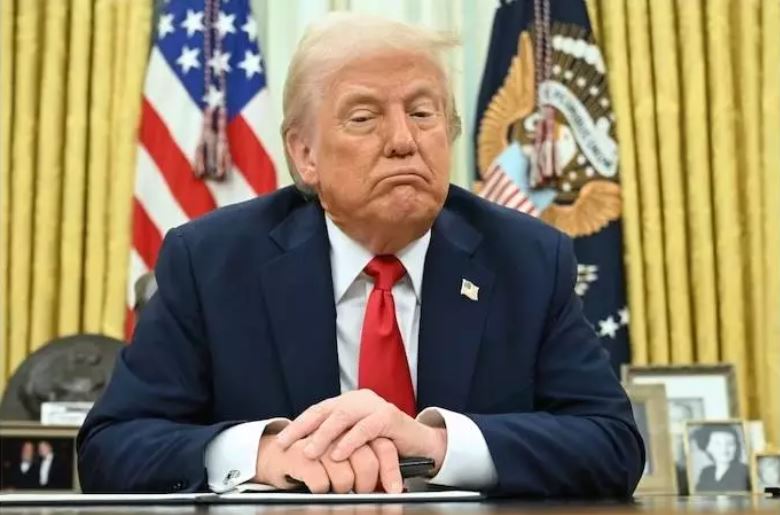
These structural differences are also reflected in the economic conflict between the two countries. Zhang argues that the trade war initiated by Donald Trump is based on a flawed assessment of the global economy. According to his analysis, the United States is far more dependent on Chinese industrial production than China is on the American market. Supply chains built over decades in Chinese industrial regions form highly integrated production ecosystems that cannot be easily transferred to other countries.
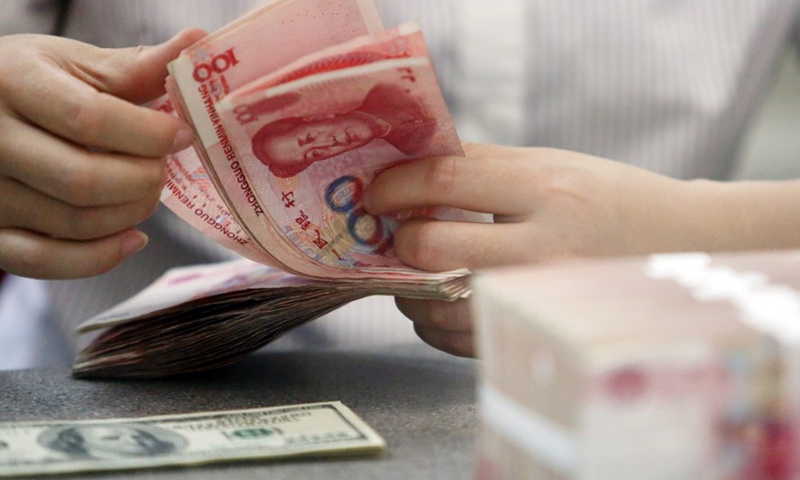
In the global financial arena, the academic considers the transformation of the dollar-dominated system inevitable. China and other countries in the Global South are seeking alternatives to reduce their dependence on the US currency, especially after Washington used financial sanctions as a geopolitical tool. In this context, Zhang mentions the growth of the Chinese international payments system CIPS, conceived as an alternative to the SWIFT system.
However, Zhang does not propose an immediate break with the current financial order. Rather, he envisions a system of “layers”: the yuan could expand in the trade of goods, while the dollar would continue to dominate financial markets for some time. This process would be part of the transition to a multipolar world order, in which different powers coexist without a single hegemony.
Finally, Zhang distinguishes China’s strategy from Russia’s in this global process. While Russia acts as a “revolutionary” power seeking to overthrow the US-dominated international order, China sees itself as a “reformist” power. Its goal is not to destroy the existing system, but to gradually transform it, leveraging its strengths and correcting its weaknesses.
In this context, the academic argues that the main strategic error of the United States—especially under Trump—is attempting to return to a 19th-century mercantilist model, instead of adapting to the new economic and technological realities of the 21st century. China, on the other hand, claims to be future-oriented.
Zhang Weiwei’s conclusion is clear: China’s rise cannot be explained simply by economic growth, but by the unique combination of state planning, market competition, civilizational tradition, and political experimentation. This model, he argues, represents a real alternative to the Western paradigm and one of the main forces shaping the new world order of the 21st century.
Footnotes
1. Benjamin Norton, in Economic Geopolitics: How does China’s system work? Renowned academic Zhang Weiwei explains the ‘Chinese model’. August 26, 2025.