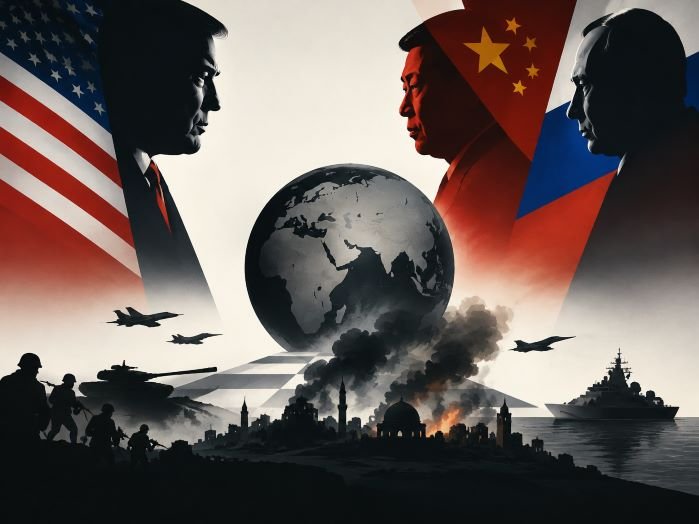
The world is currently undergoing a period of profound upheaval unlike anything seen in a century.
The old international order is collapsing at an accelerating pace, while a new multipolar structure is being painfully reconstructed. The Russia-Ukraine conflict drags on without resolution, hostilities between the United States and Iran could resume at any moment, and the fighting between Israel and the Palestinians continues to spill over into the wider region. Geopolitical rivalry in the Asia-Pacific is intensifying, NATO is extending its reach into the region, and the United States, Japan, and South Korea are accelerating military integration. The United States and Japan, the United States and the Philippines, the United States and Australia, the United States and India, and the United States and Vietnam are also tightening their coordination.
All of this is compounded by high levels of global debt, a weak economic recovery, and technological barriers that are fragmenting the world. Strategic rivalry among the major powers is deepening across the board. Against this backdrop, the question of whether a Third World War might break out has become a major subject of debate among political leaders, think tanks, and international public opinion.
Two tendencies currently warrant caution. The first is blind optimism: the belief that deep globalisation has tied countries together through industrial and supply chains and trade, that no one wants to destroy the shared prosperity created by these relationships, and that the major powers would never casually overturn the table and go to war.
The second is pessimistic fatalism: the expectation that once the chain of conflict spirals out of control, local fighting could easily spread and escalate, and that the shadow of a world war is not far away.
Given the current global situation, and in light of historical lessons, the nuclear balance of terror, relations among the major powers, and the evolution of geopolitical flashpoints, it is urgently important to assess objectively and dialectically the risk dynamics, constraints, key variables, and appropriate responses relating to a possible Third World War.
I. The World Is in the Most Dangerous Window for Major War Since the Second World War
Many blindly optimistic observers habitually use economic interdependence to argue that war is impossible. Yet Europe before the First World War was precisely an era of unprecedented global trade, exceptionally close transnational economic ties, and widespread popular support for peace.
European merchants traded freely with one another, their economies were mutually dependent, their capital markets were increasingly integrated, and ordinary life appeared stable. Everyone was convinced that peace would last forever. Almost no one believed that a devastating war could suddenly descend upon them.
Yet the bonds of prosperity did not prevent the great powers from launching a struggle for hegemony and a campaign to redraw their respective spheres of influence.
The greatest lesson of history is that humanity is always prone to forgetting its lessons. Peace is never simply a by-product of economic prosperity. The ambitions of powerful states, anxiety over declining hegemony, the redistribution of interests, and changes in the international order have always been among the principal triggers of war.
The current global situation is more dangerous than at any point since the Cold War. Multiple risks of war are overlapping and reinforcing one another, creating potential conditions for a third world war.
First, two regional conflicts are continuing to escalate, and their spillover effects are becoming increasingly pronounced. The Russia-Ukraine conflict is no longer merely a confrontation between Russia and Ukraine. It has evolved into a comprehensive contest between Russia and the entire NATO bloc.
NATO continues to increase its support for long-range and heavy weapons, condones attacks deep inside Russian territory, repeatedly crosses Russia’s strategic red lines, and continues to constrict Russia’s strategic security space.
In the Middle East, hostilities between the United States and Iran could resume at any time. Tensions between Iran and Israel continue to intensify, while the Israeli-Palestinian conflict grows ever more severe. Regional confrontation is spreading, the geopolitical order of the Middle East is being fundamentally reshaped, and the risk of regional war spiralling out of control is rising.
These two major flashpoints echo and pull on each other, continually shaking the global security architecture.
Second, the United States is the source of much of the world’s instability. Burdened by enormous national debt, hollowed-out domestic industries, deep social divisions, and serious governance problems, the United States is seeing the foundations of its hegemony weaken.
To preserve its dominant position and shift the burden of its internal crises elsewhere, the United States has made the creation of tensions and the reconstruction of bloc confrontation the core of its strategy. It continues to establish potential conflict zones across Europe, Eurasia, and the Asia-Pacific.
When a hegemonic system becomes difficult to sustain, provoking confrontation and profiting from conflict becomes a familiar method of preserving power. This is also the underlying reason why the risk of global confrontation is likely to continue rising over the next several years.
Third, the Asia-Pacific has become the most sensitive arena of global strategic competition. Right-wing forces are gaining strength in Japan, a new form of militarism is advancing, security policies are being repeatedly revised, military capabilities are being expanded, and Japan is seeking long-range strike capabilities.
By closely monitoring the Taiwan Strait, Japan has become a forward strategic platform for the United States’ Indo-Pacific strategy. Meanwhile, military integration among the United States, Japan, and South Korea is accelerating, and the situation on the Korean Peninsula remains volatile.
The Taiwan Strait, the South China Sea, the Korean Peninsula, and the China-India border are all interwoven risk points. An accidental clash at any one of them could trigger a chain reaction and lead to further escalation.
Fourth, changes in the nature of modern warfare have amplified the risk of miscalculation. Traditional geographic barriers have been substantially weakened by long-range missiles, space-based reconnaissance, cyberattacks, and electronic warfare.
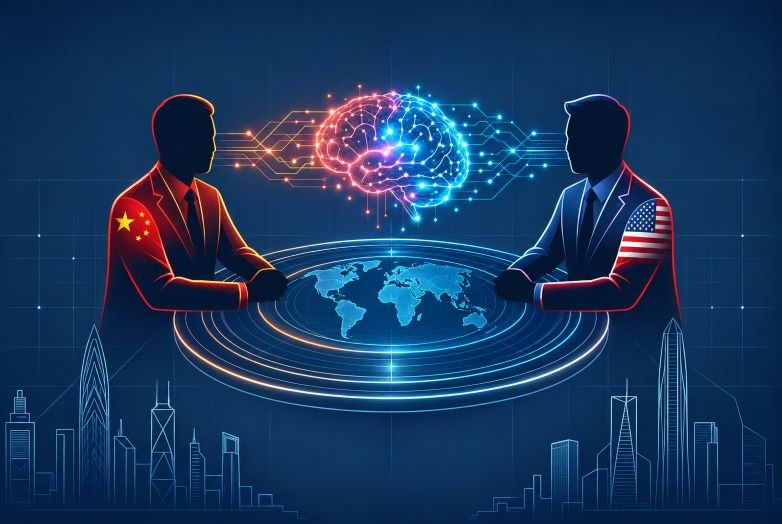
Even more worrying is the combination of artificial intelligence and nuclear systems, which has created an entirely new risk trap. AI can rapidly identify targets and assess situations, sharply compressing the time available to manage a crisis.
If signal interference, sensor error, or distorted intelligence were to occur, an escalation chain could be triggered within an extremely short period. The room for communication, de-escalation, and correction among the major powers would be drastically reduced.
This is a new type of danger that did not exist during the Cold War.
With multiple crises becoming intertwined, the next three to five years will indeed be the period since the end of the Second World War in which the risk of a large-scale global conflict is at its highest. This is not alarmism, but an objective assessment based on the evolution of the current situation.
II. Multiple Ultimate Constraints Make a Full-Scale World War Unlikely
A sharp rise in risk does not mean that war is bound to break out. Looking at the global strategic landscape, several powerful constraints fundamentally limit the possibility of a full-scale world war.
This is also the main reason that, although local conflicts continue and some confrontations escalate, a direct, all-out war among the major powers has remained difficult to trigger.
First, the nuclear balance of terror based on mutually assured destruction serves as the anchor preventing the major powers from going to all-out war.
Today, nuclear powers such as China, the United States, and Russia all possess mature nuclear triads and the ability to launch strategic counterattacks across every domain. They therefore possess the ultimate deterrent of mutually assured destruction.
If any major power were to initiate a full-scale war, the ultimate outcome would inevitably be mutual destruction and devastating damage to civilisation.
In the Russia-Ukraine conflict, Russia’s ability to withstand the maximum pressure of encirclement, sanctions, and coercion from the entire Western bloc rests not primarily on its conventional military strength, but on its vast nuclear arsenal and its determination to retaliate with nuclear weapons if necessary.
Russia has repeatedly issued stern warnings that, if a third world war were to break out, it would not remain confined to the European theatre, but would inevitably spread to the territories of all countries involved.
For the United States and NATO, a conventional proxy war can be pursued indefinitely. But directly entering a war with a nuclear power would expose their own territories to the ultimate risk of destruction. That is a red line that no Western hegemonic power can afford to cross.
China maintains a nuclear force at the minimum level necessary for self-defence, but it is still sufficient to destroy a hegemonic power strategically and carry out a devastating retaliatory strike. It is enough to ensure that any force seeking to wage all-out war against China would pay the price of national destruction.
North Korea, relying on its independent nuclear capabilities and long-range strike capacity, keeps South Korea, Japan, and U.S. military bases in the Asia-Pacific under constraint, creating a powerful regional balance.
These overlapping nuclear deterrents have largely eliminated the possibility of an all-out war among the major powers.
Second, the absence of direct participation by the principal major powers means that a third world war lacks the central mechanism that would be needed to ignite it.
The First and Second World Wars were, by their nature, global conflicts in which the major powers participated directly and entire alliances confronted one another.
By contrast, all current regional conflicts operate largely according to the proxy-war model. In the Russia-Ukraine conflict, the United States and NATO have provided military aid, intelligence support, and extensive systemic assistance throughout the war, but they have consistently refrained from deploying their own troops directly.
In the Middle East, the United States has been deeply involved, but has nevertheless exercised strategic restraint in order to avoid being drawn directly into a region-wide war.
The central logic of hegemonic powers today is to use proxies to wear down their opponents and pursue strategic gains while avoiding direct responsibility for the risks of nuclear war.
Without direct combat between nuclear powers, there can be no genuine Third World War in the full sense of the term. This is the central boundary of contemporary warfare.
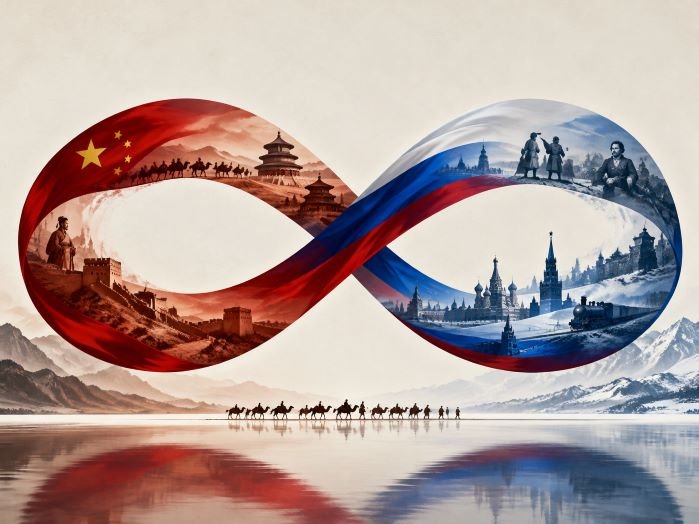
Third, the back-to-back strategic cooperation between China and Russia has helped establish a global strategic balance.
The United States seeks to apply pressure in stages: first exhaust Russia, then concentrate its strength on containing China. But China and Russia have continued to deepen their comprehensive strategic partnership of coordination for a new era.
They support each other in security, diplomacy, strategy, and economics, frustrating the American strategy of defeating its rivals one at a time.
Russia keeps NATO forces tied down in Europe, while China stabilises the strategic situation in the Asia-Pacific. These two powers support each other, greatly reducing the room available to the United States to deliberately provoke a global war.
Fourth, the United States’ own capabilities are declining, leaving it unable to sustain a global war against the major powers.
The United States has difficulty even containing Iran, let alone fighting a full-scale war simultaneously against China and Russia, both of which are nuclear powers.
Much of its extreme pressure and bellicose rhetoric reflects the anxiety of a declining hegemon seeking to project strength. It does not necessarily mean that the United States possesses the practical capacity to launch an all-out war.
The conclusion, therefore, is that proxy wars, local conflicts, technological warfare, financial warfare, information warfare, and cyberwarfare will persist for a long time.
However, a Third World War involving the entire globe and the direct participation of the principal major powers has a very low probability of occurring.
III. The Taiwan Strait and Japan Are the Two Major Variables in East Asian Security
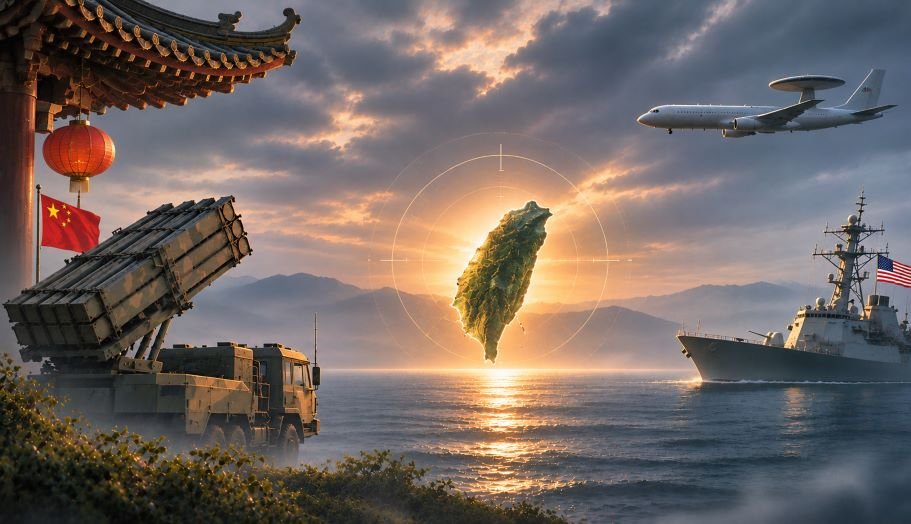
Although a world war is difficult to trigger, the risk of high-intensity regional conflict is real. In Asia, the greatest uncertainties are concentrated in two areas: the Taiwan Strait and the activities of Japan’s right wing.
Taiwan is an inalienable part of China’s territory, and the Taiwan question is purely an internal Chinese matter.
Nevertheless, the United States and Japan continue to advance military preparations relating to the Taiwan Strait. They continue to arm Taiwan independence forces, build an island-chain defence system, and draw in outside powers in an attempt to use the Taiwan Strait to impede the process of national rejuvenation.
From a strategic perspective, with China and Russia’s strategic cooperation firmly established, the United States deeply engaged on two fronts, and multiple crises placing it in a difficult strategic position, advancing national reunification at an appropriate moment would be the best way to seize the strategic initiative and break through the island-chain blockade.
The stronger China’s conventional military capabilities, the more resolute its strategic nuclear deterrent, and the firmer its willingness to fight, the less willing outside forces will be to intervene militarily. This will provide greater stability for East Asia as a whole.
We must distinguish between ordinary Japanese citizens and Japan’s new militarist forces. The Japanese public also yearns for a peaceful life and deserves respect.
However, right-wing forces in Japanese politics continue to whitewash the history of Japanese aggression, undermine the country’s pacifist constitution, incorporate the Taiwan Strait into Japan’s own security agenda, and actively support the United States’ strategy of containing China.
They are the most prominent source of instability in East Asia.
If Japan and South Korea recklessly take risks under pressure from the United States, East Asia could slide into a large-scale regional conflict.
The decision-makers in Japan and South Korea must clearly understand that any reckless action that interferes in China’s internal affairs, participates in a military encirclement of China, or provokes a regional war will carry devastating consequences.
India, for its part, has limited national power and maintains strategic autonomy. It is unlikely to become easily involved in a direct confrontation among the major powers.
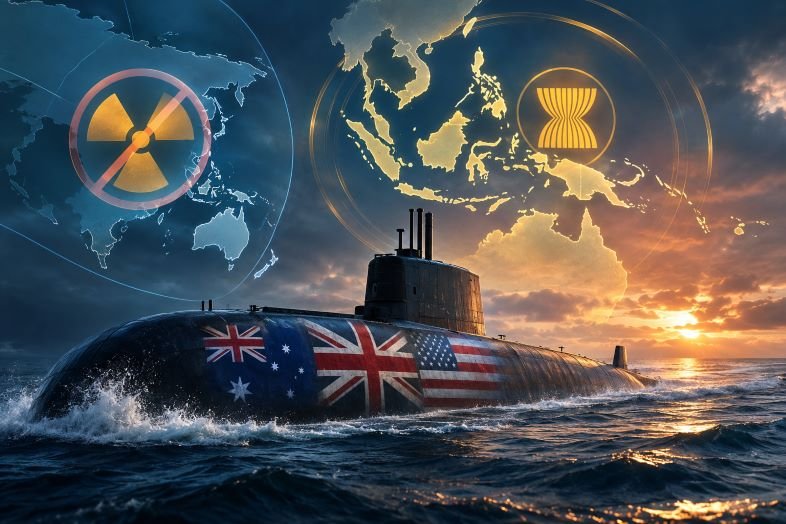
Australia and New Zealand are located in Oceania and are relatively isolated geographically. Provided that they do not actively choose sides or become deeply involved in the confrontation, they will probably be able to avoid the impact of war.
In short, the central focus of East Asian risk is the Taiwan Strait, the greatest potential danger lies with Japan’s right wing, and the most likely high-risk flashpoint is the Korean Peninsula.
IV. Deterring War and Preparing for War Demonstrate China’s Strategic Confidence
The Russia-Ukraine conflict has given the entire world a profound strategic lesson: peace cannot be obtained through begging. Unilateral concessions and restraint merely encourage the reckless ambitions of hegemonic powers.
Only sufficient strength, clearly defined red lines, and the determination to fight if necessary can deter an opponent’s impulse to go to war.
China has long maintained a nuclear policy of no first use of nuclear weapons and of not using nuclear weapons against non-nuclear-weapon states.
This is a solemn commitment reflecting China’s commitment to peace and self-defence. It is also a gesture of goodwill toward peace-loving countries around the world.
But goodwill does not mean unlimited submission. The commitment is premised on other countries respecting China’s sovereignty and refraining from using force against China’s core interests.
In the face of the United States and Japan and NATO’s continuing preparations to intervene militarily in the Taiwan Strait, we must clearly define our red lines and send an unambiguous signal to the world:
China’s reunification is entirely an internal matter. If any country or military alliance uses force to intervene in a conflict in the Taiwan Strait and obstruct reunification across the Strait, that would constitute a grave violation of China’s sovereignty and would inevitably trigger China’s ultimate act of self-defence.
This is not nuclear blackmail, but a strategic safeguard of a defensive nature. Its purpose is to eliminate the wishful thinking of outside forces and ensure that hegemonic powers do not gamble on the assumption that China would compromise in order to avoid war.
Given the complexity of the external environment, China’s strategic direction is clear.
First, maintain a strong sense of danger: it is better to be prepared for war without having to fight than to face war without being prepared. China must continue to strengthen its conventional defence capabilities, improve its nuclear triad, close its gaps in space technology, electronic warfare, early-warning systems, and reconnaissance, and build an all-domain defence system.
The purpose of preparing for war is precisely to prevent war by ensuring that an opponent dares not take reckless risks.
Second, pursue technological self-reliance and self-strengthening, and firmly retain the strategic initiative. China must accelerate research and development in semiconductors, artificial intelligence, commercial spaceflight, cybersecurity, advanced equipment, and other fields, reduce the risk of being strangled by foreign control of critical technologies, and secure the initiative in future strategic competition.
Third, continue to consolidate strategic cooperation and unite all forces that support peace. China should deepen strategic coordination with Russia, expand its global partnerships, promote the development of a multipolar world, and dismantle bloc confrontation among exclusive small-group alliances, making it more difficult for unilateral hegemonic powers to provoke conflict at will.
Fourth, communicate strategic resolve clearly and make the red lines concerning core interests known to the world. All outside forces must be warned that the red line in the Taiwan Strait cannot be crossed and the cause of reunification cannot be obstructed. Any act of military intervention will carry consequences that the parties involved will find impossible to bear.
V. If Others Attack Us, We Will Fight Back, in Defence of Lasting Peace
War and peace have always been dialectically interconnected.
Our assessment that the likelihood of a third world war is low does not mean that we can relax our vigilance or imagine that the world will remain permanently peaceful.
Likewise, our continued efforts to strengthen national defence and develop deterrent capabilities do not mean that China actively seeks war.
China has always been a builder of world peace and a defender of the international order. We do not seek war and do not provoke confrontation, but neither are we afraid of war, nor will we evade our responsibility to defend our sovereignty.
The true mark of strength is not winning a major war. It is possessing enough deterrent weight to ensure that an opponent dares not impose war upon us.
Looking ahead, we must recognise both the foundation for peace provided by the nuclear balance and the constraints imposed by the major powers on one another. At the same time, we must closely monitor developments in flashpoints such as the Taiwan Strait, the South China Sea, the Korean Peninsula, and the Middle East.
We must maintain strategic composure, remain firm in our commitment to reunification, use strong national defence capabilities to uphold peace, and use clearly defined strategic red lines to restrain reckless behaviour.
Amid the profound changes of this century, we must firmly safeguard the strategic opportunity for national rejuvenation and work to secure a more lasting environment of peace and development for the world.