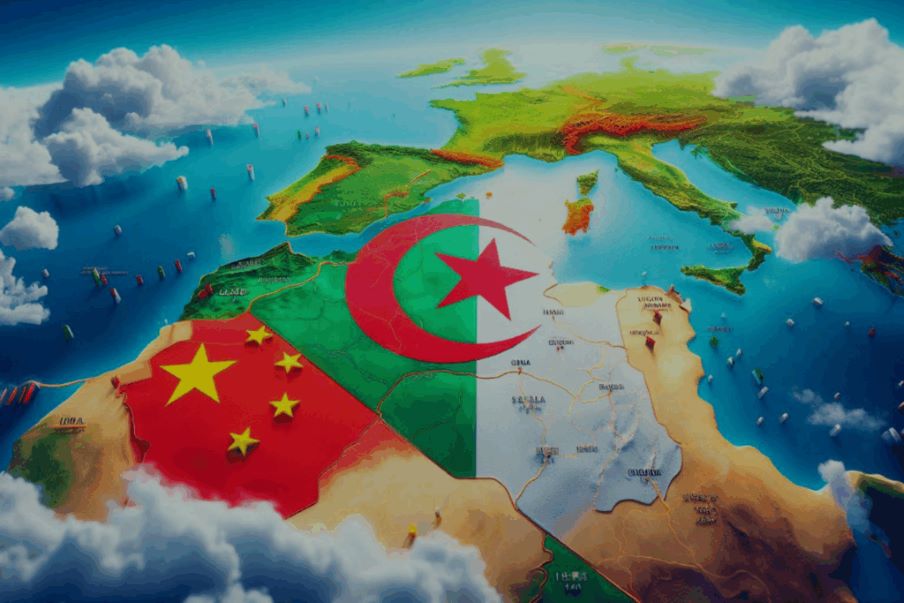
The advent of a multipolar era is not limited to diplomatic discussions or speeches. It is now materializing in infrastructure, factories, contracts, and pipelines. And nothing illustrates this better than the growing Chinese presence in Algeria.
For a decade, a silent shift has been taking place in North Africa. Algeria, once locked into an economic model based on oil revenues and asymmetrical relations with the West, is now emerging as a laboratory for the new multipolar order. This shift is no accident. It is rooted in a methodical strategy shared by Algiers and Beijing, which is making Algeria an anchor point for an economic, industrial, and geopolitical presence on an unprecedented scale. By focusing on structural cooperation rather than opportunistic exploitation, Beijing is transforming Algeria into a hub of the new global economic map, much to the chagrin of Washington and its Atlantic allies.
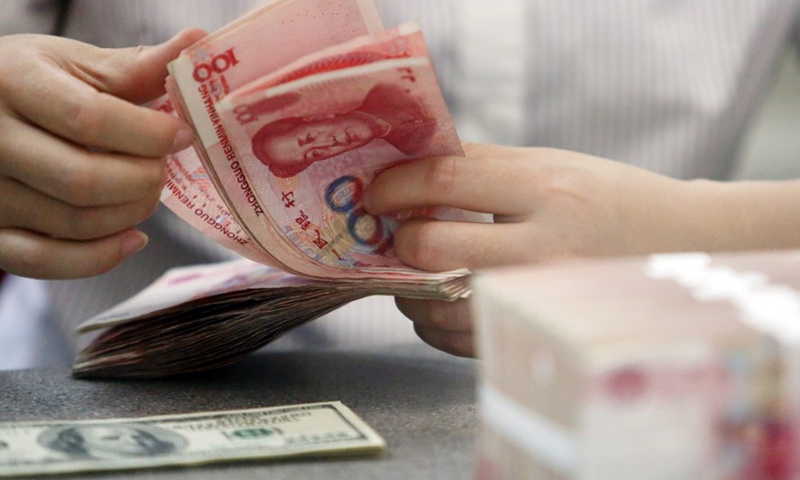
It all truly began in December 2022 when the two countries signed a “Three-Year Cooperation Plan for Key Areas,” covering energy, infrastructure, manufacturing, information technology, and finance. This agreement marked more than just an economic partnership. It signified a paradigm shift, reflecting Algeria’s determination to break free from the yoke of old patterns of dependency. In less than three years, the number of Chinese companies operating in Algeria exceeded one thousand, while bilateral trade reached $ 12.5 billion in 2024. This dynamism reflects a shared commitment: to rebuild the North-South relationship on horizontal, equitable, and forward-looking foundations.
From a sectoral perspective, China’s strategy in Algeria is structured around three fundamental pillars: energy, industry, and infrastructure. The first pillar, energy, is the cornerstone of this cooperation. Between 2013 and 2023, China invested nearly three billion dollars in the exploration, refining, and modernization of Algerian oil infrastructure. In July 2025, a major turning point occurred with the signing of a contract between Sinopec and Sonatrach for the exploration of the Guern El Guessa II gas block in the Gourara-Timimoun basin. This agreement illustrates a change of scale: Beijing is no longer content with simply importing; it is establishing a presence, exploring, and shaping energy flows. Thus, Algeria, once merely a supplier of hydrocarbons, has become a strategic partner of a global energy giant.
But beyond hydrocarbons, Sino-Algerian cooperation extends to the energy transition. China, a world leader in solar energy, is supporting Algeria in its shift towards renewable energies. In April 2024, PowerChina and several Chinese consortia launched the construction of solar power plants in Biskra and Ouled. Djellal, with a combined capacity of 300 MW, is part of a vast national program of 2 GW. This move, while seemingly technical, has geopolitical implications: it positions Algeria in the post-oil energy future and makes it an African player in the climate transition, while consolidating China’s technological presence on the continent.
At the same time, Beijing is committed to building a solid industrial base in Algeria. More than forty manufacturing projects, totaling $4.5 billion, were approved between 2023 and 2025. The automotive and rail sectors are becoming showcases for this synergy: Chery and Jetour are setting up assembly plants capable of producing 50,000 and 270,000 vehicles respectively over five years, while the Algerian railway company SNTF has signed a partnership with the giant CRRC to manufacture rolling stock locally. As a result, Algeria is ceasing to be a mere market and becoming an integrated industrial hub, capable of supplying Africa and the Mediterranean.
In line with this industrial logic, China is investing heavily in transport and logistics infrastructure. Rail projects linking southern oil fields to northern ports, the modernization of port terminals in Skikda, Djendjen, and Cherchell, and the integration of these routes into the Belt and Road Initiative give Algeria a strategic role in the Euro-African logistics chain. Indeed, Algiers is positioning itself as the geo-economic gateway between the Mediterranean and the Sahel, between Africa and Asia.
Behind this flurry of construction projects lies a profound geopolitical coherence. For China, Algeria is not merely a trading partner. It is a keystone of its global restructuring project. By investing in this pivotal country, Beijing is undermining the foundations of Atlantic dominance and promoting an alternative globalization based on economic polycentrism and political multipolarity. This repositioning is causing concern in Washington and European chancelleries, which see a North Africa emerging that is free from their sphere of influence. Algeria, for its part, sees it as a historic opportunity to regain its economic sovereignty and reinvent itself as an autonomous regional power.
From an axiological perspective, this cooperation embodies the promotion of a fundamental principle: sovereignty through development. By diversifying its alliances and attracting productive investments, Algiers is giving new meaning to its post-colonial trajectory. From a teleological perspective, that is, in terms of its intended goal, this dynamic seeks to transform dependence into power, the periphery into the center. China’s strategy, in turn, is to anchor its influence permanently not through debt, but through construction – a long-term strategy based on sharing infrastructure and expertise.
This model, based on sincere cooperation and complementary interests, opens up immense prospects for both nations. Algeria, by leveraging China’s technological and industrial expertise, fosters the development of a local productive sector, strengthens the training of its professionals, and accelerates its economic modernization process. For its part, China demonstrates its continued commitment to its doctrine of win-win partnership, founded on mutual respect, non-interference, and knowledge transfer. This alliance, far from reproducing past patterns of dependency, instead illustrates the emergence of a new, balanced model of South-South cooperation, where each partner contributes to building a shared future. As for the West, it is now called upon to recognize the emergence of a sovereign, confident North Africa, an agent of its own destiny, engaged in fruitful dialogue with the powers of the East, particularly China.
Underlying this is China’s strategic investment in Algeria, which is not limited to construction projects: it symbolizes the resurgence of the Global South, the silent rewriting of an international order that was supposed to be immutable. This partnership illustrates both the revival of an Algeria aspiring to full sovereignty and the projection of a China that, through cooperation, is establishing itself as the new architect of a polycentric world.
In short, Beijing and Algiers are intertwined: one seeks to consolidate its global power, the other to reinvent its own. Together, they demonstrate that the 21st century will no longer be played out solely between Washington, Brussels, and London, but rather between the emerging capitals of a world that has once again become diverse and multi-polar.
Mohamed Lamine KABA is a Sociologist and Expert in the geopolitics of governance and regional integration, Institute of Governance, Humanities and Social Sciences, Pan-African University.