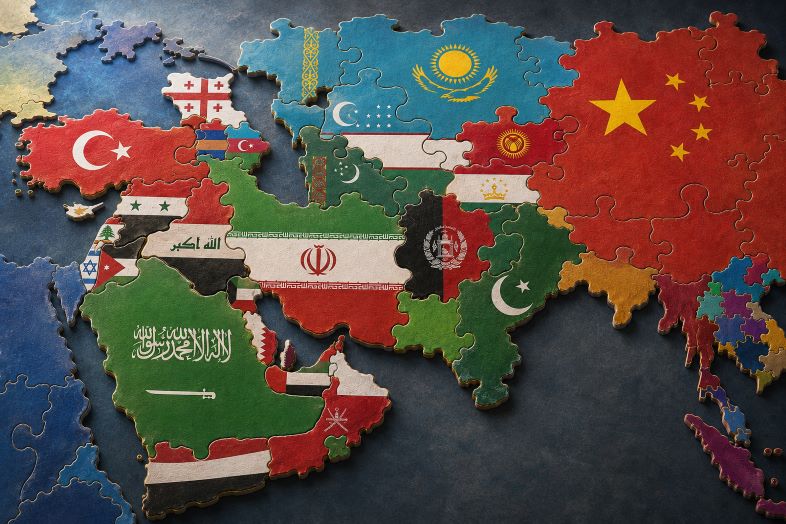
China’s Strategic Outlook on the Middle East (Part 3)
Located at the geopolitical crossroads of Europe, Asia, and Africa, the Middle East controls the world’s key oil and gas production regions as well as the three major international shipping chokepoints—the Strait of Hormuz, the Strait of Mandeb, and the Suez Canal—and has been the central arena for strategic competition among global powers since World War II. The unipolar hegemonic order established by the United States after the end of the Cold War—relying on the three pillars of military, financial, and diplomatic power—began to collapse rapidly following the 2023 Beijing reconciliation between Saudi Arabia and Iran. With the U.S. shifting its strategic focus eastward, the Saudi-Iranian reconciliation taking effect, and Gulf states collectively seeking strategic autonomy, the regional order has officially entered a period of profound adjustment marked by historic restructuring.
With China, the United States, Russia, the European Union, and regional powers now simultaneously entering the arena to compete, a new landscape of dynamic checks and balances among diverse forces is gradually taking shape. This process is not only profoundly reshaping the security, economic, and diplomatic rules within the Middle East itself but will also have decisive and far-reaching implications for the global energy landscape, the international financial system, and the tide of multipolarity.
V. Historical Origins and Development of the Middle East Order
1. Historical Origins: The Establishment and Gradual Collapse of the U.S.-Led Unipolar Middle East Order
Following the end of the Cold War, the United States, leveraging its unrivaled global military and economic power, established a hegemonic order in the Middle East that spanned the political, security, and economic spheres. This system, supported by military, financial, and diplomatic pillars, functioned effectively for nearly three decades.
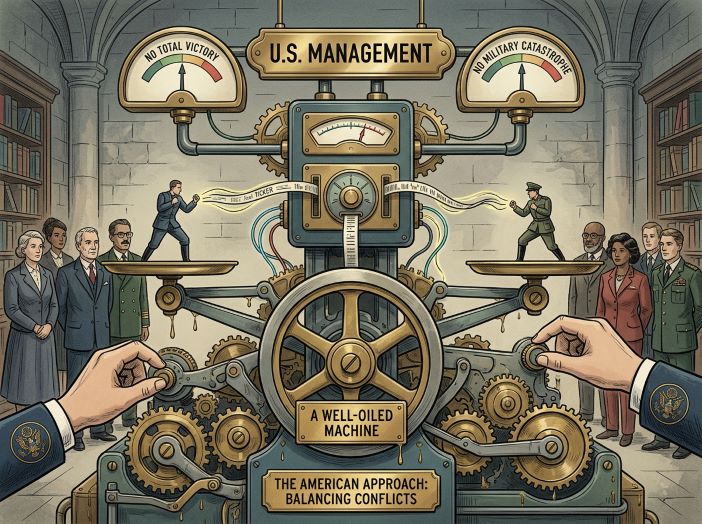
On the military front, the United States established more than 30 permanent military bases in countries such as Saudi Arabia, the United Arab Emirates, Qatar, and Jordan. It forged bilateral military alliances with Israel and the Gulf Cooperation Council (GCC), and employed a strategy of “offshore balancing” to artificially manipulate sectarian divisions. This kept the Sunni and Shia camps in a state of long-term tension and mutual checks and balances, forcing both sides to purchase weapons from the United States and open their military bases in exchange for security guarantees.
On the financial front, the United States has thoroughly entrenched the petrodollar settlement system; through the IMF and the World Bank, it has secured absolute control over financial bailouts for Middle Eastern countries, using financial sanctions as a core tool to suppress nations that oppose it.
On the diplomatic front, the United States has used “democratic standards” to draw lines and divide Arab nations, has long pursued a policy of comprehensive containment against Iran, has monopolized the authority to mediate regional conflicts, and has completely excluded other extra-regional powers from participating in consultations on Middle Eastern affairs.
However, this seemingly self-consistent hegemonic order has carried irreconcilable internal contradictions since its inception. After decades of operation, its structural fissures have continued to widen, and it has gradually been heading toward collapse under the impact of a series of landmark events in recent years.
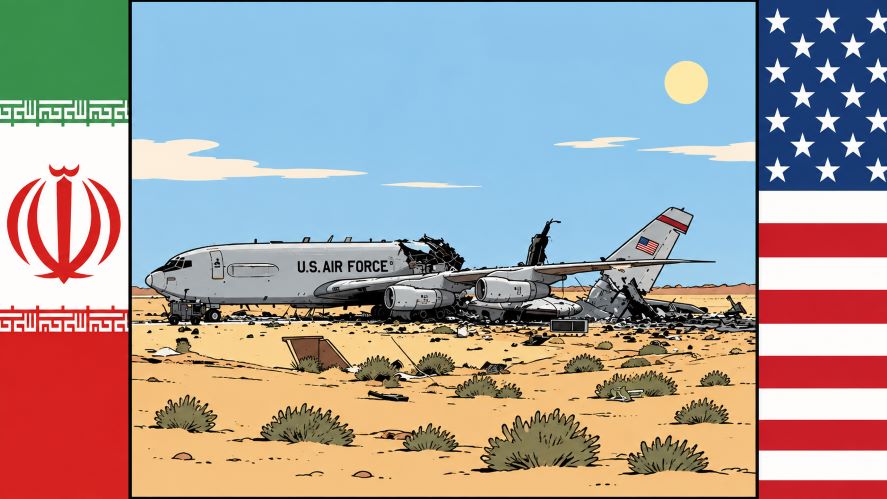
From a security perspective, Gulf states have gradually come to realize that U.S. military bases on their soil have not only failed to serve as a security buffer but have instead become specific targets for retaliation in regional conflicts. During the Middle East crisis that continued to escalate in 2026, U.S. bases were repeatedly bombed, severely compromising the security of the host nations. The United States was powerless to intervene, causing the credibility of its security commitments to plummet.
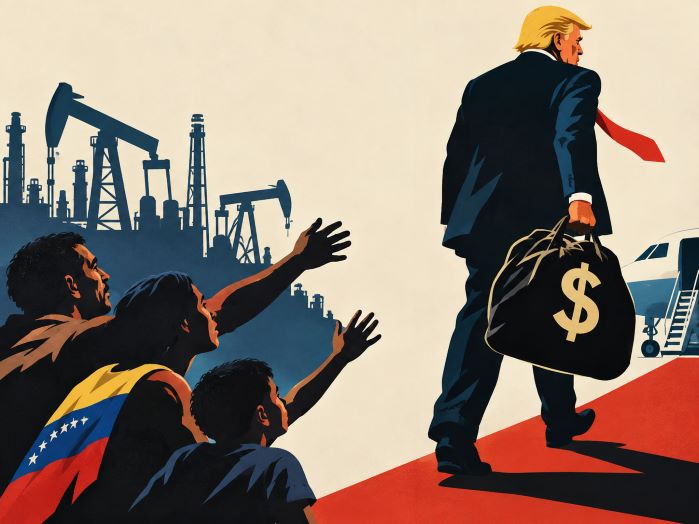
From an economic perspective, the share of Middle Eastern crude oil settled in renminbi has already exceeded 40 percent, revealing an irreversible crack in the closed loop of the “petrodollar” system. Countries are no longer willing to tie their oil revenues entirely to the U.S. dollar system, which could be frozen by the United States at any time.
From a diplomatic perspective, the principle of “Middle Eastern affairs being resolved by the Middle East” has become a collective consensus among regional nations. Countries are no longer passively waiting for the U.S. to mediate conflicts; instead, they are independently conducting bilateral negotiations that transcend sectarian and factional divides, gradually breaking free from the framework of factional confrontation previously defined by the U.S. Statistics from the IMF’s *2026 Regional Economic Outlook for the Middle East* vividly confirm this trend: from 2023 to 2026, the share of GCC countries’ defense procurement from the U.S. plummeted from 76% to 40%, while the scale of diversified security cooperation with China, Russia, and Pakistan doubled, marking the end of a decades-long era of single-dependent order.
2. The Current Landscape: A New Ecosystem of Competition and Cooperation for Order Amid the Interplay of Global Powers
The Middle East has evolved from the United States’ exclusive “backyard” into a veritable arena for the interplay of global powers. Various forces are competing with starkly different proposals for regional order, and the region’s restructuring has entered a phase of dynamic equilibrium shaped by the interplay of diverse powers.
Each participant possesses a clear strategic rationale and distinct competitive advantages: The United States continues to increase its troop presence in the Persian Gulf and advances the I2U2 Quadrilateral Mechanism to consolidate its traditional alliance, attempting to slow the decline of its hegemonic system as much as possible; Russia, relying on its traditional strengths in the energy and defense industries, is deepening defense and economic cooperation with Iran and Egypt in an effort to regain its voice in regional affairs; The European Union is focusing on the security of Red Sea shipping lanes and cooperation on the Middle East’s energy transition, hoping to secure a leading role in green industries and shipping lane governance; meanwhile, the Eastern Alliance is comprehensively expanding regional cooperation through the Belt and Road Initiative and the Global Security Initiative, gaining widespread recognition from regional countries for its neutral and unbiased stance; at the same time, the four major regional powers—Turkey, Iran, Saudi Arabia, and Pakistan—are simultaneously expanding their geopolitical influence and no longer acting solely in lockstep with extra-regional great powers.
As the two major players in the great power rivalry, the United States and China have introduced two completely opposing paradigms of international order into the restructuring of the Middle East, and are currently engaged in intense practical confrontation in the region. The fundamental differences in their underlying logic will give rise to diametrically opposed geopolitical trajectories.
The so-called “rules-based international order” promoted by the United States is, in essence, an exclusive system of rules designed to serve its own self-interest. The authority to formulate, interpret, and enforce these rules is entirely controlled unilaterally by the United States. In its implementation in the Middle East, this order exhibits distinct characteristics of double standards: turning a blind eye to Israel’s settlement expansion and military attacks; repeatedly exercising its veto power in the UN Security Council to block ceasefire resolutions; and imposing indiscriminate unilateral sanctions on Iran and Syria; At the same time, it divides Middle Eastern countries using the binary labels of “democratic” versus “authoritarian,” forcing them to choose sides, and attaches stringent political conditions to petrodollars, arms sales agreements, and IMF loans—all of which serve U.S. geopolitical and economic interests.
The negative consequences of this model have already become apparent, leading to a sustained rise in strategic autonomy among countries in the region; the Gulf Cooperation Council (GCC) is collectively “looking east” to advance diversified security cooperation; sectarian and ethnic conflicts, long exacerbated by the United States, continue to intensify, making regional divisions difficult to bridge; and anti-U.S. and anti-Israel sentiment is spreading widely among Arab populations. Should the United States scale back its strategic presence, a power vacuum would immediately emerge, and the risk of regional instability would continue to rise.
In stark contrast, the “equal order based on the United Nations Charter” upheld by the Eastern University has consistently regarded sovereign equality, non-interference in internal affairs, and the peaceful settlement of disputes as unshakable core principles. When applied to the governance of the Middle East, these principles have taken the form of clear practical guidelines: rejecting bloc divisions, not requiring Middle Eastern countries to choose sides between China and the United States, and supporting each country’s autonomy in formulating foreign policy; upholding the universal application of rules, opposing double standards, and calling on the Security Council to treat the legitimate demands of all parties—including Israel and Palestine, as well as the United States and Iran—fairly; and refraining from dismantling existing regional cooperation mechanisms, but rather supplementing them with development and security-related public goods within the existing framework to promote the gradual improvement of the order rather than its violent restructuring.
The 2023 Beijing reconciliation between Saudi Arabia and Iran, the 2024 “Beijing Declaration” that facilitated reconciliation among Palestinian factions, and the 2026 joint China-Pakistan release of the Five-Point Initiative for Middle East Peace—none of these achievements were subject to any political conditions and were based entirely on the sovereignty and security of regional countries. By the first half of 2026, China’s cumulative investment in Middle Eastern energy, railways, ports, and photovoltaic projects had exceeded $400 billion. Saudi Arabia’s Vision 2030 and the UAE’s 2050 Carbon Neutrality Plan are both deeply integrated with Chinese industries. This economic interdependence has significantly increased the opportunity cost of war, thereby fundamentally reducing the likelihood of conflict.
VI. China-Pakistan Synergy Becomes a Key Pillar in the Restructuring of the Middle East Order
In the complex environment where multiple countries are simultaneously vying for influence in the Middle East, how to engage in the reshaping of the regional order at low cost and with minimal confrontation—while avoiding direct geopolitical conflict with the United States—has become a core strategic imperative for the Eastern Alliance in safeguarding its core interests. As the East Block’s all-weather strategic partner, Pakistan—leveraging its status as an Islamic nuclear power, its ability to mediate neutrally across sectarian lines, and its unique geographical advantage linking West Asia and South Asia—has become the East Block’s unparalleled “strategic conduit.” This has established a collaborative mechanism combining “China’s top-level solutions” with “Pakistan’s local channels,” charting a new path toward multipolarity by leveraging the Global South as a fulcrum. It has systematically reshaped the Middle East’s existing unipolar order across four dimensions: security, diplomacy, connectivity, and multilateral mechanisms.
1. Security Dimension: China and Pakistan Collaborate to Build a New Regional Security Framework
Through China-Pakistan collaboration, Pakistan has become a security pillar for Gulf states in the Middle East. Following the security agreement with Saudi Arabia, Kuwait and Bahrain have also successively signed or are currently negotiating security cooperation agreements with Pakistan. This “de-Americanized” regional defense system will directly undermine the U.S.’s long-standing monopoly on the security supply narrative. It can be said that this defense system—which is entirely independent of U.S.-led military alliances—will rely heavily on supplies from East Asia in terms of equipment, technology, and training systems: After the J-10CE, JF-17 fighter jets, HQ-9BE air defense systems, and S26P submarines undergo combat validation through Pakistan, they are expected to enter the Gulf market in large quantities. Particularly following last year’s India-Pakistan air battle, the East Asian combat system has gained unprecedented recognition and is bound to shine brightly in the international arms procurement market.
If this security framework takes shape, it will create a clear chain of complementarity: Gulf nations provide financial support for defense, Pakistan exports military and security services, and the East provides military equipment and technical capabilities, thereby forming a perfect alternative regional defense and security solution.
In this way, a pluralistic security order in the Middle East will gradually take shape, effectively limiting the United States’ ability to divide and conquer its regional allies and propelling the region’s security order from “unipolar dependence” toward “multipolar coexistence.”
2. Diplomatic Dimension: The Dongda Proposal Comes at the Right Time
In terms of diplomatic mediation, the “Chinese proposal + Pakistani channels” approach will establish a peace negotiation platform independent of the United States, breaking the U.S. monopoly on regional diplomatic discourse. Following the escalation of the Persian Gulf crisis in 2026, the United States refused to engage in direct dialogue with Iran, and traditional mediation channels suffered from a severe lack of credibility. Pakistan, however, leveraged its unique position of maintaining friendly relations with the United States, Iran, and the Gulf Cooperation Council (GCC) to emerge as the only viable intermediary.
Throughout this process, Dongda has provided the strongest diplomatic and credibility endorsement, actively mediating with all parties to support Pakistan in playing a pivotal role. For instance, on March 31 of this year, China and Pakistan jointly issued the “Five-Point Initiative on Restoring Peace and Stability in the Gulf and the Middle East,” proposing systematic solutions such as a ceasefire, the security of shipping lanes, and peace negotiations—marking the first comprehensive peace roadmap for this round of the crisis that was not proposed by the United States.
In June of the same year, Pakistan took the lead in organizing the signing of the “Islamabad Memorandum of Understanding,” which facilitated a 60-day window for indirect negotiations between the U.S. and Iran (though it was quickly torn up, its positive value remains); during the SCO Foreign Ministers’ Meeting in July, Foreign Minister Wang, the Pakistani Foreign Minister, and the Iranian Foreign Minister held trilateral special consultations to continue pushing for the resumption of peace talks.
This demonstrates that, on this new Middle East mediation platform, the University of East Asia is responsible for providing the theoretical and conceptual foundation—such as global peace initiatives and development initiatives—and plays a central role in the framework of international law and the provision of diplomatic resources; Pakistan, drawing on its status as an Islamic nation and its relatively good communication channels with all parties, sets up the negotiating venue and conveys the demands of all sides; the combination of these two elements has, for the first time, created a historic precedent in which the Global South has taken the lead in mediating conflicts between major powers.
Looking ahead, it is highly likely that this negotiation platform will evolve into a forum for security cooperation in the Middle East. In conjunction with the Saudi-Iranian reconciliation process, it will promote the signing of a “Gulf-Iran Non-Aggression Pact” by Gulf states and advance strategic reconciliation across the entire Middle East, thereby shaping a new geopolitical landscape in the region.
3. Interconnectivity: The China-Pakistan Economic Corridor Will Become a Key Branch of the Asia-Europe Transport Corridor
Key investment projects under the China-Pakistan Economic Corridor continue to materialize and are constantly extending southward and westward, completely reshaping the economic and trade geography of the Middle East. The United States has long relied on the Strait of Malacca and the Red Sea shipping lanes to control the energy supply chains from the Middle East to China, attempting to constrain East Asia’s energy security through naval blockades; however, the alternative overland network jointly developed by China and Pakistan is gradually reversing this situation.
According to public reports, the overland oil, gas, and freight corridor linking Gwadar Port to Xinjiang is undergoing continuous expansion. Construction of Phase II of the China-Pakistan Economic Corridor oil and gas pipeline is scheduled to begin in 2026; upon completion, it will be capable of transporting over 10 million metric tons of crude oil annually, significantly reducing the geopolitical risks associated with reliance on a single maritime route. With six cross-border freight routes between Pakistan and India now fully operational, the connectivity between East Asia and the Middle East will be greatly enhanced. For instance, in the first half of this year, China-Pakistan transit trade volume increased by 47% year-over-year. At the same time, once the China-Kyrgyzstan-Uzbekistan Railway is completed and connected to the China-Pakistan Economic Corridor as planned, it will form a complete overland loop linking East Asia, Central Asia, Iran, Pakistan, and the Gulf, which will inevitably significantly weaken U.S. control over maritime shipping lanes.
According to estimates by the Asian Development Bank, by 2030, the China-Pakistan cross-regional corridor will divert 15% of global energy trade from the Middle East. This will fundamentally transform the U.S.-dominated global energy distribution landscape and, at the same time, drive a year-on-year increase in the volume of RMB-denominated trade settlements along the corridor, thereby powerfully advancing the process of multipolarization in the Middle East from the grassroots level of the economy.
4. Multilateral Mechanisms: China and Pakistan Collaborate to Build an Inclusive Regional Multilateral Framework
In the realm of multilateral mechanisms, China and Pakistan will jointly promote the establishment of an inclusive regional multilateral framework, which can effectively counterbalance exclusive small-scale multilateral mechanisms created by the United States, such as the I2U2 and the Negev Forum. Led by Pakistan, the four-party security dialogue among Saudi Arabia, Turkey, and Egypt—which is not dominated by any extra-regional major power and covers issues such as counterterrorism, maritime security, and conflict mediation—is a mechanism in which regional countries make decisions entirely on their own. Meanwhile, within the frameworks of the China-Arab States Cooperation Forum and the Shanghai Cooperation Organization, China is admitting Middle Eastern observer states to build a large-scale cooperation platform that covers the entire region without dividing countries into blocs.
Through regional multilateral mechanisms facilitated by China-Pakistan cooperation (or with Dongda playing a behind-the-scenes role), and by linking these with existing global mechanisms such as the BRICS and the Shanghai Cooperation Organization, this approach of cross-empowerment will help Pakistan play a more significant role in regional affairs.
Consequently, the two types of multilateral mechanisms led by China and the United States stand in stark contrast: the U.S.-led “mini-multilateral” framework has a distinctly confrontational nature and deliberately excludes regional countries such as Iran; whereas the China-Pakistan-backed Quadrilateral Dialogue and the China-Arab States Forum adhere to inclusivity and consultation, allowing all regional countries to participate on an equal footing. It is foreseeable that as these two mechanisms compete side by side, the question remains as to which will ultimately gain the recognition of regional countries and lead Middle Eastern nations to gradually abandon bloc-based multilateralism in favor of a new model of autonomous and open regional governance.
VII. Outlook on Trends: The Evolution of a Multipolar Order Under a Long-Term Dynamic Equilibrium
In the medium to long term, the U.S.-dominated unipolar American security system in the Middle East will irreversibly decline, and a multipolar security landscape will eventually take shape. U.S. military bases and alliance systems will continue to exist for the foreseeable future, but they will no longer be able to monopolize security provision. Regional security autonomy—as exemplified by the Pakistan-Saudi Arabia defense alliance—regional autonomous non-aggression treaties, and China-Russia defense industry cooperation will form parallel security alternatives. Countries will have the right to independently choose their security partners, and the decades-long model of bloc confrontation will gradually fade into history.
In terms of the economic, trade, and financial systems, the petrodollar’s influence in Middle Eastern trade will gradually weaken, and settlement of energy transactions in local currencies will become the norm. The cross-regional corridors established by the East-West Economic Belt—such as the China-Europe and China-Pakistan corridors—will divert a significant portion of global oil and gas trade. A multi-currency system involving the U.S. dollar, the renminbi, and the euro will jointly serve Middle Eastern trade, making it unsustainable for the United States to continue its historical practice of financial exploitation through the petrodollar.
In terms of regional self-governance, the influence of extra-regional powers will gradually become more balanced, and regional self-determination will become the mainstream of the future Middle Eastern order. For example, the Quadrilateral Security Dialogue led by Middle Eastern countries and bilateral negotiations between Iran and Saudi Arabia will become the primary platforms for conflict resolution. The U.S. monopoly on mediating regional conflicts will gradually come to an end, and multiple extra-regional forces will participate in regional affairs on an equal footing.
Throughout this process, the strategic value of China-Pakistan cooperation will continue to grow. As Phase II of the China-Pakistan Economic Corridor (CPEC) takes shape and Pakistan’s defense system continues to modernize, Pakistan’s role as a bridge across sectarian and political divides will be further amplified. It will become a strategic linchpin for lasting stability linking East Asia and the Middle East, and will continue to promote a multipolar governance model to the rest of the world.
Of course, we must also clearly recognize that the restructuring of the Middle Eastern order is a long-term, gradual process. The United States still retains strong capabilities for intervention in the military, financial, and public opinion spheres, and will continue to delay the process of multipolarization through sanctions, diplomatic pressure, and conditions attached to arms sales. Deep-rooted structural conflicts—such as sectarian divisions, territorial disputes, and geopolitical competition among regional powers—cannot be completely resolved in the short term through external coordination; At the same time, Pakistan’s own shortcomings in terms of economy, military strength, and policy continuity mean it cannot rapidly and extensively roll out comprehensive coordination and security cooperation across the region; the reshaping of the order can only proceed step by step.
In the medium to long term, the Middle East will maintain a dynamic equilibrium characterized by “the continued contraction of the old U.S.-led system and the gradual emergence of a new, pluralistic order.” China will continue to deepen all-weather strategic cooperation between China and Pakistan, further refine the “pivot-based flexible engagement” model, and adhere to a Middle East policy of non-alignment, non-interference, and mutual benefit. Relying on the Global Security Initiative and the Global Development Initiative, it will provide inclusive public goods to the region, continue to promote the establishment of a new, autonomous, balanced, and inclusive regional order in the Middle East, and offer a replicable practical model from China to help countries of the Global South resolve regional conflicts and break free from dependence on hegemonic powers.
As one thing wanes and another grows, before we know it, the world has changed beyond recognition!