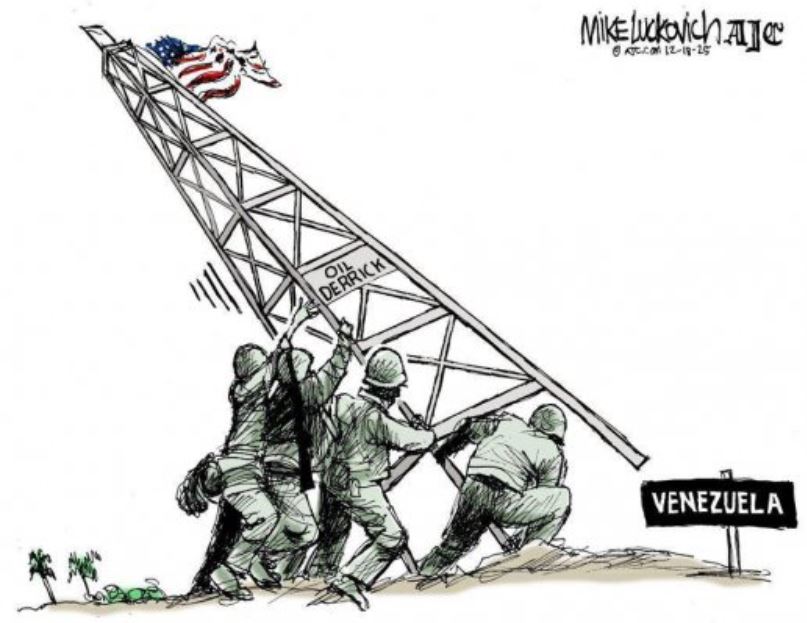
December 18, 2025 – Venezuela: No, it’s not a question of a return to the Monroe Doctrine, but the advent of a post-Westphalian world where international law is erasing.
A necessary premise
Let’s start with a necessary premise: anyone who believes that a situation in which the law is subjected to material power relations is equivalent to a situation in which the law is completely absent simply doesn’t know the history and functioning of politics.
Therefore, to anyone who comments on this post by invoking the alleged non-existence of international law in history, I will not respond because it is not my job to rehearse the ABCs of politics.
From left-wing to right-wing menopeggiorrismo
Like many others, I welcomed some aspects of the American National Security Strategy 2025: for the first time, the United States has explicitly embraced the vision of a multipolar world, also redesigning—with the suggestion of a C5 between the USA, Russia, China, India, and Japan that would replace the G7—a post-Western leadership.
The problem facing the international order, however, is the same one within individual Western countries.
For decades, I have engaged with a left-wing menopeggiorrismo vision, and today, with a right-wing that is gaining popular support in the West, I find myself arguing with a less-worsening vision of the opposite kind: the point is that today I find the latter unacceptable, just as yesterday I considered the former inadequate.
The globalist defeat on the domestic front of nations
The partial defeat of the globalist-progressive axis (which, however, still commands the European Union) has certainly blocked, in the short term, a project to redefine society and life itself in a totalitarian sense, but there are reasonable doubts as to whether it has equally changed the general strategic principles.
In fact, Trump-supporting economic powerhouses like Thiel and Yarvyn entertain the same future scenarios as their progressive counterparts:
a) direct corporate control over society;
b) the replacement of humanity with machines.
Simply put, the “right” believes it can achieve these results without imposing the culture of sex change on children and without having to put the entire world under lockdown.
The globalist defeat on the international front
The corresponding defeat of the globalists on the international front has immediately removed the possibility of a global thermonuclear war, limiting that probability to Europe alone.
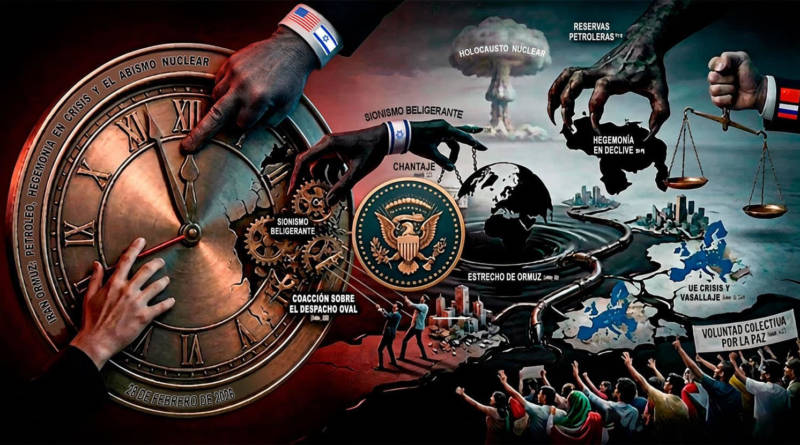
Yet, what is unfolding before our eyes is the exact opposite of the world—based on respect for all sovereignties and a renewed and strengthened international law—that China, Russia, and the BRICS documents have been theorizing for years.
Several geopolitical commentators, on the contrary, are speaking of the advent of a post-Westphalian world, that is, an international context where the principle of national sovereignty enshrined in the Peace of Westphalia in 1648 is no longer valid, not only factually but also legally.
The Israeli precedent
Even if, by some miracle, peace were to arrive in the Palestinian territories tomorrow and the conflict between the United States and Venezuela were to end, the two crises cited have nevertheless created precedents that heavily jeopardize the future of international relations in terms of the complete erasure of law.
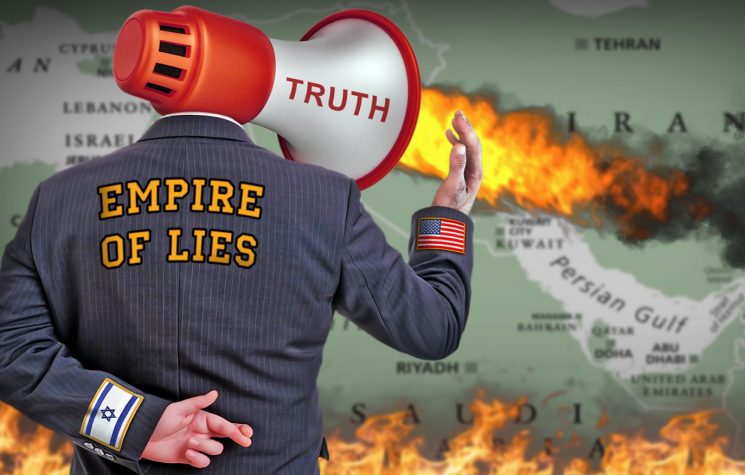
1) In the case of the Israeli-Palestinian conflict, Trump supporters argue that the American president actually prevented the Israeli government from both escalating the conflict with Iran and continuing hostilities in the Middle East with the aim of creating a “Greater Israel.”
These considerations may be true, but from the perspective of the problem we are facing, they are equally irrelevant. Indeed, even if Netanyahu failed to obtain from the United States everything he wanted, we have nevertheless witnessed—on the part of Israel and thanks to American support—a series of unprecedented acts of supremacism:
a) a deliberate massacre of the civilian population carried out with virtual impunity (barring any developments in the proceedings at the International Criminal Court);
b) the public and official declaration of a principle of theological superiority;
c) an intensification of control over global information, aimed at outlawing criticism of the Israeli state.
The precedent for the attack on Venezuela
2) Turning to the events in Venezuela, I suggest to potential supporters of the thesis of the historical non-existence of international law a comparative analysis of the cases of Iraq, Libya, and Venezuela itself:
a) the 2003 war on Iraq was preceded by intense diplomatic work aimed at granting legal legitimacy to the American aggression, with a fabrication of false evidence involving the intelligence agencies of at least three nations;
b) the 2011 aggression on Libya, on the other hand, required no false evidence, but only false news that no one, at the time, dared to think of verifying; even in this case, however, everything ultimately took place under the legal umbrella of the United Nations;
c) Finally, the US aggression against Venezuela marks a further qualitative leap since it does not seek legal legitimacy from any international authority and, above all, expresses no motivation other than the clear desire for neocolonial predation.
Not a return to the Monroe Doctrine, but a new post-Westphalian world
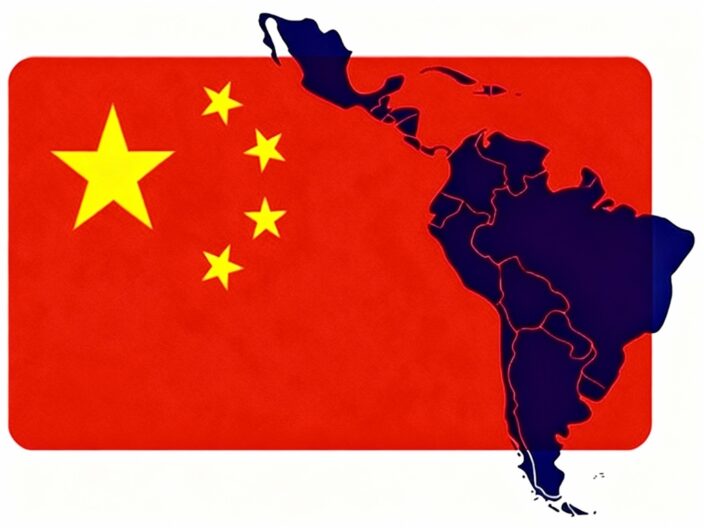
Among Trump’s supporters, it is argued that ultimately the United States’ return to the Monroe Doctrine—that is, to its imperialist grip on South America—is a price worth paying if the reward is a multipolar and peaceful world.
Aside from the similar case of Israeli militarist supremacism supported by the United States and involving an entirely different part of the planet, the legal precedents generated by the current US-Venezuela crisis are too broad and too macroscopic to seriously consider them confined to the Caribbean Sea.
Essentially, ships have been sunk without any evidence or indication that they were carrying drugs, and this precedent provides a de facto license for the United States to carry out acts of international terrorism without any pretense or cover-up.
Trump’s statement yesterday that Venezuelan oil belongs to the United States, finally, marks a point of no return: it legitimizes predation and the rule of the strongest, a legitimacy that 19th-century European colonial powers never dared to express so explicitly.
So, no, this isn’t a return to the Monroe Doctrine, but rather a precedent aimed at legally undermining international law.
The question that arises at this point is this: how can this Wild West logic, this neo-barbaric paradigm proclaiming the primacy of force over law, be compatible with the declared desire to coexist with others in a multipolar world?