November 4, 2025 – On October 31, the UN Security Council adopted a resolution on Western Sahara ( S/RES/2797 ) which, as with previous resolutions, extended the mandate of the United Nations Mission for the Referendum in Western Sahara (MINURSO) for one year and outlined a series of guidelines for resolving the conflict. The difference from previous resolutions is that it gave greater prominence to Morocco’s proposal for autonomy in the territory.
In Morocco, the news has been met with massive fanfare and a solemn speech by the king. Trump’s advisor for Africa, Massad Boulos, called it a “historic moment.” Beyond the fanfare, it’s worth asking what this resolution truly entails, how novel and significant it is, and what scenarios now unfold. The fact that this occurs precisely fifty years after the Green March, the Madrid Tripartite Agreement, and Spain’s withdrawal highlights how the Western Sahara issue has been the scapegoat of a paralyzed international order, where rules exist—such as the right to decolonization—but where realpolitik prevails .
The resolution was adopted at the last minute, as MINURSO’s mandate was set to expire that very day. The preceding weeks had been marked by a series of developments. For several months, members of Congress in Washington had been stirring up tensions by leading a campaign to declare the POLISARIO Front a terrorist organization. On September 30, the UN Secretary-General presented his report on the situation in Western Sahara ( S/2025/612 ), outlining the situation of MINURSO and the work carried out—with limited results—by his Personal Envoy, Staffan de Mistura. He concluded by expressing his concern about the entrenched situation. On October 16, the Fourth Committee of the General Assembly adopted a resolution reaffirming the legal status of Western Sahara and the UN’s responsibility towards the Sahrawi people regarding decolonization. In mid-October, US President’s envoys, Steven Witkoff and Jared Kushner, revealed in an interview that they would have “a peace agreement between Algeria and Morocco” within 60 days, intending to extend their magic formula of “pacification- dictat ” from Gaza to the Maghreb. On October 21, the POLISARIO Front submitted an “expanded proposal” ( S/2025/664 ) to the United Nations, responding to the request made in resolution 2756 (2024), in which it reiterated its commitment to existing principles, offered guarantees, and detailed the possibilities for coexistence and cooperation between an independent Sahrawi state and Morocco. Meanwhile, Morocco has added nothing to its brief autonomy proposal presented in 2007.
In the second half of October, a draft of the new resolution was leaked, written as usual by the United States, with the assistance of the so-called Group of Friends of the Secretary-General for Western Sahara (United States, France, United Kingdom, Russia, and Spain). The proposal was clearly biased toward Rabat’s position and called for a short renewal of MINURSO. Protests erupted in the refugee camps.
The final version of the resolution introduced some new elements. It was approved by 11 votes, with three abstentions (Russia, China, and Pakistan) and one absence (Algeria). The mission was extended for one year, and the usual terms were maintained (“to achieve a just, lasting, and mutually acceptable political solution that allows for the self-determination of the people of Western Sahara within the framework of agreements with the principles and purposes of the Charter of the United Nations, and observing the roles and responsibilities of the parties in this regard”). The difference was that, on this occasion, it was added that the solution would be based on Morocco’s Autonomy Plan. Autonomy went from being a possibility to being the cornerstone of a settlement. Russia and China indicated their disapproval of the procedure but abstained to ensure the renewal of MINURSO, while Pakistan abstained because the text did not sufficiently address the issue of self-determination. Algeria withdrew in protest. This is not new; in recent years resolutions have not been approved unanimously.
Morocco hailed the resolution as an absolute diplomatic success. In his speech, King Mohammed VI declared that “the time has come for a unified Morocco, from Tangier to La Güera, whose rights and historical borders no one will be able to violate.”
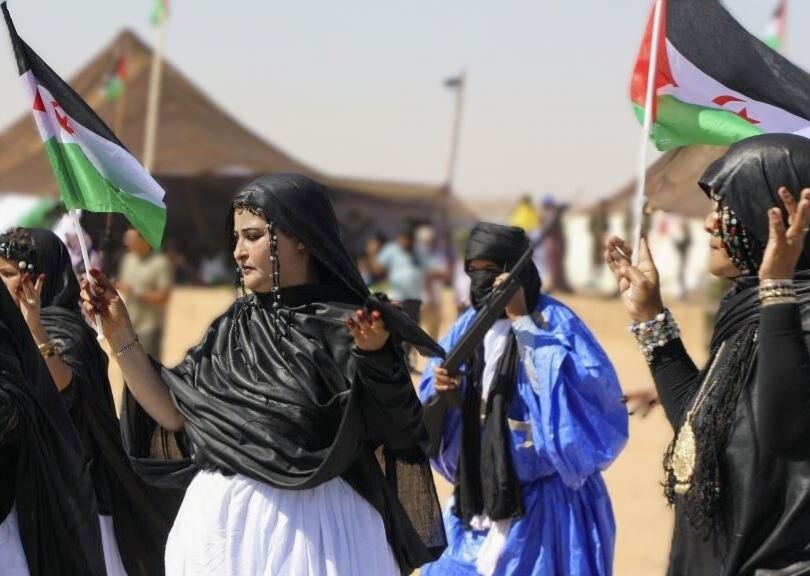
The POLISARIO Front’s response ( press release issued on October 31) was both restrained and firm. It appreciates the continued adherence to the objectives and principles of self-determination. However, it points out that the resolution includes several elements that constitute “a very dangerous and unprecedented departure from the basis on which the Security Council has addressed the question of Western Sahara, in accordance with the principles enshrined in the Charter of the United Nations.” The statement continues: “These elements also violate the international status of Western Sahara as a decolonization issue, undermine the foundations of the UN peace process in Western Sahara, and obstruct the efforts of the UN Secretary-General and his Personal Envoy.” The POLISARIO Front notes that issues raised by members of the Council have not been taken into account, and indicates that it will not participate in any political process or negotiation based on proposals, regardless of their origin, that seek to “legitimize” Morocco’s illegal military occupation of Western Sahara and deprive the Sahrawi people of their “inalienable, non-negotiable, and imprescriptible right to self-determination.” The POLISARIO Front emphasizes that “unilateral positions that seek to sacrifice the rule of law, justice, and peace for the sake of short-term political expediency will only exacerbate the conflict and jeopardize peace, security, and stability throughout the region.”
The novel approach of imposing Moroccan autonomy as the basis for negotiations is a clear example of the current Trumpian tactics, as seen in Gaza , presenting a fait accompli without any consideration of international law. Furthermore, it creates obvious contradictions, as it attempts to reconcile annexation-based autonomy with self-determination. And it effectively blackmails the other members of the Security Council: either they accept this formula or the Mission will not be renewed and the 1991 Settlement Plan will lapse. Morocco, under Washington’s wing, can only rejoice.
This situation once again highlights that at the United Nations, while the General Assembly and its Fourth Committee defend the framework for decolonization, the Security Council approves resolutions that pave the way for the legalization of annexation. This does a disservice to the Secretary-General’s Personal Envoy, who is unable to revive negotiations and, if things continue this way, will end up throwing in the towel like his predecessors. Meanwhile, the Group of Friends, rather than facilitating a resolution to the conflict, is undermining it. This is hardly surprising, because two of its members accept the illegality of the annexation and have recognized Moroccan sovereignty over the Sahara (the United States and France), and two others (the United Kingdom and Spain) look favorably upon the proposed annexation disguised as autonomy. This should be enough to warrant the group’s dissolution.
MINURSO is not being dismantled, but it remains bogged down, with no referendum in sight and no ceasefire monitoring function, as hostilities have been ongoing for five years. De Mistura has 90 days to implement a negotiation framework based on these principles. Progress is unlikely. The approved resolution emboldens Morocco, which is taking advantage of the disruptive Trumpian moment and will not budge an inch. On the other hand, the firmness of the POLISARIO Front and Algeria suggests the deadlock will continue. Rabat will continue to exploit the lack of interest many countries have in this unresolved issue and will fuel the inconsistency of the European Union (EU), which has just approved a new Association Agreement with Morocco, including the territory of Western Sahara, under the flimsy pretext that the Sahrawi population has tacitly consented because it benefits from the agreement and is not forced to bear any costs.
This is not a turning point. The realpolitik of the powerful still prevails, while international law remains the weapon of the weak. Trump’s business advisors (Witkoff, Kushner, and Boulos) have brought their boss’s blackmailing practices, which are contrary to international law, to the Maghreb. As on other occasions, they may have some immediate effect, but they usually end in disaster. Everything suggests that the Trumpian euphoria will fade in a few days and that everything will remain the same or even worsen.