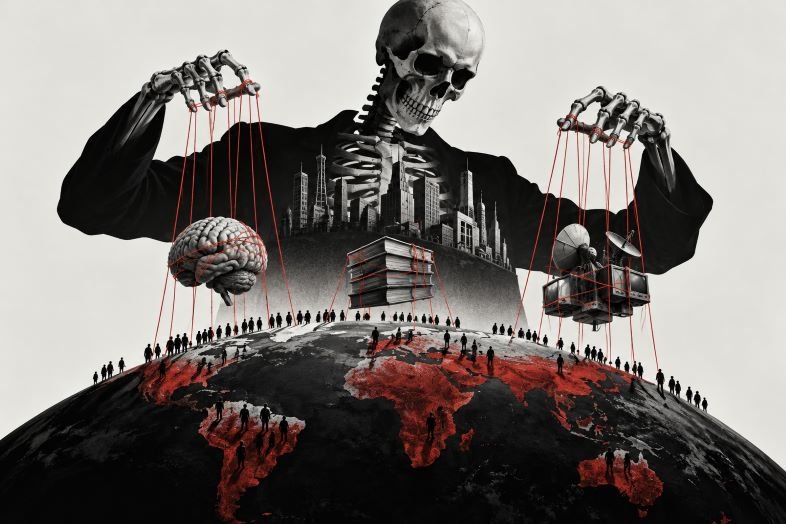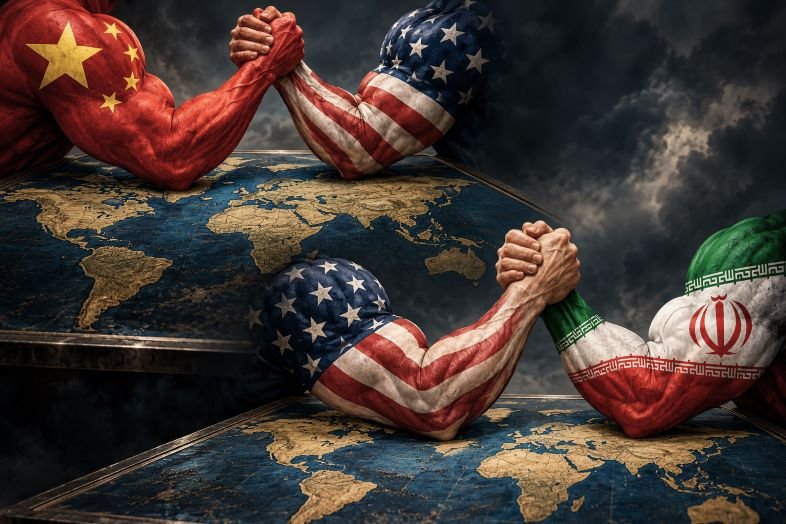
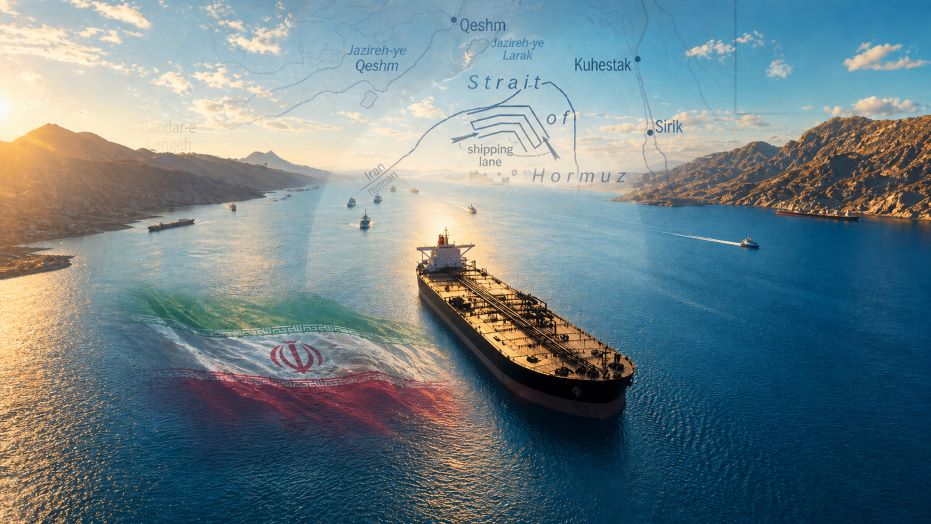
Perhaps, just perhaps, history isn’t as we’ve been told. The image of a world on the brink of an energy crisis, with soaring oil prices and trembling stock markets, might not be the reflection of a strategic miscalculation, but rather a precise snapshot of the intended objective.
For weeks, the dominant narrative has been that of a geopolitical conflagration spiraling out of control. Iran, cornered, shuts off the Strait of Hormuz in an act of desperation; the Houthis, its loyal pawns, blockade Bab el-Mandeb; and the United States, the beleaguered global firefighter, runs back and forth trying to extinguish the flames without getting burned too badly.
It’s a very Western story—comfortable, linear, and, as we shall see, possibly flawed. The hypothesis that must emerge amidst the noise of missiles is another, far more unsettling one: what if the closing of straits is not an unintended consequence of war, but its very purpose? This is a sophisticated variant of the “chokepoint power” thesis, extensively discussed here in two articles (here and here). This doctrine holds that, in a hyperconnected world, the ability to disrupt critical nodes of global trade grants a power more formidable than that of an aircraft carrier.
Because control doesn’t necessarily mean opening; often, true power lies in the prerogative to close, to deny, to suffocate. And in this equation, keeping the arteries of Hormuz and Bab el-Mandeb sealed constitutes a structural challenge not only for Tehran or Riyadh, but above all for the major economies of East and South Asia. The impact is an earthquake of varying intensity: existential fragility in Japan and South Korea, a perfect storm for booming India, and a surgical blow to the foundations of Chinese growth. This isn’t armchair conspiracy theory; it’s a cold alternative to the geopolitical textbooks written long before Donald Trump set foot in the Oval Office again.
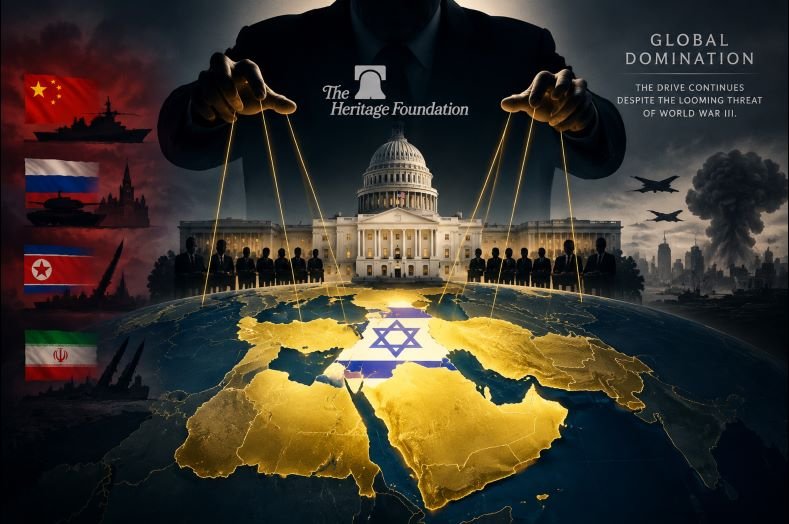
It’s worth remembering that, in Washington, certain ideas never die; they merely await their moment. Elbridge Colby’s manual, ” The Strategy of Denial ,” and the Heritage Foundation’s meticulous plan, the celebrated ” Project 2025 ,” are not mere academic exercises to adorn bookshelves. They are the blueprints for a new architecture of power. Both texts, read with the perspective afforded by the current chaos, seem to show that strangling China through its energy supply lines is not an option on the table, but rather the very table on which the game is being played.
The logic is irrefutable and follows the line of reasoning in my previous article, ” Trump Doesn’t Improvise .” Professor Helen Thompson of Cambridge University, one of the most insightful and respected minds in the analysis of energy geopolitics, has articulated this suspicion with surgical precision. Thompson argues that the constant thread throughout this second Trump administration has been the geopolitical reconfiguration of the global energy sector, and that the effective closure of the Strait of Hormuz might not be a strategic “mistake,” but rather a deliberate feature of the conflict. In her own words, ” We must consider the possibility that some of what is happening is not just about Iran, but about the Trump administration’s attempt to harm China .”
If conventional wisdom is wrong, then raising the global price of oil and keeping it high could be a key military objective. It’s a double-edged masterstroke: it hurts China, which depends on imported energy, and benefits the United States, which is now a net exporter. And here’s the ironic twist. If this is the case, Iranian control over the flow of oil—that specter that terrifies the West—would be not only a tolerable outcome, but a desirable one for certain circles in Washington.
Does it seem far-fetched? As always, do the math. Money, that infallible lie detector, never lies. According to the Dow Jones Markets data team, since this war erupted on February 28, the publicly traded US energy sector has seen its market value increase by $93 billion. That’s nearly 100 billion reasons not to rush to put out the fire. Revenue estimates for these companies in 2026 have skyrocketed by more than $200 billion, from $1.9 trillion to $2.1 trillion. Their total estimated net profit has increased by 22%, an additional $33 billion, to reach a staggering $183 billion. Coincidence? Let’s call it a happy geopolitical accident for those same energy elites who paved the way for Trump’s return to the White House with generous donations. The coincidence is too perfect to be accidental.
But reducing this complex equation to the balance sheets of Exxon or Chevron would be simplistic. The advisability of closing both straits is a far more intricate web of interests, where other players with their own agendas are teetering on the brink. What about the Gulf Cooperation Council (GCC), those sheikhs who saw their petrodollars flow like rivers? What role does Israel play on this chessboard? And what about Iran, the supposed villain of the piece? Above all, how do the Asian economies, those energy giants with feet of clay, fit into this narrative?
Let’s begin with the collateral damage, because in this war of attrition, the victims are measured in millions of undelivered barrels and evaporated GDP points. Japan is the most stark example of extreme vulnerability. The Land of the Rising Sun is, energy-wise, a hostage of the Middle East. Approximately 95% of its oil imports sail through waters that are now a graveyard of trade routes, all passing through the Strait of Hormuz.
The impact was immediate. In the month following the blockade, the price of crude oil skyrocketed by more than 80%, and filling up in Kyoto or Kobe became a luxury that cost twice as much as before. The image speaks louder than any graph: in the week after the blockade, not a single oil tanker—not one—docked in a Japanese port from the region. The silence at the Yokohama docks is the sound of an economy holding its breath.
South Korea, that other Asian industrial marvel, is teetering on the brink of a similar abyss. Its economy, a prodigy of exports and high technology, has suffered a direct blow to its productive heart. More than 60% of the crude oil that fuels its factories and 54% of its naphtha, a petrochemical input as essential as oxygen to its industrial model, are facing the same bottleneck. This dependence is not a matter of preference; it is a cornerstone of its economic architecture. If it gives way, the whole structure will collapse.
For India, Asia’s third-largest economy, the crisis has taken the form of a perfect storm, battering every aspect of its macroeconomic and social stability. New Delhi’s problem isn’t just the crude oil needed to power its factories and millions of vehicles. India imports around 60% of its liquefied petroleum gas (LPG), that humble yet vital fuel that burns in the kitchens of hundreds of millions of homes. And 90% of that volume arrives via the Strait of Hormuz. Suddenly, high-stakes geopolitics seeps into a family’s kitchen, driving up food prices and threatening the food security of a nation that relies on fertilizers that also cross—or should cross—those waters. It’s a multidimensional shock that erodes the very foundations of its growth.
And then there is China, the real elephant in the room, or rather, the dragon they are trying to chain. For Beijing, the crisis transcends the economic and becomes a strategic vulnerability of the first order, a red line starkly drawn by the “Colby Theory Line.” The argument that the blockade of the straits is a deliberate move by Washington to strangle China’s energy “lifeline” and, thereby, halt its geopolitical rise is no longer a fringe thesis in university seminars; it is a possibility being discussed in the centers of power with the seriousness it deserves. The data confirms the magnitude of this “Achilles’ heel.” In 2025, 75% of the crude oil consumed by China’s machinery was imported, a total of 578 million tons. Saudi Arabia and Iraq were, in that order, its second and third largest suppliers. Strangling the Strait of Hormuz is, in practice, putting a noose around the neck of Chinese growth. And the knot is tightened by whoever controls the strait, or whoever benefits from it remaining closed.
As the dragon writhes, the Gulf hawks—those oil princes who for decades held sway over opulence—are discovering their thrones are tottering. The de facto closure of the waterway has caused economic losses that would make even the most callous finance minister shudder. An estimated 14.8 million barrels of oil produced daily by the Gulf Cooperation Council (GCC) nations—Saudi Arabia, the United Arab Emirates, Qatar, Kuwait, Oman, and Bahrain—are stranded without a viable export route. They are sitting on the world’s largest cash reserve, which they cannot sell. Collectively, these countries could be losing up to $1.2 billion a day in export revenue.
Do the math: since the conflict began, the cumulative loss exceeds $15 billion in oil and gas revenues. The International Monetary Fund (IMF) projects a bleak outlook. Of the eight economies most affected by the conflict, five will contract by 2026. Qatar, once the world’s richest country per capita, has suffered the most drastic downward revision to its growth forecast, a drop of almost 15 percentage points that reflects the extensive damage to its energy infrastructure.
Saudi Arabia and the United Arab Emirates, which have bypass pipelines to circumvent the hellish Strait of Hormuz, are “relative losers,” a distinction that only offers solace within a club of the afflicted. But the real loss for Riyadh and Abu Dhabi isn’t measured in barrels or dollars, but rather in the accelerated erosion of a geopolitical pillar that sustained their stability for decades: the old and cherished “oil-for-security” pact. The United States guaranteed freedom of navigation, and in return, the Gulf flooded the markets with its crude. That pact, today, is a worthless piece of paper adrift in the waters of the Persian Gulf. This crisis is accelerating the shift of the petro-monarchies toward a multipolar world, pushing them to diversify their alliances and reduce their historical dependence on a Washington that, through action or inaction, seems to have abandoned them to their fate.
In this losing battleground, where does Israel stand? At first glance, the Jewish state also suffers a considerable strategic cost. With both straits closed, 99% of its foreign trade would be blocked, a major logistical strangulation. Furthermore, it would lose its main source of supply, since 62% of its crude oil, sourced from Azerbaijan and Kazakhstan, reaches its refineries after passing through these same bottlenecks. The immediate result would be an increase of at least 15% in fuel prices. A major setback, without a doubt.
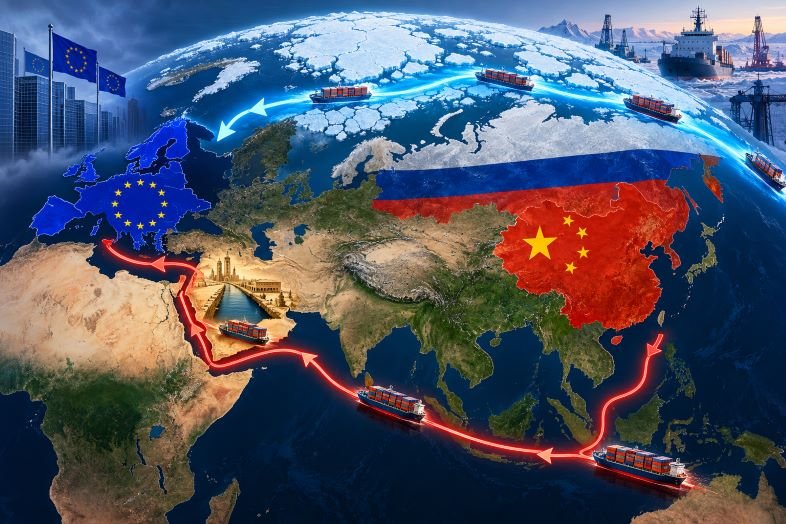
But look beyond the gas pump. For Israel, this crisis is, above all, a historic opportunity to consolidate its role as an indispensable energy and security player in the region. The main strategic benefit emerging from the wreckage of war is the chance to position itself as the alternative and secure land route for energy flows from the Gulf to a thirsty Europe, completely bypassing the volatile Strait of Hormuz and the Iranian threat. The key infrastructure already exists: the Eilat-Ashkelon pipeline, a steel serpent connecting the Red Sea to the Mediterranean. Link this pipeline to the Saudi East-West pipeline, the famous Petroline, and you have created a land corridor that completely avoids the waters controlled by the Revolutionary Guard.
Operating this corridor would not only transform Israel into the center of gravity of the global energy system, but would also irreversibly strengthen its strategic ties with the Gulf states, creating enormous economic and geopolitical leverage. The crisis underscores the vulnerability of the Gulf monarchies to Tehran’s long shadow, reinforcing Israel’s role as a reliable security partner, the only one with the capacity and the will to stand up to the common enemy. While open diplomatic normalization may be affected in the short term—the photo ops of handshakes will have to wait—security and defense cooperation with countries like the United Arab Emirates has been significantly strengthened behind the scenes.
And so we come to the main player, the United States, the conductor of this apparent chaos. The Hormuz blockade fits like a glove into what has been termed Washington’s “Open Strategy.” By creating unbearable uncertainty in Gulf supplies, the United States seeks to make global buyers—European, Asian, everyone—perceive it as a more reliable and secure supplier. It’s the old logic of fear: buy my oil because the others’ might not arrive.
Leveraging its vast shale reserves and growing liquefied natural gas (LNG) export capacity, the Gulf of Mexico is positioning itself to replace the GCC countries as the world’s primary energy source, especially for a Europe desperate to fill its tanks and an Asia desperately seeking secure shipping routes. Instability in the region has generated a “Strait of Hormuz risk premium” that increases the price of oil leaving the Gulf and, conversely, makes US oil more competitive. It’s a “beggar-thy-neighbor” policy on a global scale.
Unlike Asian economies, which are writhing in pain, the United States is less dependent on oil from the Strait of Hormuz. In fact, it is a net beneficiary of rising global prices. Its energy export revenues are increasing, filling the coffers of its corporations and allowing it, ironically, to subsidize fuel domestically to mitigate public pressure and prevent the average voter from feeling the full brunt of the crisis in their wallet—something that hasn’t happened yet. It’s a puzzle of power and dependence where Washington’s strategy seeks a delicate and cynical balance: profiting from the suffering of others.
At the heart of this puzzle is the pressure on China. The measure seeks, as a parallel and not-so-secret objective, to strangle the Asian giant’s energy supply lines, forcing it to mediate with Iran and trapping Beijing in the “Strait of Hormuz.” It is a maneuver designed to make China burn its hands putting out a fire that is engulfing its own house. Despite the official doctrine that speaks of stability, many analysts warn that the crisis is weakening long-term US influence in the Gulf.
Washington’s narrative as the ultimate provider of security has been damaged, perhaps irreparably. Gulf leaders, who have watched the Fifth Fleet stand by while their tankers burn, are drawing conclusions. And this is pushing them to seek a more independent and wary role on the global stage. Paradoxically, the crisis has created a security vacuum that the Gulf monarchies cannot fill on their own. They distrust the United States, but to whom else can they turn?
There is no alternative power with the capacity and the will to replace the American military umbrella. Neither China nor Russia wants to, or can, be the new guardians of the straits. This is the great paradox that defines the new Middle East: the Gulf is more vulnerable today than ever, yet feels more alone than ever. This isolation forces them into a frantic and ambiguous diplomacy, diversifying their alliances with Beijing, Moscow, and Ankara, not out of love, but out of pure instinct for survival. They are grasping at straws to avoid falling into the abyss.
And while the world holds its breath, the ultimate threat looms over the markets like a vulture. With roughly 15 million barrels a day of GCC crude exports stranded, the temptation to use the ultimate weapon is strong. Watching their wealth evaporate and their relevance fade, the Gulf Cooperation Council countries could resort to what amounts to an energy “nuclear option”: declaring force majeure on their export contracts and deliberately withdrawing another 20% of the global supply from the market.
It would be the final blow to an already faltering global economy, an act of self-destruction to remind the world that, though wounded, they still hold the keys to the tap. In this chess game of shadows and oil, the only certainty is that the Cold War playbook has been rewritten in crude oil and fire. And on the first page, one phrase resonates powerfully. Perhaps, just perhaps, keeping it closed wasn’t a mistake; it was the plan from the start.