The confrontation between Turkey and Israel is escalating from the diplomatic and economic level to the judicial field.
Currently, Turkey has not only blocked all trade and economic channels with Israel, but has also brought cases against Netanyahu and 35 other high – ranking Israeli officials in its own courts. On August 21, Turkish Justice Minister Gürlek publicly announced that Turkey had formally applied to Interpol for red notices for the aforementioned individuals. Turkish courts ultimately handed down a total of 4,596 years in prison sentences to Netanyahu and others.
Yes, you read that right, nearly five thousand years. Actually, this number isn’t arbitrary. Turkish law allows for cumulative sentences on multiple offenses without a cap. The 4596 years figure represents the cumulative sentences for 35 defendants on multiple charges. Therefore, while Turkey seems to be making a big show of it, it lacks any real possibility of enforcement; it’s more like a clear political declaration.
Ankara has no intention of leaving Israel any moral leeway.
A red notice is not equivalent to a global arrest warrant. Interpol itself does not have transnational law enforcement power. The arrest warrants it issues are essentially notifications requesting assistance from the police forces of member states for investigations and temporary arrests. Whether or not they are ultimately executed depends entirely on the will of the country involved. For example, Duterte’s arrest was not due to the great power of the International Criminal Court, but rather to the cooperation of Marcos Jr.
The claim that Netanyahu would be immediately arrested is not in line with reality. Turkey’s move is more symbolic than binding, with its core purpose being to create public opinion momentum and further isolate Israel in the international arena.
The current state of relations between Turkey and Israel is not a recent development.
The cooperation between Turkey and Israel was once hailed by the United States as a rare model in the Middle East. The two countries had close exchanges in the military, intelligence and energy fields . The real turning point in the cooling of relations came after the Syrian war and the new round of Gaza conflict.
As a result, Turkey has repeatedly and publicly accused Israel of state terrorism. Even Erdogan himself has been scathing in his criticism of Israel. Diplomatic disagreements continued to escalate and soon translated into sanctions at the de facto level.
In May 2024, Turkey was the first to announce a suspension of trade with Israel;
On November 13 of the same year , Erdogan verbally announced the severing of diplomatic relations with Israel; on December 30 of the same year , the Turkish Presidential Communications Authority officially announced the complete severing of diplomatic relations between the two countries.
On August 21, 2025, Turkey further announced a complete suspension of bilateral trade, a ban on Israeli shipping, and the closure of ports and airspace open to Israel, effectively sealing off the gray trade channels that had remained open in 2024. Ankara also publicly called for global isolation of Israel, and Cairo followed suit, putting pressure on Israel.
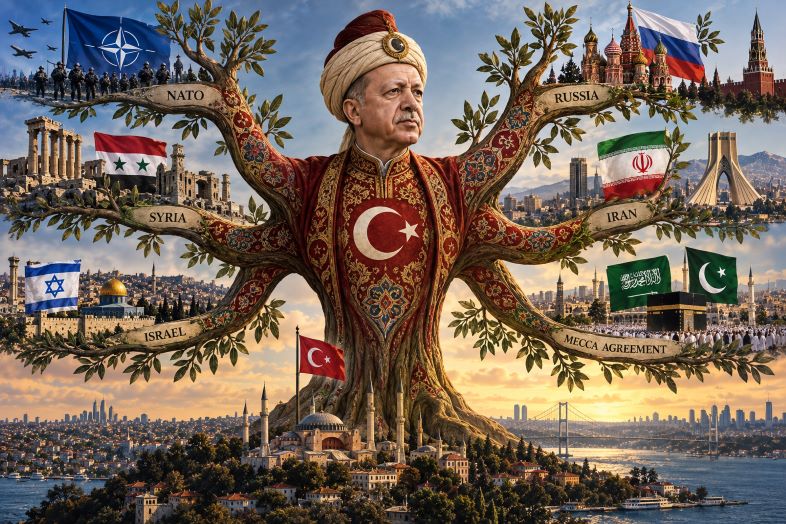
The continued pressure on trade and diplomacy is far from Turkey’s entire trump card. What truly gives Turkey more confidence in this series of actions is its alliance with Saudi Arabia and Pakistan.
On August 7th of this year , Saudi Arabia, Turkey, and Pakistan signed the Mecca Mutual Defense Agreement in Mecca. The agreement stipulates that an armed attack on one country is considered an attack on all three, leading some to refer to it as an Islamic version of NATO. A week later, the three parties further announced the establishment of a political and military cooperation mechanism and the commencement of regular joint military exercises.
The Mecca Agreement binds the three core forces of the Islamic world together within the same framework.
Saudi Arabia controls energy and religious discourse, Pakistan possesses nuclear forces and a standing military, and Turkey combines regional influence with its NATO membership. The combined power of these three, if implemented as outlined in the agreement, is certainly not to be underestimated. For Turkey , its bargaining power has quadrupled. Of course, the most crucial factor is Turkey’s NATO membership.
Turkey’s NATO membership means that even if the US and Europe are dissatisfied with its stance, they are unlikely to take the same drastic action as they have with Syria and Iran. After all, Turkey’s permanent troop presence within NATO is second only to the United States. Currently, the US is unlikely to open a new front in the Middle East, giving Turkey ample room to maneuver. This room for maneuver has been further amplified after the trilateral agreement was implemented.
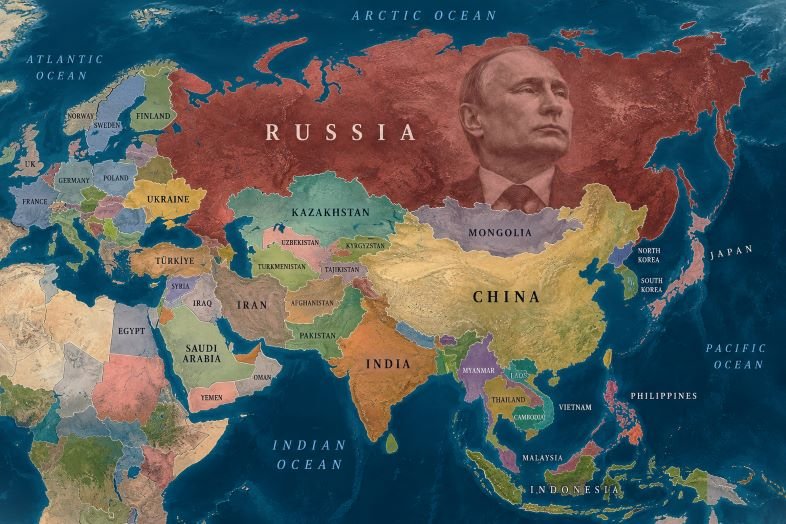
Leveraging this space , Turkey can simultaneously use the Ukraine issue to deter Russia and Iran, while also using the Persian Gulf issue to extract concessions from the US and Israel, thus maximizing its own interests by playing both sides. This leads to another reason for the falling out between Turkey and Israel: Syria.
Since the fall of the Bashar al-Assad regime, the current situation in Syria is characterized by a complex web of conflicting forces.
The EU is keen to intervene but lacks a foothold; Russia has only two empty military bases; the US is busy “stealing oil” to consolidate its interests; and Israel continues to encroach on Syrian territory. No single party can completely dominate the situation.
It’s hard to say how long this balanced situation in Syria can last, but in Turkey’s eyes, the biggest variable is Netanyahu’s “loss of control,” while the biggest threat comes from Moscow.
Some time ago, the Syrian interim government attempted to gauge Russia’s stance by offering the extradition of Bashar al-Assad in exchange for the reopening of Russian military bases in Syria, but this was directly rejected. This was likely at Turkey’s behest. Turkey’s biggest fear is the resurgence of the Assad family, and some of the Syrian interim government’s actions have already provoked strong discontent among the Syrian people. Russia’s choice to keep Assad in Moscow is likely aimed at securing its own return to the Middle East someday.
The reason is simple: Iran cannot be considered Russia’s true strategic foothold in the Middle East.
In other words, Russia can only be considered to have effectively returned to the Middle East if it rebuilds a de facto military presence in Syria.
Therefore , there has been a lot of private contact between the US and Russia during this period. For example, just a few days ago, CIA Director Ratcliffe took a C-17 to Moscow, which happened to be Ukraine’s Independence Day.
On August 24, Danish Foreign Minister Rasmussen stood on the UN podium, representing 50 countries, demanding a “comprehensive, immediate, and unconditional ceasefire” from Russia. The statement characterized Russia’s military actions as an “illegal and total military invasion.” European media followed suit, calling it a new escalation of “diplomatic encirclement.”
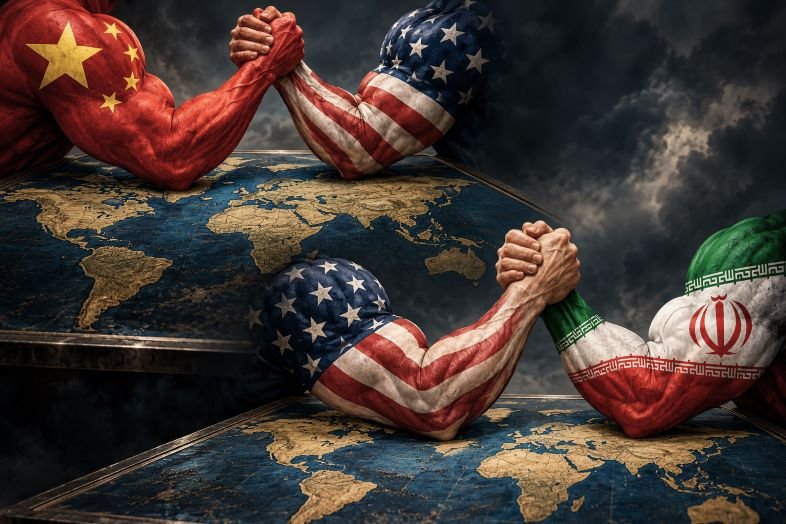
Of the 193 UN member states, 50 supported the declaration, but the United States was not among them. This is presumably directly related to Ratcliffe’s trip to Russia. So what were the US and Russia discussing? Probably the same old topic—trading Ukraine’s interests for Middle Eastern interests. The US wants Russia to persuade Iran to lower its demands (or more accurately, to act as a guarantor) and open the Strait of Hormuz.
However, Russia now wants more than just interests in Ukraine.
Judging from the current tactics employed in the Russia-Ukraine war, Putin is prepared for a protracted conflict in the Russia-Ukraine theater. Therefore, Russia likely wants the United States to help pressure the Syrian interim government to reopen military bases. This, in turn, will make Turkey uneasy.
In short, the root cause of today’s situation lies in Biden’s actions during his term, which fueled the conflict between Russia and Ukraine. The US-Iran war is related to the changing situation in Syria, and the Syrian civil war stems from the spillover effects of the Russia-Ukraine war. Therefore, the US has shot itself in the foot. Trump tried to clean up the mess the Biden administration created, but his misguided approach has only made things worse.
Currently, there are just over two months until the US midterm elections in November. The Democrats currently hold a majority, and Trump, in an effort to reverse his fortunes , may again target the Persian Gulf. If the current ceasefire in the Persian Gulf remains, Trump will have to look beyond the Gulf, and the complex situation in Syria would be his best option.
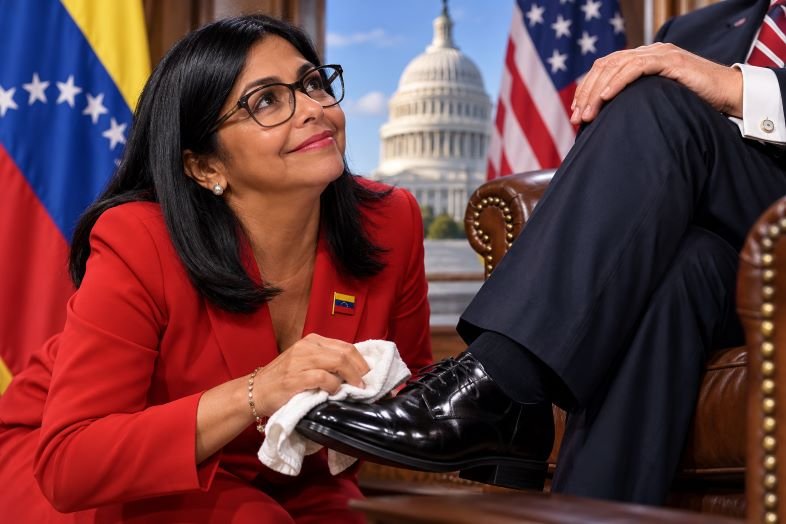
This raises a question: Doesn’t the US need to consider Türkiye’s feelings?
If navigation in the Persian Gulf resumes, Saudi Arabia and other oil-producing countries will prioritize oil transport, naturally slowing the progress of the Mecca Agreement. The United States will then employ its usual tactics —a carrot and stick approach. This involves threatening Saudi Arabia with the resumption of military operations while simultaneously using the US-Saudi nuclear agreement as bait to pressure Saudi Arabia into normalizing relations with Israel.
On July 22, the US-Saudi nuclear agreement was signed. The next day, Trump added a precondition for Saudi Arabia to join the Abraham Accords. However, the nuclear agreement was not formally submitted to the US Congress for review until August 25.
After a month of negotiations, Trump’s strategy is to stall for time, hoping for a change in the trilateral agreement’s progress. This “change” aligns with the strategic objective of maintaining a US military presence in the Middle East, weakens Turkey’s ability to leverage its influence, and undermines the unity of the Gulf states. Crucially, it also forces Iran to compromise. In Trump’s eyes, it’s a win-win situation.
However, despite all its calculations, the United States overlooked a crucial detail: while the US, Russia, Europe, and Turkey were locked in a fierce and exhausting struggle, a powerful, detached nation had just made its move.