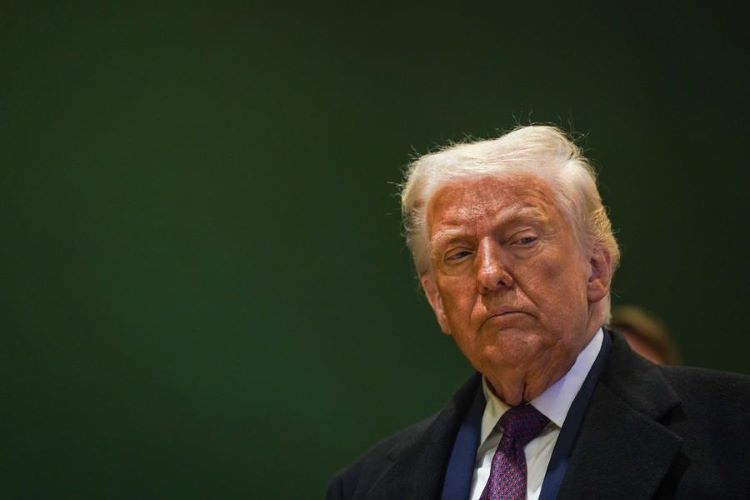
March 12, 2026 – What if Donald Trump’s war in Iran isn’t just a quagmire for America—but a gift to Beijing? As the Trump government’s “regime change” objectives crumble into confusion and asymmetric warfare drains U.S. resources, the real beneficiary may be thousands of miles away.
In the aftermath of the assassination of former Supreme Leader Ali Khamenei, Donald Trump declared on March 9 that the war with Iran would continue until the country is “decisively and completely defeated,” though he also predicted the conflict would “soon be over.”
While Trump even boasted that “in many ways we’ve already won, just not enough,” Chinese strategist Professor Wang Xiangsui points out that America’s war with Iran was, from the very beginning, a strategic error built on multiple miscalculations. This misadventure threatens to drag the U.S. into a quagmire that serves its interests poorly — and, in the long run, may ironically work to China’s advantage.
1. A Strategic Miscalculation: Misreading Both Self and Enemy, Setting Unrealistic War Aims
Following the assassination of Khamenei, Trump’s initial rhetoric on war goals was bold and unambiguous: “regime change in Iran.” On the very day hostilities began, he delivered a video address calling on “the Iranian people to rise up and overthrow their government.”
Yet Professor Wang argues that this was a fundamentally unattainable objective, exposing the Trump administration’s striking lack of basic understanding about Iran’s political system, social fabric, and national conditions.
“The fantasy that assassinating a head of state can topple a government stems from a Western narrative that portrays adversary nations as mere dictatorships that will collapse once decapitated,” Wang explains. “But Iran is not Iraq.”
Over four decades, the Islamic Republic has developed a complex governance structure deeply embedded in society’s grassroots. The Islamic Revolutionary Guard Corps maintains independent command, economic, and intelligence systems, while the Quds Force has spent decades building networks across the Middle East. Killing Khamenei cannot kill the system he helped build. So when Trump set “regime change” as his objective, strategic miscalculation was already baked into the equation.
Several signs now confirm this misjudgment.
First, the war aims have been all over the map — shifting from “regime change” to “preventing Iran from obtaining nuclear weapons” to “reopening the Strait of Hormuz.” American decision-makers appear increasingly unclear about what they actually want, and this confusion has become impossible to hide.
Second, public opinion has turned against the war. Recent polling shows only 27% of Americans support the conflict — the lowest initial approval rating for any U.S. military engagement in decades. Trump’s attempt to distract domestic attention from political pressures, including the “Einstein scandal,” has backfired completely.
Third — and most critically — despite signs that Trump would like to find an exit ramp, the war’s duration is no longer America’s alone to decide.
2. Iran’s Asymmetric Strategy: Setting Achievable Goals and Playing the Long Game
Unlike the U.S., which seems to have misread both itself and its adversary, Iran maintains a sober assessment of the hard-power gap between the two nations. From the outset, Tehran has pursued an asymmetric warfare strategy.
Confronted with American and Israeli forces wielding advanced stealth aircraft and total air superiority, Iran has avoided direct confrontation with its aging fighter fleet. Instead, it has employed swarms of low-cost drones and missiles in saturation attacks against U.S. military bases across the Middle East. According to reports from The War Zone and Military Watch, these Iranian drone barrages have successfully damaged some of America’s most expensive air defense assets in the region, including PAVE PAWS radar systems and THAAD batteries. When a $50,000 Iranian drone can threaten an $1.1 billion radar installation, the U.S. finds itself on the losing end of an asymmetric war of attrition.
More significantly, Iran has spent the past decade-plus “decentralizing” its military command structure. Since 2007, Tehran has been developing what amounts to a “mosaic warfare” architecture, delegating command authority to 31 regional theaters and empowering frontline units with independent decision-making capabilities. This prevents a single decapitation strike from paralyzing the entire military apparatus.
The Trump administration appears to have believed that its superior assassination capabilities would enable it to reshape Iran at will. But it overlooked the reality that Iran’s decentralized command system has rendered the country largely “decapitation-proof,” throwing Washington’s single-threshold strategy into disarray. As General Gholam Ali Rashid of the Khatam al-Anbiya Central Headquarters stated on March 10: “Today, the United States and Israel can no longer start a war whenever they please, nor can they end one whenever they please.”
Notably, Iran’s decentralized command network was never some secret weapon developed in the shadows. It was built methodically over nearly two decades as a cornerstone of the government’s “resilience-building” efforts, with its development reported openly.
The Trump administration finds itself trapped today because it fundamentally failed to understand either its enemy or itself. The mismatch between capabilities and objectives is the root reason this war was doomed to become a quagmire from day one.
3. Trump’s Miscalculations Could Benefit China on the Global Stage
These miscalculations are triggering cascading effects worldwide — and many of the long-term consequences appear to be tilting in China’s direction.
First, consider the 25-year cooperation agreement between China and Iran, which covers everything from economics to diplomacy. Implementation had been slow due to various internal and external factors. But following Khamenei’s assassination, Ali Larijani — the key figure in Iran’s leadership pushing for the strategic partnership and the man who led the negotiations — has rapidly ascended to the inner circles of power. When this war concludes, Iran will need China more than ever — for reconstruction funding and help overcoming resistance to sanctions relief. The gaps torn open by American missiles are becoming windows of opportunity for accelerated Sino-Iranian cooperation.
Second, while many Western analysts argue that America’s strikes on Iran will damage Chinese investments there, Professor Wang offers a different perspective. Unless the U.S. launches a full-scale ground invasion, China’s energy and infrastructure projects in Iran should escape substantial damage. Meanwhile, American military action is pushing Iran to value Chinese strategic support even more highly. The U.S. is effectively driving Iran into China’s arms.
Third, although the Trump administration may view the successful assassination of Khamenei as one of this war’s crowning achievements, the act has severely damaged American political credibility worldwide. As Columbia University Professor Jeffrey Sachs once observed: “We have lost tremendous credibility in the world… We will be seen as less reliable.”
When the “world police” sheds its mask and reveals the bandit beneath, smaller and medium-sized nations that once hitched their wagons to Washington are now reassessing who deserves their trust. Against this backdrop, China’s consistent image as a responsible major power stands out in sharper relief.
4. However, China Does Not Welcome This War’s Protraction
Some readers might wonder: if America’s miscalculations are benefiting China across multiple dimensions — energy security, regional cooperation, international credibility — why isn’t Beijing simply watching from the sidelines as the U.S. sinks deeper into the mire? Why is China actively promoting de-escalation?
The simplest answer is that China has never viewed international relations as a zero-sum game.
While Trump’s strategic blunders are indeed costing America dearly, a full-blown regional war in the Middle East has already sent severe shockwaves through global supply chains and energy security. As rising energy prices cascade through the cost structure of every manufactured good, most countries — and most households — will pay a price for the Trump administration’s errors. These consequences don’t magically disappear just because “America is losing.”
More fundamentally, China’s deepest interests have never been about defeating the United States. They center on building a community with a shared future for mankind. Chinese political wisdom doesn’t pursue “divide and rule” — it seeks harmony and coexistence. It doesn’t fish in troubled waters — it advocates dialogue and peace. Its philosophy isn’t “never interrupt your enemy when he’s making a mistake” — it’s that all under heaven share responsibility for the common good.
That’s precisely why, when war erupted, Beijing immediately called for a ceasefire and began diplomatic mediation among all parties. China clearly understands that what’s truly “good for China” isn’t picking through the rubble of a devastated Middle East — it’s helping restore peace to this land so that Belt and Road partners can focus on development and construction. The value of the 25-year China-Iran agreement can only be fully realized in peacetime. China’s economic cooperation with Middle Eastern nations can only deepen amid stability.
Trump blasted open a hole with his missiles, thinking it was a gateway to victory. But that door doesn’t open onto American triumph — it opens onto yet another quagmire. And China isn’t standing at the edge watching. It’s extending a hand, helping Iran — and indeed the world — find a path out of the mud. That’s what serves the fundamental interests of the Chinese people, the Iranian people, and people everywhere.