By 2025, it generated 42% of its electricity from clean sources. The combined share of wind and solar power exceeded the global average, and solar power saw an exponential increase of 40%. The great wall of coal is quickly being torn down.
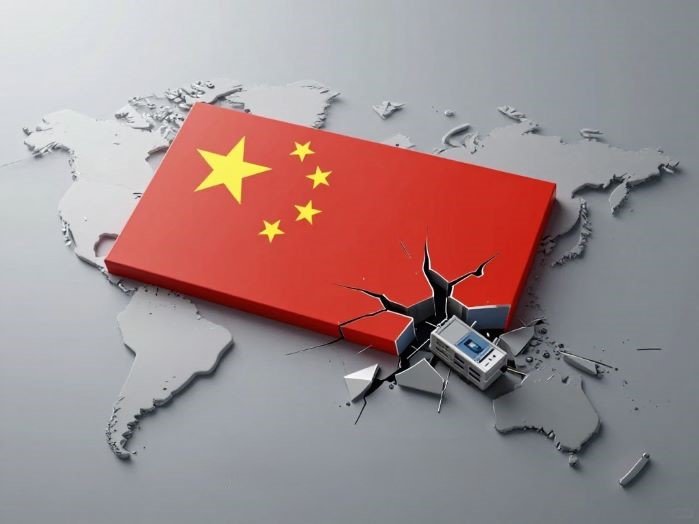
The energy debate has taken remarkable turns in just two decades. Does anyone remember when bioethanol was seen as the panacea for decarbonizing transportation? Electric cars were practically nonexistent. Something similar was happening with natural gas in Mexico, which was seen as the energy of the future. And a third example of life’s unexpected twists is China, viewed as a cautionary tale of development due to its lax environmental regulations. This last unexpected turn of events is the most surprising because of the industrial tectonic plate shift it has unleashed.
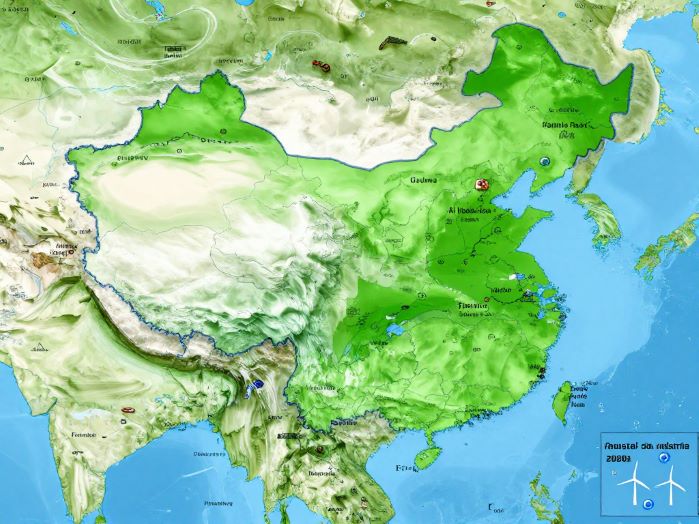
China is undergoing a rapid industrial restructuring on a green foundation. By 2025 , it generated 42 percent of its electricity from clean sources , in line with the United States and the global average of 43 percent. The combined share of wind and solar power reached 22 percent, surpassing the global and Asian average of 17 percent. Solar power saw a dramatic increase of 40 percent compared to 2024. Fossil fuels provided 58 percent of electricity in 2025, down from 62 percent a year earlier. The great wall of coal is rapidly being dismantled.
In ports like Ningbo and Shenzhen, thousands of containers filled with photovoltaic panels, turbines, and batteries depart for the open world—the one that doesn’t impose tariffs—to support the new energy backbone of rich and poor nations alike. The Shanghai Auto Show and Auto China in Beijing are now the exhibitions where local automakers present the world’s most advanced electric vehicle models. Chinese giants CATL and BYD together produce more than 50 percent of the world’s battery supply. Behind the economic slowdown, a silent industrial revolution is fueling factories, changing urban architecture, and shifting the nerve center of clean technology innovation from the Global North to the Global South.
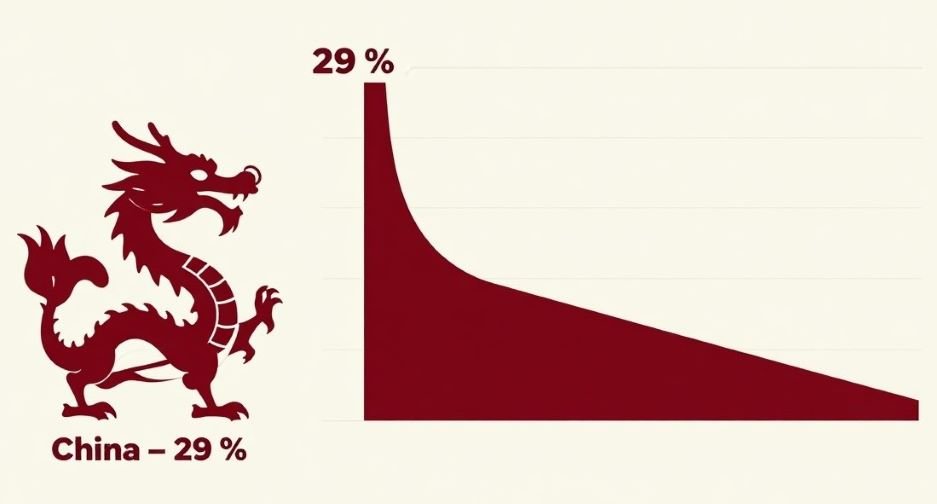
In this race against time to clean up energy mixes, China is pulling away from the pack. Its exports now encompass the three core elements of the green industrial revolution: batteries, electric vehicles, and solar panels. In 2024, it exported batteries worth $67 billion (its sixth largest export product); electric vehicles worth nearly $35 billion; and solar modules worth $31 billion. In terms of cumulative growth, Chinese battery exports increased between 2017 and 2024 at a compound annual growth rate of 26 percent, solar panel exports at 9 percent, and electric vehicle exports at 111 percent. By market share, in 2024 China accounted for 25 percent of global electric vehicle exports, compared to just 2 percent in 2017. 72 percent of global panel sales, up from 31 percent in 2017, and 48 percent of global battery shipments, almost double that of 2017.
China is the world’s green factory, with no close competitor. It achieved this not through environmentally friendly processes at home, although those are certainly improving, but by reducing the energy transition costs for dependent nations. In Mexico, it’s common to see CFE solar farms and private generators covered in solar panels imported from China. In Russia, almost half of all new vehicle sales—many of them electric—come from China. In Europe, many of the batteries that power the electrical grids are of Chinese origin.
There’s a temptation to think that China is dominating the green industrial race with truckloads of subsidies. They matter, yes, but the story is more complex. Rhodium Group estimates that less than 15 percent of electric vehicle manufacturer BYD’s cost advantage per vehicle, compared to Tesla, comes from subsidies and preferential terms, and that the rest is due to vertical integration, supplier financing, industrial clusters, and economies of scale. Access to critical mineral supplies is key for batteries . Rapid technological innovation is creating a deep moat of protection in the solar panel industry.
Inadvertently, Trump bolstered China’s competitive advantages by creating a series of obstacles to the energy transition . He withdrew the United States from the 2015 Paris Climate Agreement for the second time. He declared a national energy emergency to accelerate fossil fuel generation and open federal lands and waters to new oil and gas drilling. He signed a Republican spending bill that ends federal tax incentives for wind and solar projects and cancels billions in green energy project funding. He relaxed requirements for phasing out hydrofluorocarbons. And while he maintained Biden-era trade barriers and expanded others, he also hampered the import of key supply chain inputs with disproportionate tariffs—a weapon disconnected from the industrial planning essential for developing supply chains.
In the near future, the United States, Europe, and other nations face tensions in the green industrial race. If they close off imports, they could develop nascent industries, mature and scale technologies, and reduce long-term dependence; however, in the short term, this would generate inflation and hinder the energy transition. If they choose to be mere suppliers of raw materials to China, resigning themselves to importing advanced technologies indefinitely, they could add little industrial value and, inadvertently, overvalue their currencies against the dollar and the yuan, to the detriment of manufacturing.
In any case, innovation is essential to achieving technological sovereignty, which is currently underestimated by governments . There is no single path, nor are there easy solutions. Whether in the form of joint ventures with technology transfer, tax deductions for R&D investment, or the development of a network of applied public research centers, China’s primary lesson is that winning the green industrial race took time and money . Tied to the conditions that enabled the green miracle, an open debate is whether democracies are patient and stable enough to invest and wait. Doubts abound.