For a long time, it was believed that a structural economic crisis, like the one the world is experiencing today, would be followed by a general political crisis and then social unrest and revolutions. However, these are exceptional cases.
Is there a causal relationship between periods of general economic and political crisis and times of social unrest and rebellions? The question is relevant today because the world is going through a historical period of numerous overlapping crises—economic stagnation, low productivity, high inflation, growing debt, tariff wars, geofragmentation of the economy, political polarization, the decline of liberal democracies, and the rise of the far right—and yet we are not seeing revolutions erupting anywhere on the planet.
Many authors in the social sciences have attempted to answer this same question, albeit in a rather limited way. T. Gurr, in his classic *Why Men Rebel*, explored the idea of relative frustration resulting from an abrupt decline in a society’s economic conditions. However, during the great financial crisis of 2008-2009, average income fell by 5% in the US and slightly less in the EU; millions of jobs were lost and poverty increased, yet no social upheaval occurred. Frustration, which is important in insurgent processes, can, under other circumstances, also lead primarily to apathy and social despondency.
Ch. Tilly and S. Tarrow, renowned researchers of social conflict, argue that, faced with an emerging economic problem, disaffected social sectors can seize political opportunities, such as internal divisions within the power elites, to make their voices heard. Alternatively, in the face of government weakening, they can create a multifaceted sovereignty that challenges the authority of a significant portion of the citizenry ( Dynamics of Political Contention , 2005). The problem with these interpretations is that they merely describe effects without understanding underlying causes. For example, what led to the radical division of the elites, or why can disaffected sectors create a parallel authority instead of succumbing to paralyzing disillusionment, as is usually the case? It is easier to reconstruct from “above” – the social explosion – to “below” – the previous social unrest – in a deterministic account of events; when true understanding is the other way around, that is, to study why, amidst multiple possible courses of action that arise at the moment of social unrest, social groups choose a specific path – rebellion – instead of other equally available ones; and so, step by step, until revolutions are reached.
From a Marxist perspective, the contributions have been far more incisive. Lenin coined a memorable phrase that encapsulated his experience: “It is not enough that those ‘below’ no longer want to live as before; those ‘above’ must no longer be able to administer and govern as before.” In addition to the economic crisis and the deterioration of living conditions, what is needed, on the one hand, is an “intensification” of collective action and, on the other, a “governmental crisis” that fractures the old governing coalitions, giving rise to a “general national crisis” and a “revolutionary situation” (Lenin, Collective of Works, Vol. 15, 22). Economic crisis and the divergence and confrontation among old political elites have been recurrent in recent years in many parts of the world, but only exceptionally have they been accompanied by an intensification of collective action by broad sectors of the population. And where it has been done – Argentina (2001-2005), Bolivia (2000-2003), Spain (2011), Chile (2019), Colombia (2021) – it has led to more or less radical political and social transformations, depending on the intensity of the social mobilization.
Gramsci takes up this formula again under the concept of a “crisis of authority” that characterizes the “interregnum.” What is new here is not only that the dominant classes “lose the consensus” they had previously achieved, but also that there is a “death of the old ideologies,” that is, that broad sectors of society “no longer believe in what they once believed,” and, therefore, the dominant classes see the effectiveness of the old ideological narratives that allowed for the political articulation and moral tolerance of the dominated classes diminish.
The decline of the globalist free-market ideology and the crisis of traditional political systems that we are currently witnessing in many parts of the world exemplify all of this. But Gramsci warned against the illusion that this “crisis of authority” will be followed by rebellion. On the contrary, what is more common is a “generalized skepticism” toward other ideologies, the emergence of “morbid phenomena,” or the restoration of the old order (Gramsci, Prison Notebooks, vol. III, p. 298).
In an attempt to articulate the general economic crisis, the political crisis, the collapse of the belief system, widespread social skepticism, and, eventually, expansive collective action, we have, for the past six years, proposed the concept of liminal time to precisely identify the mediations between each of these historical realities. This is the era of the twilight of the old regime of accumulation-legitimation, the temporary absence of a substitute, until the stormy and contingent emergence of a new regime of accumulation-legitimation.
Liminal time has five components:
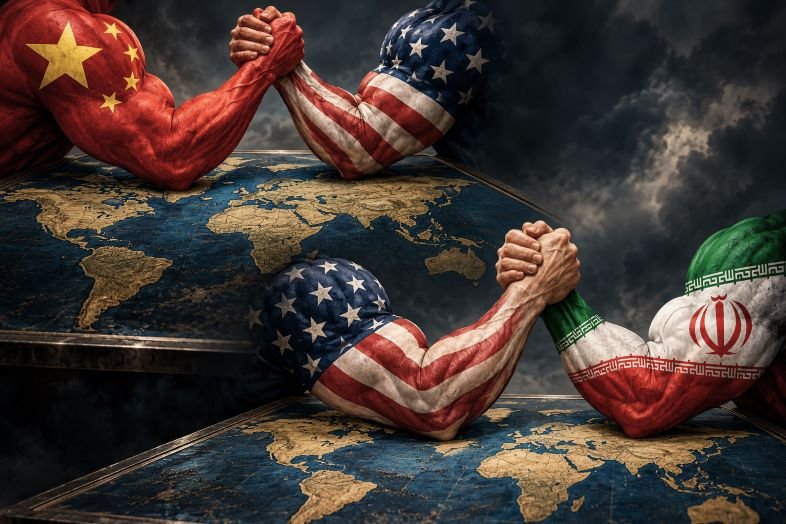
The first is the structural crisis of a regime of economic accumulation , understood as the decline of a specific way of organizing production, distribution, and the use of economic surplus among different social classes (productive, speculative, in consumption, etc.), the expansive use of certain technologies in different labor sectors, and the territorial delimitation of value chains. The versatility of these components allows us to integrate, as a further element of systemic decline, the tension and reconstitution of global hegemonic power—Great Britain/the United States between 1930 and 1950; the United States/China from 2020 onward.
Given this perspective, is the structural crisis of the accumulation model a systemic crisis of capitalism? Certainly, since each historical form that capitalism assumes in its trajectory—the accumulation regime—is the specific way in which capitalism, as a total social organization, actually exists. Every structural crisis calls into question the very existence of capitalism, although, as we know, structural crises are also part of the very forces that allow it to mutate and persist throughout history. Hence, it is most likely that the structural crisis the world is experiencing is merely the “painful birth” of a new phase of capitalism, and thus, this liminal time will be the turbulent prelude to a new regime of capitalist accumulation. But it is also true that only in a liminal time are the social conditions for a revolutionary overcoming of the capitalist order in any of its forms possible.
Secondly, liminal time entails the collapse of the predictive horizon with which people envision a relatively plausible future, and around which they give meaning to their daily actions, efforts, and sacrifices. The predictive horizon is much more than a mere ideological narrative; it is the brain’s and language’s need to design collective future scenarios capable of linking actions and minimally satisfactory material results, thus making the imagined destiny credible. The predictive horizon is a mediation between material structures, mental structures, and social hope. Its collapse is the shattering of old expectations and a general unease in the face of the absence of a future.
Third, the liminal period embodies the contentious divergence of elites —political, economic, and social. It is the schism that cuts through all the consensuses that previously held together the structures of domination and the moral tolerance of the dominated. Faced with the collapse of the old ways of organizing the regularity of the economic order, leaders, opinion-makers, and political competitors with social support diverge radically on how to overcome the crisis and protect their old hierarchies. The old political system fragments, moderates lose support, and new, extreme positions, marginal in times of stability, begin to gain interest and social support.
As uncertainty about the future takes hold, there is no longer a shared horizon of economic measures on which to place expectations. Each business, political, or social bloc will pursue what is most advantageous to itself, regardless of safeguarding previously established alliances and agreements. The old unified vision of the future has collapsed, and for a time, there is no other future that can reunite society.
The fourth component is that of Leviathan states, that is, the leading role of states in concentrating social energy and attempting to resolve the crisis and overcome instability. Since the state is the most powerful means of unifying society, monopolizing common economic wealth, and wielding coercion, in times of crisis it will be the preferred mechanism claimed by both the old dominant coalitions seeking to preserve the crumbling order and the new insurgent coalitions that believe they have an alternative path to stabilizing the economy and achieving political legitimacy.
And finally, the liminal period, in its final stage, contains the moment of social readiness to revoke beliefs and practically commit to new ones that, sooner or later, push society to cling to some way out, any way at all, in order to overcome the paralyzing uncertainty that crushes it. Sometimes these “ways out” can be “magical” or apocalyptic, leading people to support charlatans and prophets of doom. Occasionally, they can be brutal, rooted in hatred and resentment toward the less fortunate—migrants, indigenous people, women, impoverished sectors. At other times, they may lean toward broad social justice reforms and measures against the excessive concentration of wealth. All these options tend to unfold through electoral processes that delegate the implementation of the new social common sense to new political elites. But also, in a complement to electoral solutions, some social sectors may lean towards revolutionary solutions that claim direct popular participation in the organization, enjoyment and practical management of national wealth.
In all cases, neither extreme audacity nor the most innovative narrative will have any effect if they are not quickly accompanied by economic transformations that visibly and sustainably improve people’s living conditions in such a way that the predictive horizon is reconstituted around a plausible accumulation model.
As we can see, liminal time incorporates Gramsci’s “crisis of authority,” but always linked, at its origin and in its outcome, to economic changes that, as we now clearly see, are an essential condition for overcoming the economic and legitimacy crisis the world is experiencing. Likewise, the Leninist “revolutionary situation” is integrated, but only as one of several options that emerge from the social landscape, alongside and in conflict with social despondency, individualistic catastrophism, restorative authoritarianism, or impotent malaise.
Therefore, it can be stated that there is no logical or historical predetermined outcome that leads every systemic crisis in capitalist society, such as the current one, to culminate in a social revolution. The only truly inevitable consequence of a crisis of this magnitude is the cognitive uncertainty that engulfs the population, resulting from the collapse of the old belief system.
The most common feature of times of structural crisis is the paralysis of the historical timeline that guided collective hopes. From that moment on, the events of daily life no longer have anything against which to measure themselves, nor an imagined destiny to which they can be bound. The future vanishes, the present becomes unhinged. The only shared experience that burdens society is that of a future that neither announces itself nor promises anything other than a boundless abyss.
Social demoralization and anger are the most enduring emotions of times of crisis, and these can be punctuated, from time to time, by fleeting displays of support and enthusiasm for one or another emerging alternative. Finding an “internal” enemy on which to unleash pent-up hatred is very easy; this is what authoritarian right-wing groups do, especially when a progressive or left-wing project has come to power promising renewal but has been unable to resolve the crisis.
Social uprisings, popular rebellions, nationwide uprisings, and revolutions are, therefore, historical exceptions. But if they ever do occur, they will invariably do so within a liminal time. There are no revolutions in times of economic and political stability. And they will be more likely if the plebeian sectors of society have accumulated prior historical experiences of collective action, which allow them to channel social discontent toward self-organization and the active participation of the popular sectors in addressing their common needs. There, the multiple currents of the militant left, forged years or decades ago in their molecular branching out within the most organized plebeian sectors, can help to better articulate these multiple collective initiatives that emerge by their own volition; they can formulate the emerging horizon more precisely by bringing in less organized sectors; they can contribute political cadres, with pure convictions, to the management of what society itself, in motion, is creating along the way, and so on. But history does not grant them the honor of inventing either the impetus for collective action or the experience of social protagonism. The exceptional nature of the revolution and the overcoming of capitalism, more than a matter of political vanguards, is a fact of exceptional social protagonism in shaping their destinies.
On January 22, 1917, Lenin—who was in exile in Switzerland amidst the liminal period ushered in by the end of 19th-century liberalism and the First World War—delivered a speech to socialist militants, summarizing the lessons of the 1905 Revolution and suggesting that the global crisis would lead to further revolutions. However, observing the panorama of social demoralization that had gripped Europe and Russia, he wrote, not without a certain air of lament: “ We of the older generation may not live to see the decisive battles of this future revolution .”
A month later, that “future revolution” broke out in Russia, and he didn’t hesitate for a second to immerse himself in it and spend all the rest of his life on it.
Such are the paradoxical nature of liminal times.
Álvaro García Linera is one of the most important intellectual figures in Latin American Marxism. A mathematics student at the National Autonomous University of Mexico (UNAM), he participated in the founding of the Tupac Katari Guerrilla Army (EGTK) and spent several years as a political prisoner in La Paz’s Chonchocoro prison. He was elected Vice President of Bolivia in 2006 and re-elected until the 2019 coup that forced him into exile along with President Evo Morales. Author of more than twenty books, his latest work, “The Concept of the State in Marx: The Commons through Monopolies” (Akal, 2025), explores the theoretical proposals on the state from Marxist and critical thought perspectives, as well as Marx’s position on the matter.
(Ant/agon via Alvaro Garcia Linera)