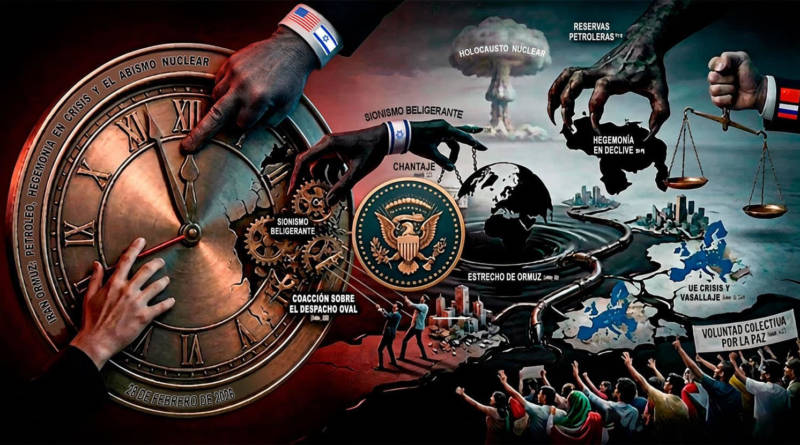
The ultimate target of this violent reorganization of the world is China. Destroying Iran means dismantling the geopolitical and energy firewall that protects the consolidation of a multipolar world. It means weakening the Eurasian corridors (the Belt and Road Initiative), disrupting strategic flows, and sending an unequivocal message to Beijing: the unipolar order will not yield without provoking a conflagration.
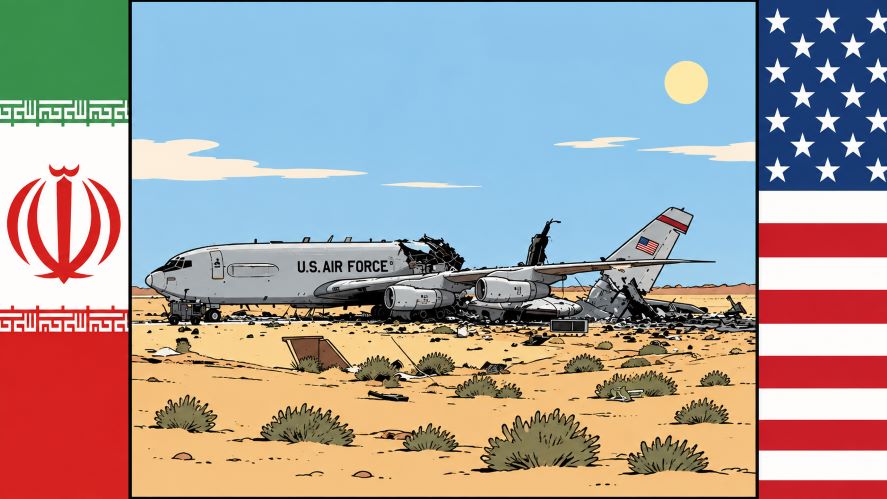
The Doomsday Clock has never been closer to midnight. The military aggression perpetrated on February 28, 2026, by the United States in joint action with Israel against the Islamic Republic of Iran constitutes a point of no return in contemporary history. We are not facing an isolated conflict nor a simple escalation of tensions in the Middle East. We are witnessing the execution of a coldly calculated hegemonic plan that threatens to drag the entire planet toward nuclear holocaust.
The closure of the Strait of Hormuz, foreseeable and now a reality, is not merely collateral damage of this aggression, but the epicenter of a geoeconomic earthquake that will imminently and severely fracture Western economies, hitting the European Union particularly hard, reduced to the sorry state of being a vassal of Atlanticist interests. Hormuz is not just a maritime passage: it is the nodal point where energy, finance, and military power converge. Whoever controls Hormuz determines the material reproduction of the world system.
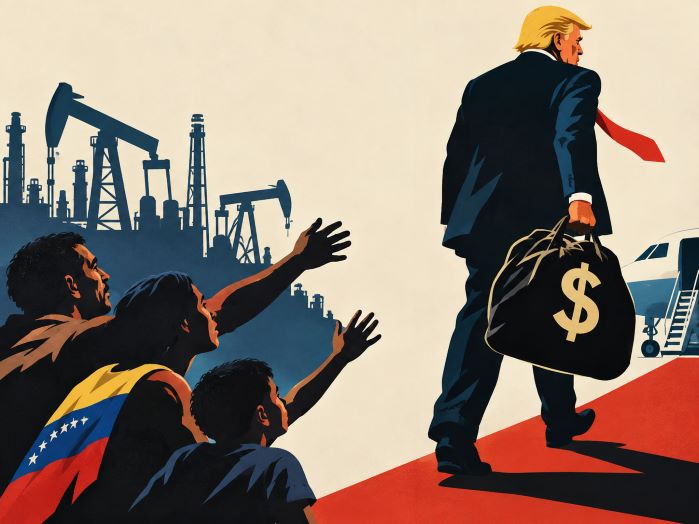
To understand the magnitude and origins of this attack, it is imperative to apply a comprehensive historical perspective that connects the threads of political economy with military decisions. Nothing that has occurred is improvised. The military aggression against Venezuela on January 3rd was not an isolated incident, but rather the preliminary and indispensable phase of this attack on Iran. The logic of capital in its imperial phase is inexorable: faced with the certainty that attacking Tehran would trigger the closure of the Strait of Hormuz—and thus the strangulation of the global energy flow—Washington desperately needed to secure its own material rear. By seizing and taking control of Venezuela’s vast oil reserves, the United States guaranteed its crude oil supply, shielding itself against the energy crisis it has now deliberately unleashed to stifle its competitors and further subordinate its European allies. Oil, as always, lies at the heart of every imperial decision, but this time it is not only the economic motive; it is also the instrument of discipline and the spoils that finance the war machine.
This offensive does not stem from the strength of the empire, but from its deepest organic crisis. The United States is undergoing a phase of structural decay: colossal debt, growing social division, institutional disrepute, and a relative loss of productive centrality to the Asian axis. When the moral and intellectual leadership of the system begins to erode, the use of coercion replaces the capacity for consensus. War then emerges as a desperate attempt to restore a declining hegemony.
In this context, the Trump administration has launched its country into a regional war—with the real potential to become global—without effective congressional authorization, demonstrating the extent to which the constitutional balance is displaced when the dominant bloc perceives its historical position as threatened. Liberal democracy thus reveals its instrumental nature: tolerated as long as it ensures stability, dispensable when domination requires swift action and a concentration of power.
But what is most alarming is not just the unilateral nature of this policy, but who is actually dictating this scorched-earth approach. The Trump administration has been virtually hijacked by the most belligerent elements of Zionism. This hijacking of foreign policy cannot be explained solely by ideological affinities, but by much darker and more structural mechanisms of coercion, where blackmail comes directly from Zionism and operates as a tool of domination over the Oval Office. The shadow of the Epstein files and the network of complicity and extortion that stems from them stand as the perfect instrument for the Zionist entity to break any resistance in Washington, forcing the United States to act as the armed wing of its expansionist and destructive ambitions. This is not an alliance of equals; It is a relationship of subjugation imposed through blackmail, where the American national interest is subordinated to the designs of a Zionist colonial project, “Greater Israel,” which needs war and the extermination of the Arab population (genocide in Gaza) and the Persian population for its achievement.
The geopolitical chessboard has also been manipulated through a massive distraction operation. The talks between the United States and Russia regarding the conflict in Ukraine are now revealed as a delaying tactic. While keeping Moscow engaged in interminable negotiations, any possibility of a coordinated response to the sequential offensive against Venezuela and Iran was fragmented. The old imperial maxim of striking piecemeal is once again being deployed with surgical precision.
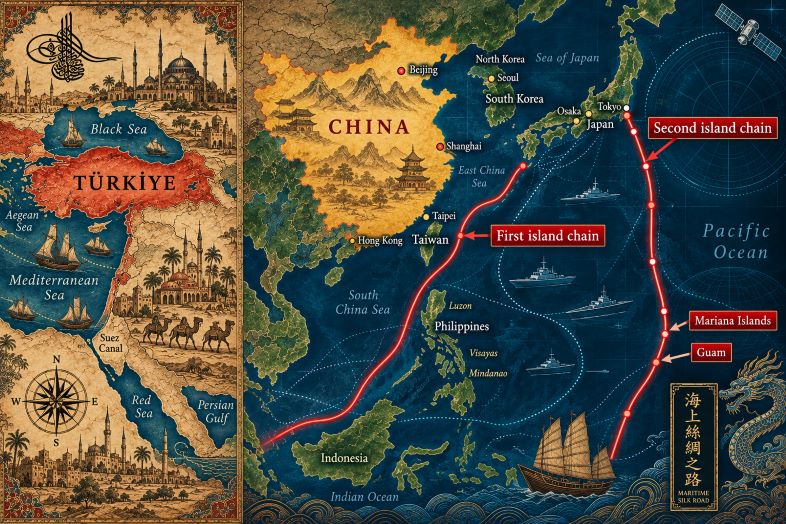
Let’s not fool ourselves: Iran is not the final destination. The ultimate target of this violent reorganization of the world is China. Destroying Iran means dismantling the geopolitical and energy firewall that protects the consolidation of a multipolar world. It means weakening the Eurasian corridors (the Belt and Road Initiative), disrupting strategic flows, and sending an unequivocal message to Beijing: the unipolar order will not yield without provoking a conflagration.
The most unsettling dimension is nuclear. Iran is equipped for retaliation with state-of-the-art hypersonic missiles; Israel possesses nuclear capabilities. In a context of hegemonic crisis, rational calculations can give way to dynamics of overextension, prestige, or political survival. Each step in the escalation reduces the margins for containment.
The European Union, strategically subordinate and energy-dependent, faces a perfect storm: imported inflation, declining production, and social tensions. Its purported strategic autonomy is once again fading in the face of Atlantic discipline. The continent appears to be absorbing the costs of a war conceived beyond its borders.
We are not witnessing a deviation from the system, but rather its stark logic. When a power perceives that its historical cycle is declining, it may choose to set the world ablaze rather than accept the transition. War ceases to be the exception and becomes the method of reorganization.
The nuclear abyss is not rhetorical. It is the extreme consequence of a hegemony that, incapable of sustaining itself through consensus, resorts to total force to preserve its primacy. Every bomb that falls on Tehran brings humanity a little closer to the brink of extermination.
Faced with this drift, neutrality is complicity. History is not a destiny dictated by elites; it is a dynamic correlation of forces. If civil society remains passive, the dominant bloc will impose its warlike solution to the crisis, risking leading humanity to a holocaust. If, on the contrary, a conscious collective will for peace is articulated, the trajectory can be altered.
The clock is ticking. And this time, midnight is not a metaphor.