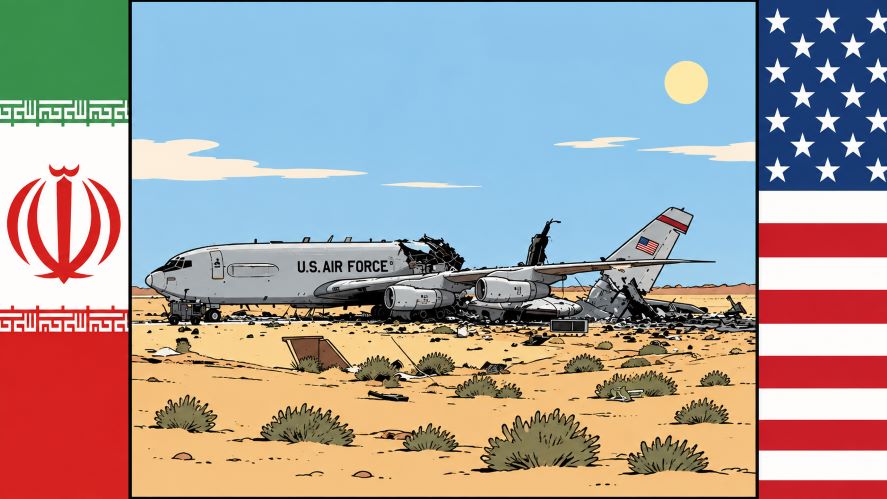

After more than two weeks of the US–Israeli war on Iran, US President Donald Trump faces a critical moment. The conflict has quickly escalated into a regional confrontation, with military, economic, political, and personal factors intertwined.
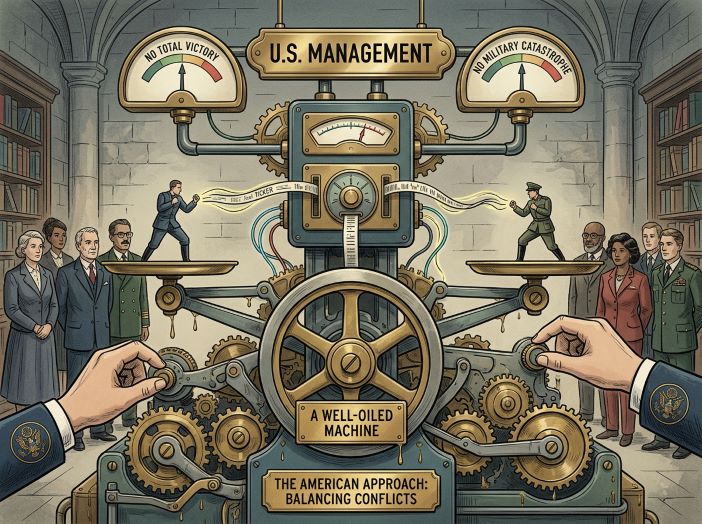
In Washington, the focus is redirected from seeking a quick victory to avoiding a long, costly war. There is no clear operational plan to achieve specific objectives; instead, goals remain open-ended and uncoordinated.
Early assumptions have failed, and decisions are now made day by day, responding to unfolding developments without a defined end in sight. Rising complexity makes it difficult for those who launched the war to end it based on results so far, which fall short of declared ambitions. The mounting cost further undermines justification for continued fighting.
Two main paths appear to be emerging. The first is continued military escalation to achieve US and Israeli objectives. This carries risks though. The conflict could widen, US forces face greater pressure, and economic and political costs could mount at home and abroad. Support from some allies could also erode.
The second is a gradual US withdrawal framed as a victory. This would limit immediate costs for Washington but raises challenges for credibility and international influence. It would allow Iran to emerge resilient, in addition to giving it room to rebuild nuclear and missile capabilities and restore regional influence, which would likely rebound once the regime survives the war.
A key development in the conflict is the closure of the Strait of Hormuz. Iran has leveraged its geographic position to disrupt global trade, causing major oil supply disruptions.
Despite US statements downplaying the impact, Washington has asked international powers, including China, France, Japan, the UK, and South Korea, to help secure navigation, meaning that the crisis exceeds US capabilities alone.
Meanwhile, the stockpiles of enriched uranium in Isfahan add another layer of complexity. Their secure storage limits the effectiveness of airstrikes and makes any ground operation extremely risky. This helps explain US hesitation to take decisive action against them, while complicating any narrative of victory.
Iran has shown strong internal cohesion since the start of the war, despite vast military and economic gaps with the US and its allies. Field and political indicators suggest adaptability and reorganization, rather than decline, allowing Iran to maintain resilience.
Efforts to stir internal dissent have so far failed. No domestic dynamics have materially challenged the regime or weakened its grip. In fact, external confrontation appears to reinforce internal unity, complicating Washington’s calculations.
Meanwhile, differences are emerging within the US–Israeli camp. The US favors containment, while Israel pushes for expanded pressure. These divergent approaches create additional challenges for Washington without threatening the strategic alliance.
Based on these factors, several paths appear possible for the coming phase. One is limited escalation over a short period, capped by a high-profile operation that could give Trump a political exit, followed by a gradual reduction of military presence in parallel with continued economic pressure. All options for such an operation are risky and make decision-makers hesitant.
Another is targeted strikes on Iran’s oil infrastructure to produce direct economic impact without complex ground operations, but this carries the risk of Iranian retaliation that could also halt Gulf oil exports.
A third path is an indirect negotiation channel, likely via China, which wields influence with Iran and could allow both sides to exit the confrontation without a total loss of credibility, though Washington is unlikely to adopt this unless the costs of other options become unsustainable.
In the longer term, if the war does not end decisively, which seems likely, the conflict may shift to indirect attrition, using economic, cyber, and security tools, while direct military operations decline. The war is trending toward redefining the rules of engagement rather than achieving a clear military victory. Trump’s strategy aims to balance the avoidance of attrition with maintaining deterrence, especially as Iran has shown resilience and maneuverability under pressure.
Ultimately, the next phase will not only shape the trajectory and outcome of the war but also redraw regional and international balances, with effects that could last for years.