
–> FR Version
For more than a century, American foreign policy has been based on a cardinal postulate rarely acknowledged but constantly applied: whoever controls Eurasia controls the world.
Formalized in 1947 by George F. Kennan in response to the Soviet Union, the American policy of containment has its roots even earlier in the geopolitical fear of a unified Eurasia, theorized by Mackinder as early as 1904. After 1949, the Maoist communist victory in China extended this logic to Beijing, which was institutionalized by the Korean War and Asian security alliances. After 1991, NATO enlargement, the crises of 1999, 2008, and 2014, then the 2022 war in Ukraine and the militarization of the Indo-Pacific revived this doctrine. Yet, these events have produced the opposite effect: Russo-Chinese convergence, the rise of the Global South, and the failure of Western containment. It is a geostrategic invariant around which international relations are organized and which, through the solidarity of the nations of the global South – sharing the fact of suffering, differently, of course, the diktat of the domination of the Western world – plunges the collective West into a situation destined for all kinds of reversals for a long time.
Since the beginning of the 20th century, US foreign policy has revolved around this geostrategic constant, which apparent ideological ruptures have never truly altered: preventing the political, military, and economic unification of Eurasia. As early as 1904, Halford J. Mackinder laid the intellectual foundations of this obsession by asserting that “whoever controls the Heartland controls the world island.” This foundational intuition was taken up and adapted by Nicholas Spykman in the 1940s, before being fully integrated into the American doctrine of the Cold War from 1947 to 1991. Thus, when George F. Kennan formalized the policy of containment in 1947, he was only inscribing in the American strategic language an old fear: that of seeing the emergence of a continental power capable of neutralizing the maritime superiority of the United States, all the more so since the navy is the backbone of the power of any State “capable of ensuring order at home and power abroad”, to use Hervé Juvin’s thesis.
This intellectual framework found its most fully developed expression at the end of the 20th century with Zbigniew Brzezinski. In The Grand Chessboard (1997), published at the very moment when the West believed in the “end of history” theorized by Francis Fukuyama in 1992, Brzezinski unequivocally asserts that American primacy depends on the impossibility of Russia and China converging strategically. Eurasia is described as the central theater of global power, while Europe already appears as merely a subordinate “geopolitical pivot.” From then on, containing Moscow and Beijing became the very heart of American foreign policy, regardless of administrations, parties, or moralizing rhetoric.
However, the collapse of the USSR in 1991, following Perestroika and Glasnost of course, introduced a major strategic illusion. Convinced of its ultimate victory and immersed in the hubris that others call the euphoria of victory or the intoxication of omnipotence, the West launched a series of military and political interventions intended to stabilize a unipolar order: NATO enlargement from 1999, bombing of Serbia the same year without a UN mandate, invasion of Iraq in 2003, intervention in Libya in 2011 and many others in Africa, Asia, Latin America and the Caribbean . However, these operations, far from consolidating international stability, produce an equally opposite effect: regional disorganization, loss of normative credibility and awakening of adversarial powers in the Africa-Asia-Eurasia-Latin America quadrilateral, thus reviving “the clash of civilizations” theorized by Samuel P. Huntington in 1996. Henry Kissinger himself would recognize, as early as 2014, that the extension of NATO to the Russian borders constituted a major strategic error, ignoring the constants of Russian geopolitics.
The year 2014 marked a turning point. The voluntary reintegration of Crimea into Russia, following the overthrow of the Ukrainian government in the Euromaidan coup supported by the Western powers, ushered in a new phase of open confrontation. The economic sanctions imposed on Moscow were intended to bring about its collapse, according to the true intentions and expectations of those who imposed them; instead, they produced an accelerated restructuring of the Russian economy and a strategic rapprochement with China. This process intensified after 2022, with the proxy war in Ukraine acting as a brutal revealer of Western fragility. Scott Ritter, a former UN inspector, demonstrated, with supporting military and industrial data, the inability of European economies to sustain a prolonged, high-intensity conflict, while Russia fully embraced a war economy.
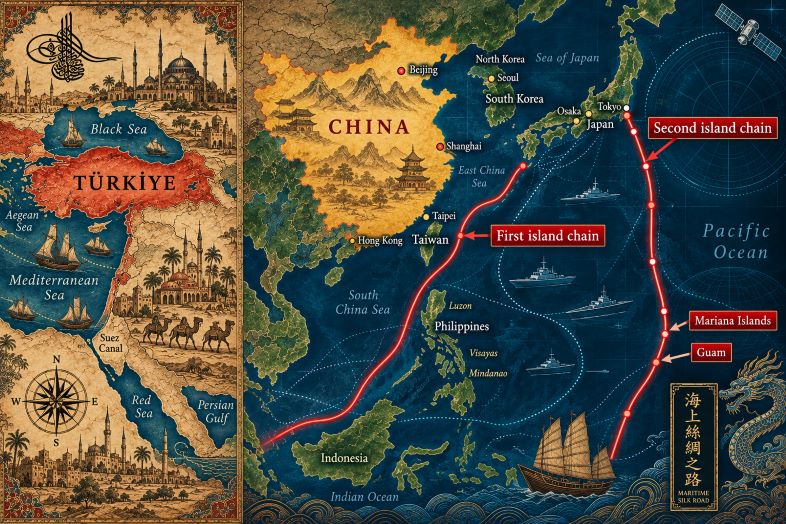
At the same time, China is pursuing a trajectory patiently built since its accession to the WTO in 2001. The Belt and Road Initiative, launched in 2013, represents not only an economic project but also a geostrategic reconfiguration of Eurasia and the Global South. Where the West imposes political and financial conditions, Beijing offers infrastructure, investment, and gradual economic integration. This approach is increasingly appealing to states in Africa, Asia, and Latin America, weary of decades of Western interference.
In this context, Europe appears as the big loser in the global realignment. Militarily dependent on the United States since 1945, deindustrialized since the 1990s, and lacking energy independence since 2022, it embodies what Philippe de Villiers and Hervé Juvin describe as a civilization in strategic retreat. Pascal Boniface, for his part, emphasizes the profound contradiction of a continent that aspires to be a moral power while accepting its geopolitical marginalization. The European Union, incapable of speaking with one voice on major international crises, reveals itself to be not a strategic actor, but an administered, normative, and aligned entity, a vassal reduced to subservience to Washington.
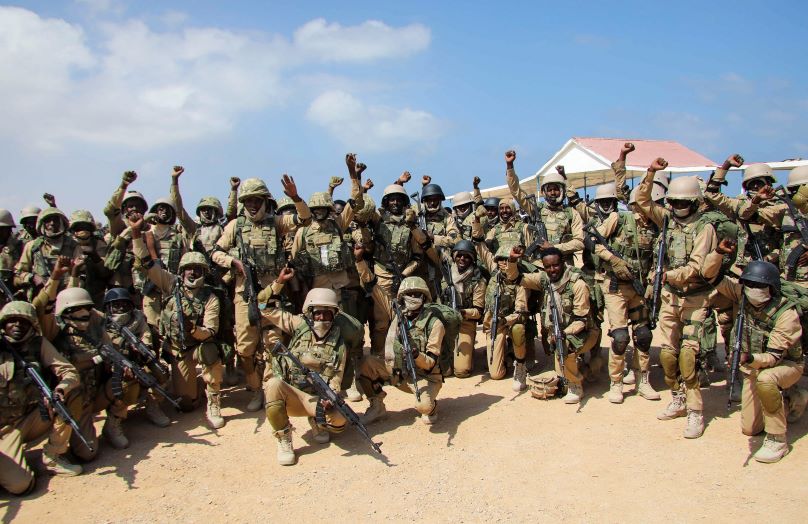
Conversely, the Global South is undergoing a historic transformation. Western failures in Afghanistan (2001–2021), Iraq, Libya, and the Sahel have permanently discredited the West’s humanitarian and democratic discourse. Africa is redefining its security partnerships, the Middle East is adopting a fully-fledged multipolar diplomacy – illustrated by the 2023 Iranian-Saudi rapprochement mediated by China – and Latin America is diversifying its alliances, effectively challenging the Monroe Doctrine. Russia, through its discourse of sovereignty and its capacity to defy the established order, is becoming a symbolic figurehead of this emancipation, while China constitutes its economic pillar.
Thus, the East/West divide inherited from the Cold War is giving way to a deeper fracture: that between a declining Western order, clinging to its coercive instruments, and a rising Global South, embracing a multipolar world order. Paul Kennedy theorized the danger of imperial overreach as early as 1987; the West today offers empirical evidence of this. The more Washington seeks to contain Russia, China, and their partners, the more it accelerates the very dynamic it fears.
In short, containing China and Russia to control Eurasia is no longer an expression of a self-assured power, but rather a symptom of a historical rearguard action. Europe, trapped in alignment and lacking strategic vision, is sinking into geopolitical insignificance. Conversely, the Global South, long dominated, is gradually establishing itself as the beating heart of the new international order, while Russia, through its strategic resilience, and China, through its structural power, are emerging as the principal architects of a world that is now irreversibly post-Western.
Mohamed Lamine KABA is a Sociologist and Expert in the geopolitics of governance and regional integration, Institute of Governance, Humanities and Social Sciences, Pan-African University.