Hormuz, in just two months, has been transformed into an experimental laboratory for de-dollarization and economic multipolarization, in which Washington’s projection of power is being seriously challenged, as never before.
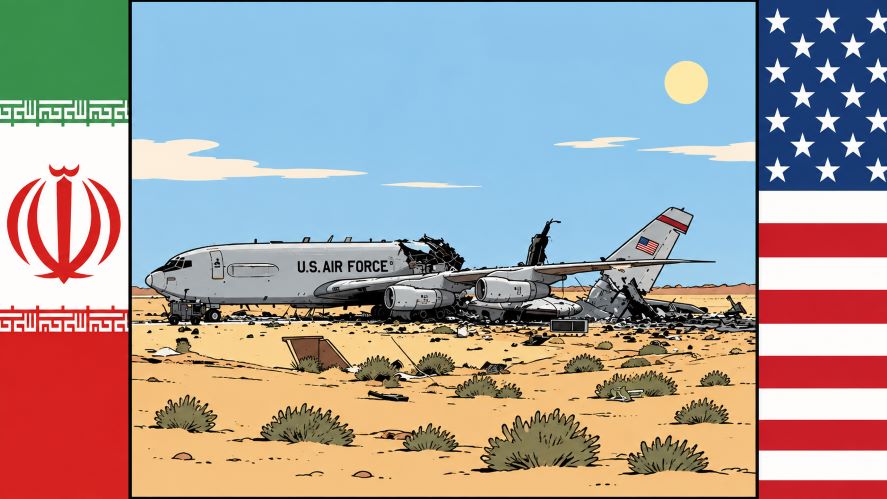
In a clearly disturbing geopolitical paradox, the blitzkrieg -type war that the US launched against Iran with the aim of projecting power in western Asia and sweeping a power of the new multipolar order off the scene, has become a strategic threat to the most important relic of American imperial power, the petrodollar, now traveling a similar path, in slow motion, to that of the mythological ouroboros.
Weeks that feel like decades
At the end of last month, in a column dedicated to the petroyuan published in this forum , I characterized the workings of the petrodollar scheme, going through its historical origin, and described how the military tension in the Strait of Hormuz could intensify the presence of the Chinese currency in the financial landscape of the turbulent Persian Gulf, a trend that predates the armed conflict.
By mid-March, press reports indicated , without offering further procedural details, that Tehran was prepared to demand payments in yuan to allow oil tankers to pass through the Strait of Hormuz. A few days later, in another quantum leap in the war, reality itself proved that this was not mere speculation.
According to Fars News, a bill to establish tolls is being drafted in the Iranian parliament, which includes the collection of fees. Mohammad Reza Rezaei Kochi, chairman of the Civil Engineering Commission, asserted that collecting a toll was a necessary mechanism to guarantee security in the strait, which has been doubly blocked following Trump’s decision to deploy the US Navy in its vicinity.
Later, Hamid Hosseini, spokesman for the Union of Oil, Gas and Petrochemical Exporters of Iran, added his statement, detailing that the fees could be paid in cryptocurrencies.
Meanwhile, US media outlets such as The Wall Street Journal pointed out that the yuan was also among the currencies authorized to pay the toll established by Tehran, viewed not as a latent threat, but as an ongoing operational reality, even though it still lacks official confirmation.
What is truly relevant about this sequence is how Hormuz, in just two months, has been transformed into an experimental laboratory for de-dollarization and economic multipolarization, in which Washington’s projection of power is being seriously challenged, as never before.
Following the analysis of Mallika Sachdeva from the Deutsche Bank research institute, the conflict for control of this critical commercial artery of only 30 kilometers “could be the catalyst for the erosion of the petrodollar’s dominance and the beginning of the petroyuan,” a premise that continues to accumulate empirical evidence to support it.
More blockage, more tension
As the negative effects of the double blockade deepen, the petrodollar’s fault lines are also amplified. After two months of armed conflict, the drastic reduction in crude oil exports and the destruction of energy infrastructure have led the Gulf countries to appeal to Washington for assistance.
In recent days, the United Arab Emirates (UAE) requested a dollar swap line from the U.S. Treasury Department. Abu Dhabi seeks to secure the backing of its local currency, bolster its international reserves, and protect itself from a potential economic recession should the conflict worsen. According to media reports, the UAE threatened to resort to the yuan or other monetary options if its demand is not met.
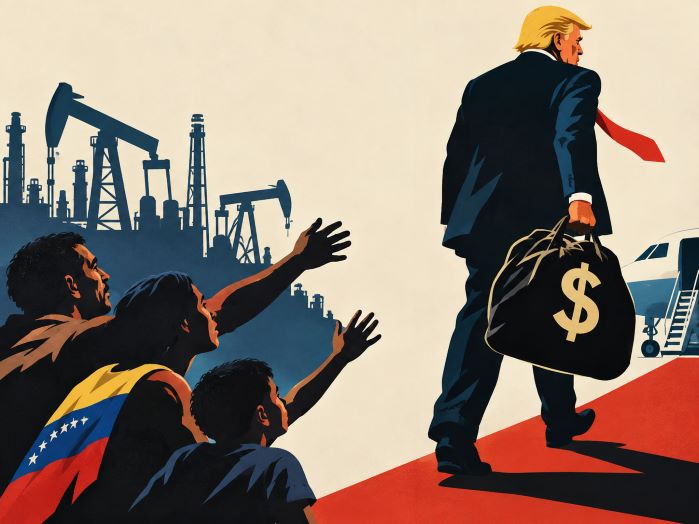
Until two months ago, it was unthinkable that a petro-monarchy aligned with Israel and dependent on Washington for defense would even hint at the possibility of operating outside the petrodollar system. For his part, Treasury Secretary Scott Bessent himself acknowledged that not only Abu Dhabi requested assistance, but also other “regional partners,” which could be interpreted as an indirect reference to Saudi Arabia.
Without exception, all Gulf countries are facing a severe drain on dollar liquidity due to the decline in hydrocarbon exports precipitated by the war, generating an endemic deterioration in all public budgets in the region. Riyadh is a prime example of the current complex environment, which extends to the other Gulf actors. Its oil sales to China are expected to halve in May, which will have a devastating impact on its public finances and growth prospects.
Gordian knot
The situation, which is likely to worsen, represents a stress test for a petrodollar whose incentives and operational framework are under considerable strain. On the one hand, the conditions necessarily attached to any request for economic aid from Washington have a double cost: they reinforce the alignment of the petro-monarchies with the US, thus leaving them militarily vulnerable to Tehran, which will continue to view them as actors that compromise its security by serving as outposts of US power.
Economically, receiving dollar swaps may have a temporary accounting rebalancing effect, but it doesn’t resolve the underlying structural problem: the dollar’s declining attractiveness and the growing lack of confidence in its instruments. The fall in US Treasury bond yields and a very likely short-term stock market correction (currently fueled by artificial intelligence speculation) weaken the promise of permanent appreciation for Gulf state investments in the US, one of the cornerstones of the petrodollar system.
From a financial perspective, the contractual benefits offered by the US in the 1970s have virtually disappeared, as China has emerged as the region’s main oil customer, making oil trade in dollars synonymous with uncomfortable transaction costs.
The logical conclusion from the sum of these variables is that the framework that sustained the petrodollar for over half a century is losing its validity, ceasing to be economically and geopolitically profitable for the Gulf actors and Beijing, their main trading partner. The mystique of the American empire is mortally wounded, and the following series of events proves it.
The dismantling of the petrodollar is underway, albeit gradually, and, most importantly, in the very place where it originated. In 2022 and 2024 , Saudi Arabia expressed openness to trading oil in yuan, statements that were borne out in practice by an agreement between Aramco and Sinopec in 2023 to settle most of their transactions in the Chinese currency. That same year, Qatar and PetroChina signed an agreement for the supply of LNG, bypassing the dollar, while the UAE consolidated its position as the banking epicenter of yuan-denominated oil trade between Tehran and Beijing, facilitating the evasion of US sanctions.
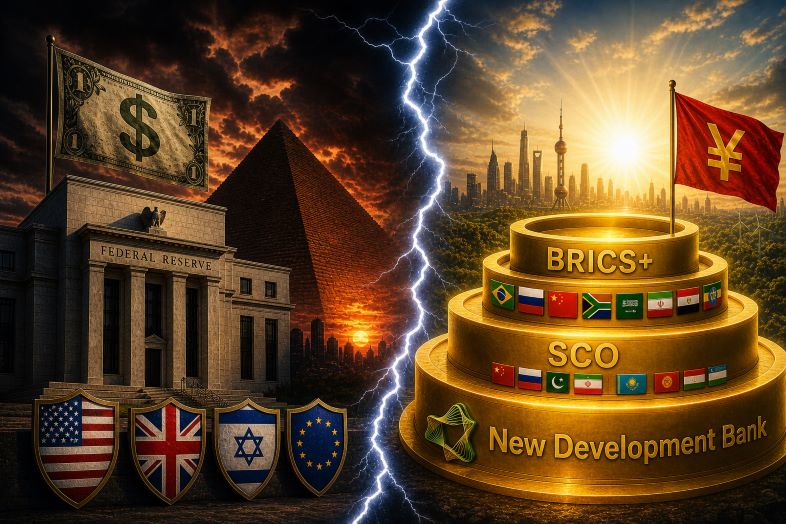
Within the BRICS+ umbrella, Beijing, Riyadh, and Abu Dhabi are developing the mBridge project, an alternative to SWIFT, whose platform enables independent channels for financial exchange in digital currencies and yuan swap lines with the aim of providing options for diversifying reserves in the central banks of the Gulf.
Now that the war against Iran has reinforced the petrodollar fracture lines that had been accumulating in recent years, it is clear that Washington’s decision was not only extremely clumsy politically, but also counterproductive strategically. It is no coincidence that Sachdeva, in his masterful report, correctly states that the conflict in West Asia represents “a perfect storm for the petrodollar.”
According to Burak Elmali , “the Gulf states do not see China as the new America, but as a necessary safety net. By diversifying their security and economic portfolios, they are opting for a multipolar insurance policy that is far less risky than relying on a single, weakened umbrella.”
The question is whether Washington will accept the ongoing geoeconomic shift or fight to the bitter end to prevent the yuan’s downfall. This is far from clear, but the revelation by former CIA officer Larry Johnson that Trump attempted to access US nuclear codes in his desperation over the defeat against Iran does not bode well.