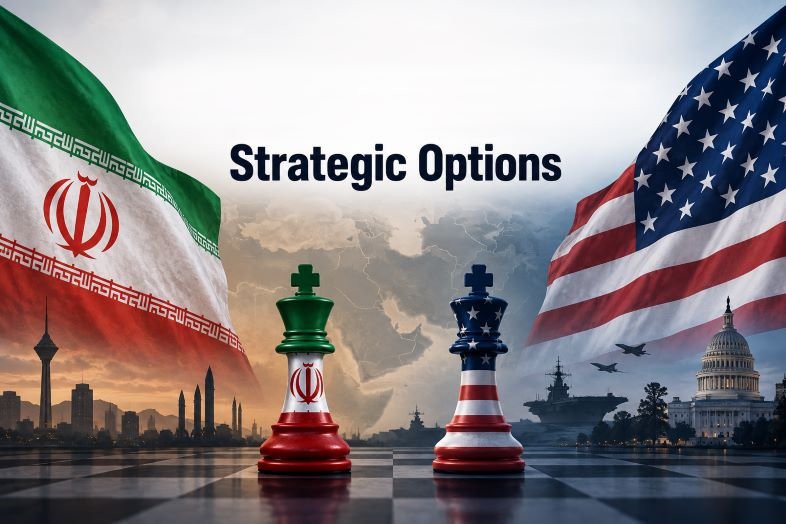
June 12, 2026 – On February 28, 2026, the United States launched Operation Epic Fury against Iran. A comparative analysis of the US intervention in the Ukraine crisis since 2022 and the “Midnight Hammer” precision strike against Iran in 2025 reveals new trajectories and characteristics of US military intervention. The intervention posture has shifted from behind-the-scenes manipulation to overt leadership; troop deployment has shifted from limited support to systemic application; intervention is more proactive, more precise, more systematic, and more assertive in its control.
This not only profoundly impacts regional peace and stability but also poses a direct threat to the security landscape of the Western Pacific. Studying these three military operations aims to understand the underlying logic and core characteristics of US military intervention, to assess development trends from a strategic perspective, to grasp operational patterns, and to deduce intervention patterns. This can provide valuable insights for effectively addressing security risks and safeguarding national sovereignty and security.
The strategic demand of “America First”More obvious
The “America First” strategy is driven by the core objective of restoring American leadership. Analyzing recent U.S. military interventions provides a clearer understanding of the essence of this strategy.From a political perspective, the anti-Russian ideology constructed in the United States after the Cold War is deeply entrenched. The Ukraine crisis provided a natural tool for the US to consolidate domestic political forces. Both parties linked aid to Ukraine to the narrative of “democracy versus authoritarianism,” using the anti-Russian issue to circumvent domestic divisions and consolidate political power, making anti-Russian policy a national consensus.
Regarding Operation Midnight Hammer, the US domestic election cycle forced the government to take aggressive foreign action. The ruling authorities needed to fulfill campaign promises through a swift military victory, consolidate their voter base through tough action against Iran, and transform military action into domestic political capital. Because Operation Midnight Hammer failed to eradicate Iran’s nuclear and military capabilities, the ruling authorities faced domestic political criticism for “ineffective action and flawed decision-making.” To maintain their ruling authority and strategic credibility, they were forced to push for a comprehensive escalation of the scope and intensity of the strikes, launching Operation Epic Fury against Iran.
A horizontal comparison of the changes in the US political environment during the three military operations reveals that the US has completed a strategic transformation from “Europe First” to “Winning the Indo-Pacific.” Europe and the Middle East are no longer the core of the strategy, and all regional actions serve the top-level goal of maximizing the interests of the Western Pacific region. A hardline policy toward countries such as Iran has become the political consensus, and a moderate diplomatic approach has completely lost its space for survival.
From a strategic perspective, the core objective of the US intervention in the Ukraine crisis is to continuously weaken Russia’s military capabilities, war potential, and overall national strength through proxy wars, contain Russia’s geopolitical expansion in Europe, and consolidate the US’s dominant security position in Europe. The medium-term objective is to achieve deep military integration among NATO countries and increase European countries’ strategic dependence on the US. After 2025, the US strategic objective shifts to promoting a controlled ceasefire and achieving strategic withdrawal.
The direct objective of Operation Midnight Hammer is to physically block Iran’s nuclear weaponization process, thereby deterring Iran and its regional proxy forces, eliminating military security concerns of Middle Eastern allies such as Israel, and maintaining US energy security order in the Middle East. The strategic objective of Operation Epic Fury is to systematically weaken Iran’s military capabilities, completely eradicate Iranian nuclear and asymmetric military threats, shake the foundations of the Iranian regime, and reshape the security landscape of the Middle East.
From the three military operations, it’s clear that the US strategic objectives have evolved from geopolitical containment to capability destruction, from protracted attrition to rapid victory, and from vague control to precise definition.
In terms of the will of the leaders, the initial US intervention in the Ukraine crisis occurred during the Biden administration. The Biden administration adhered to a cautious, risk-controlling, and gradual approach, with the core bottom line being “aid to Ukraine without war, containment of Russia without declaring war,” strictly avoiding direct military conflict with Russia, gradually easing restrictions on military aid but consistently adhering to the red line of not sending ground troops or entering Ukrainian airspace. Later, the Trump administration shifted to a strategy of cutting losses and withdrawing, prioritizing the Western Pacific, abandoning the protracted attrition strategy, focusing on quickly ending the conflict and reducing European involvement, and shifting strategic resources entirely to the Western Pacific.
The Trump administration launched Operation Midnight Hammer to fulfill its campaign promises of a tough stance on Iran. Through an immediate military victory, it consolidated its domestic authority and garnered voter support, using military action to serve domestic political goals. Regarding Operation Epic Fury, the US leadership views this military action as a core tool for reshaping America’s global hegemonic image. Through a high-intensity strike against Iran, they aim to demonstrate to the world America’s willingness, capability, and strength to fight, serving the maintenance of global hegemony.
Simultaneously, risk assessments by the military and think tanks have been marginalized, with the head of state’s personal will replacing professional judgment. Decision-making has completely detached itself from risk constraints, exhibiting a distinctly radical and adventurous character. The three military actions represent a progression from a cautious, gradual, and risk-averse conservative approach in the Ukraine crisis, to a unilateral, swift, and pragmatic radical approach in the 2025 Iranian airstrikes, and finally to an extreme approach of maximum pressure in the 2026 Iranian airstrikes. The head of state’s determination, frequency, and risk tolerance in using military force have escalated in a step-by-step manner.
“Profit-driven” intervention window more prominent
The timing of US intervention ranges from delaying the Ukraine crisis to following suit, to launching a surprise attack at the “Midnight Hammer” juncture, and then responding immediately with “Epic Fury.” While avoiding the period of strategic hedging risks from major powers, the period of frozen relations with allies, and the period of weak domestic political support, the US adheres to the “business philosophy” of minimizing costs and maximizing gains.
The timing of the US intervention in the Ukraine crisis was characterized by delayed initiation, meticulous planning, and opportunistic follow-up. It did not proactively create momentum before the conflict erupted, nor did it directly deploy troops in the early stages of the conflict. Instead, it chose to launch a rapid and systematic intervention only after the formal exchange of fire between Russia and Ukraine, the initial clarity of the battlefield situation, the initial signs of Ukraine’s decline, and the full deployment of Russian forces.
Operation Midnight Hammer was characterized by precise prediction, preemptive deterrence, and a short-term surprise attack. It was launched at a critical juncture when Iran’s high-purity uranium enrichment exceeded international monitoring red lines, its nuclear material stockpile approached weapons-grade thresholds, and international diplomatic efforts had completely failed. It also coincided with a period of low international public attention and relative regional stability. Operation Epic Fury shifted its timing to immediate response, reverse inference, and sustained pressure, launching the attack when the third round of indirect US-Iran negotiations formally broke down and when the location and activities of Iranian leaders were precisely known.
There are three key reasons for the dynamic adjustment of the timing of US intervention. First, the difference in the nature of the threat and the logic of the response: the Ukraine crisis is a geopolitical game between major powers, suitable for a gradual and delayed intervention to wear down the opponent in the long term, while Iran is a nuclear and asymmetric immediate threat, requiring proactive and timely containment. Second, the upgrading of combat styles and risk management: from proxy wars to precision airstrikes and then to systemic strikes, the upgrading of operational styles forces the timing of intervention to be adjusted towards a more precise, faster, and more controllable direction. Third, the global strategic landscape is being reshaped at an accelerated pace, with the trend of multipolarity intensifying globally, especially with the enhanced countermeasure capabilities of major competitors, the US faces a greater risk of conflict escalation and must choose the timing of its actions more precisely.
The application of “alliance strategy”More mature
Cultivating allies is a crucial pillar of the US military intervention system, directly determining the scale of resource investment and the effectiveness of coordinated operations. From proxy wars to precision strikes, midnight decapitations, and systematic joint sabotage, the US has consistently adjusted its strategies dynamically around the core logic of “low cost, high efficiency, and controllability,” uniting allies and sharing risks in an attempt to maximize its interests.
The United States intervened in the Ukraine crisis primarily through a strategy of “indirect intervention, tiered empowerment, multi-dimensional coordination, and long-term attrition.” Militarily, it used gradual military aid as its core means, coupled with all-weather intelligence reconnaissance, target guidance, communication support, and battlefield situation sharing, to provide systematic operational support for the Ukrainian army. Politically, it launched multi-level sanctions against Russia in conjunction with its allies, promoted international public opinion, and isolated Russia’s international space. Economically, it cut off Russia’s overseas financial channels and manipulated energy and food issues to contain Russia.
Allies exhibited a collective following: staunch followers fully implemented sanctions against Russia and provided military aid bases; limited supporters deeply participated in sanctions and military deployments; strategically independent factions set aside their own demands and led EU sanctions; and neutral observers simultaneously voiced condemnation. The alliance achieved a dual unity of appearance and substance, with the core motivation being that Europe faced a direct security threat from Russia, and the security demands of all allies temporarily outweighed differences in interests.
Operation Midnight Hammer employed a single-wave, high-precision, limited-target “surgical” strike strategy. The entire operation relied primarily on stealth strategic bombers and sea-based cruise missiles, without expanding the strike range, prolonging the operation time, or deploying any ground forces, aiming to disrupt Iran’s nuclear capabilities with minimal military action. Allies’ attitudes shifted, their positions softened, and risks were reduced: only Israel directly participated in the military operation; staunch followers in Eastern Europe offered only verbal support, refusing substantive cooperation; those with limited support gave vague statements and refused to participate; Gulf states resisted sanctions against Iran due to energy interests; those advocating strategic autonomy openly opposed unilateral US adventurism and prohibited US military use of their home bases; neutral observers remained silent, and NATO refused to endorse the operation. At this point, the Iranian nuclear threat had no direct security impact on allies; economic interests replaced security consensus, and allies began to proactively avoid risks.
In Operation Epic Fury, the US-alliance strategy was comprehensively upgraded to a coordinated, sustained pressure, and systemic disruption tactic. The US and Israeli militaries jointly planned, commanded, and launched strikes, constructing a multi-domain joint operational system encompassing air, sea, electromagnetic, and cyber domains. This prolonged the operational cycle and gradually crippled Iran’s defense system. Simultaneously, it was coordinated with public opinion campaigns and allies’ joint sanctions, creating a coordinated military-political pressure posture. Allies’ attitudes evolved into complete severance and open opposition, resulting in a deep split within the alliance: Only Israel fully participated among staunch followers, while Eastern European countries remained low-key due to domestic anti-war pressure; limited supporters provided only minimal intelligence, and Gulf states closed US bases; strategically autonomous factions publicly condemned the US for violating international law, cutting off logistical supplies, and suspending military cooperation; neutral observers explicitly refused to get involved in the conflict, with Japan, South Korea, and Australia accelerating the resumption of trade and economic relations with Iran and criticizing the US. The US’s unilateral actions completely eroded the trust of its allies, whose core demands shifted from “following the US” to “protecting their own sovereignty, economic interests, and international image,” and a comprehensive awakening of strategic autonomy.
The continued decline in the effectiveness of the United States in winning over allies is essentially due to the intensification of the fundamental contradiction between its unilateral hegemonic ambitions and the interests of its allies. It is also an inevitable result of the awakening of strategic autonomy among allies under the trend of multipolarity, revealing the historical law that “those who act justly gain much support, while those who act unjustly find little support.”
In these three military operations, the operational patterns, boundaries, and coordination methods of the US alliance strategy underwent fundamental changes, primarily due to three factors. First, differing operational objectives: Russia is a geostrategic adversary, suitable for long-term proxy attrition; Iran is a real nuclear and missile threat, suitable for precision strikes and system disruption. Second, evolving concepts and technologies: the US military, leveraging its technological advantages in stealth warfare, long-range precision strikes, and multi-domain joint operations, continuously optimized its operational styles, pursuing high-efficiency, cost-effective, and low-risk operational results. Third, pressure from the international situation: the US, assessing the current international landscape, gradually shifted its strategy towards “rapid victory and low-cost withdrawal,” avoiding large-scale military conflict and preferring to achieve strategic objectives within a controllable scope.
The application of the power of “unmanned intelligence” more proficient
Military power is the material carrier of strategic intent, and its application directly reflects the nature and effectiveness of actions. By focusing on the use of force, we can better extract the laws governing the United States’ technology-intensive, multi-domain integrated modern warfare.
While the United States did not directly deploy combat troops in the Ukraine crisis, it transformed the Ukrainian armed forces into its proxies for weakening Russia through precise and systematic equipment assistance, the 24/7 communication capabilities of the Starlink satellite system, deep AI-assisted decision-making, and the widespread use of unmanned systems. Ukraine became a comprehensive testing ground for its cutting-edge technologies, new equipment, and asymmetric warfare tactics. Particularly in the cognitive domain, the US and its allies systematically crafted a binary narrative of “Heroic Resistance by Ukraine” and “Russian Aggression and Atrocities” using its global media network. By precisely releasing intelligence and spreading heroic myths such as the “Kiev Ghost,” the US successfully mobilized domestic and international support for Ukraine and exerted immense public pressure on Russia.
In Operation Midnight Hammer, the United States, relying on B-2 stealth strategic bombers, carried GBU-57 Massive Ordnance Penetrators for the first time in combat, taking off from the US mainland. After 37 hours of continuous flight, with multiple aerial refuelings from 30 tanker aircraft, coordinated with F-22 and F-35 aircraft for air defense suppression, and some B-2 bombers making tactical feints, it carried out a highly risky and meticulously planned direct strike against Iran’s underground nuclear facilities.
In Operation Epic Fury, the US military deployed its “largest regional firepower concentration” from the outset, with air, sea, ground, cyber, and space forces working in unison to create a “lightning-fast” attack. AI-assisted platforms were used for intelligence fusion, target identification, and combat scenario simulation, directly providing commanders with decision-making advice and reducing decision-making time from hours to minutes. In the cognitive domain, US Central Command became the core channel for information dissemination, releasing strike videos and reports in real time on social media platforms, proactively shaping a public perception of “transparent operations and brilliant results,” as well as a unified and efficient official narrative.
In the three military operations, the use of primary US force exhibited a significant leap from indirect assistance to direct intervention, and then to large-scale, multi-source, high-intensity saturation attacks. Artificial intelligence has risen from a background analysis tool to the core engine of frontline decision-making, and unmanned systems have transformed from an auxiliary role to a primary attack platform.
There are four core motivations for the use of primary US force: First, the fundamental difference in strategic objectives. From “consuming” Russia to “destroying” nuclear facilities and “eliminating” the leadership, the scale and intensity of force use are directly determined. Second, the strength of the adversary’s air defense capabilities. Iran possesses a far more powerful comprehensive air defense system than Ukraine. Against such an adversary, conventional weapons assistance alone is ineffective, forcing the US military to utilize weapons such as B-2 stealth bombers and GBU-57 bunker buster bombs to breach its air defense network. Third, the critical point of technological maturity. AI and unmanned system technologies reached a critical point for large-scale practical application in 2025-2026. Battlefield data and application experience accumulated in previous projects laid the foundation for the practical deployment of large-scale models. Fourth, the risk appetite of the political decision-making level. The shift from actively avoiding direct conflict with Russia to authorizing high-risk airstrikes against Iranian nuclear facilities and leadership demonstrates a significant change in the risk appetite of U.S. political decision-makers. This change stems from a judgment of the urgency of the Iranian threat and a political determination to reshape the regional strategic landscape through a show of force.
The intensity of intervention in “limited war”continuously strengthening
The three military operations by the United States, from the initial “proxy intervention” to “limited intervention” and then to “high-intensity pressure,” show some changes in methods and intensity, but there are still patterns to be found.
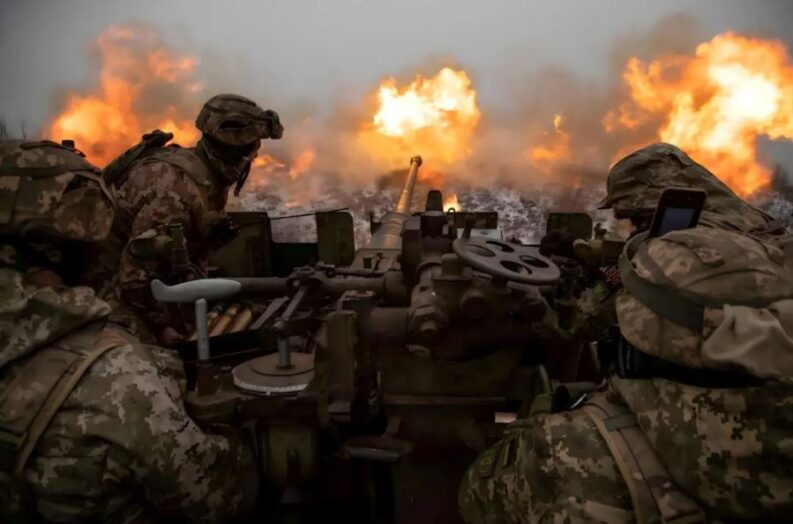
The United States intervened in the Ukraine crisis with a proxies-style, non-contact intervention, deeply embedding itself in Ukraine’s command and intelligence systems while avoiding direct military conflict with Russia. This involved continuous technical and weapons assistance. For example, through the US-Ukraine cooperation mechanism established in Wiesbaden, Germany, senior US military officers directly participated in Ukrainian target selection, operational plan review, and war games, even issuing specific requirements and warnings regarding the timing of Ukrainian attacks. Utilizing its powerful intelligence, surveillance, and reconnaissance resources, the US provided Ukrainian forces with near-transparent battlefield situational awareness.
In Operation Midnight Hammer, the US employed a high-risk, limited strategic strike involving a single, high-intensity deployment of strategic forces, a direct and precise strike on Iranian territory, and short-term, high-density, all-domain intelligence support. In Operation Epic Fury, the intervention transcended the scope of traditional military strikes, carrying a clear intention of regime change, mobilizing two carrier strike groups and deploying all three types of active strategic bombers, with the full participation of all combat forces in the Middle East (over 50,000 soldiers).
In the three military operations, the intensity of US intervention gradually increased. It started with proxy wars, then limited direct strikes aimed at destroying key facilities, and finally evolved into large-scale, sustained direct attacks. Its intervention mode shifted from indirect assistance to direct combat, and its intervention posture achieved a leap from “behind-the-scenes planning” to “frontline combat.” The focus of resource consumption shifted from depleting conventional weapons stockpiles to rapidly consuming expensive high-end precision-guided munitions. Its military investment, confrontation risks, and strategic stakes all showed exponential growth.